
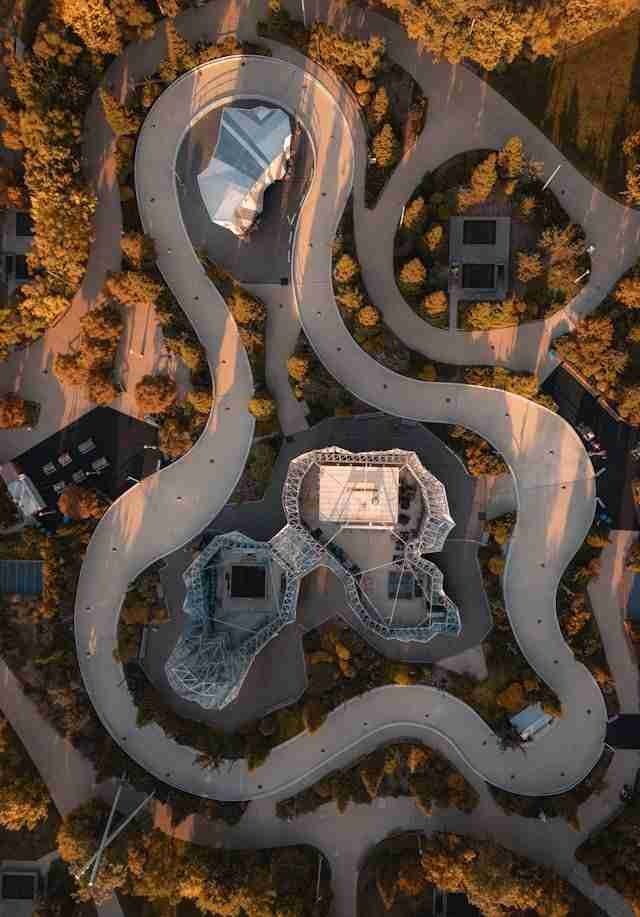
Nestled between the bold geometry of Millennium Park and the sweeping skyline of downtown Chicago, the Maggie Daley Park Ice Skating Ribbon
offers a dynamic blend of motion, light, and architecture. Unlike a traditional rink, the ribbon loops through landscaped parkland in a flowing quarter-mile path, surrounded by trees, pedestrian bridges, and high-rise towers. In winter, when the ribbon is open for skating, the contrast between natural curves and urban verticals makes it one of the most photogenic public spaces in the city.
The ribbon isn't just a place for action shots—it's also a venue for creative architectural framing, long exposures, and seasonal compositions. By day, it's full of movement and reflections; by night, the city lights transform it into a glowing circuit of motion. Whether you're photographing skaters, light trails, or skyline reflections in the ice, Maggie Daley Park offers a versatile canvas for winter photography in an iconic urban setting.
Best Photography Opportunities
• Elevated Skyline Shots from the BP Bridge
The BP Pedestrian Bridge, designed by Frank Gehry, curves over Columbus Drive and provides a raised perspective of the ribbon winding below. From here, you can frame skaters against the backdrop of Chicago's vertical skyline, with the contrast between flowing movement and rigid architecture providing strong visual tension. The gentle S-curve of the ribbon acts as a perfect leading line from foreground to background, especially during golden hour or dusk. This perspective also helps showcase the way the ribbon weaves through the surrounding landscape, giving context to its placement within the greater park and city grid. On foggy mornings or snowy days, the city softens into atmosphere, creating an ethereal mood against the cold geometry of the towers.
• Night Photography and Light Trails
After sunset, the ribbon becomes a luminous figure-eight of motion as skaters loop under string lights and building glow. Use a tripod and long exposures to capture light trails from the skaters, softening their movement into elegant curves. The nearby towers reflect on the ice in cold conditions, and passing headlights on Columbus Drive add extra motion and rhythm to the frame. Blue hour is particularly effective for balancing warm artificial light with the fading natural sky. Consider experimenting with multiple exposures or layering techniques to emphasize motion while retaining detail in the cityscape. The interplay between movement and light makes for dramatic storytelling, especially in winter's long, dark evenings.
• Close-Up Action and Street Portraiture
Along the outer curves of the ribbon, low fence lines give you the opportunity to photograph skaters up close without obstruction. These spots are perfect for fast shutter street portraits or candid action work. Use a fast lens to isolate individuals or freeze joyful expressions mid-glide. Reflections in the ice add layers, and the surrounding trees often carry twinkle lights, providing seasonal bokeh and framing for more emotive compositions. Capture families and couples interacting, or zoom in on gloves, scarves, and blades carving arcs in the ice. These tighter moments add emotional depth and human narrative to wider, more scenic frames from the rest of the park.
• Reflections and Abstract Ice Patterns
During calm weather, the ribbon's ice surface becomes a mirror, especially early in the day before heavy skating begins. These reflections are ideal for abstract or fine art interpretations of the surrounding architecture. On overcast days, the light becomes beautifully even, allowing for subtle surface textures, geometric framing, and layered contrast between natural and built environments. Look for early-morning compositions when the ice is still pristine, or shoot directly downward for a flattened, painterly effect that blurs the distinction between water, glass, and sky. This approach works particularly well when juxtaposing the ribbon's soft curves with the sharp lines of city reflections.
• Drone Photography and Overhead Geometry
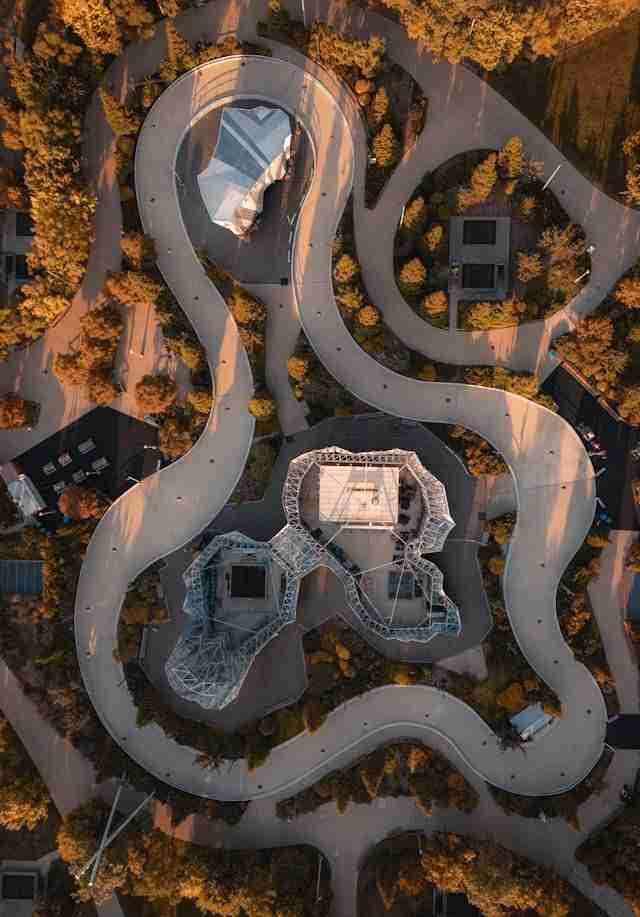
When flown safely and legally, drones can reveal the ribbon's full looping shape in relation to the surrounding city grid. From above, the skating path becomes a graphic element—part sculpture, part track—contrasted against rectilinear buildings and the snowy geometry of Maggie Daley Park. This perspective highlights the intentional design of the ribbon, its curvature set within an otherwise angular environment. Early morning and late afternoon light stretch shadows across the landscape, adding definition to the ice, trees, and adjacent structures. Flying lower allows for cinematic glides above the curves, while higher altitudes show the interplay between built and natural systems across Grant and Millennium Parks. Be mindful of flight permissions and avoid peak hours to maintain safety and respect for park visitors.
Best Time to Visit
The skating ribbon is visually rewarding throughout the winter season, but different times of day and weather conditions bring out different moods. Early morning is the best time for calm, reflective ice and soft natural light that filters between buildings. During the first hour after opening, the surface is usually undisturbed, allowing for clear reflections of the skyline and minimal foot traffic. This is especially ideal for fine art compositions and detail-oriented work with shadows and texture.
Late afternoon into golden hour brings directional light that grazes the buildings and park features, adding depth and warmth to both skaters and background architecture. As the sun dips, the ice begins to glow from surrounding city lights, offering a smooth transition into blue hour shooting. At this time, long exposures and tripod work become especially effective, allowing you to capture skater movement and the illuminated city beyond in a single composition.
Night is arguably the most dynamic time to photograph the ribbon. Under string lights and architectural glow, the ice becomes a stage for motion blur, colorful reflections, and contrast-rich compositions. The curving track is outlined in warm tones that pop against the cooler shadows of winter. On clear nights, the skyline shines crisply above the scene; on snowy evenings, the falling flakes add motion and atmosphere that enhance the sense of place.
If you're after people-free scenes, weekdays are best—especially in the first or last hour of operation. In early December and late February, the park tends to be quieter, offering more time and space to work. Winter storms can provide dramatic conditions, softening the landscape and creating visual separation between skaters and their surroundings. Overcast days are excellent for detail-oriented shots and flat lighting, ideal for scenes where contrast is less desirable.
How to Get There
Maggie Daley Park is located at 337 E Randolph Street in downtown Chicago, directly adjacent to Millennium Park and the Art Institute. The park is easily reached on foot from Michigan Avenue via the BP Pedestrian Bridge or Monroe Street entrances.
Parking is available in the Millennium Park Garage beneath the park, with elevator access to the skating ribbon and surrounding areas. CTA buses and nearby 'L' stations (Washington/Wabash or Millennium Station) provide additional public transit access.
The skating ribbon typically operates from mid-November through early March, weather permitting. Entry is free, though skate rentals and timed access require booking. Photographers should stay outside the skating area unless skating themselves, and tripods may be restricted during busy periods.
Recommended Gear and Shooting Tips
To capture the full scale of the skating ribbon and its urban context, a wide-angle lens (16–35mm) is essential. It allows you to emphasize the ribbon's sweeping curves and place skaters within the larger architectural scene. From elevated positions like the BP Bridge, this lens helps exaggerate depth and lead the eye from foreground motion to towering skylines. A mid-range zoom (24–70mm) adds flexibility when working at ground level, allowing you to move from wider contextual frames to tighter skater interactions or detail shots without changing lenses.
For action and low-light conditions, a fast prime lens (35mm or 50mm with an aperture of f/1.8 or wider) lets you capture sharp handheld images with shallow depth of field, ideal for isolating skaters or freezing candid motion even in dim conditions. Use this lens when shooting close to the ribbon's edges or focusing on emotion, gesture, and expressions within the crowd.
A tripod is essential for long exposure work at dusk or night, especially when capturing light trails or motion blur. Use a remote shutter release or timer to minimize shake. A circular polarizer is useful during daytime sessions to reduce glare on the ice and glass buildings, particularly on sunny days. If you plan to shoot longer exposures during the day, a 6- or 10-stop ND filter will allow you to smooth out moving figures and isolate architectural form.
If drone use is permitted and conditions are safe, aerial views offer a graphic perspective not possible from the ground. Capture the ribbon's elegant curve as it snakes through the park, surrounded by rectilinear buildings and urban geometry. Use early or late light to cast long shadows and add dimensionality. Always check local UAV regulations and avoid flying during peak crowd hours to ensure safety and courtesy to skaters.
Pack extra batteries and keep them warm in an inner pocket—cold temperatures can reduce battery life dramatically. A lens cloth is essential for clearing condensation, especially after transitions from warm interiors to freezing air. Lastly, take your time walking the perimeter of the ribbon—its shape and lighting change continuously depending on your position, creating new opportunities for layered and unexpected compositions throughout your visit.
Nearby Photography Locations
• Millennium Park and Cloud Gate ("The Bean")
Just west of the skating ribbon, this iconic sculpture and its surrounding plaza offer dynamic reflections, skyline shots, and minimalist winter compositions—perfect for pairing with movement-heavy shots from the ribbon.
• Pritzker Pavilion and BP Bridge
Gehry's metallic bands and organic lines provide bold architectural contrast to the softness of the ice ribbon. Shoot from beneath or along the curves of the BP Bridge to include both structures in the frame.
On the park's southern edge, the formal gardens and modern additions to the Art Institute offer strong geometry, sculptures, and minimalist winter scenes. Great for high-contrast black-and-white work or architectural studies.
A short walk north, the Riverwalk offers urban canyon views, layered bridges, and winter light bouncing off the water and glass. Excellent for wide landscapes or tighter compositions with strong graphic lines.
East of the ribbon, Grant Park provides open space, skyline backdrops, and, in winter, a quiet landscape dotted with bare trees and snowdrifts. It's an ideal place to decompress the frame and shift focus from movement to mood.
The Maggie Daley Park Ice Skating Ribbon offers one of the most fluid and interactive shooting environments in downtown Chicago—where skaters trace light through space, and the contrast of winter motion against urban stillness creates something new with every loop.
Comments
Loading comments…