
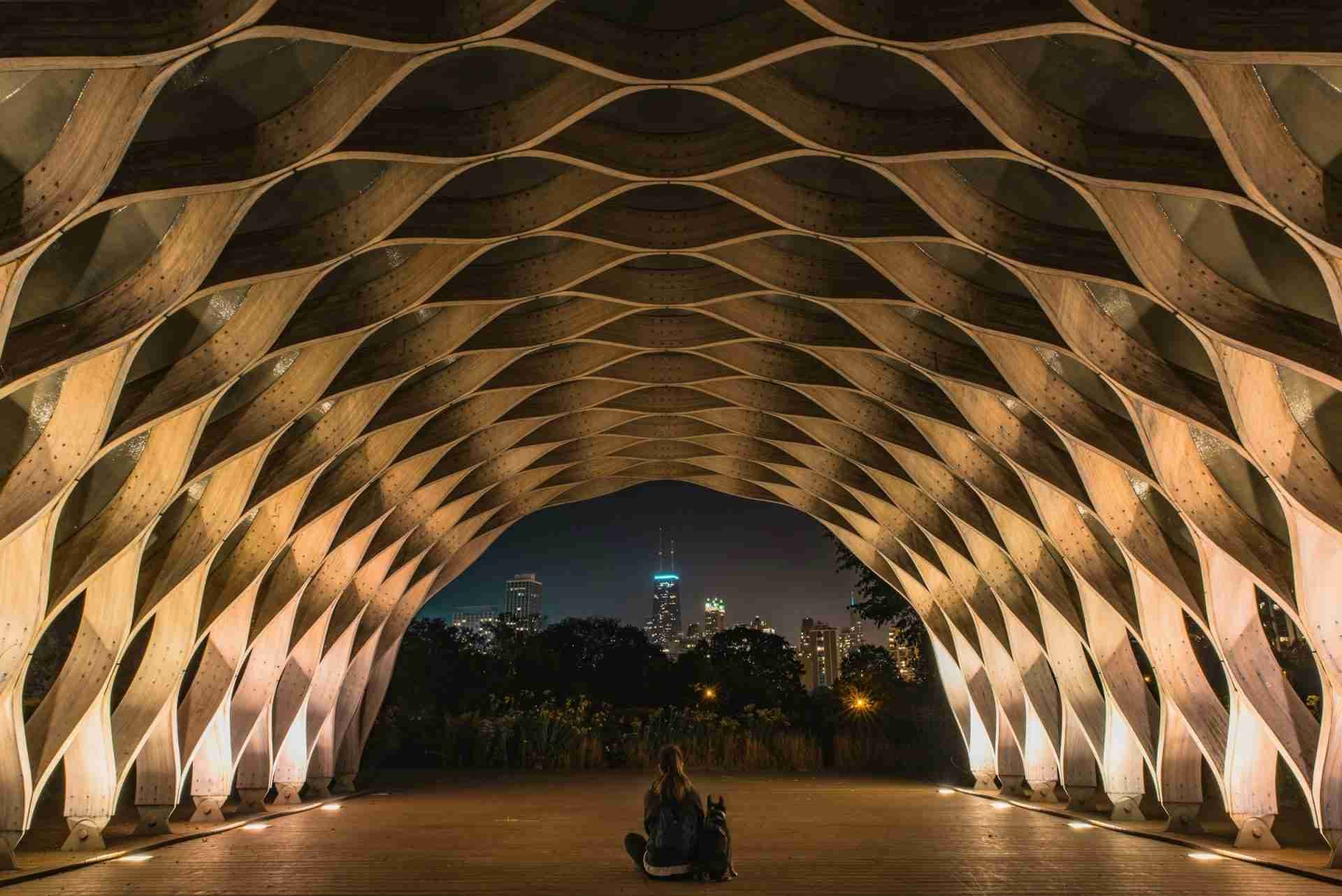
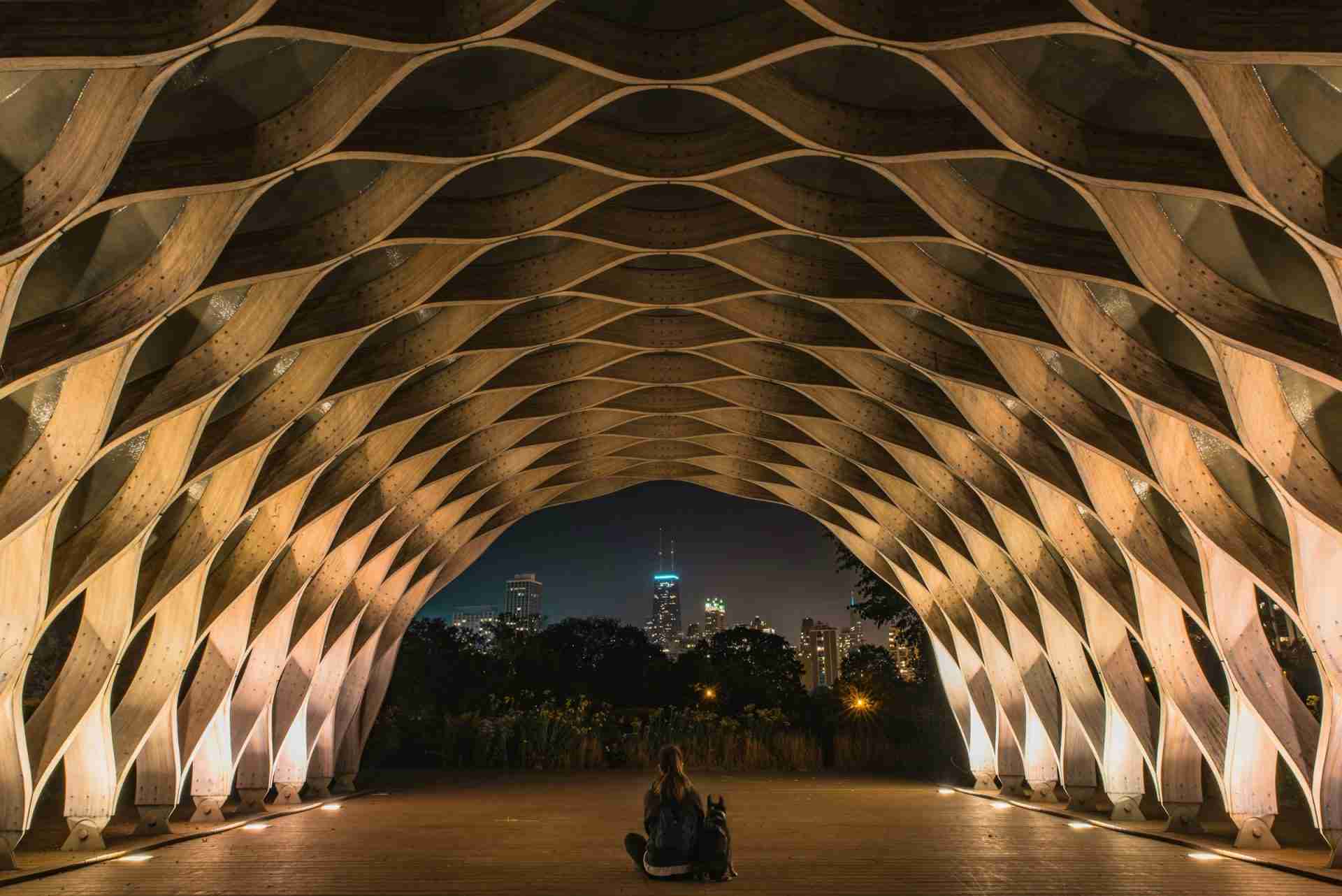
The Peoples Gas Pavilion, often called the Honeycomb, is a striking open canopy in Lincoln Park that immediately stands out once you step beneath it. The repeating hexagonal structure overhead creates a strong sense of order, while the open sides keep the space connected to the surrounding paths and trees. Light filters through the pattern throughout the day, producing shifting shapes on the ground and across the people moving through the space. The pavilion works equally well as a subject on its own or as a framework for scenes that include movement and everyday park life. It is the kind of place that rewards lingering, where small changes in light and timing can produce very different images without changing your position.
Best Photography Opportunities
• Under the Canopy Looking Up
Standing directly beneath the pavilion and looking upward is one of the most reliable ways to work with its structure. The hexagonal pattern fills the frame quickly, and small shifts in position noticeably change how the shapes overlap and align. A wider lens emphasizes the canopy's scale and curvature, while longer focal lengths tighten the pattern into a dense graphic field. Light filtering through the openings creates contrast that shifts steadily throughout the day. This is a viewpoint that rewards patience and careful framing more than movement.
• Framed Views From Inside the Pavilion
Shooting outward from within the pavilion allows the edge of the canopy to act as a clean visual frame. The repeating hexagon boundary helps organize what could otherwise be busy park scenes, making it easier to direct attention toward a single subject or moment. Camera height matters here, as lower angles give more weight to the structure while higher angles open up the background. This approach works well when you wait for people to enter the framed space rather than trying to chase movement. It is especially effective for images that balance architecture with everyday activity.
• Side Angles Showing Depth and Repetition
From the side, the pavilion's grid reads as a sequence of repeating shapes that recede into space. This angle highlights depth and rhythm instead of overall form, which can feel more engaging than a straight on view. Longer lenses help compress the pattern and keep the background from pulling attention away. Light coming across the structure adds separation between layers and keeps the pattern readable. These views benefit from slow adjustment and careful edge control.
• Light and Shadow Patterns on the Ground
When the sun is high enough, the pavilion casts a clear pattern of light and shadow onto the ground below. These shapes can become the main subject, especially on clean pavement or open surfaces. The pattern shifts gradually, which allows you to work variations without changing position. Including a single person moving through the shadows can add scale and interest without overwhelming the frame. This is one of the most consistent ways to produce strong images at this location.
• People Using the Space
The pavilion is constantly in use, which makes it well suited to images that include people sitting, walking, or passing through. The rigid structure of the canopy provides a stable backdrop for movement and gesture. Slower shutter speeds can soften motion, while faster speeds freeze precise moments depending on your intent. Timing matters more than volume, since crowded frames quickly lose clarity. This approach helps show how the pavilion functions as part of the park rather than as an isolated object.
Best Time to Visit
Morning and late afternoon are generally the best times to photograph the pavilion. During these hours, light enters the canopy at an angle, creating more defined patterns and gentler contrast. Midday light produces stronger shadows directly beneath the structure, which can work well for graphic images but may feel harsh for wider views. Overcast conditions reduce contrast and make the pavilion easier to photograph evenly, especially when focusing on pattern and repetition. Seasonal changes affect the surroundings more than the structure itself, with foliage adding density in summer and cleaner sight lines in winter. Weekday mornings tend to be quieter, giving more freedom to work centered or people focused compositions without constant interruptions.
How to Get There
The Peoples Gas Pavilion is located in Lincoln Park and is easy to reach by foot, bike, or public transportation. Several bus routes stop nearby, and there is street parking in the surrounding area, though availability varies by time and season. The pavilion sits along paved park paths, making access straightforward for photographers carrying gear. There is no fee to access or photograph the structure from public areas. Activity levels change throughout the day, so arriving earlier provides more flexibility and fewer people moving through the frame.
Recommended Photography Gear
A standard zoom lens is a strong choice here, as it allows you to move easily between wide canopy views and more focused pattern studies. A longer focal length is useful for compressing the grid and isolating repeating shapes from the surrounding park. A tripod can be helpful in lower light or when you want consistent framing while waiting for people to move into position. Filters are optional, but a polarizer can help manage glare during strong sun, especially on bright surfaces. Comfortable footwear matters more than heavy gear, since most of the work here involves standing, waiting, and making small adjustments rather than covering long distances.
Nearby Photography Locations
• South Pond Area
Nearby water and walking paths offer reflections and calmer scenes that contrast with the pavilion's overhead focus. This area works well for easing out of more graphic compositions.
• Lincoln Park Zoo Walkways
The surrounding paths introduce movement, signage, and structure that add context to a park based photo walk. They are useful for environmental storytelling.
• Lakefront Trail Sections
A short walk east brings open views and horizontal lines that balance the pavilion's vertical and overhead emphasis. These areas help add visual variety.
• Tree Lined Interior Paths
Shaded paths nearby provide softer light and simpler backgrounds. They are useful for quieter images that still connect to the park setting.
• Open Lawns Near the Pavilion
These spaces allow wider views back toward the structure and help show how it sits within Lincoln Park. They work well for environmental context shots.
Comments
Loading comments…