
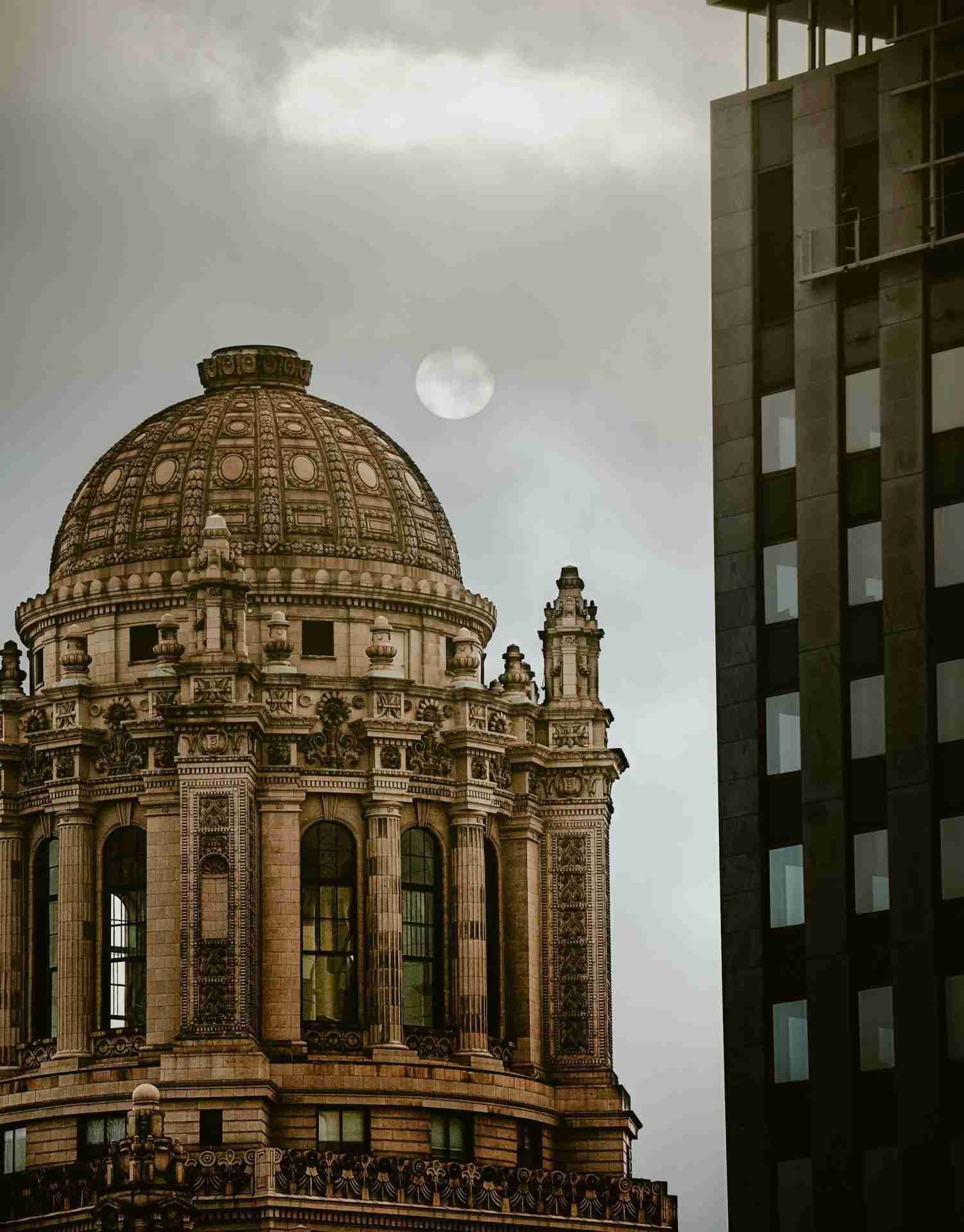
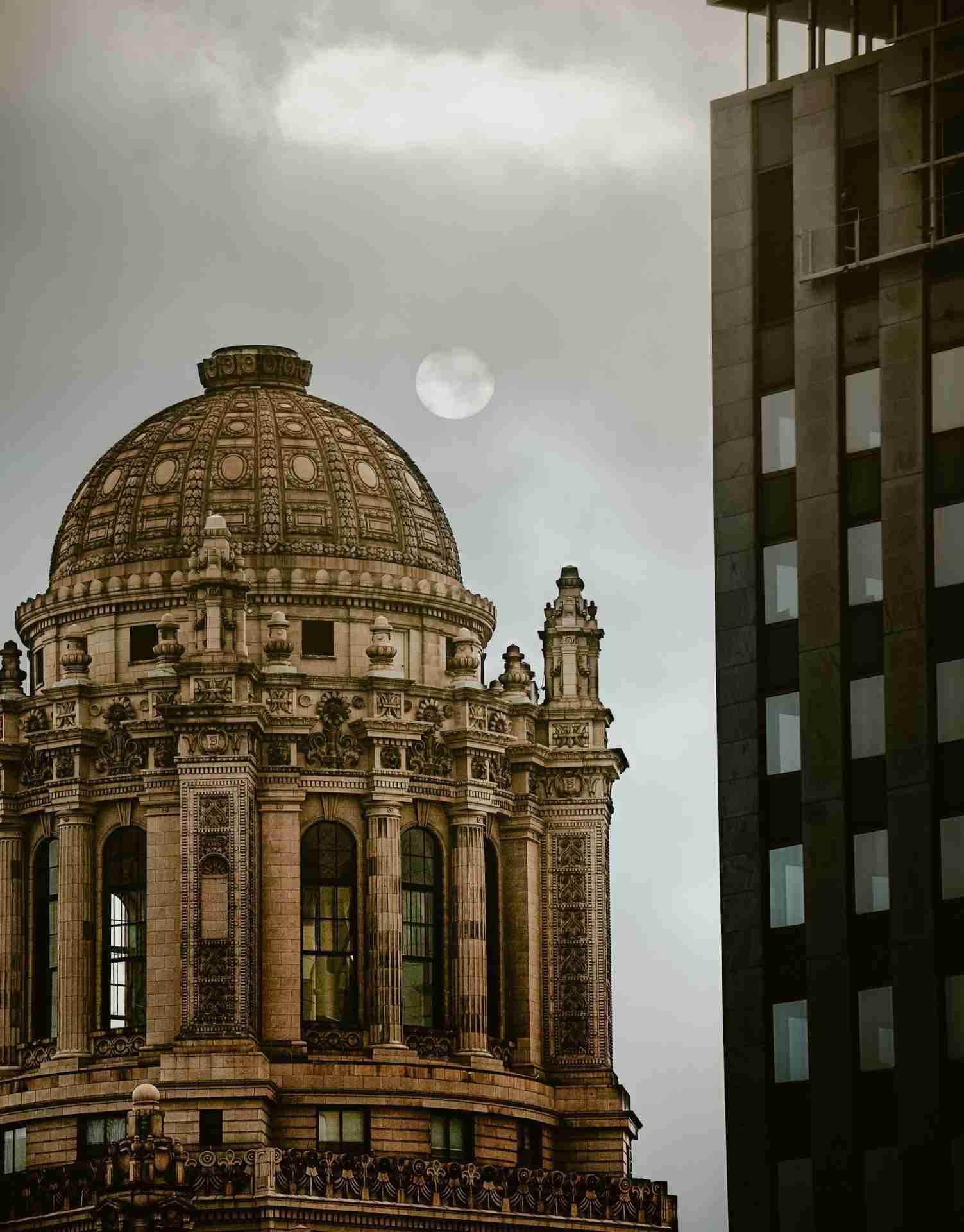
Among the most iconic pieces of early 20th-century architecture in downtown Chicago, 35 East Wacker Drive—commonly known as the Jewelers Building—offers photographers a dramatic study in vertical lines, Beaux-Arts ornamentation, and old-world grandeur. Completed in 1927, the structure rises 40 stories along the Chicago River with its crown jewel: a domed, temple-like tower that dominates the skyline and glows like a lantern during evening hours. Once home to an automobile elevator that allowed jewelers to drive straight to their offices, the building remains one of the most storied and visually compelling skyscrapers in the city.
Set along a bend in the river and surrounded by reflective glass towers and steel giants, this limestone and terra cotta monolith offers a refreshing contrast in both material and mood. Whether you're working from river level, across the bridges, or from neighboring rooftops, the building rewards careful framing, long exposure work, and detailed architectural studies.
Best Photography Opportunities
• Dome and Crown Detail from Street Level
The domed temple structure perched atop the building is its most famous feature. From Wacker Drive or along North State Street, a telephoto lens can isolate the dome against the skyline or the sky itself, showcasing its columns, decorative reliefs, and lantern-like form. Late afternoon and blue hour light accentuate the warm tones in the dome and the upper façade's intricate terra cotta detail. Try framing the dome from the Riverwalk below for a strong vertical composition that emphasizes its height and elegance.
• Full Façade and Bridge-Level Compositions
The building's riverfront placement makes it ideal for full-height architectural portraits. Stand on the Clark Street or Dearborn Street bridges to frame the entire vertical mass of the structure with the Chicago River in the foreground. Use leading lines from the balustrades or bridge cables to guide the eye upward. A wide-angle lens lets you capture the building's vertical sweep along with its relationship to the surrounding urban context. During early morning, the eastern light highlights the limestone carvings and brings depth to the recessed windows.
• Riverwalk Views and Long Exposure Waterwork
The Chicago Riverwalk, running beneath and parallel to Wacker Drive, offers a lower-angle perspective of 35 East Wacker that works beautifully for symmetry and reflection-based compositions. In the golden hour or evening, use long exposures to smooth out river texture and mirror the building's lights and forms in the water. This location is especially strong after rainfall or at night when urban reflections come alive.
• Architectural Detail and Ornamentation
Up close, the Jewelers Building is rich with intricate decorative features. The lower floors display an impressive variety of reliefs, keystones, and ornamental flourishes characteristic of the Beaux-Arts style. Use a mid-range lens to frame doorways, bronze signage, window frames, and sculptural elements. Diffused midday light works well to minimize contrast and reveal the fine craftsmanship without hard shadows. Don't overlook the corners and setbacks, which often hold small sculptural surprises that reward a patient eye.
• Skyline Context and Rooftop Views
The building is a frequent star in skyline photographs taken from neighboring rooftops, especially the LondonHouse rooftop bar across the river. From there, you can shoot a diagonal composition with the dome in the foreground and Chicago's modern glass towers rising behind. It's a striking juxtaposition of historical and contemporary architectural forms. These elevated views are excellent at twilight when the dome is lit and the windows of downtown skyscrapers begin to glow.
Best Time to Visit
Golden hour and blue hour offer the most dynamic lighting, especially for shots featuring the illuminated dome. The building's limestone façade and copper dome both respond beautifully to warm, directional light in the early morning and late afternoon, enhancing texture and contrast without overwhelming shadow.
Evening visits yield the most dramatic dome photography, particularly after the lights come on and reflections build across the water. On cloudy days, the mood shifts—less golden and more noir—with the monochromatic tones of stone and sky adding a vintage or documentary feel to the images.
Weekday mornings are ideal for clean architectural shots with minimal foot and vehicle traffic. On weekends, you may find more pedestrians on the bridges and Riverwalk, which can add a human scale to your frames or present opportunities for candid urban photography.
How to Get There
35 East Wacker Drive is located directly along the Chicago River at the corner of Wacker Drive and North Wabash Avenue, just steps from the Wabash Avenue Bridge. It's easily accessible by CTA with nearby stops on the Red, Blue, and Brown Lines. If arriving by car, parking garages are available nearby, though walking in from public transit or other downtown spots offers more flexibility for photographing from multiple vantage points.
To shoot from the best exterior spots, approach via the Chicago Riverwalk for low-angle and reflection-based views, or from the Clark and Dearborn bridges for elevated sightlines. The LondonHouse rooftop offers one of the best paid-access skyline perspectives. Entry into the building may be restricted, but the exterior alone provides plenty of opportunities.
Recommended Gear and Shooting Tips
A wide-angle lens is essential for capturing the full façade from nearby bridge crossings or river-level positions. A mid-range zoom is versatile for tighter architectural framing, while a telephoto lens allows you to isolate the dome, sculptural details, and compress skyline layers from a distance.
A tripod is useful for evening and night work, especially along the Riverwalk where long exposures are ideal. Use a circular polarizer during the day to control glare off the water and adjacent glass buildings. For evening dome shots, bracket exposures or use a two-shot blend to retain detail in both building lights and ambient sky.
Keep an eye on weather—Chicago's cloud layers can create dramatic skylight breaks that enhance compositions. Also, look for seasonal variation, such as fog rising from the river in early spring or rich golden light bouncing off nearby towers in late fall.
Nearby Photography Locations
Offers elevated, unobstructed views of 35 East Wacker with the Chicago River and skyline in the background. Ideal for skyline layering and evening dome shots.
A meandering lower-level path that provides endless angles for architectural photography. Great for symmetry, reflection, and long exposure cityscapes, especially at sunrise or sunset.
• Marina City Towers
The nearby corncob-shaped towers are Chicago icons in their own right and offer dynamic framing alongside or behind 35 East Wacker in wide urban compositions.
• Tribune Tower and Wrigley Building
Just a short walk north, these two historic towers add rich texture to any architectural photo walk. Ideal for Gothic detail, juxtaposition, and creative layering.
• Millennium Park and Cloud Gate
Less than 10 minutes away on foot, this park features reflective urban art, crowds, and skyline views. A perfect contrast to the historic detailing of the Jewelers Building.
35 East Wacker is a Chicago classic—a building that reveals new angles and moods with every hour and weather change. For photographers who appreciate historic design, riverside reflections, and elegant geometry, it remains a cornerstone of the city's architectural soul.
Comments
Loading comments…