
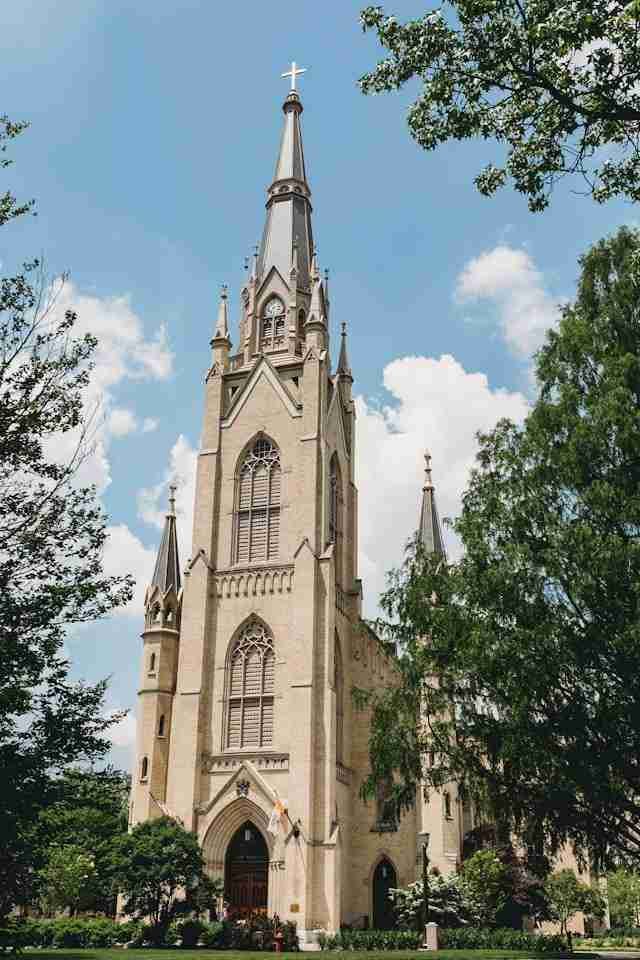
Set at the heart of the University of Notre Dame campus in Indiana, the Basilica of the Sacred Heart rises with quiet precision and strong vertical grace. This 19th-century Catholic church is a study in Gothic Revival design, with pointed arches, richly detailed stained glass, and a steeple that cuts clean into the Midwestern sky. The basilica is not just a space for liturgy but an architectural anchor that defines the spiritual and visual rhythm of the campus. For photographers, it presents opportunities across disciplines including architectural composition, interior low-light work, and outdoor golden hour studies. The surrounding quadrangles, pathways, and seasonal gardens expand the frame, offering natural elements that contrast with the basilica's carved stone and ornate metalwork. The site is still in daily use, which means you will often find human presence woven into the frame in ways that enrich, rather than interrupt, the photographic experience.
Best Photography Opportunities
• Southwest Lawn during Golden Hour
The basilica's steeple and ornate entrance glow during the last hour of daylight, especially when viewed from the southwest lawn near the Main Building. The stone takes on warm tones, and the elongated shadows of trees provide strong compositional foreground interest. Use a 24–70mm lens to balance full-structure shots with detail-rich medium frames. Autumn provides the most color contrast, with leaves catching the low sun as it dips behind the church. Include pedestrians or students in the frame for scale and atmosphere.
• Interior Nave and Ceiling Details
Inside, the basilica's ceiling is an intricate canopy of painted stars, deep blue panels, and golden accents that lead the eye upward. A tripod and a fast wide-angle lens are essential for capturing the full vertical experience. Set up just behind the last pew to frame the full length of the nave, with strong leading lines created by columns and chandeliers. Midday, when ambient light filters strongest through the stained glass, provides ideal conditions without needing to boost ISO too high. Focus stacking may be necessary for complete sharpness in high-resolution work.
• Rear Exterior Archway and Brick Patterns
Behind the basilica, a small stone arch and garden area offer a more intimate composition of curved forms and textural brickwork. Early morning light softens the façade and adds a golden tone to the red and tan stone. Use a 50mm or short telephoto lens to isolate the interplay of masonry and shadow. This is also an excellent spot for abstract studies or detail shots of carved stone and stained-glass windows from the outside. Rainy conditions intensify the saturation of the brick and allow for reflective compositions using puddles or wet stone paths.
• Stained Glass Windows with Interior Glow
The basilica's windows are not only decorative but narratively rich, depicting saints, scholars, and historical Catholic imagery in brilliant color. Use a mid-range zoom to fill the frame with individual panels. Low interior light allows the windows to shine without overexposing, especially during early morning or late afternoon when direct sun angles through the glass. A tripod helps manage long exposures and precise alignment. Look for strong compositional symmetry and repeated color motifs that echo throughout the interior.
• Steeple Framing through the Campus Arches
Several campus buildings feature arched walkways that perfectly frame the basilica's steeple at a distance. These visual corridors are best explored during early evening when directional light from the west strikes the steeple's gold cross and upper masonry. A longer focal length compresses the distance and places architectural layers in conversation. These compositions work well for photographers who enjoy visual storytelling through nested space and architectural alignment.
Best Time to Visit
The basilica photographs well throughout the year, but seasonal light and weather conditions offer specific advantages. In spring, newly leafed trees and clear skies provide soft green framing around the church's neutral stone. Early morning light filters gently through the east-facing stained glass, illuminating interior details with subtle warmth. Summer brings fuller sun and stronger shadows that accentuate architectural depth and linework, especially in midday when the stone's color remains stable.
Autumn is the most dynamic season visually. Trees throughout the quad ignite in deep reds and golds, and angled afternoon light brings the basilica's carvings and reliefs into sharp relief. Late October through early November is ideal for balanced compositions between foliage and stone. Winter strips the trees bare, opening up cleaner architectural sightlines. Snowfall transforms the grounds into a monochrome stage, and the basilica stands out even more vividly against overcast skies or fresh powder. Sunrise and sunset both offer distinct moods depending on the angle of light and the clarity of the sky.
How to Get There
The Basilica of the Sacred Heart is located on the University of Notre Dame's campus in South Bend, Indiana. The campus is accessible via US-31 or the Indiana Toll Road (I-80/90), with clear signage leading to visitor parking areas. Photographers arriving by car can park in the campus visitor lot, from which it is a short walk through tree-lined paths to the basilica. On weekends or during events, parking may be restricted, so checking current visitor guidelines in advance is recommended.
Once on foot, the basilica is easy to navigate around, with paved paths and open lawns offering flexibility for repositioning and scouting angles. There is no entrance fee to visit or photograph the basilica or the surrounding grounds. Photography is allowed inside, but tripods may be restricted during mass or special services. Visitors should remain respectful of the active religious use of the space. Drone use is not permitted over the campus due to university policy and FAA restrictions.
Recommended Photography Gear
A standard zoom lens such as a 24–70mm covers most needs across the basilica, from wide exterior views to moderate detail work inside. A wide-angle lens, ideally between 16–35mm, is critical for working within the nave and capturing the vertical reach of the interior space. A 70–200mm lens is useful for isolating architectural details, stained glass panels, or distant steeple compositions framed through arches.
A sturdy tripod is essential for long exposure work inside the basilica, particularly in low-light conditions or for bracketed shots. A remote shutter or timer will help avoid vibration, especially on polished floors. A polarizing filter can help manage reflections from stained glass and deepen sky tones in exterior work. A lightweight shoulder bag is best for navigating the campus without drawing attention or slowing down your workflow. Always carry a lens cloth, as changing weather conditions can create moisture on gear when moving between inside and outside locations.
Nearby Photography Locations
Just a few steps from the basilica, this quiet stone grotto offers a peaceful location for low-light and candlelit compositions. The layered stone, votive candles, and surrounding trees create an intimate mood, especially in the early morning or after dusk.
Facing directly across the lawn from the basilica, the Main Building features the iconic golden dome and a symmetrical staircase leading to its colonnade. Use this location for wide shots with human scale, or crop in for tight studies of the dome's reflections and architectural details.
Known for the "Touchdown Jesus" mural, this library wall provides a completely different visual language. Strong vertical compositions work well here, especially at sunrise when the mural lights up behind the reflection pool.
• Saint Mary's Lake and Walking Paths
A short walk west of the basilica, this quiet lake offers natural contrast to the structured environment of the church. It is ideal for long exposures, seasonal foliage, or moody early morning landscape shots with mist rising from the water.
Just south of the basilica, this small museum offers a modern backdrop with strong light-shadow dynamics and several photogenic sculptures. It is a good pairing location for architectural photographers seeking compositional variety within a short radius.
The Basilica of the Sacred Heart offers more than symmetry and historic beauty. It is a site where vertical lines meet the arc of faith and where silence, scale, and sacred space combine into a setting that invites attention, patience, and creative interpretation. For photographers working with both structure and light, this church rewards thoughtful observation at every hour of the day and in every season of the year.
Comments
Loading comments…