
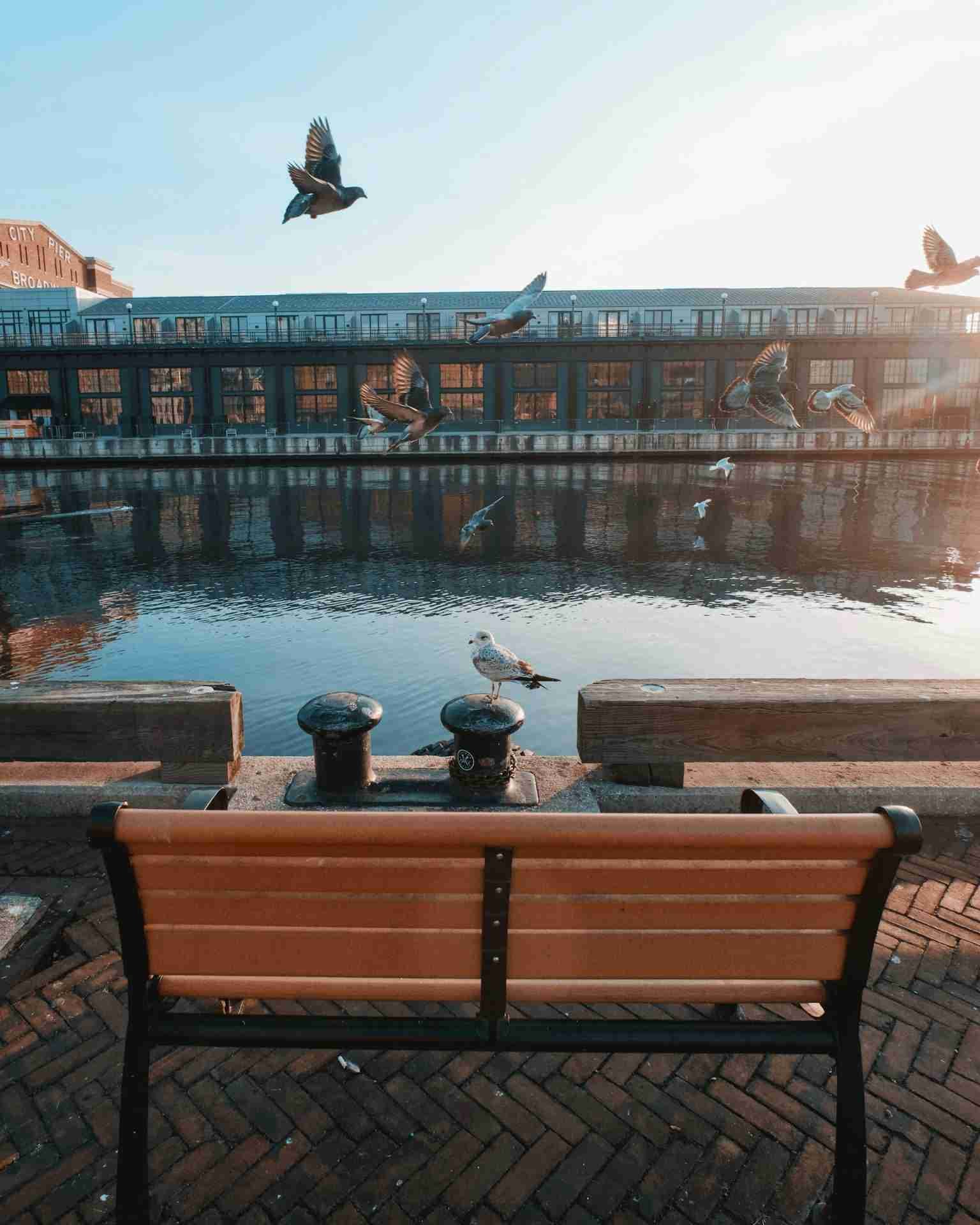
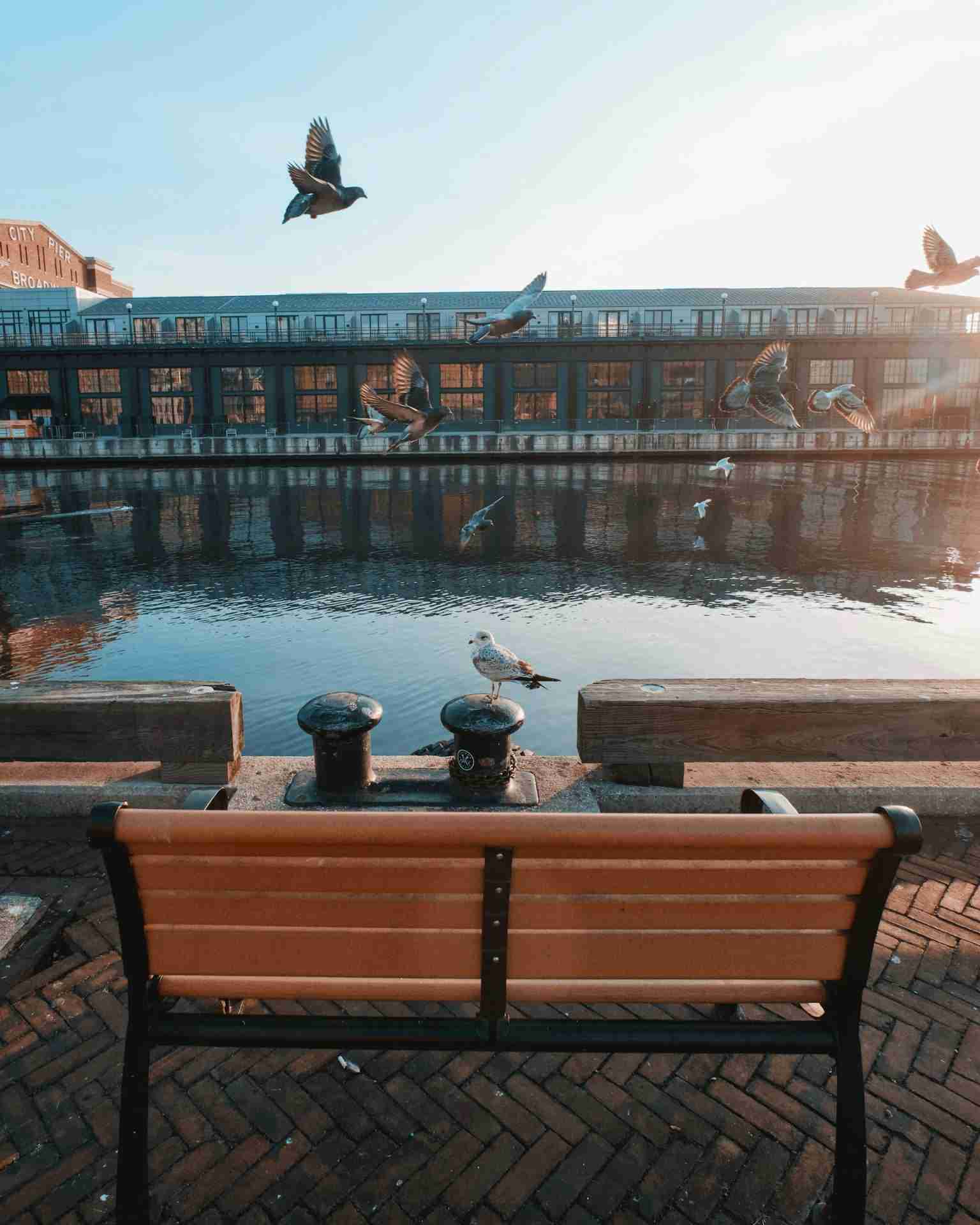
Located at the eastern end of Fells Point, Broadway Pier juts gracefully into Baltimore's historic harbor, offering expansive views of the Patapsco River, sweeping cityscape perspectives, and a quintessential blend of maritime heritage and urban energy. The pier is a visual anchor in one of the city's oldest waterfront neighborhoods—surrounded by cobblestone streets, red-brick row houses, and bobbing boats—making it a versatile spot for photographers interested in cityscapes, waterfront reflections, and golden-hour compositions. Whether you're drawn to wide water vistas or quiet detail shots among the pilings, Broadway Pier provides a scenic and accessible lens into Baltimore's nautical past and present.
Best Photography Opportunities
• Harbor Reflections and Skyline Views
: From the far end of the pier, photographers can frame the harbor's sweep with clear views toward Canton, Tide Point, and the iconic Domino Sugar sign. The water here often reflects the skyline during still conditions, creating a mirror-like effect that lends itself beautifully to long-exposure work. Golden hour adds warmth and dimensionality to the waterfront buildings, while blue hour introduces deep tones that heighten the glow of city lights. This is a perfect spot to capture both minimal, horizon-driven compositions and more layered cityscape images with distant industrial textures adding narrative contrast.
• Pier Geometry and Leading Lines
: The clean symmetry of the pier's planks and the consistent rhythm of lampposts create ideal conditions for strong linear compositions. Use a wide-angle lens to exaggerate these converging lines, drawing the eye toward the horizon or a subject walking into the distance. In the early morning, low raking light adds shadow-play across the surface, enriching the texture of the wood and emphasizing the structure's architectural precision. These kinds of compositions are also well-suited to black-and-white treatments that emphasize contrast and form.
• Boats, Dock Details, and Nautical Textures
: The adjacent slips and floating docks often host sailboats, workboats, and historic water taxis, providing rich subject matter for detail-focused shots. Look for patterns in the rigging, reflections in the hulls, and the interplay of ropes, knots, and cleats along the docks. Close-up work here is most effective during overcast conditions or during the soft light of golden hour, when color tones are warmer and shadows less severe. These elements bring tactile authenticity to any maritime-focused photo series and offer a slower, more deliberate photographic rhythm.
• Golden Hour and City Glow
: As the sun sets behind the city, warm light spills across the surface of the harbor, casting golden reflections on boats, windows, and the surface of the water. The light transitions quickly from amber to blue, providing an extended period for both natural and artificial light blending. Turn your camera inland for glowing facades and brick textures illuminated by the fading sun, or wait until after sunset to capture the subtle transition as street lamps and building lights take over. This is a prime moment for long exposures and tripod-based shooting to preserve the clarity of reflections and slow motion of the water.
• People, Movement, and Candid Life
: Broadway Pier is never static—fishermen cast lines, couples stroll, joggers pass, and children run at the water's edge. These dynamic human moments provide a constant stream of visual opportunities for environmental portraits, silhouette work, or street-style photography with strong spatial context. Shooting toward the light in late afternoon can yield striking rim-lit outlines, while early morning brings quieter, more introspective interactions. Including people in your compositions brings narrative warmth to the urban landscape and offers scale that reinforces the pier's dramatic length.
Best Time to Visit
Broadway Pier is photogenic throughout the year, with each season offering different visual opportunities and atmosphere. In spring, blooming waterfront gardens and clean air contribute to vibrant, color-rich compositions, while autumn brings bold skies and reflections enhanced by cooler, crisp light. Summer, though more crowded, provides long shooting windows and energetic street activity, making it ideal for lifestyle and people-focused photography. Winter transforms the pier into a quieter, more minimalist scene, with stark skies and a subdued urban palette that's well-suited to architectural studies and moody seascapes.
For the most dynamic lighting conditions, sunrise and sunset are ideal. Sunrise often brings calm harbor conditions, warm backlight on the skyline, and fewer visitors—ideal for reflective water and golden tonal range. Sunset offers dramatic light across the city and pier, often followed by a rich blue hour with deep color gradients and glowing city lights. Photographers should also consider weather patterns—foggy mornings or passing summer storms can add atmospheric drama and softness that elevate compositions beyond the ordinary.
How to Get There
Broadway Pier is located at the southern end of Broadway in the Fells Point neighborhood of Baltimore, Maryland. From downtown, it's a short drive or a pleasant walk along the waterfront promenade. Street parking is available nearby, though metered and limited—garage options can be found within a few blocks.
The area is well-served by public transit and also accessible by the Baltimore Water Taxi. The pier itself is open to the public and fully pedestrian-friendly, with ample room to set up tripods or explore different angles without interference.
It's an easy stop for both locals and traveling photographers, with nearby cafes and markets offering refreshment before or after your shoot.
Recommended Gear and Shooting Tips
Bring a wide-angle lens (16–35mm) for skyline views, full pier compositions, and architectural perspectives that include leading lines and surrounding city elements. A mid-range zoom (24–70mm) offers flexibility when moving between landscape views and tighter urban details like signage, brick textures, or dockside scenes. For isolating distant skyline features or compressing elements like boats against the cityscape, a telephoto lens (70–200mm) is invaluable—especially during golden hour when warm light adds dimension.
A tripod is highly recommended for low-light conditions, long exposures, and precision framing. Use a circular polarizer to cut through reflections on the water and deepen skies, particularly useful on bright days with scattered clouds. ND filters (6- or 10-stop) can be used to achieve smooth water effects and slow down movement in crowds or clouds, enhancing the sense of calm even in a busy harbor setting.
Comfortable footwear is essential, as exploring the pier and nearby areas on foot will yield a range of compositions. A lens cloth is also necessary—moisture from harbor breezes and mist can quickly fog filters and front elements, especially in cooler seasons. Always scout the pier from multiple angles before settling on a composition; small changes in position can dramatically alter foreground framing, balance, and alignment of skyline elements.
Nearby Photography Locations
: Just steps from the pier, this historic brick walkway runs along the harbor with views of docked ships, antique lampposts, and preserved 18th-century buildings. It's ideal for golden hour walks, lifestyle portraits, and street scenes that blend maritime heritage with contemporary activity. The reflections off cobblestones after rain or in early morning mist can add subtle drama to your compositions.
: Located to the west of Fells Point, this upscale marina features sleek yachts, modern waterfront architecture, and clean dock lines perfect for high-contrast reflections and minimalist compositions. It's especially dynamic at dusk when glass buildings mirror the softening skyline, and marina lights create layers of warmth on the water's surface.
: This ornate 19th-century structure sits atop one of the city's best natural vantage points, offering panoramic views of Baltimore's skyline from the east. The surrounding park is lush in spring and fall, making it excellent for combining architectural, portrait, and nature photography in one shoot. Visit during golden hour for rich light that cascades across the city from behind the pagoda's intricate silhouette.
: A quiet alternative to the bustling Inner Harbor, this park includes walking trails, fishing piers, and open lawns with clean, direct sightlines toward downtown. It's a strong location for sunrise and early morning mist scenes over the harbor, and the curved concrete walkway makes a great compositional lead-in when framed with long lenses.
• Inner Harbor & Federal Hill Park
: This iconic Baltimore area is a hub for architectural, event, and cityscape photography. From Federal Hill Park's elevated viewpoint, the full arc of the harbor is visible, including the National Aquarium, USS Constellation, and Inner Harbor skyline. Twilight transforms this area into a painterly mix of reflections and light trails, especially when ferries and tour boats begin to move.
Broadway Pier is more than a lookout—it's a photographic platform set at the intersection of history, horizon, and harbor life. Whether you're capturing the quiet geometry of wood and water or the glow of city lights across a dusk-lit skyline, this spot offers a timeless Baltimore view with layers of character and light.
Comments
Loading comments…