
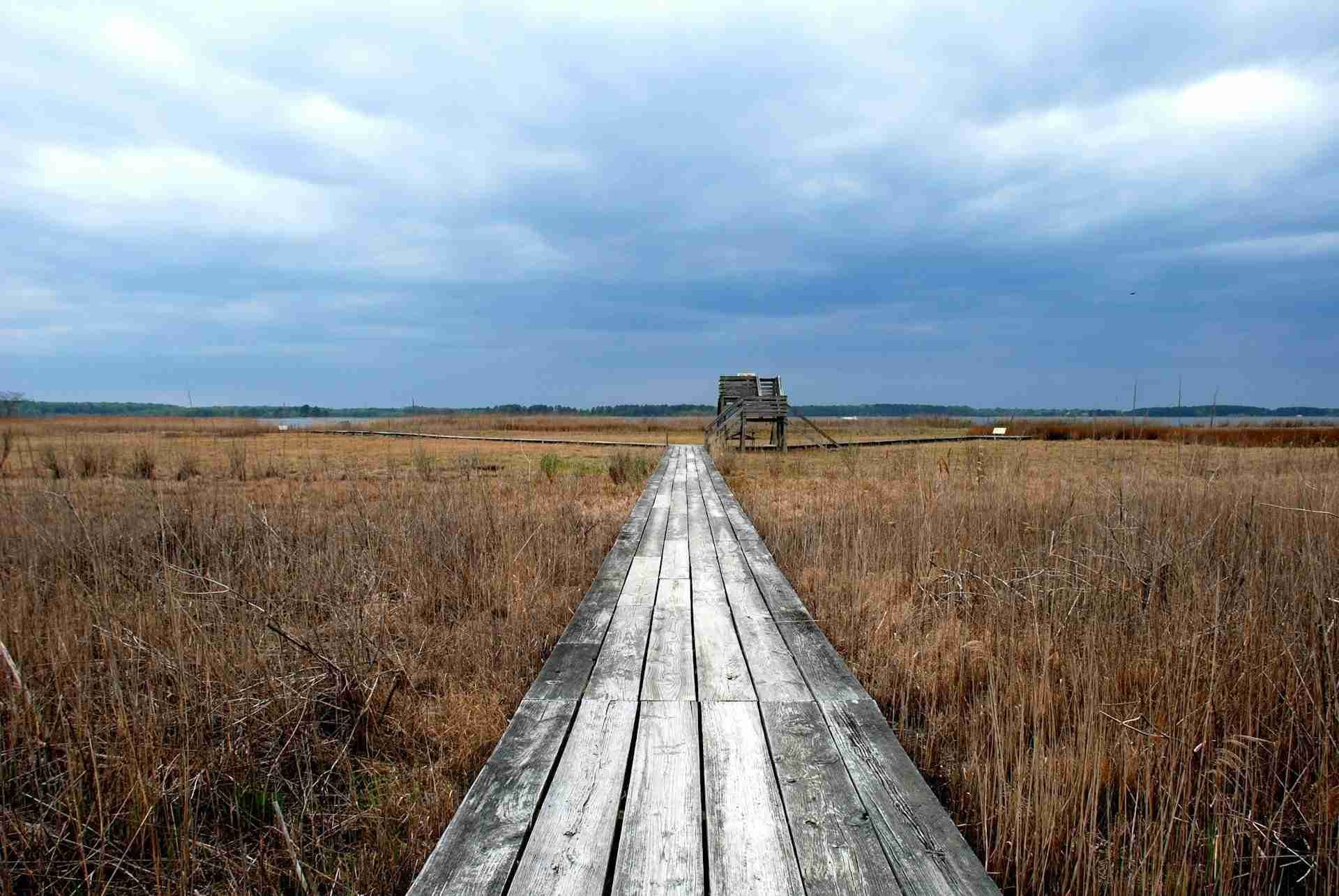
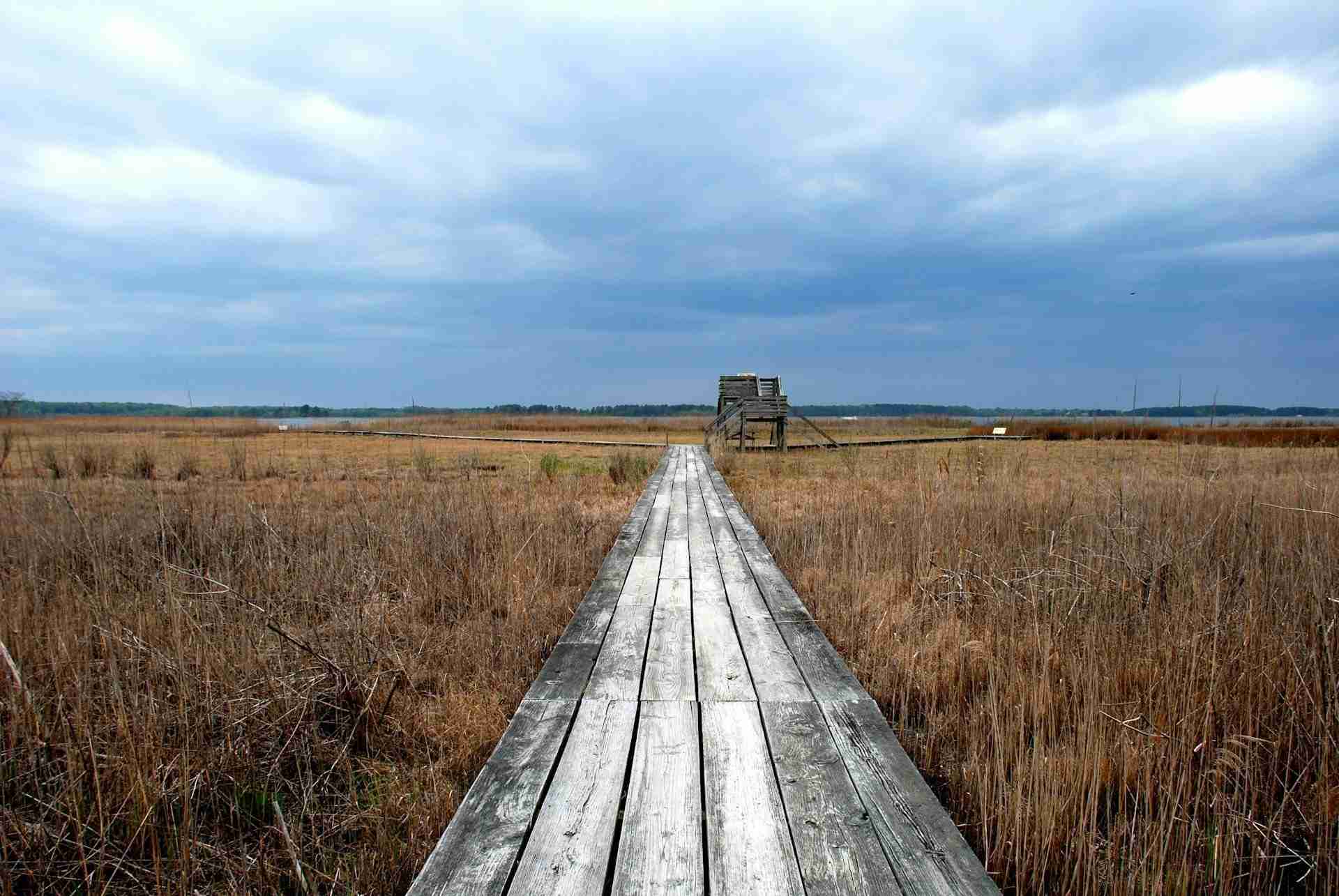
Spread across more than 500 acres of wetlands, woodlands, and tidal shoreline on Maryland's Eastern Shore, the Chesapeake Bay Environmental Center (CBEC) offers an immersive experience into the subtle, layered ecology of the Chesapeake Bay region. Located on Kent Island and bordered by the expansive waters of Prospect Bay, CBEC is a haven for birdwatchers, landscape photographers, and those seeking intimate views of nature's slower rhythms. The well-maintained trails, observation platforms, and kayaking routes offer photographers a wide array of vantage points—ranging from big sky marsh vistas to quiet heron hides tucked between stands of loblolly pine. It's a place where the tide, light, and wind shape the subject matter minute by minute, offering opportunities for everything from wide panoramic landscapes to detail-rich avian studies.
Best Photography Opportunities
• Tidal Marsh Views from the Observation Tower
: The elevated tower overlooking Marshy Creek provides one of the center's most iconic wide-angle scenes. From this high vantage point, you can frame serpentine tidal channels cutting through golden marsh grasses, often with egrets, herons, or even bald eagles passing through the frame. Use a wide-angle lens (16–35mm) to emphasize sky and horizon, particularly during sunrise when pastel tones reflect in the winding water. A polarizer can help cut glare and deepen contrast in skies and wetland surfaces.
• Wading Birds at Low Tide
: During low tide, the mudflats and shallows around the wetlands fill with foraging great blue herons, snowy egrets, and yellowlegs. A telephoto lens (400mm or longer) allows for unobtrusive shots from trail-side platforms or blinds. Look for soft light in the early morning, which highlights feather detail and creates long, elegant reflections in still water. Patience and stillness are rewarded here—many birds will return to their preferred feeding spots if you remain quiet and low.
• Woodland Trails and Seasonal Color
: The wooded sections of CBEC offer a completely different palette. In spring, dogwoods and wildflowers punctuate the shaded trails, while in fall, fiery reds and ochres dominate the understory. A mid-range zoom (24–70mm) is ideal for balancing trail perspective with forest detail. Early morning fog drifting in from the bay adds softness and mood to the canopy. Don't overlook macro opportunities along these paths—fungi, bark texture, and dew-covered spiderwebs offer fine-grained compositions, especially after rain.
• Kayak-Based Perspectives on Prospect Bay
: For those with access to a kayak or paddleboard, the view from the water opens up otherwise unreachable compositions. Framing the marsh from a few inches above water level offers clean lines, strong reflections, and a quiet intimacy that's hard to match. A waterproof camera housing or dry bag is recommended, and a compact telephoto or wide prime (like a 35mm) works well for stable, quick-access shooting. Early evening paddles yield strong golden hour light, and often include encounters with ospreys, terns, and the occasional muskrat or turtle.
• Sunset over the Salt Marsh
: Western-facing views from the dikes and edges of the main trail system provide excellent sunset compositions. The tall grasses, interrupted only by narrow tidal pools and bird silhouettes, glow in warm light and cast long shadows. This is a prime spot for minimalistic compositions—use a 70–200mm lens to flatten layers of grass, water, and sky into abstract forms. Long exposures with ND filters can smooth wind-blown grasses and create dreamy, painterly effects as the light fades.
Best Time to Visit
The Chesapeake Bay Environmental Center offers something to photograph in every season, but spring and fall deliver the richest combinations of birdlife, color, and atmosphere. Spring brings migratory songbirds and the earliest waders, while fall draws raptors, waterfowl, and expansive flocks of shorebirds to the mudflats and marshes.
Early morning is the most productive time for both light and wildlife. As the sun rises over the water, soft backlighting enhances feather texture, and mist often hangs over the creeks and meadows. Afternoon light can be excellent as well, particularly for west-facing views across the marsh, but mid-day conditions are generally harsh and better suited for macro or shaded trail photography.
Tide timing is also critical. Low tide exposes feeding flats and increases bird activity, while high tide offers better reflections and wider water coverage for landscape compositions. Check tide charts before your visit and plan your gear and shooting style accordingly.
Winter brings stark minimalism—bare trees, ice-fringed creeks, and overwintering ducks and hawks—ideal for monochrome work and quiet environmental storytelling. The trails are open year-round, though snow and ice may affect accessibility in colder months.
How to Get There
CBEC is located at 600 Discovery Lane in Grasonville, Maryland, on Kent Island. From the Chesapeake Bay Bridge, take US-50 East and exit onto MD-8 South toward Romancoke. Turn left on Pier One Road, right on Piney Narrows Road, then left again on Discovery Lane. Clear signage leads directly to the entrance and visitor center, where free parking is available.
The site includes more than four miles of walking trails, a kayak launch, and several strategically placed observation decks. Trail maps are available at the visitor center, and most paths are flat, well-maintained, and accessible. Some boardwalks and wetland crossings may be muddy or flooded after heavy rain—waterproof footwear is recommended. Tripods are permitted throughout the property, though users should avoid blocking trail access or disrupting wildlife behavior. There is a small entrance fee for visitors, but members and photographers participating in workshops often receive reduced or waived admission.
Recommended Gear and Shooting Tips
A telephoto lens (400mm or longer) is indispensable for bird photography at CBEC. Waders and waterfowl remain skittish even in high-traffic zones, so distance is key. A wide-angle lens (16–35mm) allows for expansive marsh and sky compositions, while a mid-range zoom (24–70mm) is your go-to for trails, kayaks, and transitional scenes.
A sturdy tripod is useful for long exposures and low-light work from observation decks or during sunrise and sunset. For bird-in-flight photography, a gimbal head or monopod adds maneuverability without excess weight. Bring plenty of memory cards and spare batteries—there are no charging stations once you're out on the trails.
Neutral density filters (6- or 10-stop) expand creative options for long exposure marsh work, especially when capturing cloud movement or wind patterns in the grass. A polarizer is useful for cutting glare on water surfaces, but can reduce contrast in flatter mid-day conditions.
Most importantly, plan to slow down. CBEC rewards those who observe and wait. Settle into one spot, anticipate bird behavior, and let the subtle rhythms of the wetlands guide your frame. The longer you stay, the more you'll notice—light shifting through reeds, a heron lifting its wings, or a reflection forming at just the right angle.
Nearby Photography Locations
: Located just north of the Chesapeake Bay Bridge, this park offers sweeping views of the Bay, often with the bridge itself as a dramatic backdrop. The marshy shorelines and oyster shell paths provide strong foregrounds for sunset compositions, and the open fields attract raptors and migrating butterflies during the shoulder seasons.
: About an hour south, Blackwater is one of the East Coast's premier birding destinations. Bald eagles, great egrets, and snow geese gather here in large numbers, particularly during fall and winter. The auto trail and numerous pull-offs allow photographers to shoot from the car or on foot, with excellent light over expansive marshland.
: A quieter alternative to Blackwater, Wye Island offers old-growth hardwood forest, tidal wetlands, and open meadows with frequent deer and fox sightings. The early morning light filters beautifully through the oak canopy, and the shoreline is ideal for moody landscape work and sunrise reflections.
: Further inland, Tuckahoe provides wooded trails, a calm lake, and dense spring greenery. It's a strong location for woodland birds, fungi macro photography, and moody overcast compositions along the stream-fed wetlands. In autumn, the dense forest glows with gold and crimson under diffuse light.
: Across the Bay Bridge on the western shore, this park offers sweeping views of the bridge and bay, often with colorful sunrises and strong backlight for silhouettes. It's an ideal spot for minimalist waterfront compositions or early morning fishing boat scenes.
The Chesapeake Bay Environmental Center is more than a refuge for wildlife—it's a retreat for the photographic eye. With its quiet marshes, shifting skies, and intimate trails, it offers a setting where patience meets possibility, and where each tide brings a new frame worth chasing. Whether you're tracking the silhouette of a heron through fog or capturing the blaze of reeds in golden light, this is a place that lets the landscape breathe—and gives your camera room to do the same.
Comments
Loading comments…