
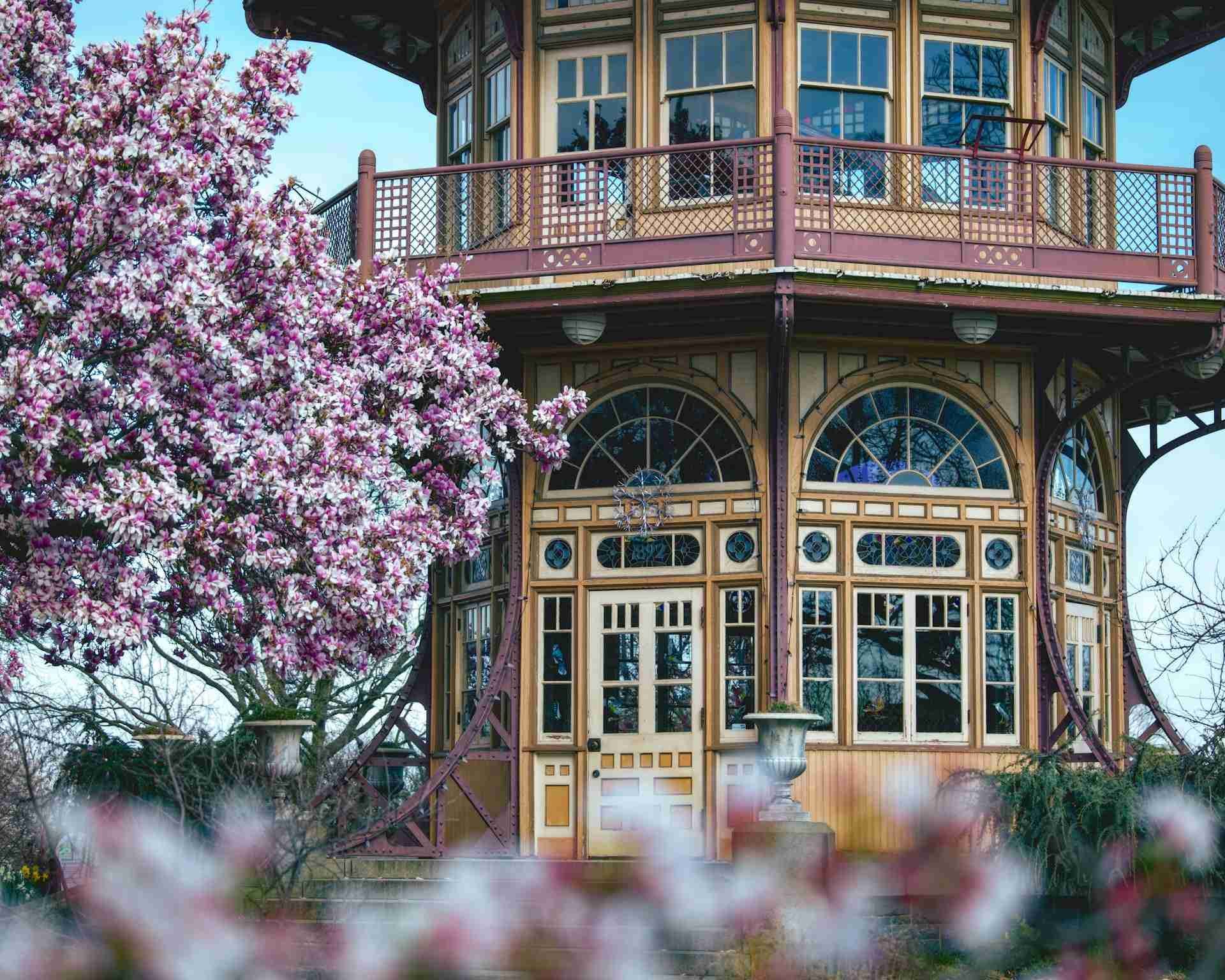
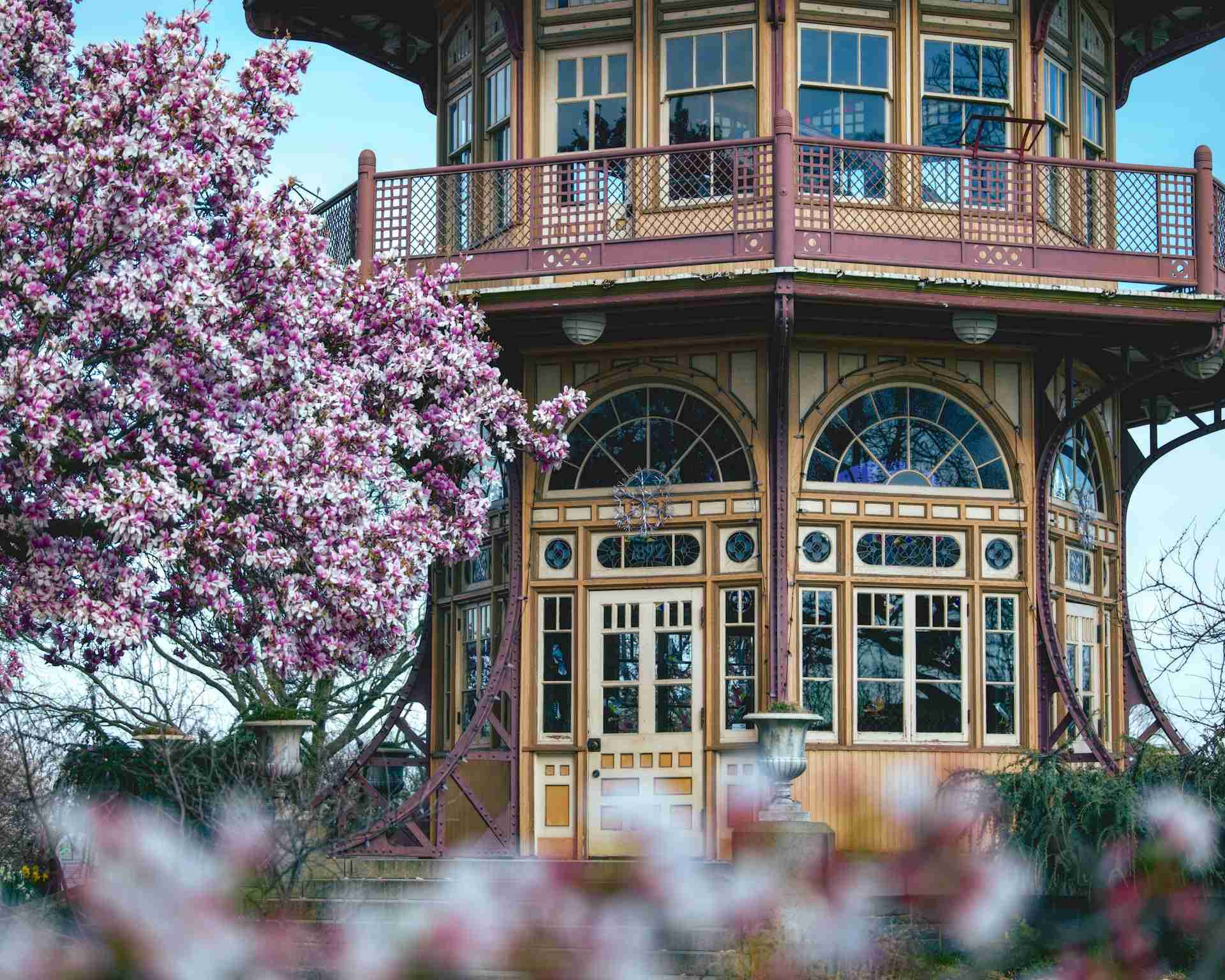
Standing four stories tall atop a gentle hill, the Patterson Park Observatory is a Victorian-era structure that rises unexpectedly above the treetops of East Baltimore. Built in 1891 and surrounded by lawns, winding paths, and city views, the Observatory is both an architectural gem and a surprisingly versatile photographic subject. Its octagonal shape, wraparound balconies, and cast-iron detailing offer strong geometric lines, especially when paired with natural elements like trees, clouds, or evening light. This location blends urban texture with elevated perspective, offering photographers the chance to shoot architectural close-ups, skyline backdrops, seasonal colors, and quiet moments at the heart of one of Baltimore's oldest public parks.
Best Photography Opportunities
• Golden Hour Skyline Framing
The Observatory offers one of the best elevated sightlines toward Baltimore's skyline without leaving the ground. During golden hour, the city's high-rises catch the last warm light of the day, and the view from the hill allows you to incorporate the Observatory's shape into a wider cityscape composition. Shooting from the southwest side of the park gives you a natural slope downward with the tower at mid-frame and the skyline rising beyond. A longer lens compresses the scene and emphasizes the layering of historic and modern architecture. Light cloud cover enhances color transitions in the sky, and tree silhouettes help frame the structure cleanly against the horizon.
• Reflected Detail After Rain
On rainy or misty days, the Observatory becomes a more contemplative subject, with glistening paths and puddles that offer reflection-based compositions. The octagonal base and balconies reflect well in shallow water, and using a low camera angle helps exaggerate this effect. A wide aperture can isolate texture in the stone or railings while softening the reflective surface, or a deeper depth of field can sharpen both structure and reflection for a symmetrical look. Rain also deepens color in the brick and ironwork, giving the Observatory added richness under overcast light. Early morning after an overnight rain is often the best time to find still puddles and soft cloud cover.
• Spring Bloom and Architectural Contrast
In April and May, flowering trees and fresh grass surround the Observatory with soft color that contrasts well with its rigid lines and dark trim. Cherry blossoms and magnolias near the lower path can be framed in the foreground, with the tower rising behind, offering both depth and a mix of color and structure. These scenes work especially well with a 35mm or 50mm lens, which maintains spatial accuracy without distortion. Late afternoon sunlight filtering through the new leaves adds dimension and subtle backlight to the trees, making this one of the most rewarding times for balanced, layered compositions. Including pedestrians or cyclists can also add movement and a lived-in quality.
• Twilight and Interior Glow
When the Observatory is lit from within or nearby park lights turn on, twilight becomes one of the best times to photograph its structure. The contrast between the warm interior light and the cool blue of the sky provides a cinematic quality, especially when shooting from slightly below the base to emphasize vertical lines. Long exposures at this time smooth foot traffic and reveal light trails from passing bikes or joggers. A tripod is necessary, but the pathways surrounding the Observatory offer multiple solid positions without interruption. The layered rooflines, finials, and balcony railings all hold visual interest under low light, making this time ideal for black-and-white studies or moody color work.
• Autumn Leaves and Foreground Texture
In October and early November, the lawn and trees around the Observatory transform into a palette of amber, red, and gold. Fallen leaves create excellent foreground texture, especially when composing from low to the ground with the tower rising beyond. A wide-angle lens exaggerates the foreground while keeping the Observatory crisp in the upper third of the frame. Side light at golden hour adds warm highlights and brings out subtle details in both architecture and foliage. Overcast autumn days are equally strong for color saturation, particularly when shooting close-ups of leaf-covered steps, railings, or framing the tower through bare tree limbs.
Best Time to Visit
The most consistently productive photography at Patterson Park's Observatory occurs during spring and autumn. Spring brings fresh greens, blooming trees, and soft morning light that highlights the contrast between nature and built form. Early daylight hours in April and May offer crisp air, light winds, and minimal foot traffic, allowing time to explore reflections, close-up compositions, and broader landscape setups. These months also bring a clear eastern sky at sunrise, which adds subtle backlighting when shooting from the park's higher western edge.
Autumn transforms the park into a rich, textural scene. The mix of changing leaves, soft afternoon light, and longer shadows makes October especially rewarding. The Observatory's dark framework stands out sharply against the warm tree canopy, and the surrounding paths are often covered in colorful leaves that make for excellent foregrounds.
Summer presents harsher midday light but offers longer golden hours in the evening. The park stays active into twilight, which is ideal for silhouette work and capturing people moving through the space. Winter brings stark light and bare trees, which can make the Observatory feel more exposed and geometric. These months suit black-and-white or minimal compositions and provide strong tonal contrast on sunny days.
Twilight, blue hour, and early morning are all useful times for different moods. Early light from the east illuminates the tower face, while twilight introduces shadow play and color contrast. Weather conditions such as light fog, post-rain cloud breaks, or winter frost each bring their own visual advantages.
How to Get There
The Patterson Park Observatory is located on the western side of Patterson Park in Baltimore, Maryland. The park itself is easily accessible by car, bike, or public transit. If driving, the best access point is along East Lombard Street or East Baltimore Street, both of which have free public parking along their length. The Observatory is near the Pagoda Drive entrance, just off South Patterson Park Avenue.
Baltimore's Charm City Circulator and MTA buses have stops within walking distance of the park's main entrances. Once inside the park, the Observatory is visible from most western entrances and is reachable by paved walking paths with gentle slopes. The climb up the hill is short but gives enough elevation to allow for panoramic views of the city skyline and the harbor in the distance.
There is no admission fee, and the structure is surrounded by open lawn with no fencing or barriers, allowing full access for photographers. Interior access is limited to select public open days organized by the Friends of Patterson Park. For most sessions, exterior shooting offers plenty of creative opportunity at any time of day or year.
Recommended Photography Gear
A flexible photography setup is ideal for the Observatory and its surrounding park environment. A wide-angle lens in the 16–35mm range helps capture the structure against the skyline or pull in surrounding seasonal detail such as flowers, foliage, or puddles. A 24–70mm standard zoom is ideal for midrange work, offering flexibility when moving between distant views and closer architectural framing. For picking out distant skyline elements or compressing tree layers, a 70–200mm telephoto lens is useful, particularly during golden hour when the skyline lights up.
A tripod is important for twilight, blue hour, or long exposure work after dark, especially when shooting reflections or interiors lit by ambient park lights. A circular polarizer helps manage glare off nearby puddles and improves color saturation in foliage or the sky. A 3- or 6-stop neutral density filter is helpful for smoothing movement in cloud or pedestrian flow during the day.
Pack light for ease of movement between paths and lawn areas, but bring a protective rain cover if you're shooting in wet or post-rain conditions. A microfiber cloth is essential for keeping lenses clean when working close to puddles or in light mist. Fast prime lenses in the 35mm or 50mm range are excellent for handheld work and are well suited to low-light architectural studies or shooting during twilight without pushing ISO too far.
Nearby Photography Locations
• Broadway East Historic Rowhomes
On the northwest edge of the park, the surrounding neighborhood features classic Baltimore rowhouses with detailed trim, bright colors, and repeating forms. These are best photographed during afternoon golden hour, when sunlight falls directly across their façades.
• Butchers Hill Overlook
Located just southwest of the park, this elevated residential area offers clean views back toward the park's interior, especially when shooting in the early morning. Narrow brick streets, iron fences, and porch details make it a good spot for quiet urban compositions.
A 20-minute walk from the park, Fells Point offers cobbled streets, old shipyards, and harbor views. It's ideal for twilight and night photography when the water reflects city lights, and works as a strong urban contrast to the greenery of Patterson Park.
• Johns Hopkins Medical Campus Views
To the north of the park, the skyline of the Johns Hopkins Hospital complex provides a contemporary backdrop. From certain points within Patterson Park, you can frame the Observatory with the modern medical buildings rising beyond, highlighting Baltimore's mix of historic and new architecture.
The Observatory at Patterson Park is a location that rewards patience and exploration. With changing light, seasonal variety, and strong architectural character, it serves as both subject and anchor point within the broader fabric of the city. Whether you're looking to frame a wide skyline, capture quiet detail, or experiment with reflective surfaces and twilight mood, the Observatory offers something compelling in every session.
Comments
Loading comments…