

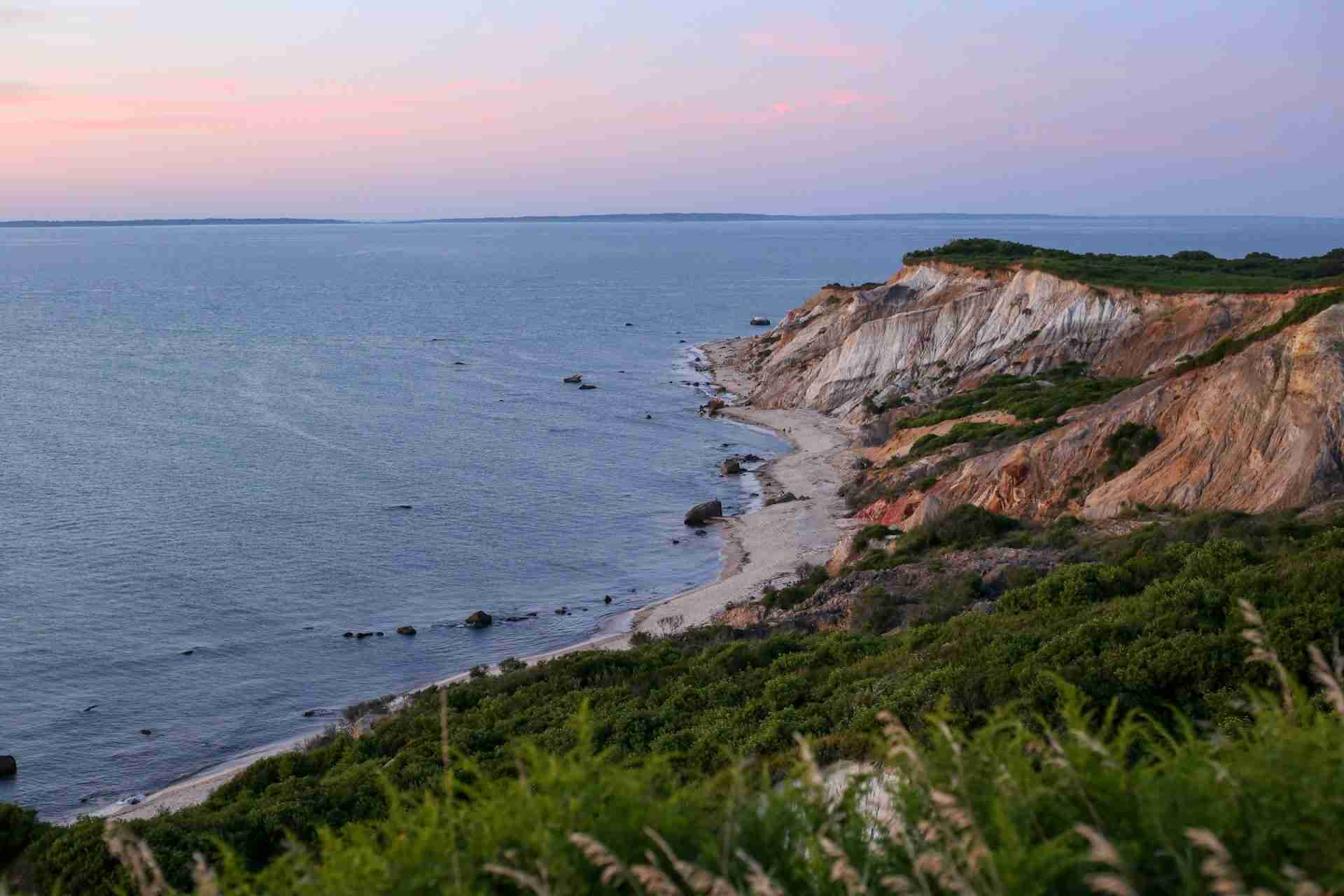
Aquinnah Cliffs Overlook is one of those places on Martha's Vineyard that immediately makes you stop and pull out your camera. The cliffs rise above the Atlantic in bands of red, orange, tan, and white clay, and the view stretches along the coastline in both directions. It's a pretty relaxed place to photograph because the overlook sits right near the lighthouse and parking area, so you don't have to hike or scramble to get great views. What makes the location fun is how many little variations you can find just by walking along the overlook path. The cliffs, beach below, lighthouse nearby, and constantly changing light over the ocean give you plenty to work with.
Best Photography Opportunities
• Layered Cliffs from the Main Overlook
The main viewpoint is the first place most photographers stop, and honestly it's a great place to start. From here you can see the colorful clay layers running down toward the beach, with the Atlantic stretching out behind them. The bands of color in the cliffs create natural horizontal lines that make the composition feel strong and organized. If you shift a few steps left or right along the railing, you'll notice how the shape of the cliffs changes slightly and gives you different compositions. On sunny days the colors really stand out, especially when the sun lights up the face of the cliffs. It's a simple scene, but the colors and textures make it really rewarding to photograph.
• Wide Coastal Views Along the Cliffs
Looking along the coastline rather than straight toward the cliffs can create some beautiful landscape shots. The cliffs stretch away in the distance and gradually blend into the shoreline, which creates a nice sense of scale. This angle works especially well when the ocean has a little movement and waves are rolling toward the beach below. Including a bit of the cliff edge in the foreground can help anchor the image and guide the viewer's eye into the scene. Sometimes the best composition comes from standing slightly back and letting the coastline curve naturally through the frame. It's a great reminder that the view here is just as much about the coastline as it is about the cliffs themselves.
• Drone Views
Drone photography really shows how dramatic these cliffs are. From above you can see the full shape of the clay formations and the way the colors run down toward the narrow beach below. The aerial perspective also reveals how the waves interact with the base of the cliffs and how the coastline bends along the island. This type of image helps tell the bigger story of the landscape rather than focusing on one small section. Calm days often produce the cleanest aerial photos because the water looks smoother and the colors in the cliffs stand out more. Just be sure to check local drone regulations and be respectful of the protected nature of the area.
• Gay Head Lighthouse with the Cliffs
The Gay Head Lighthouse sits just a short walk from the overlook and makes a great subject to combine with the surrounding landscape. From certain spots along the path you can frame the lighthouse with the cliffs or ocean in the background. The lighthouse adds a strong vertical element that contrasts nicely with the horizontal layers of the cliffs. Moving around the area can reveal a few different angles where the lighthouse and coastline work well together. It's worth taking a few minutes to explore the path rather than just photographing it from one spot.
• Sunset Colors
Sunset is when this place really shines. As the sun gets lower, the clay cliffs start to glow with warmer tones and the colors become more pronounced. The ocean often reflects some of that warm light, which helps tie the whole scene together. Even on evenings when the sky doesn't explode with color, the softer light makes the cliffs look great. Photographers usually gather along the overlook around this time, but there's plenty of room to find your own angle. It's one of those spots where it's easy to just stand there for a while and watch the light change.
Best Time to Visit
Late afternoon and sunset are usually the best times to photograph the Aquinnah Cliffs. The sun begins to light the face of the cliffs more directly, which brings out the reds, oranges, and lighter clay tones. The warm evening light also helps soften the overall scene and gives the coastline a really pleasant glow.
Morning can work too, especially if you want fewer people around. The light will be softer and the cliffs may not appear quite as vibrant, but the peaceful atmosphere can make the experience more enjoyable.
Seasonally, summer brings the most visitors to the area. Spring and fall can be especially nice for photography because the weather is still good but the crowds are usually smaller. The cliffs look beautiful year round, but calmer conditions often make it easier to photograph the coastline clearly.
How to Get There
Aquinnah Cliffs Overlook is located in the town of Aquinnah on the western end of Martha's Vineyard. The overlook sits right near the Gay Head Lighthouse, so most visitors simply follow the road signs toward the lighthouse parking area. From the parking lot it's only a short walk to the overlook viewpoints.
There is typically a parking fee during the busy season since the area is managed locally. Parking rules can change depending on the time of year, so it's a good idea to check the posted signs when you arrive. Once parked, the viewpoints are easily reached by walking along the paved paths near the lighthouse.
Because the cliffs are protected, visitors must stay on the designated paths and overlooks. It's important not to climb on the cliffs themselves since they are fragile and constantly eroding.
Recommended Photography Gear
A standard zoom lens in the range of about 24 to 70 millimeters works well for most shots here. This range lets you capture both the cliffs themselves and the wider coastal views without needing to change lenses often.
A telephoto lens around 70 to 200 millimeters can also be useful for isolating sections of the cliffs or compressing the layers of color along the coastline. This can make the patterns in the clay formations stand out more clearly.
A polarizing filter is helpful on sunny days because it deepens the blue tones in the ocean and sky while reducing glare. If you plan to photograph sunset or stay into blue hour, bringing a tripod can help keep your images sharp as the light fades.
Nearby Photography Locations
The lighthouse sits just steps away from the cliff overlook and is one of the most photographed landmarks on Martha's Vineyard. Its red brick tower stands out nicely against the sky and ocean. Because it's so close to the cliffs, it's easy to photograph both locations during the same visit.
Located below the cliffs, Moshup Beach offers a completely different perspective of the colorful clay formations. From the shoreline you can photograph the towering cliffs rising above the sand. The beach also provides great opportunities for wave and shoreline photography.
• Menemsha Harbor
About a fifteen minute drive away, Menemsha Harbor is a small fishing village known for its working waterfront and relaxed atmosphere. Fishing boats, docks, and lobster traps create great subjects for documentary style photography. It's also one of the most popular sunset locations on Martha's Vineyard.
Lobsterville Beach sits on the calmer side of the island and often has peaceful water and open coastal views. The beach stretches along a narrow strip of land and can produce very clean landscape compositions. It's a good place to photograph gentle light over the water.
Driving east from Aquinnah toward Chilmark reveals classic Martha's Vineyard scenery with stone walls, open fields, and winding country roads. These pastoral landscapes provide a quiet contrast to the dramatic coastline at Aquinnah. Photographers who enjoy rural New England scenes will find plenty of opportunities along this stretch of the island.
Comments
Loading comments…