

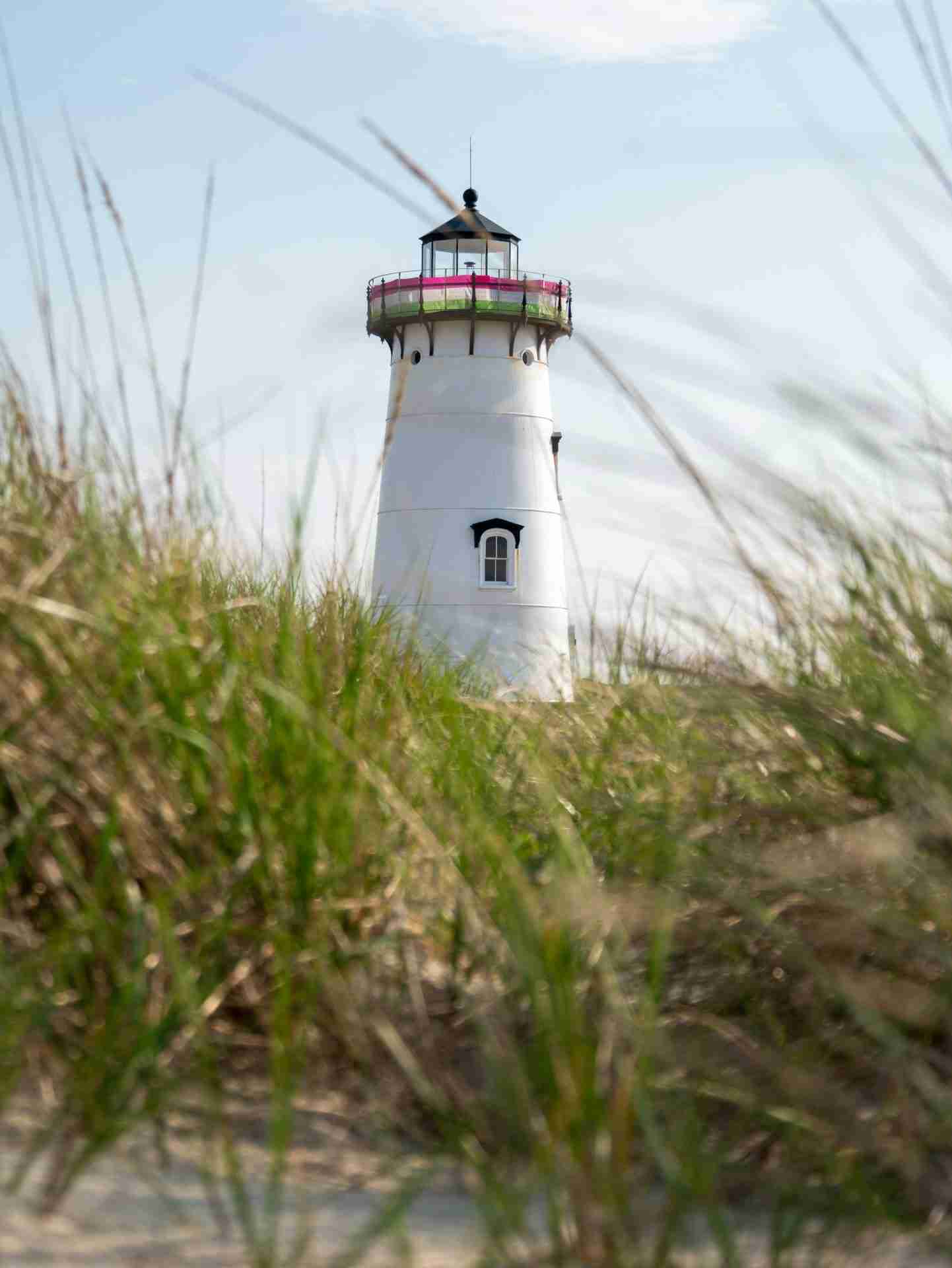
Edgartown Harbor Lighthouse is one of those places that feels instantly recognizable the moment you see it. Sitting at the edge of a sandy beach where Edgartown Harbor meets the open water, the lighthouse stands as a clean white landmark against the sky and sea. It is not a towering structure like some coastal lighthouses, but its simple design and scenic setting make it a favorite stop for photographers visiting Martha's Vineyard. What makes this location especially enjoyable to shoot is how accessible everything is. You can walk right up to the lighthouse, move around the beach to experiment with angles, and easily include the harbor, boats, or shoreline in your compositions. It is the kind of spot where you can take your time and try different ideas without feeling rushed.
Best Photography Opportunities
• Classic Lighthouse and Harbor Composition
The most recognizable photo here places the lighthouse as the main subject with Edgartown Harbor stretching out behind it. From the beach area just in front of the lighthouse, you can frame the structure against the water and distant shoreline. The white tower stands out nicely against the blue tones of the harbor, especially on clear days when the sky and water are bright. Including some of the sandy foreground can help anchor the composition and give the image a stronger sense of place. Boats passing through the harbor can add an extra element of interest without distracting from the lighthouse itself. It is a simple composition, but it works well because the scene is clean and uncluttered.
• Beach Foreground with Lighthouse Backdrop
Because the lighthouse sits right beside a stretch of sand, the beach itself becomes a useful foreground element. Footprints, textured sand, or small beach grasses can add depth and lead the viewer's eye toward the lighthouse in the distance. This approach works especially well when the tide is low and the beach opens up a bit more. The gentle slope of the shoreline can help guide the composition toward the tower. Photographers can experiment with both horizontal and vertical framing depending on how much of the beach they want to include. It is a great way to make the lighthouse feel connected to the coastal landscape rather than isolated.
• Drone Views over the Harbor Entrance
Drone photography can show how the lighthouse sits at the entrance to Edgartown Harbor. From above, the surrounding beach, harbor waters, and nearby boats create a much broader scene than what you see from ground level. The aerial perspective also reveals the curved shoreline and how the lighthouse marks the edge of the harbor channel. This kind of view helps tell the story of the lighthouse as a navigational landmark rather than just a standalone structure. Calm water conditions can make the aerial scene look especially clean and peaceful. Always check local drone regulations and be mindful of other visitors along the beach.
• Sunset Silhouettes
Sunset can be a beautiful time to photograph the lighthouse, especially when the sky begins to change color over the harbor. The tower often becomes a dark silhouette against warm orange and pink tones in the sky. Even when the colors are subtle, the soft evening light adds a calm mood to the scene. Photographers can move along the beach to adjust how the lighthouse lines up with the horizon and the setting sun. The changing light during this time of day can produce several different looks within a short period of time. It is often worth staying through the entire sunset to see how the colors develop.
• Adding People for a Sense of Scale
Because visitors can walk right up to the lighthouse, including people in the frame can add context and scale. A person walking along the beach or standing near the lighthouse helps show how the structure fits into the landscape. These moments often happen naturally since the lighthouse is a popular place for a stroll or a quick photo stop. The key is waiting for a person to enter the frame in a way that feels balanced within the composition. This approach can make the image feel more like a travel photograph rather than just a landscape.
Best Time to Visit
Early morning is often a great time to photograph Edgartown Harbor Lighthouse. The light is soft and the area tends to be quieter before visitors begin arriving later in the day. Morning light can gently illuminate the lighthouse and create calm reflections in the harbor water.
Late afternoon and sunset are also excellent times to visit. As the sun lowers, warm light spreads across the lighthouse and surrounding beach. The colors of the sky often become more interesting near sunset, which can add a beautiful backdrop behind the tower.
Seasonally, summer brings the most visitors to Martha's Vineyard, which means the lighthouse area can become busy during the middle of the day. Spring and early fall often provide more relaxed conditions while still offering good weather and pleasant light. Winter can be peaceful and atmospheric, though the weather can be more unpredictable.
How to Get There
Edgartown Harbor Lighthouse sits just outside the town of Edgartown on Martha's Vineyard in Massachusetts. The lighthouse is located within Lighthouse Beach, a small public beach area that is easy to reach from downtown Edgartown. From the town center it is only a short drive or bike ride along North Water Street.
Parking is available in the nearby area, though spaces can fill quickly during the busy summer months. Many visitors simply walk or bike from town since the distance is short. Access to the lighthouse grounds and beach is generally free, though seasonal parking rules may apply in the surrounding streets.
Once you arrive, it is only a short walk across the sand to reach the lighthouse. The location is very accessible and does not require any hiking, which makes it easy to explore with camera gear.
Recommended Photography Gear
A standard zoom lens in the range of about 24 to 70 millimeters works well for most compositions at this location. This focal range allows you to capture the lighthouse along with the surrounding harbor and beach without needing to change lenses frequently. A telephoto lens around 70 to 200 millimeters can also be useful for compressing the scene and isolating details such as boats passing behind the lighthouse.
A tripod can be helpful if you plan to photograph sunset or stay into blue hour. Longer exposures can smooth out the water and create a calmer look across the harbor. A polarizing filter can also help deepen the blue tones in the sky and water during bright daylight conditions.
Because the lighthouse is easily accessible from the beach, it is usually best to travel light and bring only the gear you plan to use.
Nearby Photography Locations
South Beach sits along the Atlantic side of Martha's Vineyard and offers a long stretch of open coastline. The wide beach, rolling surf, and changing light create excellent conditions for coastal photography. It is a great place to capture sunrise or dramatic weather moving in from the ocean.
The center of Edgartown is filled with classic New England architecture and quiet streets lined with historic homes. White clapboard houses, gardens, and picket fences provide plenty of charming subjects for photography. Walking through the neighborhood with a camera often reveals small details and compositions around every corner.
Just across the harbor from Edgartown, Chappaquiddick offers a quieter landscape with dunes, beaches, and open coastal scenery. The island feels more remote and provides a very different atmosphere compared to the busy town. Photographers who enjoy natural landscapes will find many opportunities here.
Located on Chappaquiddick Island, Cape Poge Lighthouse stands in a much more remote coastal setting. The surrounding dunes and shoreline give the lighthouse a rugged feel compared to the more accessible Edgartown Harbor Lighthouse. It is a rewarding destination for photographers who enjoy combining lighthouse photography with wild coastal scenery.
Menemsha Harbor is a small fishing village on the western side of Martha's Vineyard known for its working waterfront and colorful fishing boats. The docks, nets, and harbor activity create great opportunities for documentary style photography. It is also one of the most popular sunset spots on the island.
Comments
Loading comments…