
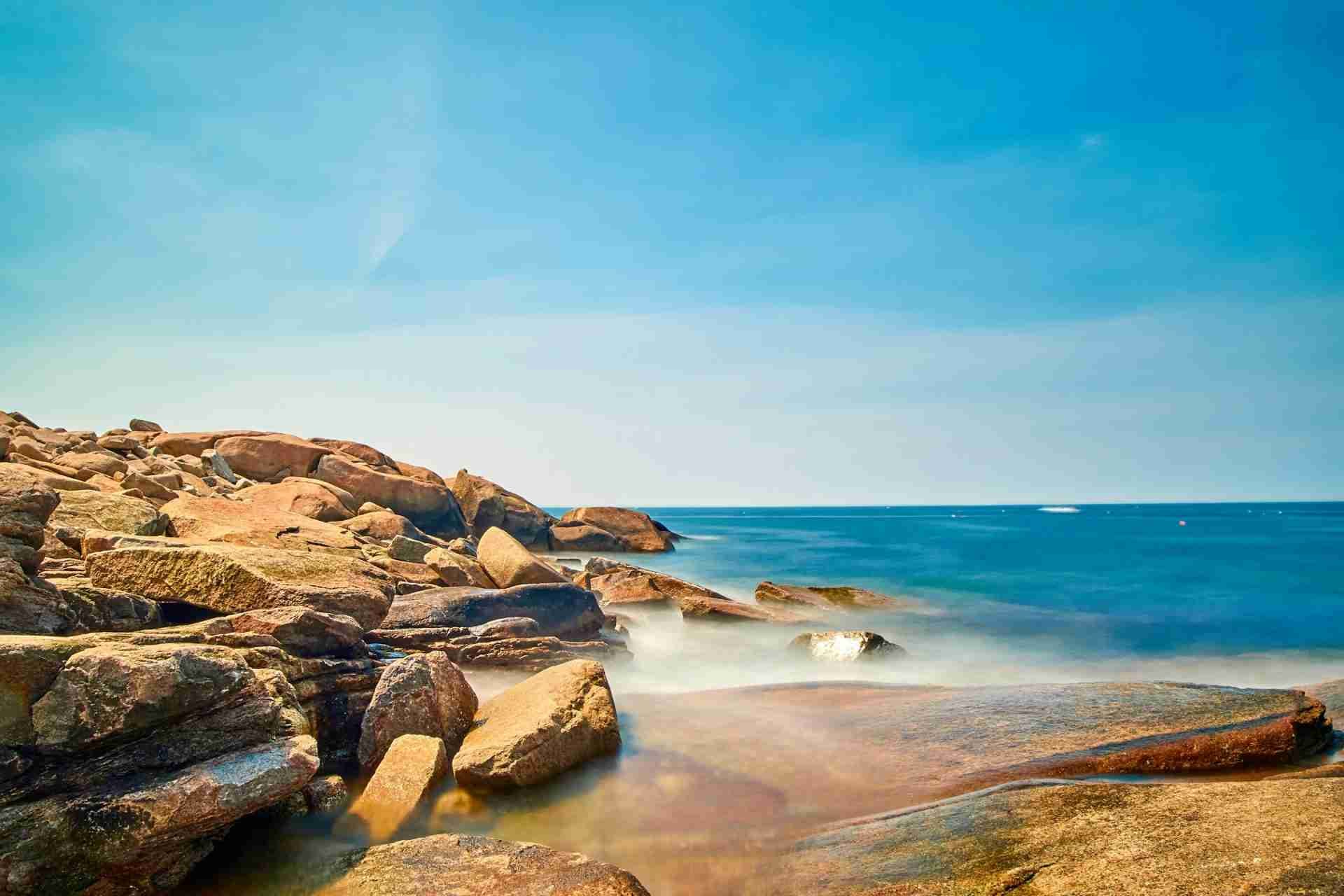
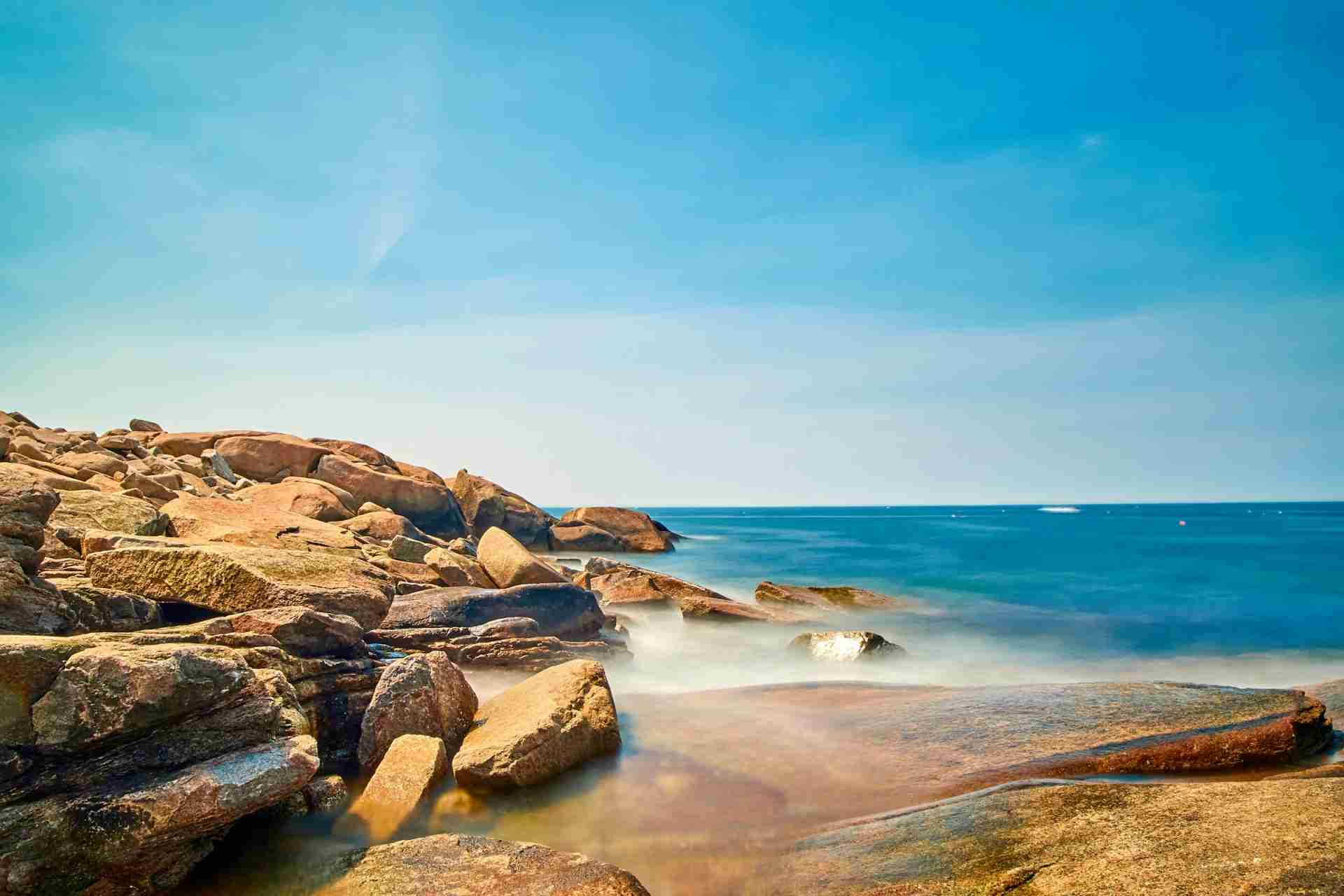
Halibut Point State Park occupies a dramatic stretch of coastline on the outer edge of Cape Ann in Rockport, Massachusetts. What makes this location stand apart is the unique contrast between its industrial past and its present as a windswept coastal preserve. The former granite quarry forms a vast bowl of stone that drops into still water, while only a short walk away the Atlantic pushes against rugged ledges with steady force. The landscape feels open and exposed, with very little to interrupt the horizon, which gives photographers clean lines and expansive skies to work with. Light behaves differently here than in wooded or urban environments. It moves freely across stone surfaces, revealing texture, cracks, and subtle color shifts throughout the day. The park offers both grand scenic compositions and intimate studies of texture, all within a relatively compact and accessible area.
Best Photography Opportunities
• Babson Farm Quarry Overlook –
The quarry is the visual centerpiece of the park. From the upper rim trail, you can create layered compositions that incorporate angular slabs of granite in the foreground, the calm quarry water in the middle ground, and the Atlantic Ocean beyond. The elevation allows you to experiment with depth and scale, especially when small figures along the trail provide a sense of proportion. Early morning light skims across the quarry walls and enhances the natural lines carved by both machinery and erosion. On overcast days, the muted light reduces contrast and allows subtle tones in the stone to come forward, which works well for more restrained, detail focused images.
• Eastern Shoreline Sunrise –
Because the park faces open ocean to the east, sunrise is one of the most dependable shooting windows. As the sun breaks the horizon, warm light washes across the granite and creates strong contrast between illuminated edges and cool shadowed recesses. Low growing plants and grasses near the shoreline can serve as natural framing elements when positioned carefully in the foreground. If clouds are present, the sky often develops layered color that adds depth without overwhelming the composition. The first thirty minutes of daylight are particularly productive, as the light shifts quickly and reveals new textures with each passing moment.
• Rocky Atlantic Ledges for Long Exposure Work –
The exposed granite ledges along the ocean side provide excellent opportunities for capturing wave movement. Incoming swells collide with uneven rock formations, creating patterns of white water that can be shaped through shutter speed choices. A slower exposure will soften the motion of the water and emphasize the solidity of the stone, while a slightly faster shutter preserves texture in the breaking waves. Careful positioning is essential to avoid overly chaotic compositions, so take time to study how the water moves through natural channels in the rock. Shooting during changing tide conditions can dramatically alter the character of the scene, giving you multiple interpretations of the same location.
• Granite Textures –
Beyond sweeping views, Halibut Point offers remarkable close range detail. The granite is fractured, layered, and often patterned with mineral variations that lend themselves to abstract compositions. By isolating small sections of rock and using directional light, you can emphasize texture and line without relying on the broader landscape. Midday light, which is often challenging for traditional landscapes, can actually be useful for highlighting surface detail when shadows fall sharply into cracks and crevices. This approach allows you to build a diverse portfolio from a single visit rather than focusing only on wide scenic frames.
• Winter Conditions –
During colder months, the park takes on a more intense character. Strong winds and heavy surf create dramatic interactions between sea and stone, especially along the outer edges of the trail system. Cloud formations tend to be more defined in winter, adding structure and scale to the sky. With fewer visitors, you have greater freedom to move deliberately and wait for decisive wave action. Cold air often improves visibility, making distant coastal features more distinct and giving telephoto compositions added clarity.
Best Time to Visit
Spring introduces subtle greens and occasional mist rising from the quarry basin, which can add depth to early morning scenes. Summer provides longer days and generally calmer water, though haze can soften distant horizons and reduce contrast. Early morning remains the most reliable time in summer, both for cleaner light and fewer visitors on the trails.
Autumn often brings crisp air and improved visibility, along with more consistent sky color at sunrise. Winter offers some of the most compelling conditions for experienced photographers. The lower angle of the sun extends the window of directional light, which enhances texture across the granite surfaces. Storm systems moving along the coast can generate dramatic cloud structure and energetic surf, but careful planning around weather and tide forecasts is essential for both safety and creative success.
How to Get There
Halibut Point State Park is located in Rockport on the northern end of Cape Ann, Massachusetts. From the greater Boston area, most visitors reach Cape Ann via Route 128 and then follow local roads toward Rockport. Clear signage directs drivers to the state park entrance once you are close to the coastline.
There is a designated parking area near the visitor center, and a parking fee is typically required during the main operating season, though rates and policies can change. From the lot, a network of well maintained trails leads to the quarry and ocean overlooks. The primary loop around the quarry is relatively level and manageable for carrying camera equipment. During peak summer weekends and holidays, the parking area can fill up quickly, so arriving early is strongly recommended for photographers planning sunrise sessions.
Recommended Photography Gear
A stable tripod is essential for working with long exposures along the shoreline and during low light at sunrise. Granite surfaces are uneven, so a tripod with flexible leg positioning will make setup easier. A wide lens is ideal for capturing the full sweep of quarry and ocean in a single frame, while a mid range zoom allows for more selective compositions along the rim trail. A telephoto lens can help isolate wave action or compress distant coastal features when visibility is strong.
Neutral density filters are useful for controlling shutter speed in bright conditions, especially when smoothing moving water. A polarizer can help manage glare on both water and stone, though it should be used thoughtfully to avoid uneven sky tones. Because the park is exposed to wind and sea spray, protective covers for gear are advisable. Extra batteries are also important in colder months, as low temperatures can reduce battery performance.
Nearby Photography Locations
is a compact harbor district filled with working boats, docks, and historic buildings that are easy to locate and access. The harbor provides opportunities for layered compositions that combine boats, reflections, and shoreline structures. Early morning light tends to be soft and directional, which enhances texture in wood and water. This location offers a strong contrast to the raw granite landscape of Halibut Point.
sits directly on Rockport Harbor and is one of the most recognizable structures in the area. The simple geometry of the red fishing shack makes it a strong subject for both tight and wide compositions. Blue hour is particularly effective, as harbor lights begin to reflect in the water and add depth to the scene. Its easily searchable name and central harbor setting make it straightforward to plan around.
offers a wide stretch of sand and tidal flats that differ completely from the rocky terrain of the state park. At low tide, rippled sand and shallow pools create repeating patterns that respond beautifully to soft light. Sunrise and sunset both work well here, depending on cloud cover and seasonal sun position. The open layout makes it easy to experiment with minimalist compositions.
stands along a granite breakwater that extends into the ocean. The long line of the breakwater naturally guides the eye toward the lighthouse, creating strong compositional structure. Morning light illuminates the lighthouse from the ocean side, while unsettled weather can add energy to the surrounding sea. The clearly defined location makes it simple to research access details before visiting.
combines rocky shoreline, small beaches, and elevated viewpoints overlooking Gloucester Harbor. The mix of elements allows photographers to shift between intimate foreground studies and broader harbor views. Sunrise light often grazes the rocks and adds texture, while evening can bring warm tones across the water. Its established public access and central location make it an easy addition to a Cape Ann shooting itinerary.
Comments
Loading comments…