
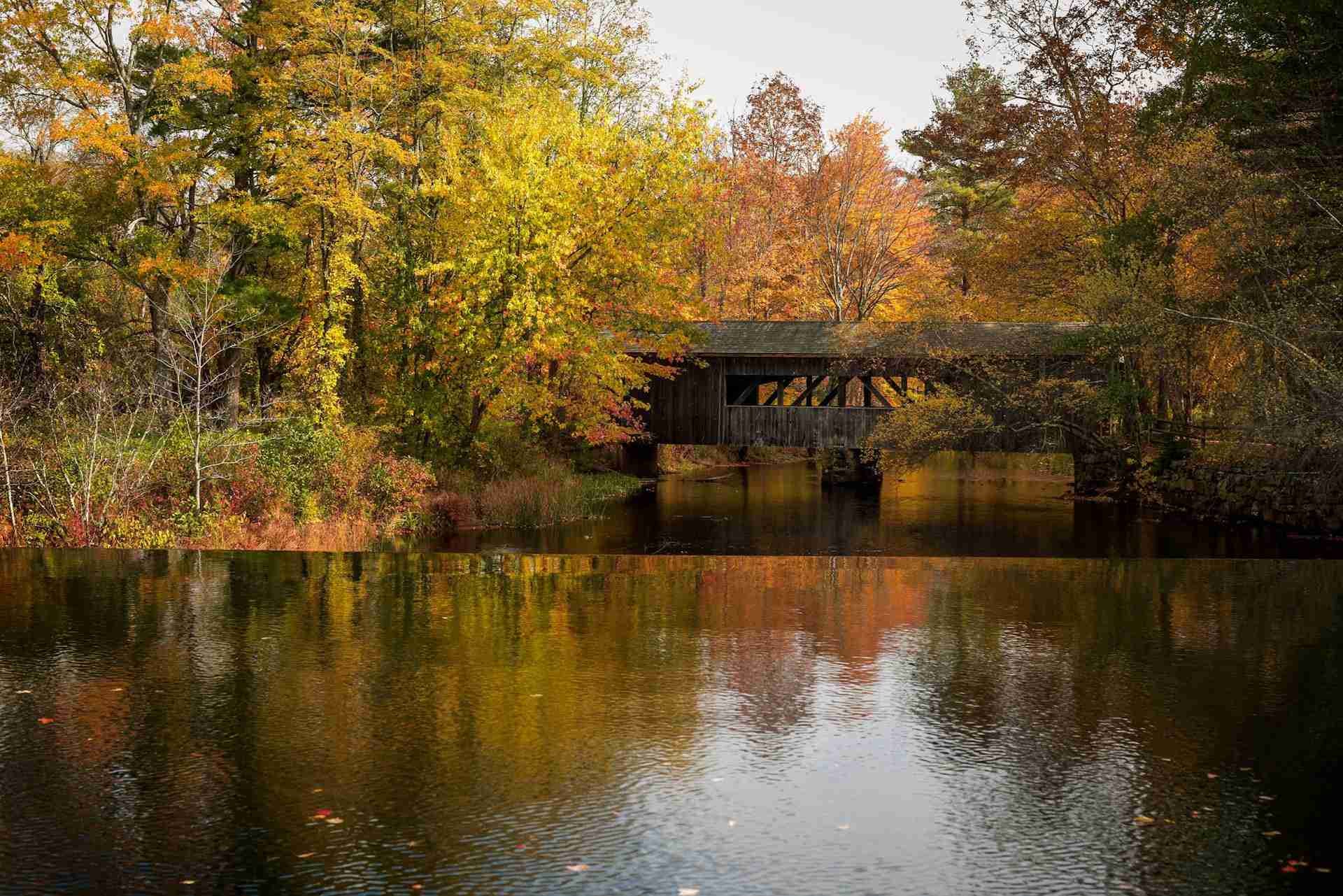
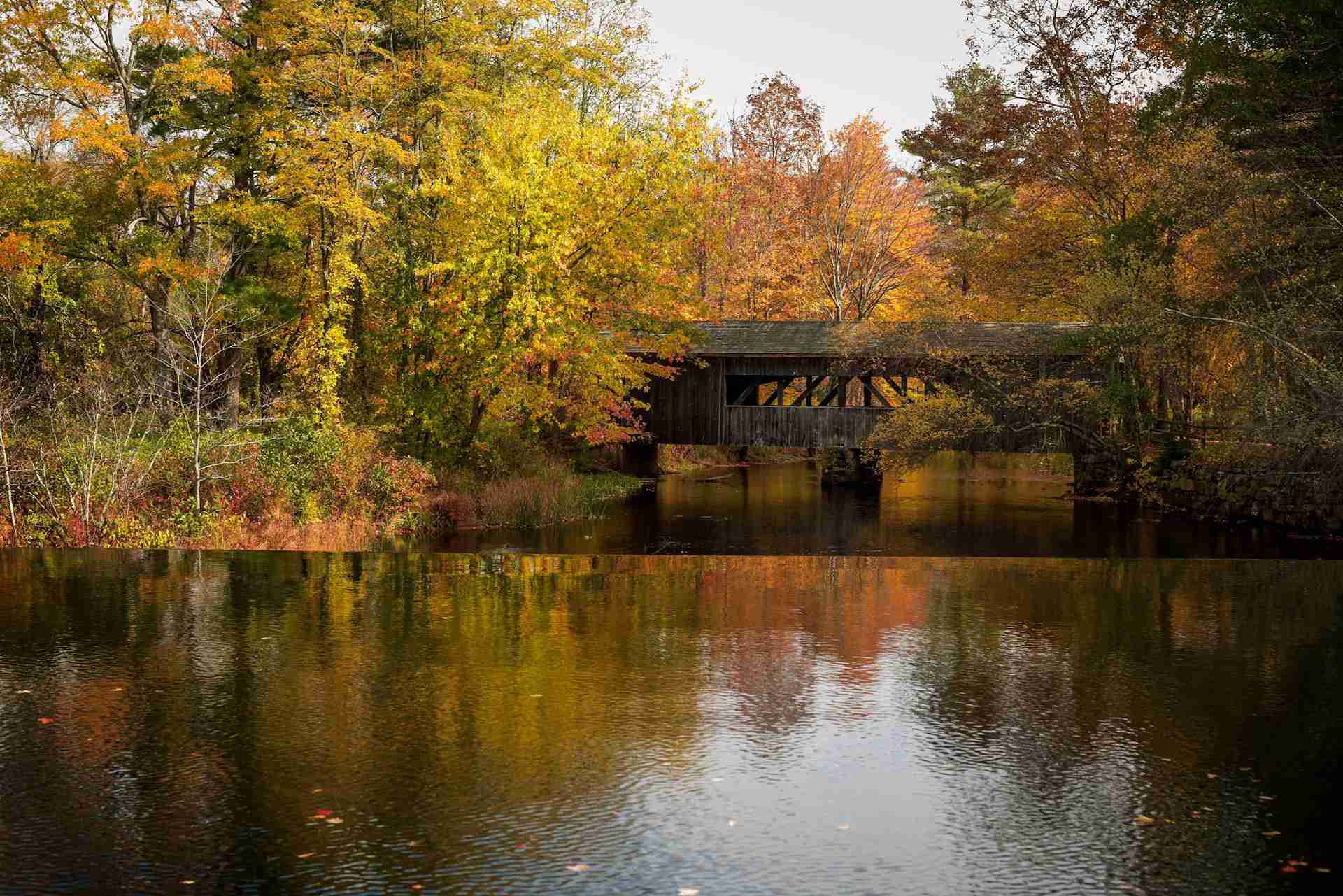
Spanning a quiet section of the Quinebaug River within the grounds of Old Sturbridge Village in Massachusetts, the Historic Covered Bridge is a meticulously crafted replica of 19th-century wooden spans that once dotted the rural New England landscape. Designed with authentic post-and-beam joinery and weathered wooden siding, the bridge is a study in classic American craftsmanship, offering strong geometric lines, warm tones, and timeless subject matter. Its placement over a reflective, slow-moving section of the river allows for layered compositions that blend architecture, water, and the seasonal variation of the surrounding forest. For photographers, it provides a versatile subject that holds up to both wide-angle overviews and detailed studies of wood, structure, and setting.
Best Photography Opportunities
• Frontal Symmetry and Leading Lines
Approaching the bridge from the main village path, photographers can work with a direct, head-on view that emphasizes the triangular geometry of the roof and the converging lines of the entrance. The wooden planks of the approach act as natural leading lines, drawing the eye straight into the frame. This perspective works especially well with a wide-angle lens and a centered composition, providing strong balance and depth. Morning light from behind the camera highlights the texture in the beams, while the shadows inside the bridge create a dramatic transition into darkness. Including people walking through the bridge can add scale and a sense of timeless motion to the shot.
• Reflections in the Quinebaug River
From the southern riverbank, you can frame the full side view of the bridge reflected in the calm, dark waters of the Quinebaug. This view is particularly strong during autumn, when colorful leaves add vivid contrast to the wooden tones. On still mornings, the water becomes a near-perfect mirror, allowing for symmetrical compositions that include both structure and color. A long exposure during low light helps soften the water and enhance the reflection, especially after recent rain. Framing the shot with overhanging branches or foreground grasses adds visual layering and a sense of enclosure.
• Interior Framing and Contrast
Standing inside the bridge creates a natural tunnel that opens onto the surrounding landscape. Shooting outward through the entrance lets you frame scenes of the river or village while using the structure itself as a dark border. The heavy beams above and along the sides offer texture and repeating patterns that contrast sharply with the brightness outside. This setup creates high dynamic range, which is best handled with bracketing or careful metering. On overcast days, the interior remains evenly lit and reveals the detail of the joinery, while during bright conditions, silhouettes of people or objects outside can become dramatic focal points.
• Seasonal Atmosphere and Environmental Detail
The setting around the bridge shifts noticeably with the seasons, offering different moods and compositional elements throughout the year. In autumn, leaves drift along the river and pile at the water's edge, introducing texture and color into the foreground. Winter brings snow that clings to the roof and outlines the structure, simplifying the scene and emphasizing shape over detail. In spring, bright green shoots emerge along the banks, and soft morning fog creates a dreamlike quality. Summer offers dense foliage, strong sunlight, and reflections under full canopy. Each visit reveals subtle changes in light, water level, and vegetation that give fresh context to a familiar subject.
• Detail Studies and Craftsmanship
Close-up photography reveals the craftsmanship of the bridge's wooden components, which are built using traditional techniques. Focus on the intersections of beams, the texture of weathered planks, or the old iron bolts that hold the structure together. These compositions benefit from a shallow depth of field to isolate texture and line. A macro or short telephoto lens lets you explore these details without distortion. Black-and-white conversions can help emphasize grain, wear, and age in the materials. Diffused lighting conditions are best, reducing glare and enhancing surface detail without blowing out highlights in the wood.
Best Time to Visit
Autumn is the most dramatic and colorful season for photographing the bridge, with mid-October usually bringing peak foliage. During this time, the surrounding maples and oaks provide a vibrant backdrop, and fallen leaves collect at the water's edge for added texture. Sunrise and early morning offer calm water and soft light that enhances the warm tones of the wood.
Spring mornings are often misty and cool, creating ethereal compositions with fresh greenery emerging around the riverbank. Summer visits bring lush vegetation and strong light, so plan for early or late golden hour to avoid midday contrast. Winter scenes benefit from snowfall that collects on the roof and railings, adding clean lines and enhancing the bridge's form against the bare trees.
Regardless of season, early morning is the best time to visit to avoid foot traffic, particularly on weekends. The bridge is part of the Old Sturbridge Village grounds, so access depends on operating hours. Visiting during low-tourism weekdays gives you more time and flexibility to compose freely.
How to Get There
Old Sturbridge Village is located in Sturbridge, Massachusetts, just off Interstate 84 and Route 20. The entrance is well-marked and includes on-site parking for visitors. The covered bridge is located within the village's historical grounds, a short walk from the entrance and past the main cluster of historical buildings.
Entry to the bridge area requires admission to Old Sturbridge Village. Tripods are generally allowed, but staff may request they not obstruct walkways during busy times. For photographers planning a serious shoot, contacting the village in advance may help coordinate visits during less crowded hours or before official opening.
The path to the bridge is fully accessible, with wide dirt and gravel walkways suitable for rolling camera bags or carts. Benches and shaded areas nearby make it easy to pause and scout light. There are restrooms, food stands, and shelter throughout the grounds, making it a convenient place to spend several hours working without needing to leave and return.
Recommended Photography Gear
A wide-angle lens between 16 and 35 millimeters is essential for full views of the bridge from both the path and riverbank. A mid-range zoom such as a 24 to 70 millimeter offers the most versatility for interior framing, detail work, and adjusting quickly to changes in light. A short telephoto in the 70 to 105 millimeter range is useful for compressing reflections or isolating elements within the larger structure.
A tripod is strongly recommended, especially for low-light conditions and long exposures on the riverbank. A circular polarizer is helpful for managing reflections off water and wet wood, particularly after rain or in early morning dew. A lens cloth is important for dealing with mist or humidity in cooler seasons.
Since you may be walking throughout the village to scout compositions, a lightweight backpack or shoulder bag with quick access will make it easier to move between locations. Extra batteries and cards are useful for all-day shooting, especially if working through multiple lighting conditions.
Nearby Photography Locations
Just beyond the bridge and Old Sturbridge Village grounds, this river trail offers natural woodland scenes, occasional wildlife, and slow-moving water that supports long exposures and reflection studies. Early morning and late afternoon are best for soft, side lighting.
Located a short drive away, this site offers panoramic views of the river valley, as well as geometric concrete structures, forested hills, and seasonal color. It's especially effective for wide compositions and contrast studies between nature and engineering.
This nearby park includes forest trails, a central pond, and several wooded overlooks. In autumn, the trail edges and pond reflections provide strong complementary scenes to those at the covered bridge, particularly for photographers building a regional portfolio.
• Sturbridge Common and Village Streets
Outside the historical grounds, the town itself includes photogenic storefronts, old churches, and classic New England streetscapes. These work well for tighter street scenes, especially during early morning when the streets are quiet and evenly lit.
A bit farther out, this expansive forest preserve includes trails, streams, and boulder formations that offer more rugged natural compositions. It's a good choice for early morning landscape work, particularly in spring and fall when the forest floor adds texture.
The Historic Quinebaug River Covered Bridge is more than just a well-built replica. It's a photographic anchor that reflects the quiet strength and detail of early American design, made all the more rewarding by the shifting seasonal backdrop and calm river setting. Thoughtful composition, changing light, and close attention to craft will yield meaningful images in every visit.
Comments
Loading comments…