
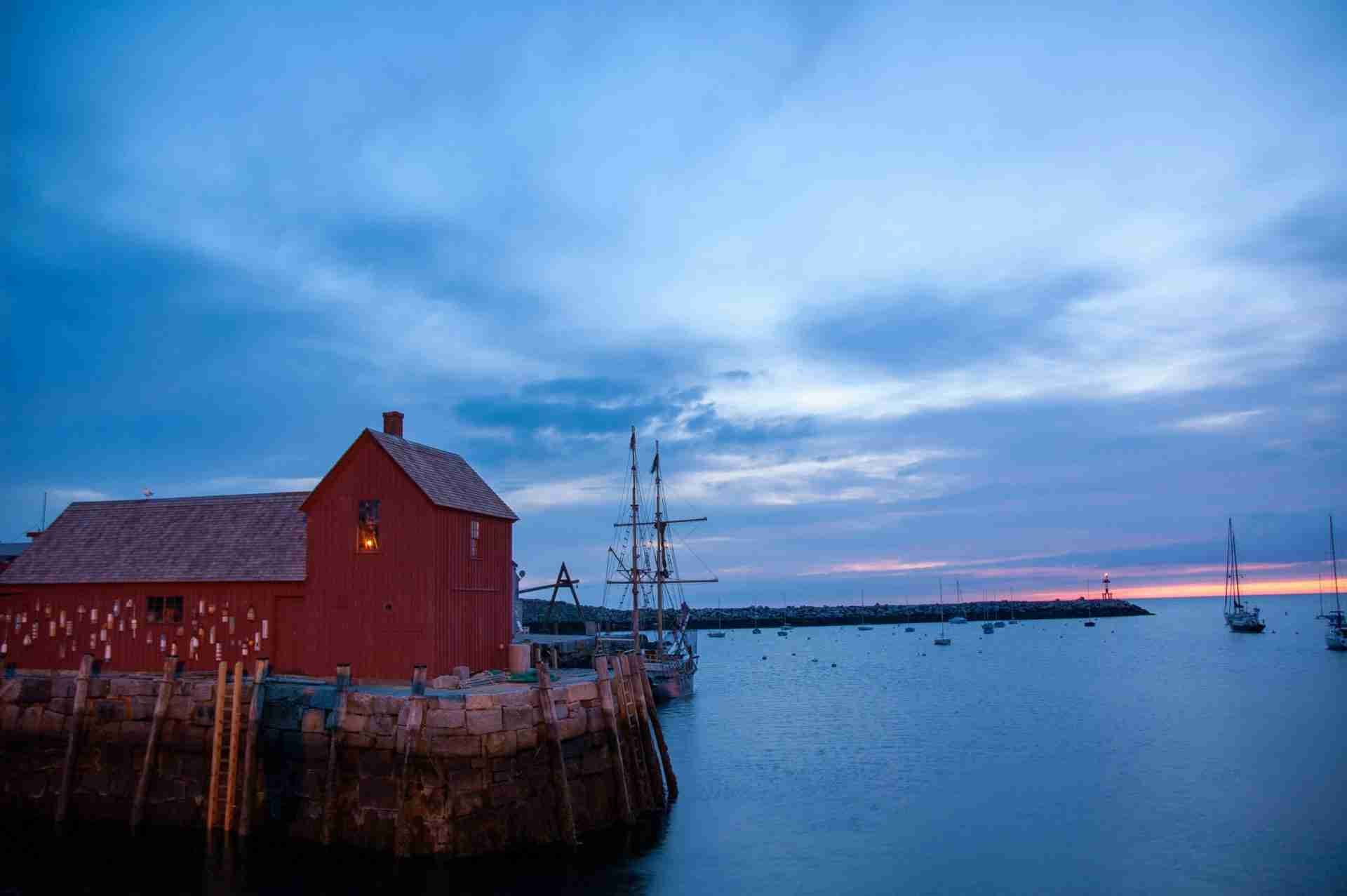
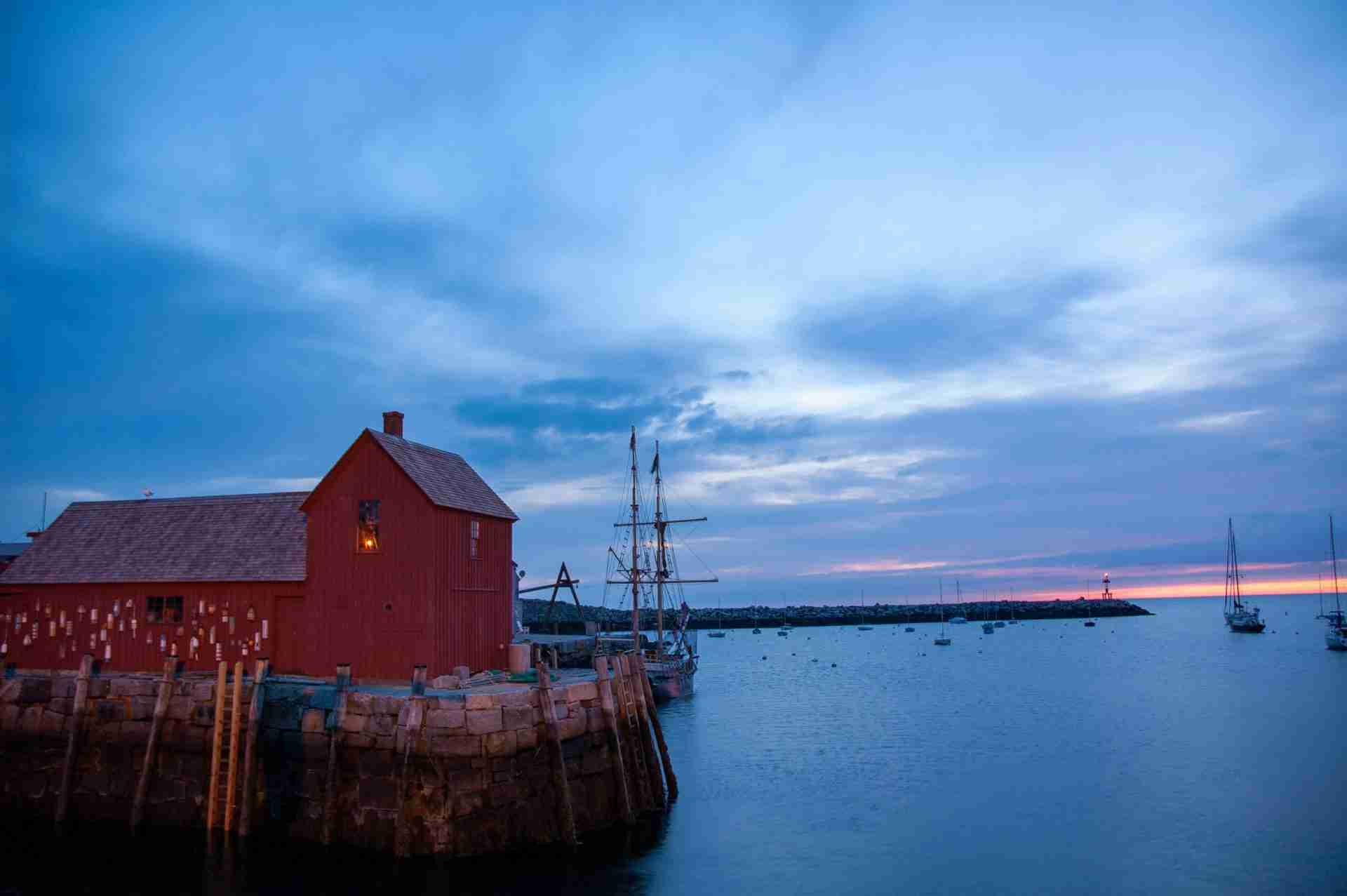
Motif No. 1 sits just off Bradley Wharf in Rockport, Massachusetts, anchored quietly along the edge of Rockport Harbor. Though modest in size, the red fishing shack carries visual weight because of its placement, color, and history within this working waterfront. It stands low against the water, allowing the sky to stretch above it and reflections to gather below, creating natural symmetry that photographers can shape in countless ways. The surrounding harbor is active but not chaotic, with lobster boats, small docks, and weathered buildings adding context without overwhelming the frame. Light moves cleanly across the open water, shifting the mood from soft pastel mornings to saturated evenings and crisp winter afternoons. For experienced photographers, the appeal lies in refining composition within a familiar subject and finding subtle variations through tide, season, and weather rather than relying on novelty.
Best Photography Opportunities
• Classic Harbor Perspective –
The most established composition places Motif No. 1 across the harbor with water dominating the foreground. From Bradley Wharf, you can align the building slightly off center to create balance between structure and open space. Dock posts and mooring lines can be incorporated carefully to frame the scene and guide the eye toward the shack. Calm mornings often provide the cleanest reflections, allowing the red structure to mirror clearly in the harbor surface. Small adjustments in height and lateral position make a noticeable difference in how the background buildings interact with the main subject, so take time to fine tune your vantage point rather than settling for the first obvious angle.
• Blue Hour with Harbor Illumination –
Blue hour is one of the most reliable windows for photographing Motif No. 1 with depth and atmosphere. As the sky darkens, harbor lights begin to glow and reflect in the water, adding warmth against the cool tones of the evening sky. A tripod is essential here to maintain clarity while extending shutter speed. Subtle ripples in the harbor can create painterly reflections that soften the geometry of the building without losing its shape. Managing exposure carefully ensures that highlight detail in the lights is preserved while still revealing texture in the red siding.
• Sunrise Light –
Although the shack faces generally toward the harbor, early morning light can still graze its surfaces depending on the season. During certain times of year, the rising sun casts gentle side light that enhances texture in the wooden planks. The harbor is often quieter at this hour, with fewer boats moving through the frame. Mist or low cloud cover can introduce softness that contrasts nicely with the clean lines of the structure. Shooting during this period allows for a more restrained and controlled interpretation of a frequently photographed subject.
• Telephoto Isolation –
A longer lens offers a different approach by isolating Motif No. 1 from surrounding distractions. By compressing perspective, you can bring distant houses, masts, and harbor elements closer together, creating a layered backdrop behind the shack. This technique works especially well when boats pass behind or beside the building, adding life without overpowering it. Narrowing the frame forces careful attention to alignment and spacing, which is critical when working with strong geometric shapes. This method is particularly effective in clear autumn or winter air when visibility is at its best.
• Winter Simplicity –
In winter, the harbor often feels more open and uncluttered. Fewer boats and visitors create a simpler scene that emphasizes structure and line. Cold air can produce crisp contrast and deeper color saturation, especially when the red siding stands out against a pale sky. Snow along the docks or light frost on nearby surfaces introduces subtle seasonal detail without overwhelming the composition. The lower sun angle during winter months also extends the period of directional light, giving photographers more flexibility throughout the day.
Best Time to Visit
Late spring through early fall offers the most consistent access and active harbor scenes, with boats, reflections, and steady foot traffic adding context. Summer evenings can produce vibrant sunsets, though crowds increase during peak tourist season. Arriving early in the morning during these months helps avoid congestion and often delivers calmer water.
Autumn is often ideal for balanced conditions, with cooler temperatures and clearer air improving overall sharpness. Winter provides a quieter atmosphere and stronger directional light due to the lower sun angle. Blue hour remains one of the most dependable times year round, particularly when skies hold subtle cloud texture. Monitoring tide levels is important, as higher water can enhance reflections while very low tide may expose mud or disrupt symmetry in the harbor.
How to Get There
Motif No. 1 is located along Bradley Wharf in Rockport Harbor on Cape Ann, Massachusetts. Most visitors reach Rockport via Route 128 and then follow local roads into the town center. Once in Rockport, clear signage directs you toward the harbor area and public parking.
Public parking lots are available within walking distance of Bradley Wharf, though availability varies by season. During peak summer months, parking fees are typically required in town managed lots, and spaces can fill quickly. From the parking areas, it is a short walk to the harbor and the wharf where the shack is positioned. The area is pedestrian friendly, making it relatively easy to carry camera equipment, though planning ahead during busy periods is advisable.
Recommended Photography Gear
A sturdy tripod is essential for blue hour and low light work, especially when aiming to capture reflections with longer exposures. A wide lens allows you to include harbor context and sky, while a mid range zoom provides flexibility for adjusting framing without moving constantly along the dock. A telephoto lens is useful for isolating the shack or compressing layers of boats and background buildings.
A polarizer can help manage glare on the water during bright conditions, though it should be rotated carefully to maintain natural reflections. Neutral density filters are helpful if you want to smooth water movement during daylight hours. Because coastal air can be damp and salty, keeping a microfiber cloth on hand for lens cleaning is practical. Extra batteries are recommended during colder months, as lower temperatures can reduce performance.
Nearby Photography Locations
is a former granite quarry that offers expansive ocean views and rugged stone formations. Elevated trails provide sweeping perspectives across the Atlantic, particularly strong at sunrise. The mix of quarry walls and open water expands the visual range of a Cape Ann photography session.
is a narrow peninsula lined with small shops, fishing docks, and harbor views. It provides opportunities for layered street and waterfront compositions within easy walking distance of Bradley Wharf. Early morning light works especially well here, illuminating textures in wood, rope, and boat hulls.
offers wide sandy expanses and tidal flats that respond beautifully to sunrise and sunset light. The open shoreline creates opportunities for minimalist compositions and reflection based images. It serves as a strong contrast to the structured harbor scene in Rockport.
provides strong leading lines and open ocean backdrops. Morning light can illuminate the structure from the sea side, while unsettled weather introduces dynamic skies. The location complements harbor photography with a more exposed coastal perspective.
combines elevated viewpoints with rocky shoreline and small beaches overlooking Gloucester Harbor. It offers flexibility to move between wide scenic compositions and more intimate foreground studies. Its accessible trails and varied terrain make it a practical addition to a North Shore itinerary.
Comments
Loading comments…