
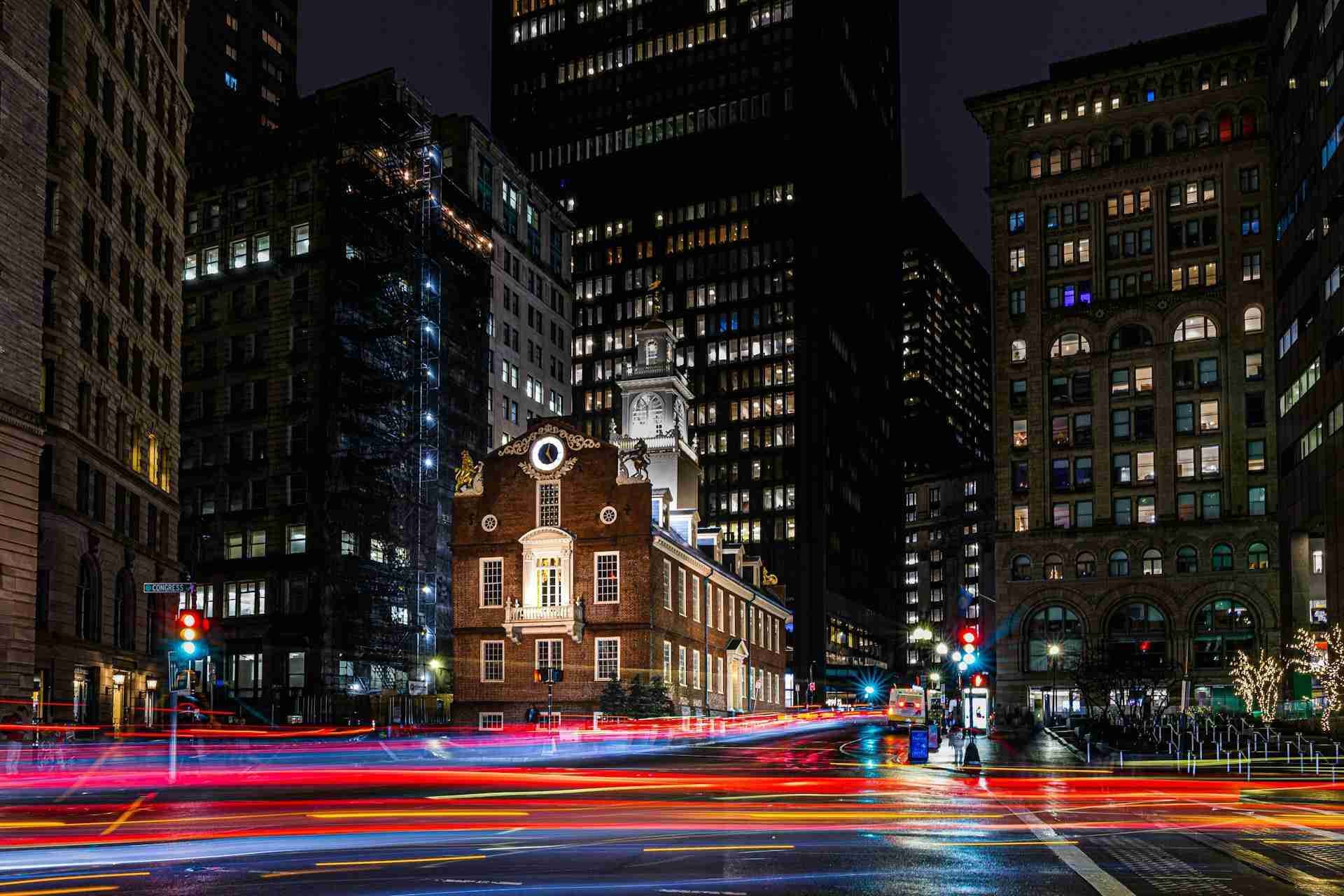
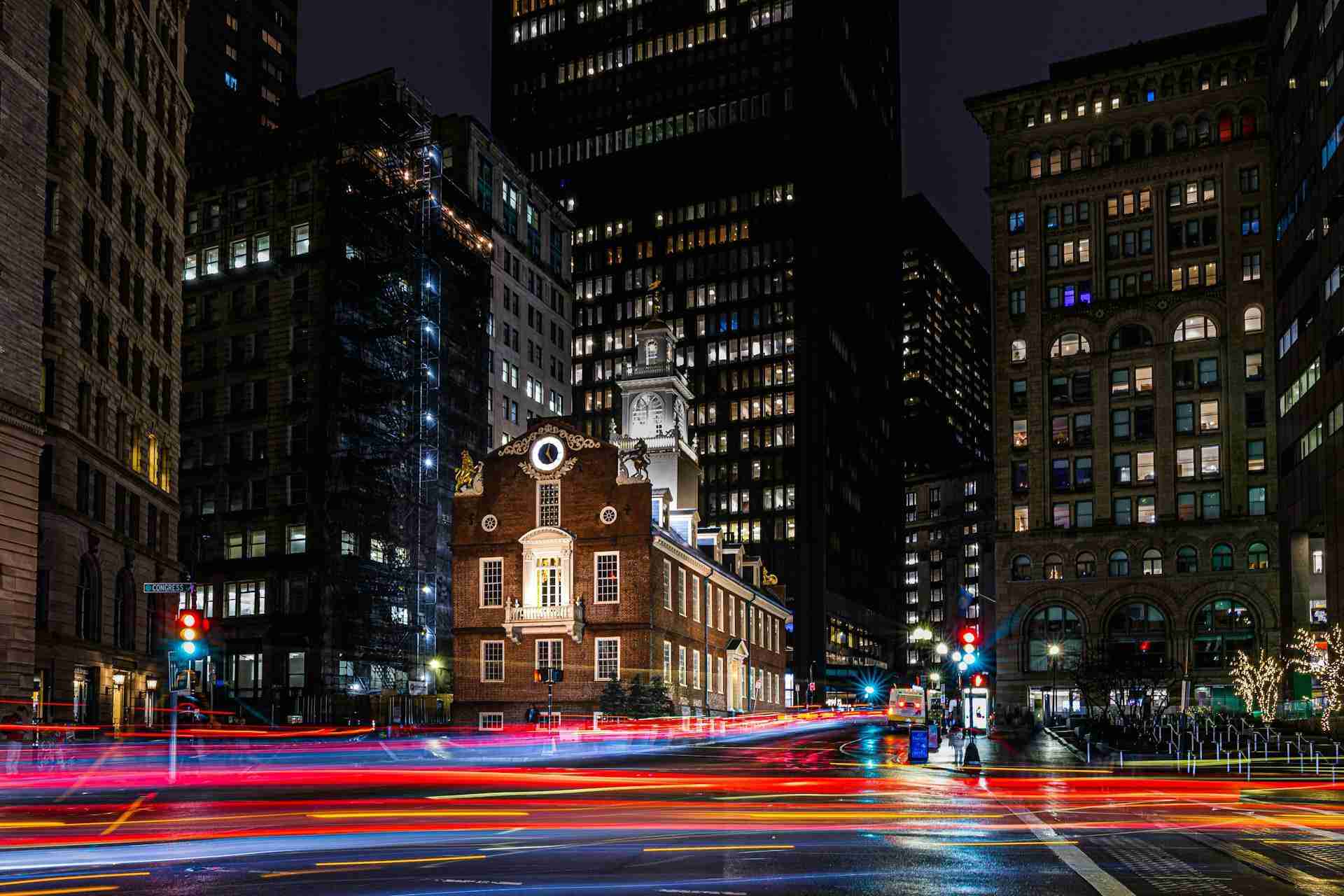
Standing at the intersection of history and modernity, the Old State House is one of Boston's most compelling architectural subjects. Surrounded by glass towers and heavy traffic, this compact colonial building provides a vivid contrast between centuries. Built in 1713, the Old State House was once the seat of British colonial government and later became a symbol of American independence. Today, it sits atop the Freedom Trail and just steps from the Boston Massacre site, making it not only a historical marker but a visual centerpiece for urban photographers. Shooting this location is an exercise in framing, perspective, and timing, with shifting light and reflections offering endless compositional possibilities.
Best Photography Opportunities
• Street-Level Wide Shots from State Street
Standing at the base of State Street offers one of the most balanced views of the Old State House. From this angle, the building is framed tightly between modern skyscrapers, creating a dramatic contrast between the colonial past and Boston's contemporary skyline. Early morning is ideal for these shots when the street is quiet and the eastern light illuminates the brick façade. A wide-angle lens helps to include both the building and its surroundings while emphasizing the height difference between the old and the new. Waiting for a pedestrian or cyclist to pass can add scale and human presence to the frame.
• Details of the Balcony and Gilded Ornaments
The building's eastern façade features a balcony where the Declaration of Independence was read to the public in 1776. Above, the lion and unicorn symbols of the British crown still remain, creating interesting subjects for tighter compositions. A mid-telephoto lens works well here to isolate these details without background distractions. Late afternoon light enhances the textures of the carved wood and gilded metal, casting subtle shadows that define the shapes. Shooting from just below the balcony also offers a strong upward perspective that emphasizes its historical weight.
• Blue Hour and Night Photography from Court Street
Court Street offers a diagonal view of the Old State House that becomes especially photogenic during blue hour. As the surrounding city lights come on, the building's interior lighting creates a warm glow that stands out against the cool tones of dusk. A tripod is necessary to manage longer exposures and maintain sharpness. Wet pavement or passing headlights can introduce reflections and light trails that add interest to the foreground. This is one of the most rewarding times to photograph the building, especially if you are aiming to balance artificial and ambient light.
• Freedom Trail Markers and Foreground Elements
The Old State House sits directly along the Freedom Trail, and its distinctive red brick path creates a useful visual anchor for compositions. Framing the building with this trail in the foreground guides the viewer's eye and helps establish historical context. Shooting from a slightly elevated or crouched position can help balance the visual weight of the foreground with the building's symmetrical lines. Early morning light adds warm highlights across the brick and helps keep pedestrian traffic low. A midrange zoom lens provides enough flexibility to work comfortably from different spots along the trail.
• Reflections and Framing with Modern Glass Towers
One of the most unique aspects of photographing this site is the way it reflects in the glass façades of nearby buildings. Exploring angles from Congress Street or Devonshire Street may reveal mirrored versions of the Old State House layered into the geometry of modern architecture. Using a telephoto lens allows for tight framing of these reflections while compressing the visual elements. Overcast conditions or soft late-day light reduce harsh glare and provide more balanced exposures. These compositions are especially effective for showing the juxtaposition of historical architecture within the constantly changing city.
Best Time to Visit
Photographers can work with the Old State House in any season, though spring and autumn offer the most balanced conditions. In spring, nearby trees and public spaces begin to green up, adding subtle color to your compositions. Autumn brings softer light and warmer tones that work well with the building's red brick and golden details. Summer offers longer daylight hours but can be crowded with tourists, making it more difficult to capture clean frames. Winter provides crisp air and stark contrast, especially after fresh snow, though shorter days and harsher conditions may limit shooting windows.
The best times of day are early morning and late afternoon. Morning light illuminates the eastern façade and adds glow to the surrounding buildings. Afternoon light enhances texture and shadow across the brick and architectural details. Blue hour is excellent for capturing warm interior lights set against the cool ambient tones of the city. Overcast days can also be productive, especially for detail and reflection shots where you want even light and fewer distractions.
How to Get There
The Old State House is located at the intersection of State and Washington Streets in the heart of downtown Boston. The easiest way to reach it is by public transportation. State Street Station, which serves the Blue and Orange Lines, sits directly underneath the building. Multiple other subway stops and bus routes are within walking distance, making this a convenient location for photographers without a car.
If you are driving, nearby parking garages are available, though rates can be expensive during business hours. Walking is the most practical way to explore the area, especially since the Old State House is one of many stops along the Freedom Trail. Exterior photography is free and unrestricted on public sidewalks. Tripods are allowed outside, but use caution and courtesy in high-traffic areas. Interior photography is more limited, especially during museum hours or public tours, so check with the Bostonian Society if you are planning to shoot inside.
Recommended Photography Gear
A wide-angle lens between 16 and 35 millimeters is useful for photographing the building in context with its urban surroundings. A standard zoom such as 24 to 70 millimeters provides flexibility for mid-range scenes, detail work, and street-level compositions. A telephoto lens in the 70 to 200 millimeter range is ideal for isolating architectural elements like the lion and unicorn or reflections in nearby glass towers.
A tripod is essential for blue hour, night, and long exposure photography, especially for shots that include traffic or street lights. A circular polarizer helps reduce glare from nearby buildings and pavement, and it can enhance color and clarity in the sky. A remote shutter release or camera timer supports stable exposures in low light. Because you may be moving between crowded sidewalks and narrow intersections, a lightweight camera bag and quick lens access will help you stay mobile without missing key moments.
Nearby Photography Locations
Just a short walk away, this area provides vibrant street scenes, colonial architecture, and open plazas that change character throughout the day. It is especially photogenic during the golden hour when the buildings catch warm light and crowds begin to thin out.
Visible from many spots near the Old State House, this early skyscraper offers strong vertical lines and distinctive design. Framing the tower with nearby structures or shooting it during twilight provides excellent results for architectural photography.
Located a few blocks up Tremont Street, this historic cemetery offers moody compositions of aged headstones and mature trees. It works well for quieter, detail-oriented photography, especially in soft light or filtered morning sun.
• Boston Common and the Massachusetts State House
Further along the Freedom Trail, Boston Common provides an open setting with walking paths, reflective puddles, and wide views. The gold-domed State House beyond the park is a classic subject for skyline and architectural compositions.
This linear park stretches across downtown and includes modern landscaping, rotating public art, and skyline views. It is a useful location for contrast-rich compositions and long-lens work that isolates design elements and pedestrian activity.
Photographing the Old State House is not just about capturing a historical building but about observing how it interacts with the modern city around it. The balance of texture, color, and context makes it a rewarding subject for many styles of photography. Whether you're focused on details, wide urban frames, or moments of calm in the middle of downtown, this small building offers a wide range of visual possibilities.
Comments
Loading comments…