
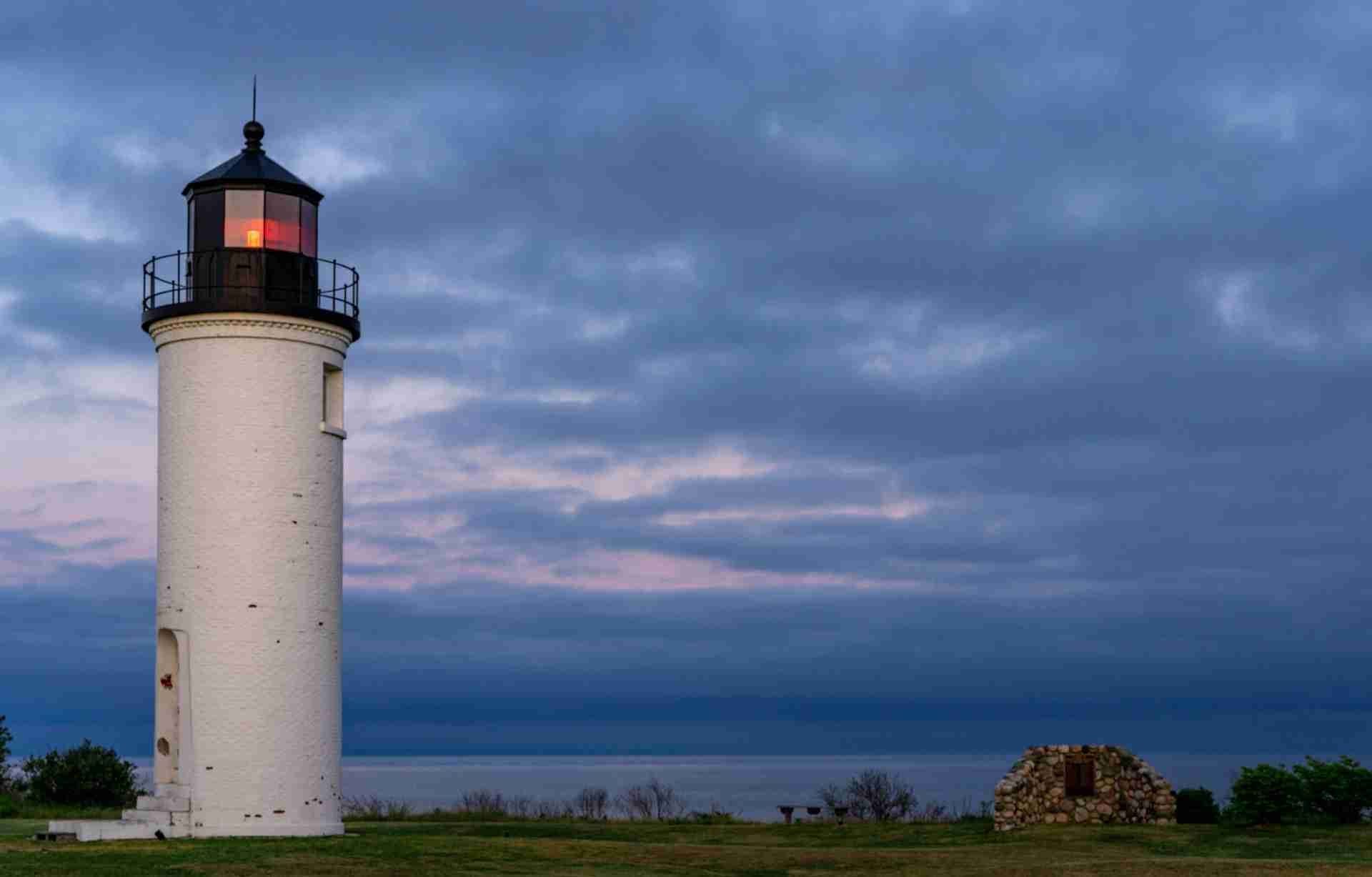
Set along the northern shoreline of Beaver Island in Lake Michigan, the Beaver Island Harbor Lighthouse offers photographers a clean, isolated subject that shifts with the surrounding weather and light. The lighthouse rises from a low forested point just beyond the town of St. James and stands as a vertical marker at the edge of the harbor. Its classic cylindrical shape, white tower, and dark lantern room provide clear contrast against the blues and grays of lake and sky. The location feels remote without being inaccessible, and the wide views of the water offer compositional range that can be adjusted with light, season, or shoreline detail. Whether approached from the beach, the water, or the forest path, this lighthouse is best explored through slow, deliberate observation and a variety of focal lengths.
Best Photography Opportunities
• Harbor View from Whiskey Point
Just across the inlet from the lighthouse, Whiskey Point provides one of the most balanced and accessible views. From this side, you can capture the full structure with open lake water in the background and subtle forest framing on either side. A mid-range zoom allows you to pull the lighthouse closer while maintaining its setting, and golden hour from this angle delivers clean, warm light directly across the tower. Calm mornings often offer mirrored water and a quiet shoreline that simplifies your foreground. This location is easy to reach on foot from the St. James harbor and allows for steady tripod use right at the water's edge.
• Close Range from the Lighthouse Grounds
If you approach the lighthouse directly, you'll find several opportunities for working up close with the structure and its surroundings. The tower is surrounded by trees and a narrow clearing, which creates interesting framing options with vertical lines and filtered light. Use a wide-angle lens to exaggerate the height of the lighthouse from below or isolate the lantern room against the open sky. Late afternoon light moves through the treetops and creates patterns across the white walls, giving added depth and texture to detail shots. A short telephoto lens is also useful here for shooting elements like the doorway, windows, or weathered exterior from a controlled distance.
• Wide Lake Views from Gull Harbor Trail
This short trail leads north of the lighthouse and opens up to the shoreline with low vegetation and wide lake views. From here, you can photograph the lighthouse with more negative space and include sky, water, or shoreline elements depending on your frame. This is a strong place to shoot during changeable weather, especially when clouds are moving across the lake or light breaks suddenly after rain. A polarizing filter is helpful in this location to bring out sky detail and reduce water glare. Long exposures in the evening can soften wave texture while allowing the structure to remain sharp and still against the background.
• Winter Frames with Ice and Wind
During the colder months, Beaver Island takes on a more desolate, open quality that changes the tone of your compositions. Snow may cover the ground around the lighthouse, and ice can build along the shoreline, adding bright, graphic elements that play well against the tower's clean lines. This time of year is best for black and white images or studies in tone and shape. Cold weather light is often directional and low, even at midday, which helps define form without harsh contrast. Dress and pack accordingly, as winds off the lake can be strong and temperatures drop quickly even in early spring.
• Twilight and Night Photography from the Marina
Shooting from near the marina after sunset gives you a distant but centered view of the lighthouse with soft color in the sky and reflected light on the water. As the last daylight fades, the tower stands as a clear silhouette with some illumination often lingering on the horizon. This position is useful for longer exposures, especially when the water is calm and the sky has retained some texture. Use a tripod, and allow time to adjust as ambient light shifts rapidly in the final moments after sunset. Wide compositions work well from here, especially if you want to include dock elements or a trace of the harbor's curve in the lower frame.
Best Time to Visit
Beaver Island is most accessible between late spring and early fall, when ferry service is regular and trails are clear of snow. For photography, the best conditions occur from May through October, with June and September offering the cleanest air and most interesting light. Early summer brings blooming shoreline plants and clearer skies, while early fall introduces soft golden tones and more dramatic weather shifts.
Morning light is best for side angles and east-facing views, particularly from Whiskey Point or the marina walkway. The lighthouse receives soft front light in the first hour after sunrise, which adds depth without harsh contrast. Sunset can also be productive, especially when working with reflective surfaces or silhouettes from the shoreline. Overcast days are ideal for detail work or closer compositions, especially in the forested area surrounding the tower. Fog is rare but possible and can add a strong atmospheric layer, especially in early morning during the shoulder seasons.
How to Get There
Beaver Island is located in northern Lake Michigan and is reached by ferry from Charlevoix, Michigan. The Beaver Island Boat Company operates regular passenger and vehicle service during the warmer months. Once on the island, the lighthouse is located at the north end of St. James and can be reached by car, bike, or on foot. From the ferry dock, head north on Main Street and follow the shoreline road past the marina toward Gull Harbor Drive. Signs will point to the lighthouse and nearby trails.
There is no fee to visit the lighthouse grounds or photograph from public access areas. Some paths near the water may be uneven or muddy after rain, so wear appropriate footwear if planning to explore on foot. Parking is available nearby, and the area is typically quiet, making it easy to use a tripod without interference. Drone use is allowed but should be done respectfully and away from private property or nesting birds. As always, check local regulations and respect any posted signage.
Recommended Photography Gear
A wide-angle lens is essential for capturing the full height of the lighthouse from the ground or for framing it with sky and shoreline. A 24 to 70 millimeter zoom is a useful all-purpose option, especially when working from across the harbor or along narrow trails. A short telephoto lens in the 70 to 200 millimeter range is ideal for isolating structural details or compressing background elements during golden hour or twilight.
Bring a tripod for low light, long exposure, or night photography. A circular polarizer is helpful when working around water, especially to manage sky contrast or reduce glare. In colder seasons, pack lens cloths and weather protection, as sudden changes in wind or moisture can affect both gear and comfort. A remote shutter release or in-camera timer can improve sharpness during long exposures. Lightweight gear is easier to manage if you are hiking in from town or moving between shoreline locations.
Nearby Photography Locations
Located just a few miles inland from St. James, this quiet preserve offers a very different shooting environment with still water, soft forest reflections, and a more intimate scale. The small lake is ringed with trees that change dramatically across the seasons This location is easy to access and rarely crowded, making it a peaceful stop after shooting along the shoreline.
Just north of the lighthouse, this small preserve offers trails, low cliffs, and wild shoreline views. It is best for wide compositions with lake texture and shifting sky. Early morning or late afternoon gives the most directional light for this area.
From the docks and boardwalk near the ferry landing, you can frame boats, the harbor, and distant views of the lighthouse with clean symmetry. This is a reliable location for twilight shots and calm water reflections.
A few miles west of town, Donegal Bay offers open views of Lake Michigan with dramatic skies and broad waterlines. It is especially good at sunset and provides a contrast to the more contained compositions near the lighthouse.
• Beaver Island Head Light
Located at the southern tip of the island, this second lighthouse is more remote but offers a rugged, overgrown setting that feels more isolated. It's a good addition to any trip where you're photographing the island's coastal structures.
The Beaver Island Harbor Lighthouse is more than a standalone structure. It is a consistent and adaptable subject within a layered island setting, where water, forest, and weather all shape the way it can be seen. With enough time and attention to light, it offers quiet compositions that reward both patience and movement. Whether you're standing on the dock or walking the shoreline, it remains one of the most visually grounded places to shoot along Lake Michigan.
Comments
Loading comments…