
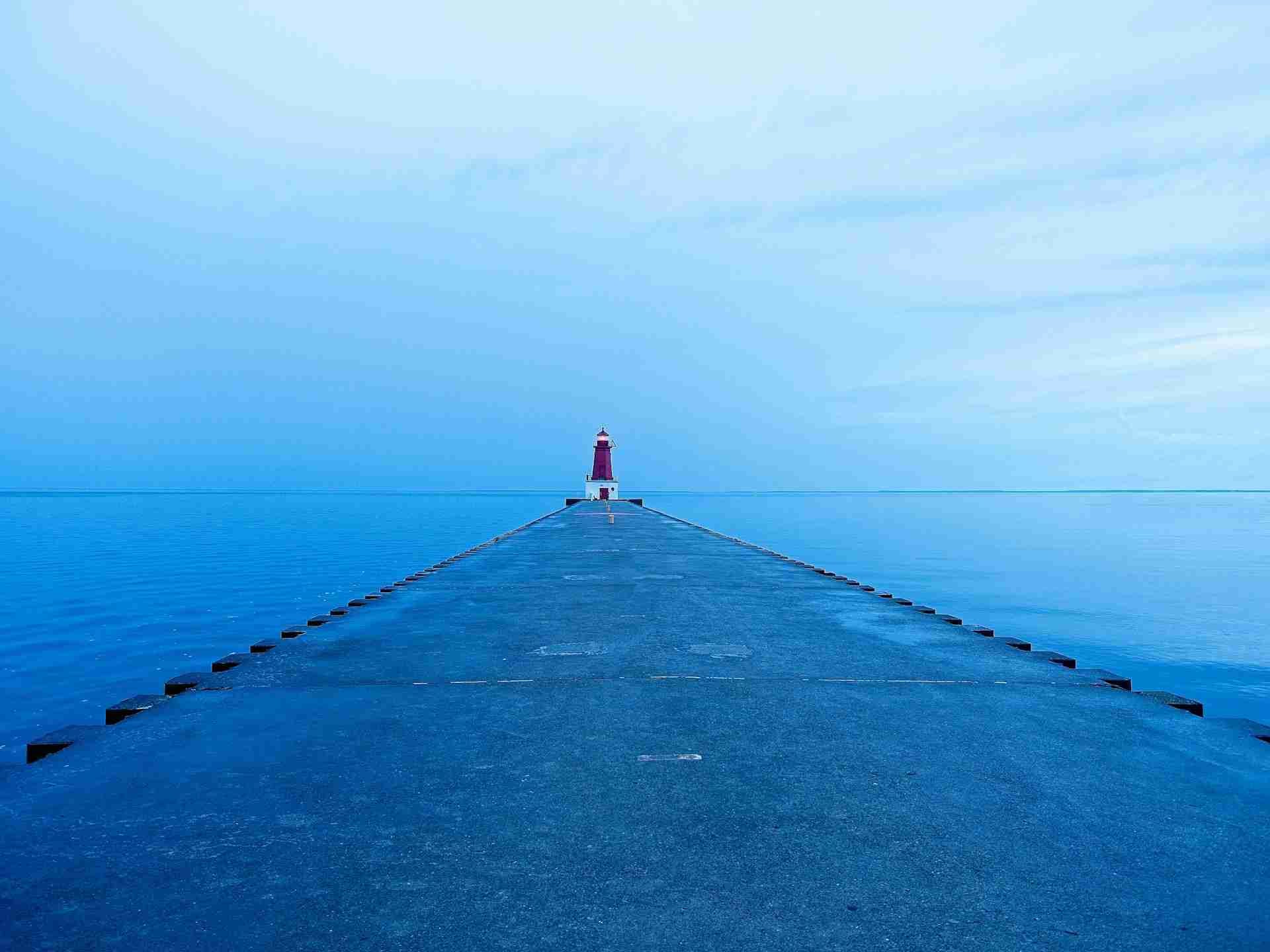
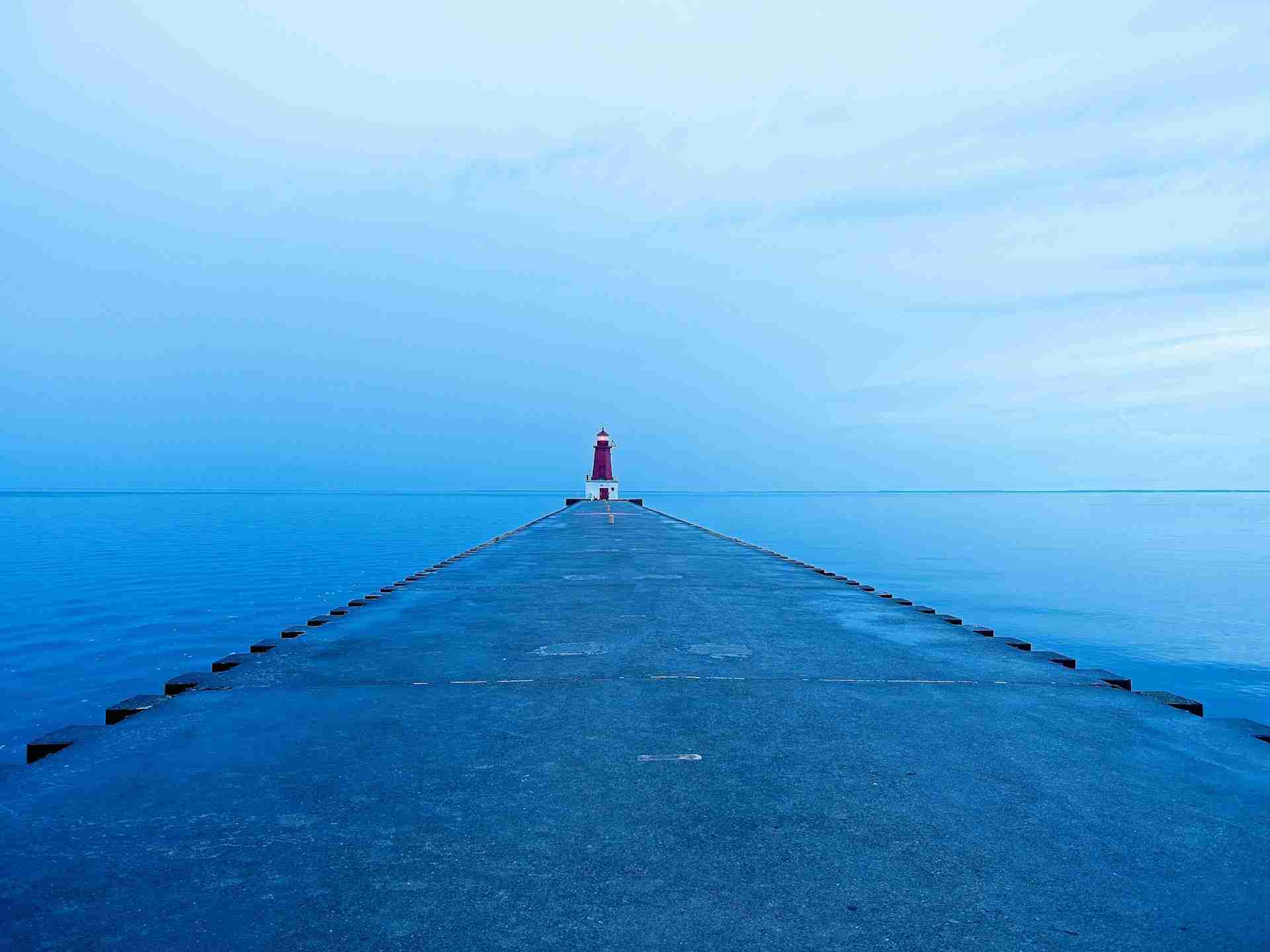
Standing at the mouth of the Menominee River where it flows into Lake Michigan's Green Bay, the Menominee North Pier Lighthouse has guided vessels for more than a century. Its square steel tower, painted bright red with a white lantern, is a vivid contrast against the blues and grays of the surrounding water and sky. This working light is reached by a long concrete pier that stretches into the bay, giving photographers a natural leading line for compositions. The open setting means changing weather and light conditions dramatically alter its mood, from calm summer evenings to stormy autumn mornings. Whether approached as a minimalist subject against a horizon or framed in the context of the shoreline and town, the lighthouse offers endless ways to explore color, shape, and seasonal variation.
Best Photography Opportunities
• Pier Approach with Leading Lines
: The most direct way to photograph the Menominee North Pier Lighthouse is from the pier itself, walking partway out and centering the lighthouse in the frame. The straight, narrow walkway naturally draws the viewer's gaze to the red tower at the end, especially when shot with a wide-angle lens that exaggerates the distance. Morning light from the east brightens the lighthouse evenly and creates soft, directional shadows along the pier, while late afternoon light from the west brings warmth and depth to the scene. After rain, the pier's wet surface reflects the sky and the lighthouse, adding an extra layer of visual interest. The effect can be subtle in calm conditions or more intense when small waves lap against the pier edges, creating splashes of texture in the frame.
• Shoreline Context from Henes Park
: A short distance north of the pier, Henes Park offers an elevated vantage point for photographing the lighthouse in its wider context. From here, you can capture the red tower framed against the blues of Green Bay, with the shoreline and river mouth adding depth. Using a telephoto lens compresses the scene and makes the lighthouse appear closer to the surrounding landscape. This location is especially rewarding in autumn, when the park's trees turn gold and orange, providing a strong color contrast against the water. Calm mornings can produce clear reflections in the bay, while windier conditions add texture and movement that change the tone of the image entirely.
• Close-Up Architectural Details
: The lighthouse's riveted steel panels, angular base, and circular lantern room make it an engaging subject for detail work. Shooting from the pier allows you to isolate these features with a telephoto lens, removing the distractions of the surrounding scenery. A polarizing filter is useful for reducing glare from the painted surfaces, especially in bright midday light. Approaching from the side rather than directly head-on allows you to show the depth of the structure and the connection between the tower and the pier. Morning and late afternoon light reveal subtle color variations in the red paint and add dimensionality to the steelwork.
• Dramatic Weather and Wave Action
: The lighthouse's exposed position at the river mouth makes it a natural subject for storm and wave photography. During strong winds, waves crash against the pier and send plumes of spray into the air. A fast shutter speed can freeze these moments, capturing each droplet, while a slower shutter with a neutral density filter can turn the water into a silky haze that surrounds the base of the tower. Overhead clouds add drama and texture, and the contrast between the red of the lighthouse and a dark, stormy sky is especially striking. Safety is paramount in these conditions, as the pier can be slippery and waves unpredictable, so shoreline positions are sometimes the better choice.
• Blue Hour and Night Photography
: As daylight fades, the lighthouse's beacon becomes the main point of interest. Blue hour provides a perfect balance between the ambient light in the sky and the artificial light from the lantern, allowing for images that retain detail in both. A tripod is necessary for the longer exposures required at this time, and a mid-range zoom lens gives you the flexibility to move between wider contextual shots and close-ups of the lit lantern. Reflections on calm water can be smooth and mirror-like, while even small ripples create a textured, shimmering surface that catches the light in more dynamic ways. Shooting just after the beacon comes on will give you the richest colors in the sky to complement the warm glow of the light.
Best Time to Visit
The Menominee North Pier Lighthouse can be photographed year-round, and each season brings unique lighting, colors, and conditions that can completely change the character of the scene. Summer offers the easiest access, with the pier typically dry and safe to walk, long daylight hours, and predictable weather patterns. Early summer mornings often feature glassy water surfaces and soft, pastel skies, while evenings provide long golden hours that are ideal for pier and shoreline compositions. Midday in summer can be harsh, but it is an excellent time for detail work when the sun's angle brings out the texture of the steel panels.
Autumn is particularly rewarding for photographers seeking drama. The surrounding shoreline trees turn deep gold and orange, contrasting beautifully with the red tower and blue water. Cooler air and stronger winds bring more dynamic skies and increased wave activity, which makes for energetic compositions. The low angle of the sun in autumn also produces longer shadows and more directional light throughout the day, giving images a greater sense of depth.
Winter transforms the lighthouse into a subject of stark simplicity. The pier may be covered in snow and ice, and Green Bay often develops frozen sections along the shoreline. This season offers high-contrast scenes with the red tower standing out against the white and gray of the ice and sky. While the pier may be unsafe to walk in icy conditions, shoreline and park-based views can still produce compelling images.
Spring is a transitional period with rapidly changing light and weather. Passing storm fronts create a mix of bright sun, heavy clouds, and occasional fog, all of which can be used to create varied moods. Melting ice can add interesting textures to the water's surface, and migrating birds along the shoreline can add life to the frame. Regardless of the season, early morning and late afternoon consistently provide the most appealing light, while blue hour delivers balanced exposures with the beacon lit.
How to Get There
The lighthouse is located at the mouth of the Menominee River in Menominee, Michigan. From downtown Menominee, follow First Street south until it meets US-41, then turn east toward the harbor and marina area. Public parking is available near the pier entrance, and from there it is a short walk to the lighthouse. The pier is open to pedestrians, though its narrow width and exposure to the elements mean you should be cautious in windy or wet conditions.
During winter, or when conditions are rough, the pier may be unsafe, and photographing from the shoreline or from Henes Park is a safer option. There is no fee to visit or photograph the lighthouse from public areas. Tripods are permitted, but on the pier, be aware of other users such as anglers and walkers. For night photography, bring a flashlight or headlamp, as the pier is unlit once you leave the harbor area.
Recommended Photography Gear
A versatile lens kit is the best approach for this location. A 24 to 70 millimeter zoom covers most needs, from wide views along the pier to mid-range shots from the shore. A 70 to 200 millimeter lens is invaluable for compressing perspectives from more distant vantage points such as Henes Park or for isolating the lantern and structural details. A wide-angle lens in the 16 to 35 millimeter range allows for dramatic compositions that emphasize the pier's length and the openness of the bay.
A sturdy tripod is essential for blue hour and night shots, as well as for long exposures that smooth wave movement during the day. A polarizing filter reduces glare from the water and enhances sky color, while neutral density filters make it possible to extend shutter speeds even in bright daylight. Weather-sealed gear is useful here due to the risk of spray, especially during windy conditions. A microfiber cloth should always be kept handy to clear water spots from the lens.
In cold months, extra batteries are important since power drains faster in low temperatures. Gloves that allow for fine camera adjustments without removal will make winter shooting more comfortable. Footwear with good grip is necessary for safe movement on the pier, particularly when it is wet or icy. A rain cover for your camera can provide peace of mind when working in unpredictable weather, and a compact gear bag makes walking the length of the pier easier.
Nearby Photography Locations
: Just north of the pier, Henes Park offers elevated views of the lighthouse and the river mouth. This location is particularly good for sunrise and sunset, with opportunities to frame the lighthouse through trees or against the open bay.
• Marinette Lighthouse
: Located across the river in Marinette, Wisconsin, this smaller lighthouse offers a contrasting architectural style and a different backdrop. Visiting both lights in one day allows for varied compositions and comparisons.
The historic center of Menominee features restored brick buildings, vintage signage, and a waterfront walkway, all of which make for appealing architectural and street photography.
• Menominee Marina
: Situated near the pier, the marina provides calm-water reflections of moored boats on still days. It can be combined with lighthouse photography for a complete harbor session.
: Located farther south along Lake Michigan, this historic lighthouse is surrounded by open water and offers unobstructed views in all directions. It makes for a rewarding secondary stop on a full day of lighthouse photography.
The Menominee North Pier Lighthouse is more than just a navigational aid. It is a subject that adapts beautifully to every season and every mood, whether you want the stillness of a summer dawn, the energy of an autumn storm, the stark beauty of a winter freeze, or the changeable drama of spring. Taking time to explore it from the pier, the shore, and the surrounding parkland will reveal just how many stories this single lighthouse can tell through the lens.
Comments
Loading comments…