
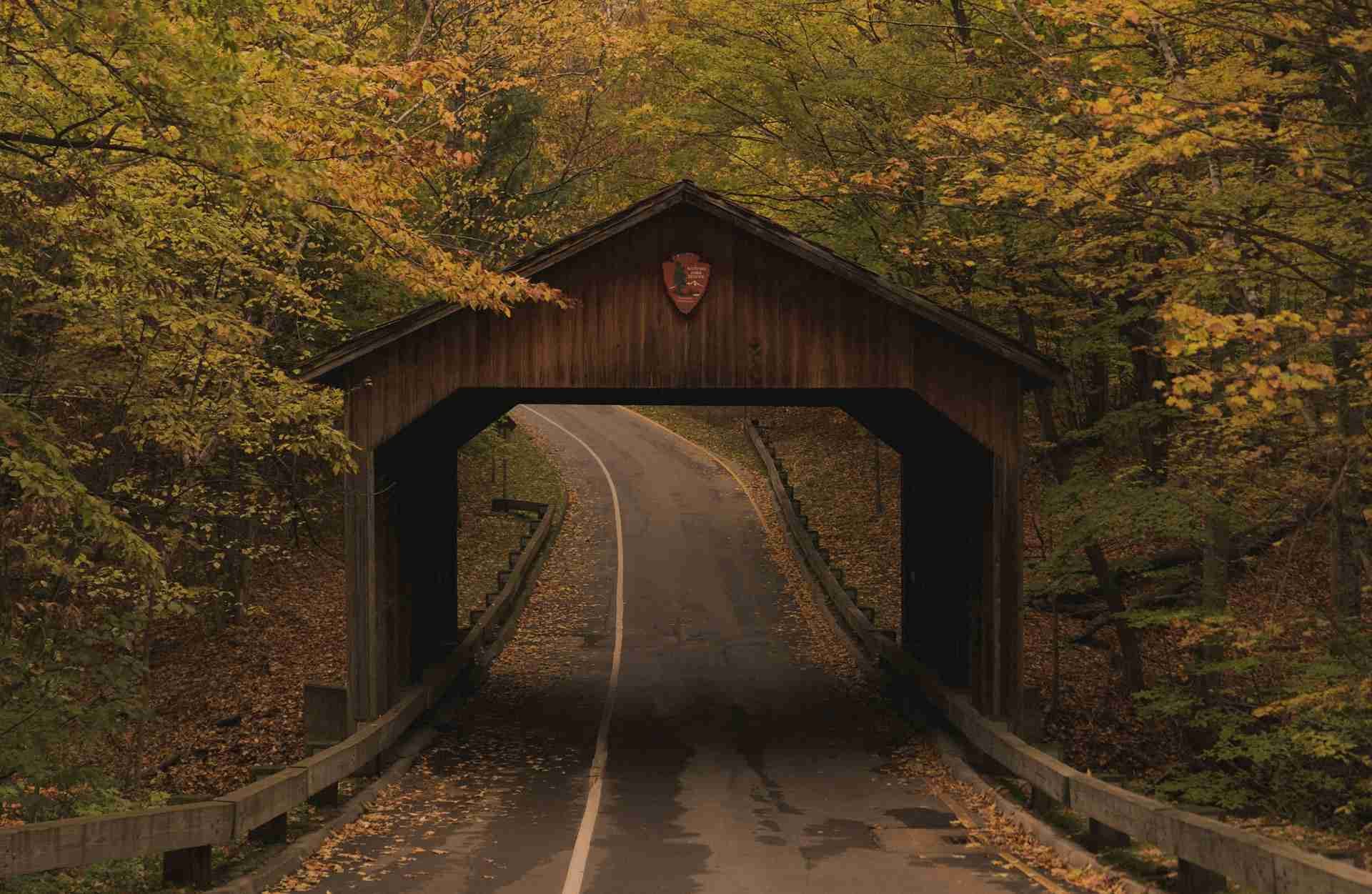
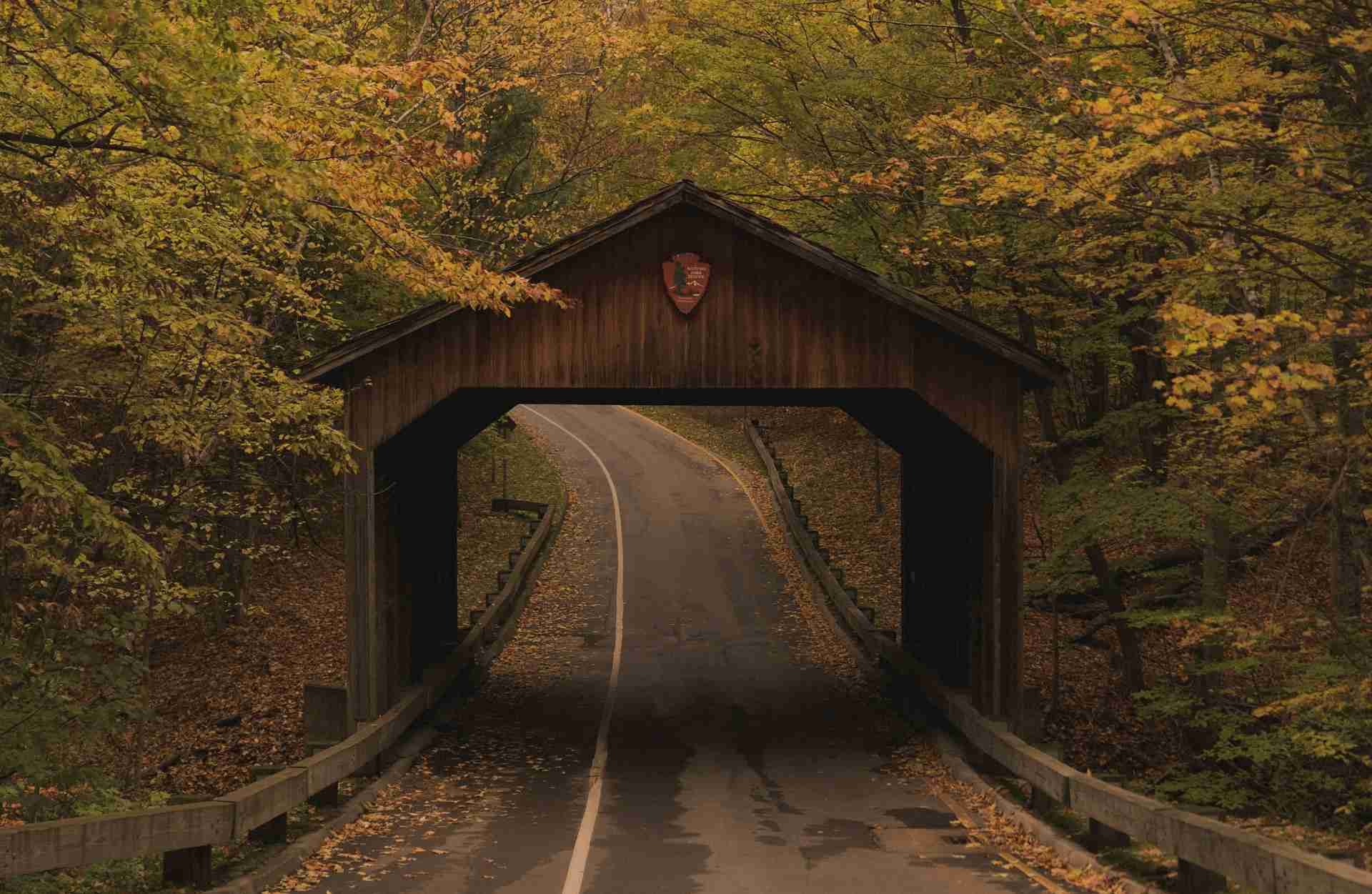
Tucked along the winding curves of Pierce Stocking Scenic Drive in Michigan's Sleeping Bear Dunes National Lakeshore, the covered bridge is a quiet moment of structure and contrast within a larger, light filled landscape. Surrounded by tall hardwoods and pines, the bridge's dark timber frame stands out against shifting dappled light and seasonal color. Though small compared to the grand overlooks and dunes along the drive, this bridge offers something more intimate. It is a chance to photograph shape, shadow, and repetition in a woodland setting. For those drawn to composition and subtlety, the bridge is a strong visual anchor between the forest and the road.
Best Photography Opportunities
• Framed by Trees
Approaching the bridge from either side of the loop allows you to photograph its entrance framed by tall trees and arching canopy. A mid-range lens between 35 and 70mm captures the proportions well, letting the tunnel of timber stand clearly in the scene without distortion. These images benefit from low angled morning or late afternoon light, when warm tones cut through the trees and throw soft shadows across the wooden boards. Wait for a gap in passing vehicles to keep the frame clean.
• Interior Views of Beams and Receding Lines
Inside the bridge, the overhead beams and side supports create a repeating pattern of dark geometry. Use a tripod and a wide lens to place the vanishing point in the center of the composition, allowing the structure to lead the viewer's eye forward. These shots are most effective on bright days when light pours through the exit, creating natural contrast and a strong glow at the end of the tunnel. You may need to bracket exposures to manage shadows and preserve detail in the darker timbers.
• Seasonal Colors
In autumn, golden and red leaves line the road on both sides of the bridge, offering vibrant color that contrasts with the dark interior. Frame the bridge slightly off center and use a wider focal length to include the canopy above and fallen leaves below. This works especially well after rain, when the road surface reflects light and color. In spring or summer, focus on greens and filtered sunlight to emphasize softness and renewal.
• Black and White Detail Studies
The texture of the timber, bolts, and beams lends itself well to monochrome photography. Get in close with a 50mm or short telephoto lens and isolate parts of the structure, focusing on wear, grain, or light catching on sharp edges. These images work well under overcast skies, which flatten contrast and draw attention to tone and line. Aim for compositions that abstract the bridge into a study of form rather than environment.
• Framed Scenes through the Bridge Opening
From inside the bridge, you can use the far opening as a natural frame for whatever lies beyond. This is especially strong when someone walks or cycles into view, or when light strikes the road in just the right way. Keep the bridge interior in shadow and expose for the brighter landscape beyond. This technique adds depth and narrative, turning the bridge from subject to viewpoint.
Best Time to Visit
Pierce Stocking Scenic Drive is open seasonally, typically from late spring through autumn. Summer offers filtered green light and lush surroundings, while autumn is the most visually dynamic season, with the bridge framed by a burst of color. Early morning is best for soft light and quiet conditions, as the road becomes more trafficked in the afternoon. Rainy days or overcast skies bring mood and help avoid high contrast scenes. Late afternoon can also provide warm sidelight that grazes the bridge structure and highlights detail.
How to Get There
The covered bridge is located on the Pierce Stocking Scenic Drive, which loops through part of Sleeping Bear Dunes National Lakeshore near Empire, Michigan. From the main visitor center, follow signs toward the drive's entrance, which is clearly marked. The bridge appears early in the loop, after a short climb through the forest. Vehicles pass directly through it, so care should be taken when setting up for photos. There is no fee specific to the bridge, but access to the park may require a vehicle pass. Parking areas and pull offs along the loop provide space to stop and walk back to photograph the bridge safely.
Recommended Photography Gear
A wide to standard zoom lens is useful for both full views of the bridge and interior symmetry. A tripod is helpful inside the bridge or during low light conditions. A polarizer may assist in managing reflections on wet pavement or enhancing color in the trees. A lens cloth is useful during damp or rainy conditions. A remote shutter or timer can help maintain sharpness during longer exposures, especially in the shadowed interior. Consider bringing a small flashlight or headlamp if shooting during twilight to help with focusing or light painting subtle interior details.
Nearby Photography Locations
Just a few minutes farther along the scenic drive, this overlook provides a dramatic view from 450 feet above the lake. The sweeping sand slope and distant horizon create strong leading lines and wide compositions, particularly at sunset.
A short drive from the bridge area, the Dune Climb is a popular site for shooting wide sandy landscapes with human scale. Early or late light creates sculpted shadow patterns across the surface, and foggy mornings can add atmosphere.
This quiet, shallow lake sits just inland from Lake Michigan and offers peaceful reflection shots, especially during sunrise. The transition from still water to open dunes makes it an ideal place for layered compositions.
Located on the shore of Lake Michigan, this small restored village includes an old cannery, blacksmith shop, and weathered wooden buildings that photograph well in soft light. It is ideal for rustic textures and historic detail.
A short hike leads to an overlook with one of the most rewarding views in the park. The trail passes through forest before opening to views over Lake Michigan, perfect for golden hour or layered aerial perspectives.
Comments
Loading comments…