
Engineering Marvel over the Colorado: A Photographer's Guide to the Mike O'Callaghan–Pat Tillman Memorial Bridge, Boulder City, Nevada
The Mike O'Callaghan–Pat Tillman Memorial Bridge spans the Colorado River just downstream from Hoover Dam, linking Nevada and Arizona with a graceful concrete-arch design. This incredible structure soars 900 feet above the river, offering photographers a chance to capture both ambitious human engineering and sweeping canyon landscape. The bridge's bold curve and dramatic setting make it an ideal subject at multiple times of day and in a variety of weather conditions. For photographers interested in architectural structure, riverside vistas, or night scenes, the bridge delivers across different vantage points. Whether shooting from the Nevada overlook, a river-level boat tour, or the Arizona side, the bridge offers endlessly compelling frames and moods.
Best Photography Opportunities
• Morning glow on the canyon
The early morning light creates a soft, golden tone across the bridge's concrete surface and the surrounding canyon walls. From the Nevada-side overlook, photographers can capture a wide scene including the Colorado River, distant canyon formations, and the arch of the bridge. The calm light helps highlight the smooth curves and clean lines of the structure. Use a mid-range zoom lens to focus on the bridge while still including some of the terrain and sky to complete the image. Mist may rise from the river, adding a dreamy texture to the composition.
• Golden-hour edge with dynamic sky
In the late afternoon, as the sun begins to lower, the bridge becomes bathed in warmer tones and deeper shadows. This is the time to experiment with framing. From the Arizona rim trail, the bridge appears as a sleek profile against the sky. A wide-angle lens allows you to include the horizon and dramatic clouds above. For a more focused shot, a longer lens lets you isolate details like support beams or light posts glowing with color. Be patient as the color shifts—every few minutes the lighting can change completely, offering multiple versions of the same view.
• Long exposures at dusk
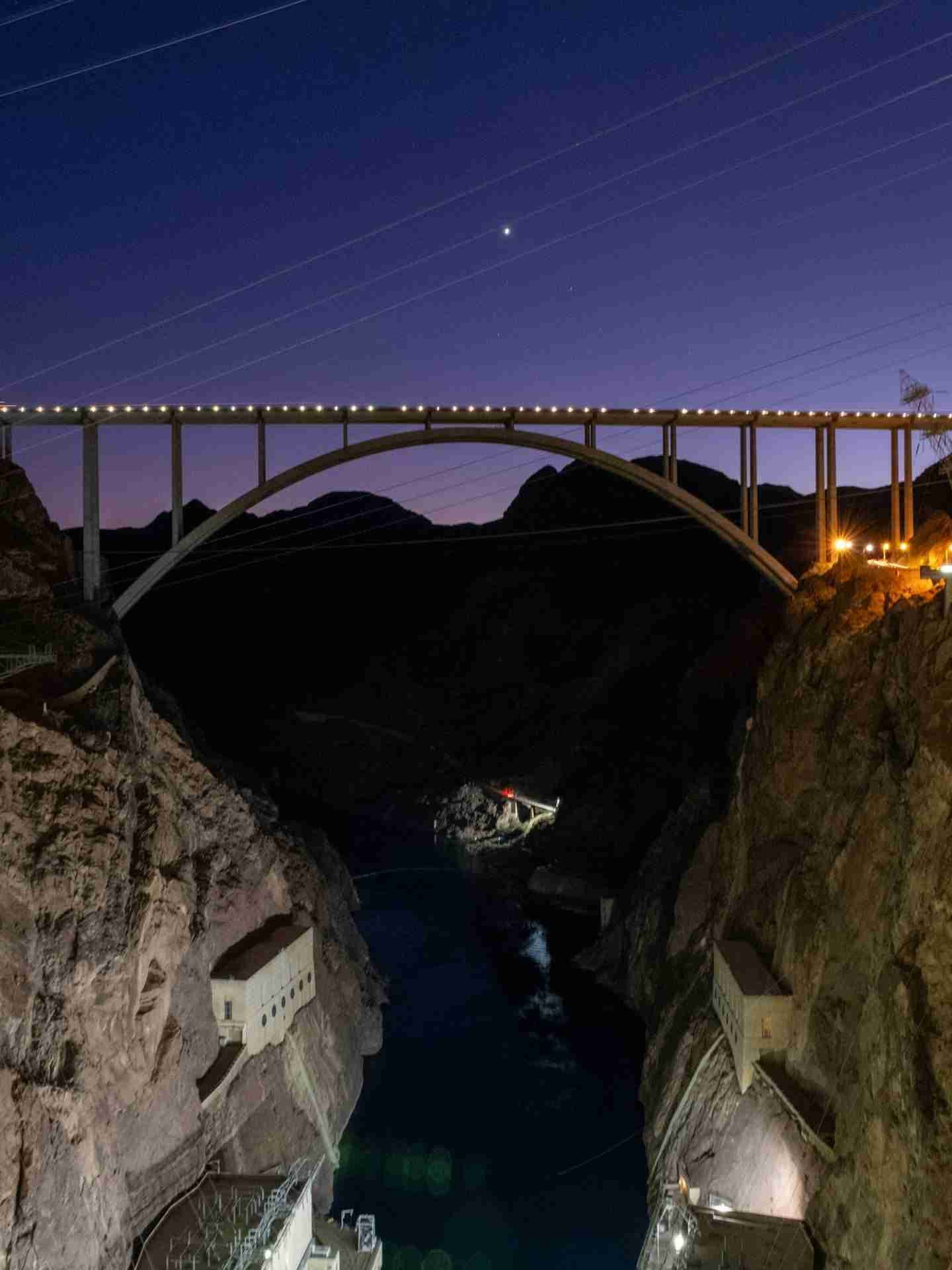
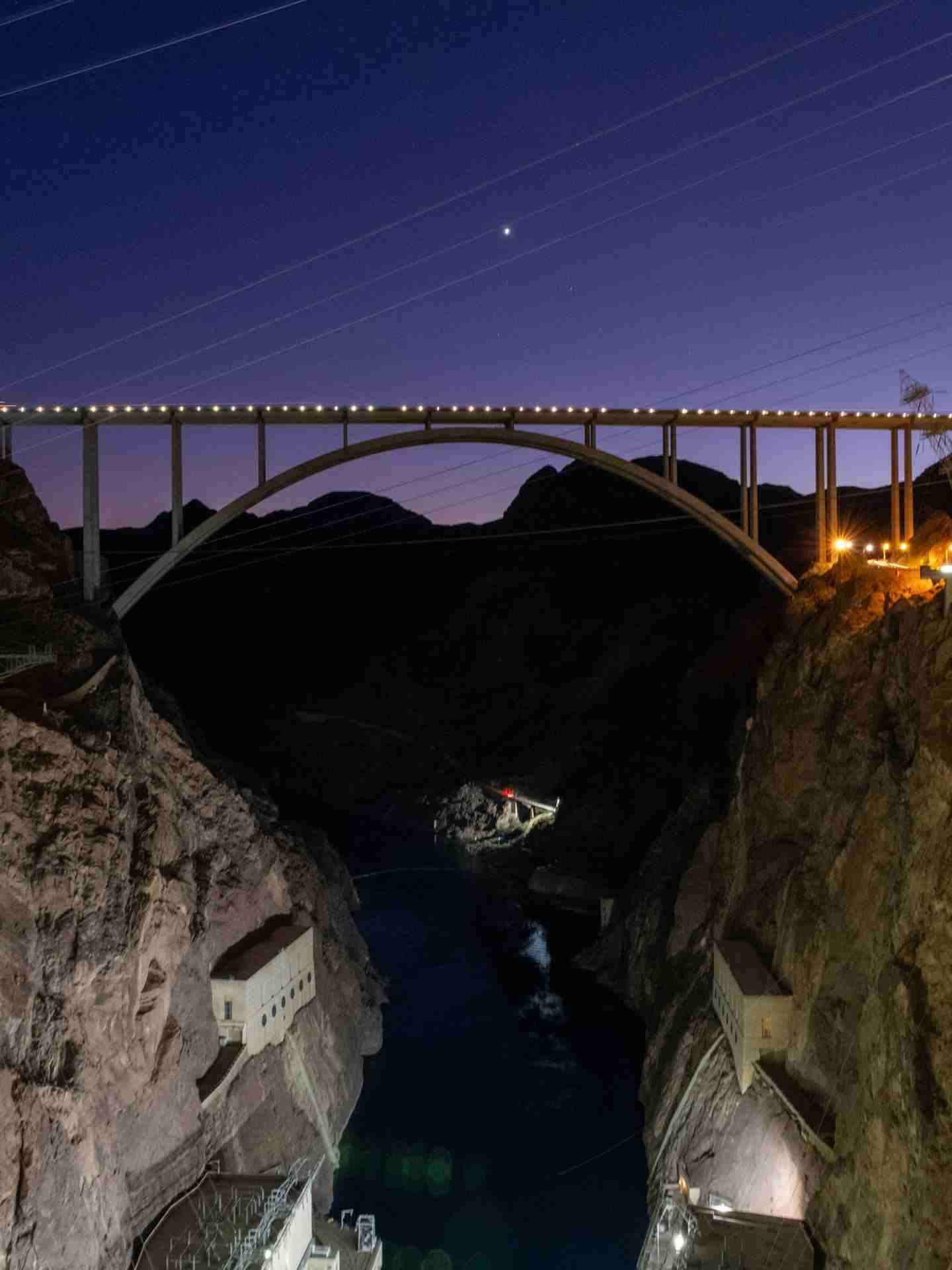
As day fades into twilight, the lights on the bridge start to come on. This is an ideal time for long exposures from the Nevada overlook. Set up your tripod and shoot exposures ranging from 10 to 30 seconds to capture the flow of vehicle lights across the span. The background will deepen into shades of blue and purple, creating a vivid contrast with the bridge's illumination. Adjust your angle to either include the canyon walls or focus entirely on the structure. Be sure to arrive early and stay through blue hour for maximum variety.
• Detail work on structural geometry
Closer shots of the bridge's unique architectural elements can be striking. Walk along the pedestrian path for opportunities to photograph repeating lines and clean shapes formed by the concrete arches and supports. These patterns are especially photogenic when side-lit by early or late sunlight. Use a short telephoto or prime lens to isolate parts of the bridge. Play with focus and aperture settings to soften the background while emphasizing texture and form in the concrete. This approach offers a more abstract but rewarding view.
• Nightscape with illuminated span
At night, the bridge is lit from below, producing a soft white glow beneath the arches. Shooting from lower along the canyon wall or near the base of the dam lets you look up at the span with stars above. A long exposure will show a sky full of stars, and the lit bridge will serve as a clean focal point. A wide-angle lens and tripod are essential here. For best results, use a flashlight to light-paint rocks or foreground elements very gently, giving a bit of context without overpowering the natural light in the scene.
Best Time to Visit
Photographers will find something to shoot at the bridge during every season, but the quality of light and comfort of weather vary greatly. Spring and fall are the most pleasant times to visit. The temperatures are moderate, skies tend to be clear, and both sunrise and sunset bring color and clarity to the scene. Morning mist or haze from the river is more likely in spring, adding soft layers to your images.
Summer brings intense heat during the day, often over 100 degrees Fahrenheit, making photography best reserved for early morning or late evening hours. Even at these times, bring plenty of water and wear light, breathable clothing. Harsh midday sun should be avoided unless you are shooting architectural detail shots with strong contrast.
Winter brings cooler air and clearer skies. Early sunsets make golden hour easier to reach without a long day's wait, and crisp light casts excellent shadows across the bridge's surface. This is also the best season for star photography. Bring a warm layer, as wind is common across the canyon.
Light and cloud conditions change rapidly in the desert environment. Plan to arrive early and wait for the best lighting. The bridge is striking in direct sunlight but just as photogenic under soft light and moody skies.
How to Get There
The Mike O'Callaghan–Pat Tillman Memorial Bridge is located on US Route 93, just downstream from Hoover Dam. From Boulder City, follow signs to the Hoover Dam bypass. There is a designated parking area on the Nevada side with restrooms and a paved path that leads to an elevated viewing platform and the pedestrian portion of the bridge. The area is open to the public daily, and there is no fee for access to the overlook.
The pedestrian walkway on the bridge allows up-close views of the structure and wide panoramas of the river and canyon below. Be mindful of foot traffic and wind while using a tripod on the bridge.
For alternative views, the Arizona side offers access via trails from the Lake Mead National Recreation Area. These trails lead to lower viewpoints beneath the bridge. Some of these areas require short hikes and may be rocky or steep in places. Wear sturdy shoes and be aware that facilities are limited.
To photograph the bridge from the river itself, guided boat tours are available, many of which leave from near Hoover Dam. These excursions can be excellent for sunrise or sunset sessions. Check with providers for availability and restrictions.
Recommended Gear for Bridge Photography
A flexible kit will allow you to adapt to changing conditions. Bring a wide-angle zoom lens, such as 16 to 35 millimeters, for capturing the entire bridge and its surroundings. A mid-range zoom (24 to 70 millimeters) is ideal for general compositions, while a telephoto lens (70 to 200 millimeters) lets you focus on design elements or compress distances between the bridge and canyon walls.
A sturdy tripod is necessary for long exposures, especially around dusk and during night shoots. Use a polarizing filter to manage glare from the concrete and the water. A graduated neutral density filter helps control exposure in high-contrast scenes, particularly at sunrise or sunset. A remote shutter release helps eliminate motion blur in long exposures.
Extra memory cards, batteries, and lens cleaning supplies are essential for extended sessions. The desert environment can be dusty, so pack weather protection for your gear. Sunscreen, a hat, and plenty of water are necessary for daytime shoots, and a headlamp is useful for night photography and navigating trails in low light.
Nearby Photography Locations
This nearby viewpoint allows for sweeping images of both the Hoover Dam and the bridge together. The contrast between the solid, historic dam and the clean, arched lines of the bridge is visually striking. Early morning and late evening light provide the best color and contrast.
• Arizona Rim Trail Viewpoint
This location offers a side profile of the bridge rising over the canyon with the river visible below. It's accessible via a short, slightly rugged trail. Late afternoon and golden hour lighting are especially effective from this side.
These tours provide constantly shifting perspectives as you move beneath the bridge. Early morning trips offer calm waters and low-angle light, great for reflection shots and viewing the underside of the bridge's structure.
From the shores of Lake Mead, you can find calm water, open skies, and an extended view toward the bridge. The shoreline offers great opportunities to frame the bridge with natural textures like sand, rock, and scattered plant life.
• US Route 93 Highway Pullouts
Several elevated parking areas along the highway offer quick stops and great views. These are ideal for capturing traffic light trails during twilight or composing layered shots that mix roadways, canyon walls, and the bridge's smooth arc.
The Mike O'Callaghan–Pat Tillman Memorial Bridge is a place where bold design meets dramatic scenery. It rewards careful observation and varied techniques, offering new compositions every hour of the day. Whether you focus on sweeping views, fine details, or the sky above, this landmark gives photographers a compelling location to explore and create.
Comments
Loading comments…