
![Where the Maurice River Meets the Bay East Point Lighthouse stands at the quiet mouth of the Maurice River where […]](https://storage.googleapis.com/pixeo-blog.firebasestorage.app/article-images/wp-import/featured-135857.jpg)
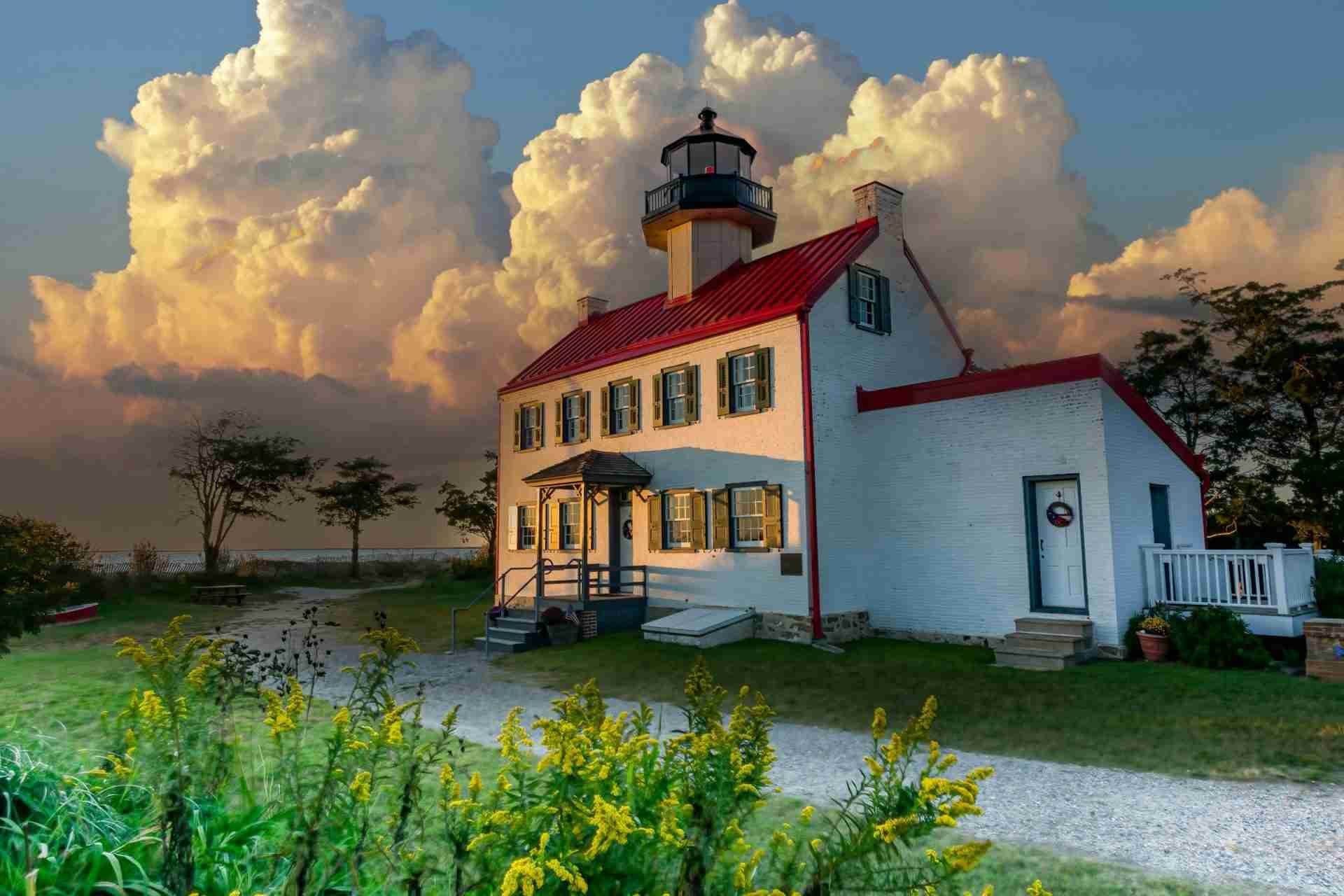
East Point Lighthouse stands at the quiet mouth of the Maurice River where it opens into the Delaware Bay. Surrounded by marshland, low shoreline, and wide coastal sky, the lighthouse feels isolated in a way that works beautifully for photography. Originally built in 1849 and later rebuilt after deterioration, the structure combines a two story white keeper's house with a lantern tower and distinctive red roof. That combination gives it more visual complexity than a simple tower light. The proportions are balanced, the windows are evenly spaced with shutters, and the compact footprint makes it easy to compose cleanly from multiple angles. Because the surrounding terrain is flat and open, the lighthouse never feels visually crowded. It sits comfortably within its environment, allowing you to build images that emphasize sky, water, and structure in equal measure.
Best Photography Opportunities
• Classic Front View With Open Sky
From the open grounds directly in front of the lighthouse, you can frame the full structure against expansive sky. The building's white siding and red roof create strong color contrast that reads clearly even from moderate distance. A slightly lower shooting position increases the presence of the lantern tower and keeps background distractions minimal. Watching how clouds move across the sky is important here, as they can either add depth or overpower the composition. This angle works particularly well in early morning when light falls gently across the front of the building.
• Side Profile Showing Keeper's House and Tower Relationship
Photographing from the side reveals how the lantern tower rises from the roofline of the keeper's house. This perspective emphasizes the lighthouse's hybrid design rather than treating it as a standalone tower. Including a portion of marsh or shoreline grass in the foreground adds texture and regional context. A moderate focal length maintains natural proportions without exaggerating perspective. Even light preserves detail in siding and window shutters, making this a strong option under lightly overcast skies.
• Sunset Over Delaware Bay
Because the lighthouse sits on the eastern edge of the Delaware Bay, sunset is the strongest time to photograph it with water facing light. As the sun lowers in the west, it drops toward the bay horizon, allowing you to frame the lighthouse against warm sky tones and reflective water. From certain angles, the building can be rendered as a silhouette, while from others you can capture rim light outlining the roof and tower. Calm conditions create subtle color gradients across the water surface. A tripod is essential as light fades and contrast increases. This is the most visually dynamic time at the location.
• Marsh Viewpoints
Stepping back slightly into the surrounding marsh allows you to place the lighthouse within its broader coastal environment. Tall grasses and low vegetation can serve as natural framing elements without obscuring the structure. This approach highlights the lighthouse's working landscape rather than isolating it against empty sky. Using a slightly longer focal length compresses the marsh and structure into a cohesive composition. It is a strong way to emphasize location rather than just architecture.
• Detail Studies of Windows, Roofline, and Lantern
Closer compositions reveal the texture of the siding, the shape of the shutters, and the structure of the lantern room. Soft side light enhances surface detail without harsh contrast. Overcast conditions are particularly useful for preserving subtle tones in white paint. Isolating the lantern tower against the sky creates a clean, graphic frame. These tighter images complement wider environmental shots and add variety to a coastal series.
Best Time to Visit
Sunset is the most visually rewarding time at East Point Lighthouse due to its west facing position along the Delaware Bay. The sun drops toward open water, creating warm tones and potential silhouettes. Late afternoon leading into sunset provides the best balance between light on the structure and color in the sky. Sunrise is quieter and offers softer light across the marsh side, but it does not rise over the bay itself. Midday light can be harsh on white siding and reduce visible texture. Overcast conditions are useful for architectural detail and controlling contrast. Spring and autumn often provide the most dramatic skies and comfortable temperatures, while summer can introduce haze and stronger midday glare. Wind conditions also matter, as the site is fully exposed and bay breezes can affect stability.
How to Get There
East Point Lighthouse is located in Heislerville, New Jersey, at the end of Lighthouse Road. The drive passes through low marshland before reaching the shoreline. Parking is available near the lighthouse grounds, followed by a short walk to the structure. The exterior grounds are publicly accessible, though interior access may depend on seasonal hours or restoration schedules. There is no fee for exterior photography from public areas. The terrain is flat and open, but it can become muddy after rain. Because the location is remote and exposed, checking weather conditions before arrival is advisable.
Recommended Photography Gear
A standard zoom lens is ideal for covering full structure compositions and tighter architectural studies. A short telephoto lens helps compress the lighthouse against the bay horizon and isolate structural details. A sturdy tripod is strongly recommended for sunset sessions. A polarizer can reduce glare on the water and deepen sky tones when conditions allow. Neutral density filters may be useful for smoothing water during longer exposures. Because wind exposure is common, stabilizing your tripod and minimizing loose gear is important.
Nearby Photography Locations
• Maurice River
The river offers calmer water scenes and reflective marsh landscapes. It provides a quieter contrast to the open bay shoreline.
Another regional lighthouse, Turkey Point offers a wooded coastal setting that differs from East Point's open exposure.
• Bivalve
This small bayfront community features docks, working boats, and documentary coastal subjects. It expands a visit beyond a single architectural landmark.
• Cape May
Further south, Cape May provides beaches, additional lighthouses, and Victorian architecture. It adds variety to a coastal photography itinerary.
A small fishing community along the bay, Port Norris offers maritime scenes and working waterfront compositions.
East Point Lighthouse is defined by openness and horizon. By understanding its west facing orientation and timing your visit around sunset light over the Delaware Bay, you can build images that feel intentional and geographically grounded rather than generic coastal views.
Comments
Loading comments…