
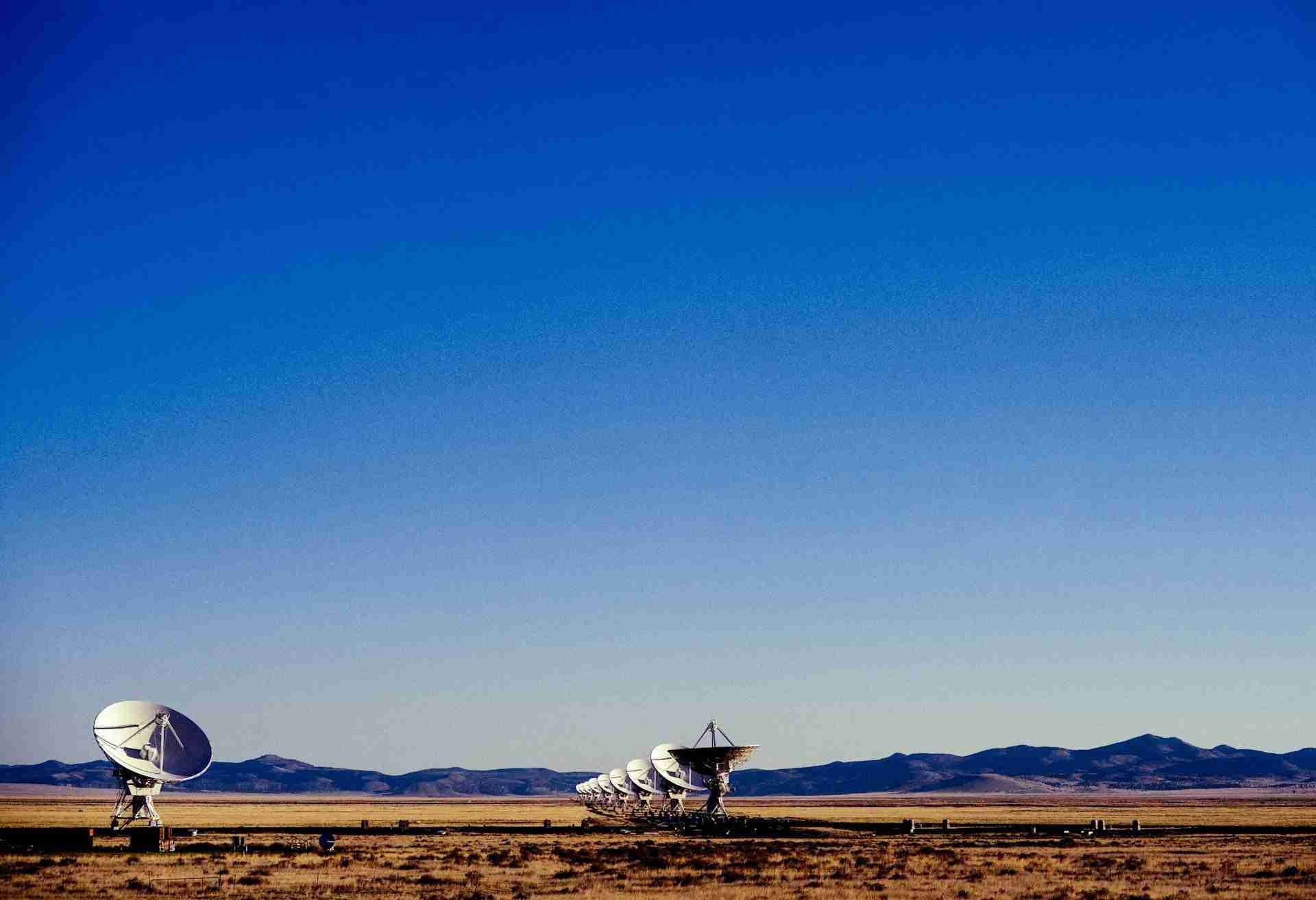
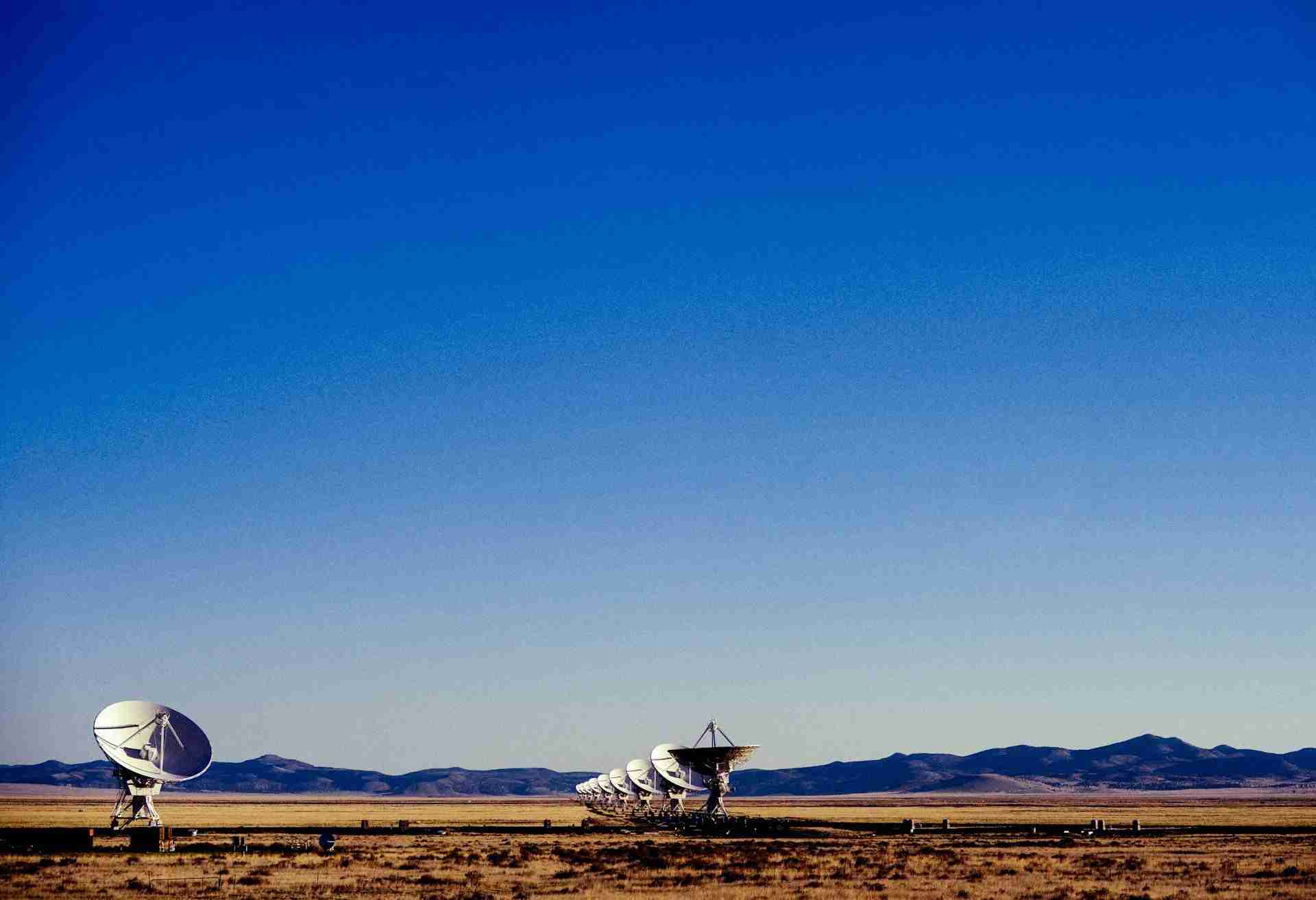
Rising from the vast plains of the San Agustin Basin in New Mexico, the National Radio Astronomy Observatory's Very Large Array (VLA) presents one of the most surreal and photogenic landscapes in the American Southwest. With 27 enormous white dish antennas aligned in a Y-shaped formation, each spanning 25 meters in diameter, the VLA fuses science fiction aesthetics with engineering precision. Set against the backdrop of wide-open skies, desert scrub, and distant mountains, this active observatory offers a striking juxtaposition of cutting-edge technology and natural expanse. Photographers drawn to symmetry, minimalism, and astronomical themes will find the site deeply rewarding, especially under the changing light of day or the stars of night.
Best Photography Opportunities
• Symmetrical Track Alignment and Repeating Dishes
From the central nexus where the three arms of the array converge, photographers can stand at ground level on the service rails and witness an endlessly repeating line of parabolic dishes stretching toward the vanishing point. This is the VLA's most iconic photographic view—where structure and landscape collapse into visual rhythm. A wide-angle lens helps exaggerate the receding lines and curvature of each dish, while a telephoto lens can compress the array, accentuating scale and density. Shoot during golden hour for rich shadows and warm side lighting that gives dimension to the otherwise stark geometry. Overcast skies create a more industrial and uniform atmosphere, ideal for black-and-white treatments.
• Isolated Antenna Portraits and Minimalist Compositions
Outside the dense alignment of the central rail line, individual antennas dot the desert basin, standing like sentinels beneath an expansive sky. These isolated dishes are ideal subjects for minimalist compositions that emphasize the contrast between man-made precision and vast natural emptiness. Use a medium telephoto to isolate the dish from background ridges or passing clouds. On clear days, deep blue skies provide a clean backdrop that complements the stark white of the dish, while late afternoon light brings out texture in both the equipment and the desert floor. This is also the best setting for compositions that explore solitude and scale.
• Milky Way and Night Sky Astrophotography
Thanks to its high elevation and remote location far from light pollution, the VLA is among the best places in the contiguous United States for photographing the night sky. The Milky Way arcs above the basin from May through August, and when conditions are right, it aligns beautifully over one of the array's arms. Use a fast wide-angle prime (14mm to 24mm, f/2.8 or wider) with a sturdy tripod and long exposures to capture the galactic core above silhouetted antennas. Include ground detail or dish reflections in water pools for dynamic foreground interest. Note that strict radio-silence rules are enforced, and night photography should be planned with discretion and awareness of observatory regulations.
• Mechanical and Textural Detail Shots
Beyond their sweeping forms, each VLA antenna is a complex piece of engineering. Up close, the base of each dish reveals a network of bolts, access ladders, rotating tracks, and cabling systems that reward careful study. These mechanical details create strong subjects for industrial-style photography and offer contrast to the broader landscape compositions. Use a macro or telephoto lens to isolate repeating shapes, shadows, or surface textures. Early morning light works especially well here, providing soft edge highlights that emphasize form and functionality.
• Environmental Wide Shots with Sky and Mountain Context
Step back from the main site to incorporate the surrounding desert and distant ridgelines of the Magdalena Mountains. Wide environmental shots place the VLA in its broader geographic context, capturing the tension between natural landforms and human intervention. These frames are particularly strong in moody weather or during monsoon season, when dynamic skies add drama and scale. Include foreground elements like desert grass, utility rails, or road textures to create leading lines and anchor the antennas within the scene. These compositions work well at all times of day but take on special atmosphere in dawn light or under post-storm skies.
Best Time to Visit
The VLA is visually compelling year-round, but the best times for photography are spring and autumn. These seasons offer clear skies, cool air, and dramatic light angles throughout the day, all of which bring out the shape and form of the dishes and surrounding landscape. Spring typically delivers the most stable weather with striking cumulus cloud patterns that move through the basin, enhancing contrast and depth in wide-angle shots.
Summer is the prime season for night sky photography, especially when the galactic center of the Milky Way rises high above the horizon after sunset. However, summer also introduces extreme daytime heat and monsoon storms, which can limit shooting time but also yield striking cloud formations and post-storm golden light.
Winter visits can be visually rewarding as well, especially after light snowfall, which outlines the dishes and coats the plains in pale tones rarely seen in the region. The air is often crisp and clear, offering excellent visibility and saturated colors, but daylight hours are short, and road conditions may require caution.
For lighting, the golden hours around sunrise and sunset are ideal for both color and directional shadows. Midday sun can be harsh but is useful for capturing high-contrast architectural detail. Blue hour and nightfall allow for stunning silhouette and astro work, provided conditions are calm and sky visibility is clear.
How to Get There
The Very Large Array is situated approximately 50 miles west of Socorro, New Mexico, along U.S. Route 60. From Socorro, take Highway 60 west through the small town of Magdalena. Continue for another 25 miles, watching for signs to the VLA and the turnoff to the Visitor Center.
The site is fully accessible by paved road, and the parking area accommodates personal vehicles and small groups. The VLA is open daily during daylight hours, with a self-guided walking tour available that leads visitors through interpretive exhibits and close proximity to several dishes. Public access is limited to the designated tour route and exterior grounds.
No photography permits are required for personal or hobby use. Commercial shoots or use of the site for media purposes requires prior permission from the NRAO. Drone use is strictly prohibited. Visitors are advised to turn off mobile devices or switch to airplane mode to minimize electronic interference with the facility's sensitive instruments.
Recommended Gear and Shooting Tips
A wide-angle lens (16–35mm) is essential for capturing the geometry of the dish formations and full array vistas. A standard zoom (24–70mm) works well for balanced compositions and environmental portraits, while a telephoto lens (70–200mm or more) is ideal for compressing rows of antennas or isolating individual units against the horizon.
Bring a sturdy tripod for long exposures and astrophotography, along with a remote shutter release or intervalometer. A circular polarizer helps control reflection and increase contrast, especially on sunny days. Use ND filters for extended shutter speeds during bright daylight when capturing slow movement of clouds across the dishes.
Because of the elevation and desert exposure, temperatures fluctuate widely—especially between day and night. Dress in layers, use sun protection, and bring plenty of water. Dust is common, so use lens cloths and camera covers when not shooting.
For astro work, plan your session around new moon cycles and consult sky tracking apps to optimize Milky Way position and exposure planning. Always shoot in RAW to manage the extreme tonal range of this landscape, from bright skies to shaded mechanical structures.
Nearby Photography Locations
Located just southeast of Socorro, this refuge is one of the most celebrated bird photography destinations in North America. During fall and winter migrations, thousands of snow geese and sandhill cranes fill the ponds and skies. Sunrise over the water offers layered silhouettes, reflections, and high-action flight shots.
• Magdalena Ridge Observatory and Western Hills
West of the VLA, the hills and highlands offer elevated viewpoints over the entire array. These vantage points allow for wide scenic frames where the layout of the array becomes visually apparent. Ideal for sunset and cloudscapes with the dishes below.
Located about two hours north, El Malpais features ancient lava flows, rugged volcanic cliffs, and dramatic basalt landscapes. This stark terrain contrasts well with the clean geometry of the VLA and offers moody, geological imagery with strong abstract potential.
Socorro itself provides more traditional Southwest imagery, including historic mission architecture, street scenes, and community murals. Ideal for supplementing your visit with cultural texture and color-rich compositions.
Though only open twice a year, the Trinity Site—location of the first nuclear test—sits within the larger Jornada del Muerto basin and offers both stark desert scenes and deep historical weight. On open days, this area becomes a compelling if sobering addition to a New Mexico photography itinerary.
The NRAO Very Large Array is more than a scientific installation—it is a monumental tribute to human imagination set in a landscape that feels both ancient and futuristic. For photographers who seek solitude, structure, and a tangible sense of scale, it is a site where visual clarity and cosmic curiosity align. Whether under a sky blazing with stars or awash in desert sun, the VLA listens to the universe while offering us one of Earth's most extraordinary vantage points for photography.
Comments
Loading comments…