
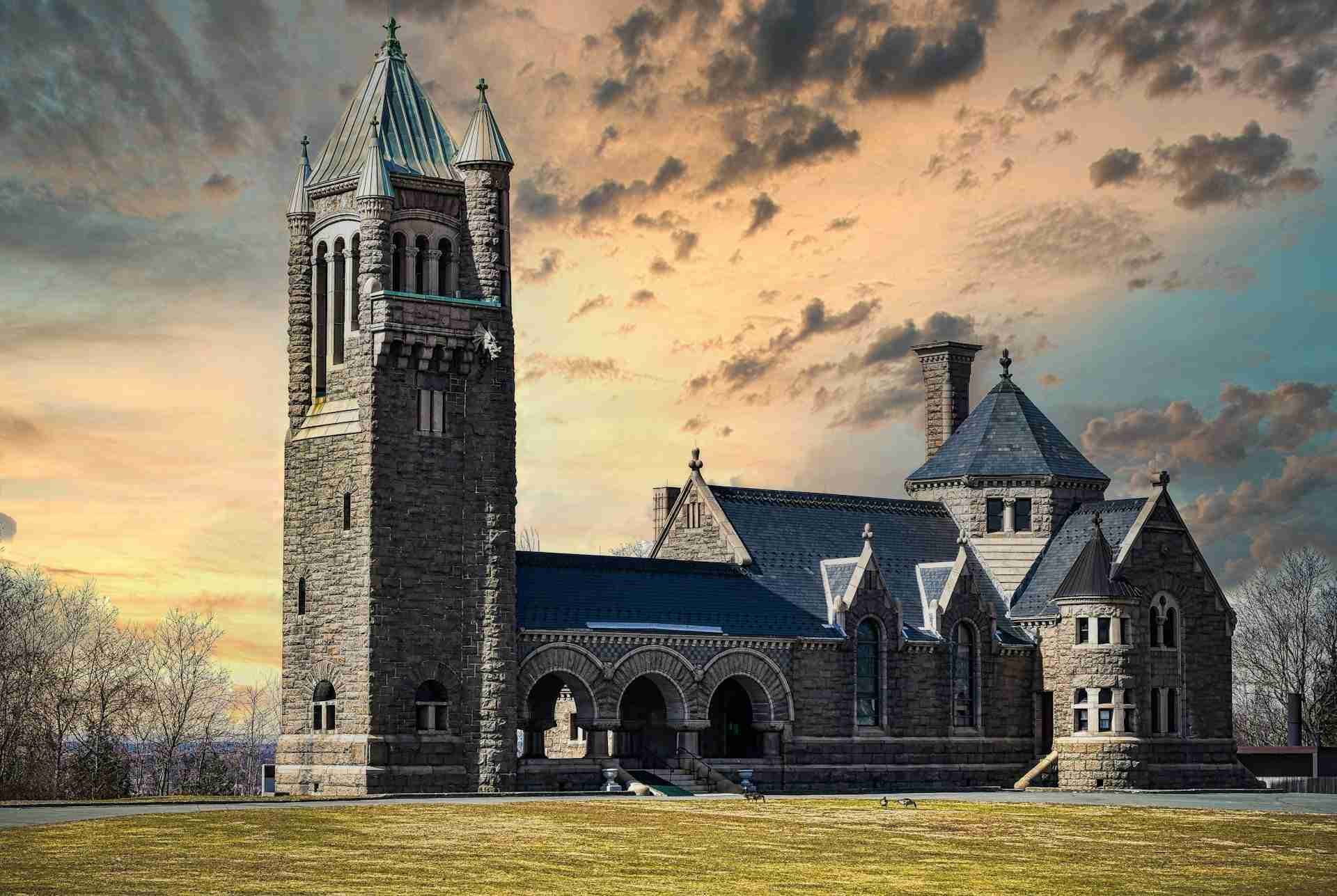
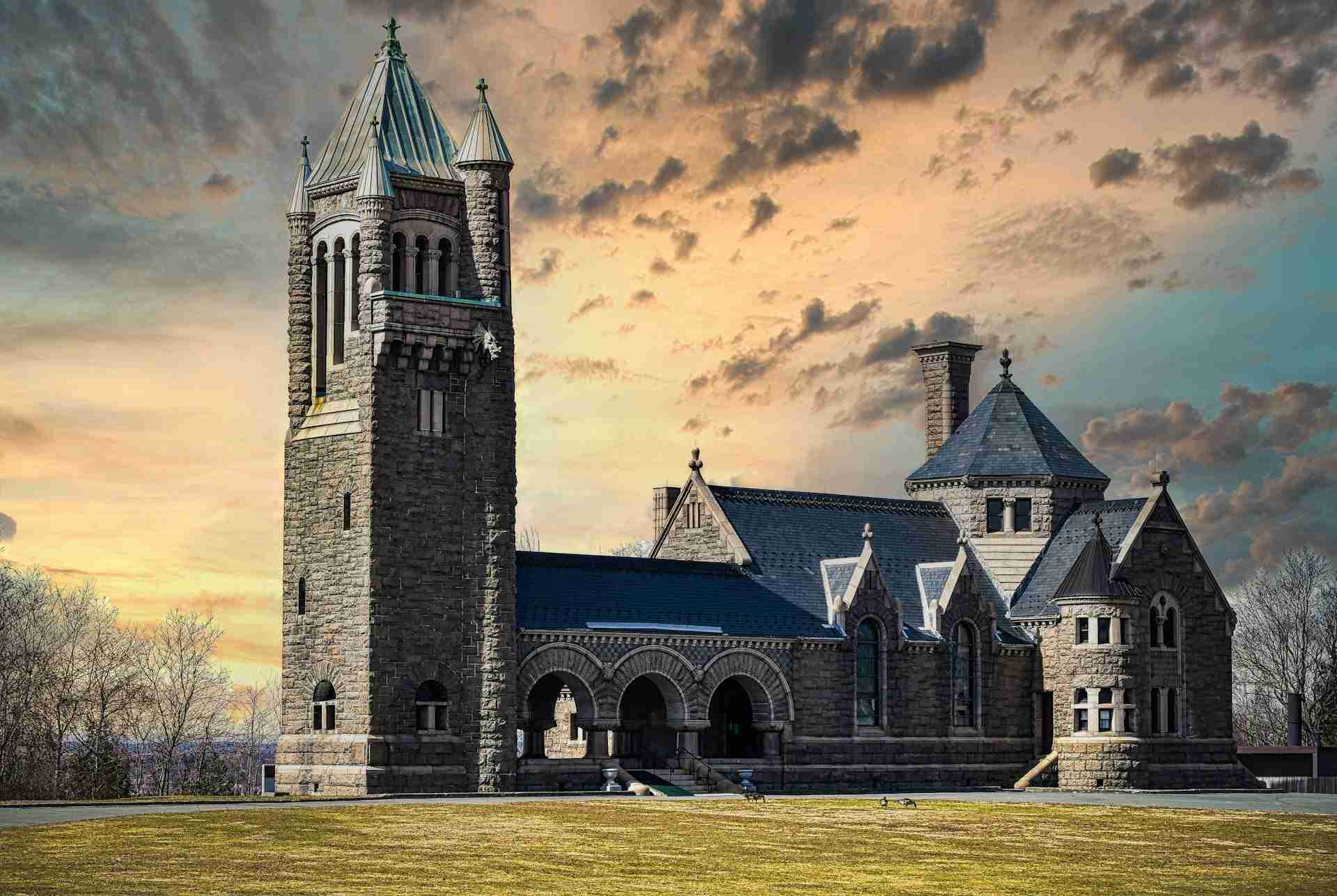
Standing as a timeless monument within Oakwood Cemetery, the Gardner Earl Memorial Chapel is a masterpiece of Gothic Revival architecture that beckons photographers with its intricate stonework, soaring tower, and peaceful cemetery surroundings. Built between 1887 and 1889 to honor Gardner Earl, a wealthy Troy businessman, the chapel was designed by architect Harvey Ellis and is notable for its richly detailed limestone façade, Romanesque arches, and an elegant blend of medieval European architectural styles. Tucked among the rolling hills and aged trees of Oakwood Cemetery, the chapel provides a serene, atmospheric backdrop for both wide scenic compositions and intimate architectural studies.
Best Photography Opportunities
• Full frontal view from the main path
: Approaching the chapel from Oakwood Cemetery's internal roadways provides a classic, full view of its symmetrical façade and commanding presence. Use a wide-angle lens to capture the sweeping front elevation, including the central tower and its arched entryways. Early morning light gently illuminates the limestone, bringing out soft textures in the stone and highlighting the intricate carvings around doorways and windows. Incorporate the surrounding lawns or tree branches into the frame to create natural leading lines that guide the eye toward the chapel.
• Detail shots of carvings and stained glass
: The Gardner Earl Memorial Chapel is rich with ornate detail, from finely carved angels and floral motifs to elaborate Gothic window tracery. A mid-range zoom lens allows you to isolate these features for close-up compositions that emphasize craftsmanship and texture. Overcast days are perfect for detail work, as diffused light softens shadows and reveals subtle tonal variations in the stone and glass without harsh glare.
• Tower perspectives and vertical framing
: The soaring central tower provides a strong vertical element perfect for upward-looking compositions. Shoot from near the base with a wide-angle lens for dramatic converging lines, or step further back and use a telephoto to compress the tower against the sky or the wooded backdrop of Oakwood Cemetery. Golden hour light slanting across the tower can create striking contrasts between lit and shadowed stone surfaces, adding depth and drama to your images.
• Seasonal landscape scenes around the chapel
: Each season offers a distinct mood at Oakwood Cemetery. In autumn, brilliant foliage provides a vibrant contrast to the muted limestone of the chapel, while spring brings fresh greens and flowering trees that soften the building's sharp lines. Snow in winter adds a serene, almost otherworldly quality, while summer's lush greenery frames the chapel in a rich, vibrant setting. Wide environmental compositions using trees, gravestones, and rolling lawns create storytelling images that blend natural and human elements.
• Cemetery paths and layered compositions
: The chapel is surrounded by winding cemetery paths lined with historic gravestones and mature trees. Explore compositions that use these elements as foreground interest, leading lines, or framing devices. Shooting along gently curving paths can create natural depth in your images, drawing viewers through the peaceful landscape toward the chapel in the background.
Best Time to Visit
The Gardner Earl Memorial Chapel is photogenic year-round, but each season brings distinct photographic advantages. Spring offers fresh, lively surroundings with blooming flowers and soft, clean light, perfect for capturing the rejuvenation of the cemetery grounds. Summer provides dense, verdant backdrops and opportunities to play with light filtering through the trees, casting dappled shadows across the chapel's stone surfaces.
Autumn is a standout season, with Oakwood Cemetery's trees erupting into a blaze of gold, red, and orange hues that frame the chapel with vivid color. The rich, low-angle light of fall mornings and late afternoons accentuates the textures and carvings with warm, glowing tones. Winter transforms the scene into a quiet, minimalist setting, with snow-dusted stone and bare trees offering stark contrasts and a solemn, peaceful mood.
Early morning and late afternoon provide the most beautiful light and the least visitor traffic, making it easier to set up thoughtful, uninterrupted compositions. Overcast days are excellent for photographing stone details and avoiding harsh contrasts on bright limestone surfaces.
How to Get There
The Gardner Earl Memorial Chapel is located within Oakwood Cemetery in Troy, New York, a short drive from downtown Troy and about 15 minutes north of Albany. The main entrance to Oakwood Cemetery is off Oakwood Avenue (Route 40).
Once inside the cemetery, follow posted signs toward the Gardner Earl Memorial Chapel, or refer to the cemetery's visitor map, which clearly marks the chapel's location. The roads within Oakwood are well-maintained, and there is ample space to park nearby. The chapel is easily accessible on foot from the internal roadway, with gentle slopes leading to excellent vantage points.
Oakwood Cemetery is open to the public during daylight hours. Be respectful of the cemetery's guidelines—tripods and personal photography are generally permitted, but commercial shoots may require advance permission.
Recommended Gear and Shooting Tips
A wide-angle lens (16–35mm) is ideal for capturing the full breadth of the chapel, especially when working close to the structure to emphasize its grandeur. A mid-range zoom (24–70mm) is highly useful for tighter architectural studies, isolated window details, and environmental portraits that incorporate the surrounding landscape. A telephoto lens (70–200mm) is perfect for compressing the tower against the skyline and isolating carvings high above ground level.
A sturdy tripod is recommended for long exposures, early morning shoots, or low-light conditions, particularly inside shaded sections of the cemetery. A circular polarizer can help manage reflections on stained glass and deepen the colors of surrounding foliage, particularly in autumn. A lens hood or protective cloth is helpful to shield against stray light when working in dappled sun.
Move slowly and thoughtfully through the area, exploring different angles and heights. Crouching low to use paths and gravestones as framing elements or shooting upward dramatically at the tower can add storytelling depth to your images. Be mindful of weather conditions—misty mornings or light snowfalls offer some of the most atmospheric opportunities.
Nearby Photography Locations
: Beyond the chapel, Oakwood Cemetery itself is a vast photographic treasure, filled with historic mausoleums, grand Victorian memorials, and sweeping views of the Hudson River Valley. The rolling landscape and monumental architecture make it ideal for both wide landscapes and detailed shots.
: Located nearby, Prospect Park offers elevated views over the city of Troy and the Hudson River. It's an excellent spot for sunrise cityscapes and tranquil green spaces ideal for portraiture or environmental photography.
: The historic core of Troy is filled with beautiful 19th-century brick buildings, ornate facades, and lively street scenes. Early morning or late afternoon brings the best light for capturing the architectural charm of the city.
: Just across the Hudson River, this state park provides walking trails along the riverbanks, open meadows, and old industrial ruins perfect for blending natural and urban landscape photography.
: Part of the Erie Canal, the Waterford Flight is the highest set of lift locks in the world. The mechanical structures, waterways, and historic context offer a fascinating and unique subject for photographers interested in industrial and maritime heritage.
The Gardner Earl Memorial Chapel stands as a testament not only to personal remembrance but to the enduring artistry of stone, light, and human craftsmanship. Within the peaceful grounds of Oakwood Cemetery, it invites photographers to slow down, observe, and discover beauty in every arch, carving, and quiet corner.
Comments
Loading comments…