
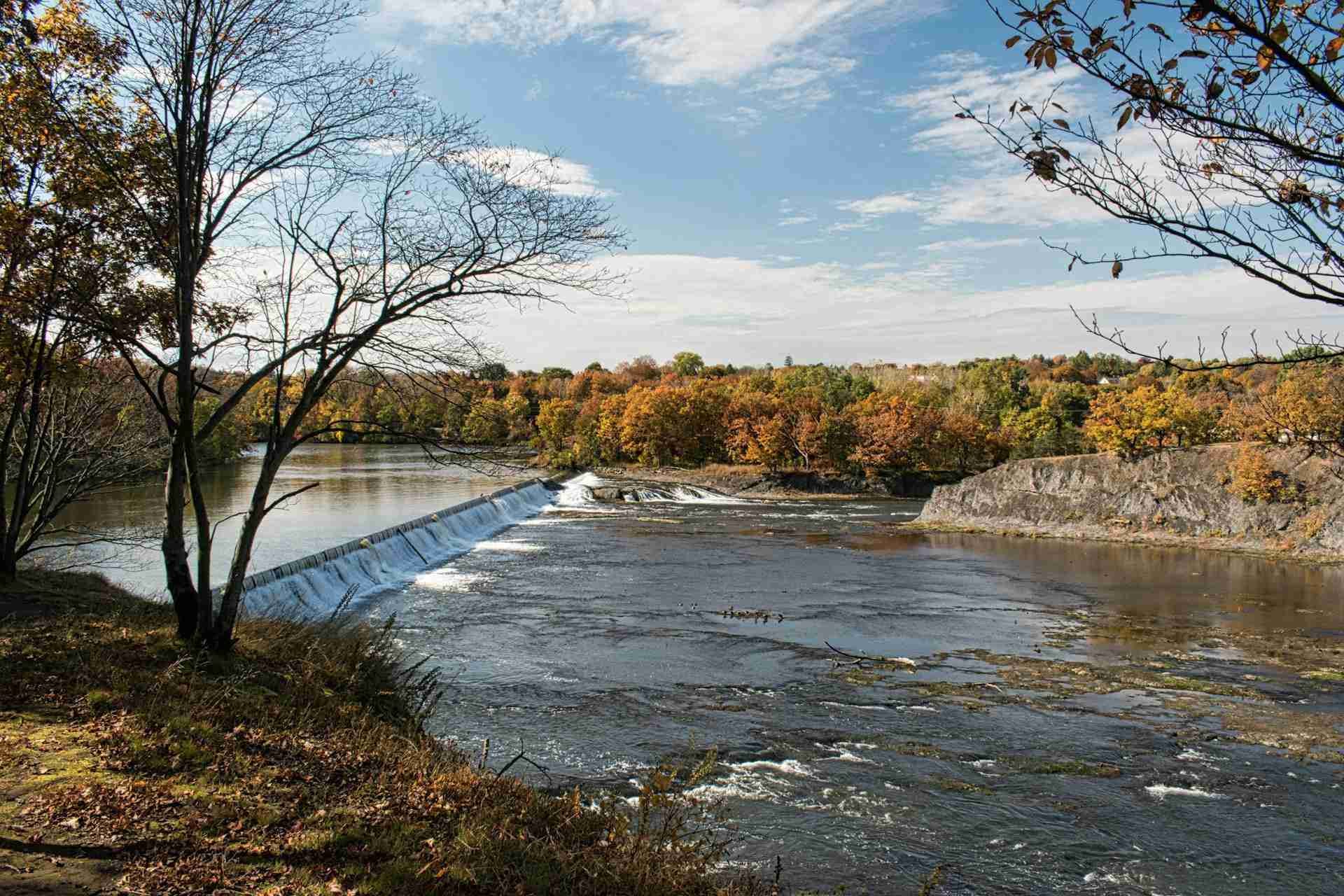
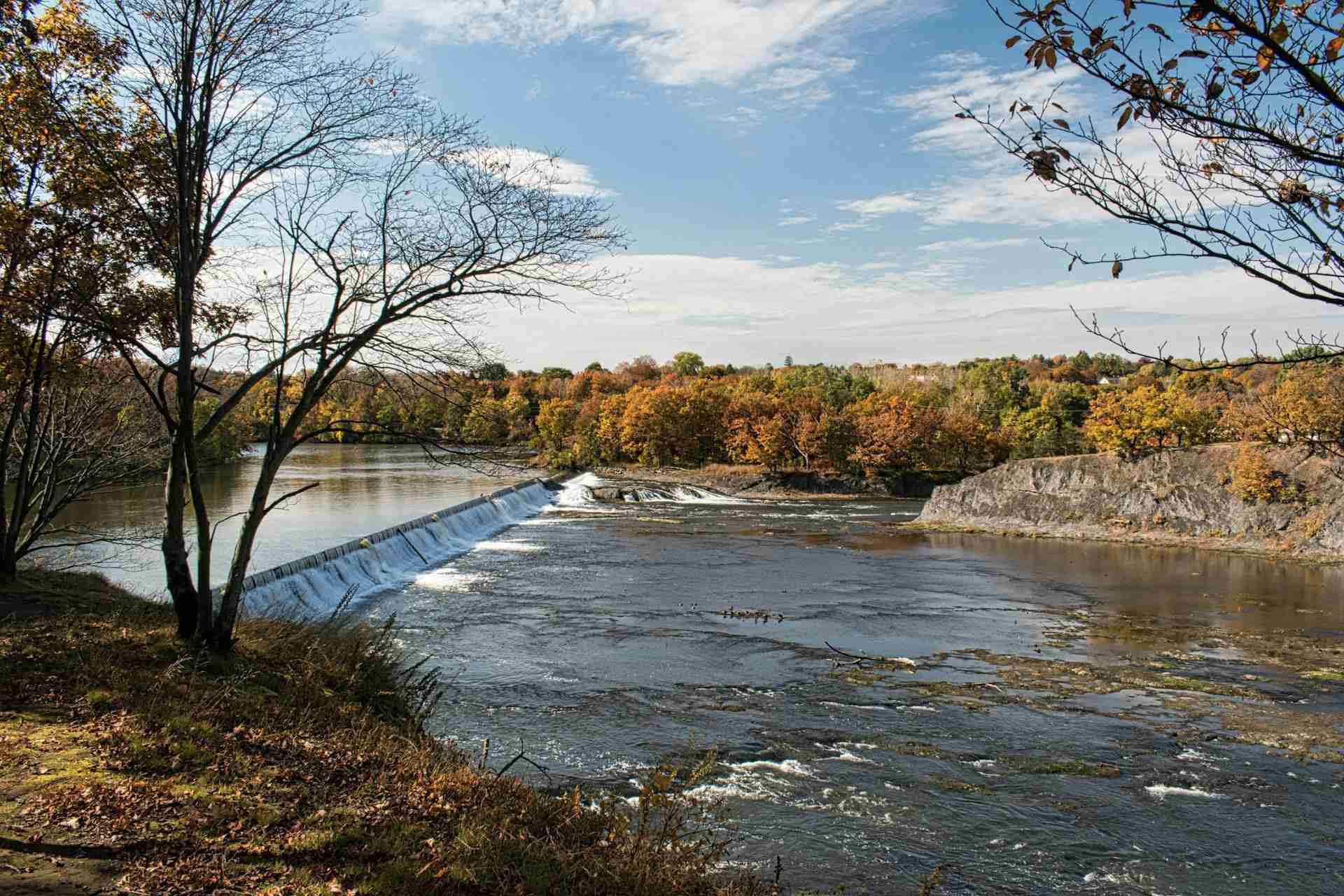
Set at the confluence of the Mohawk and Hudson Rivers in upstate New York, Peebles Island River Overlook offers photographers a peaceful yet dynamic vantage point shaped by water, woodland, and weathered stone. Located within Peebles Island State Park, the overlook sits above a dramatic stretch of river where tree-lined banks curve into the distance and the steady movement of water reflects the shifting tones of the sky. This is a landscape that rewards both patience and flexibility, offering opportunities for sweeping views in golden light, intimate studies of rock and foliage, and seasonal transformations that change the tone of the entire scene. Whether you arrive in the rich greens of summer, the gold and copper of fall, or the frosty stillness of winter, the overlook allows photographers to engage with the landscape from a position of quiet immersion and compositional control.
Best Photography Opportunities
• Wide River Vistas from the Main Overlook Point
The primary overlook near the southeastern edge of the island offers a commanding view across the Hudson River as it bends gently around a forested peninsula. This location is ideal for wide-angle compositions that capture the arc of the water and the texture of the surrounding canopy. Using a focal length between 16 and 24 millimeters allows you to include rocky foreground elements for depth while framing the river and sky in balance. The best light often comes just after sunrise or just before sunset, when the golden glow hits the treetops and casts soft highlights along the water's edge.
• Mid-River Islands and Reflections
At certain vantage points along the perimeter trail, small mid-river islands come into view, especially when water levels are low. These rocky outcroppings are often ringed by slow-moving water that acts as a mirror, reflecting nearby trees or cloud formations above. These spots work well for compositions that focus on stillness and symmetry. A polarizer can help manage glare and deepen the contrast between foliage and water, especially during the warmer months when the sun is high.
• Textural Details in Rock, Water, and Tree Roots
Beyond the grand views, Peebles Island offers close-up photographic opportunities that are rich in texture and form. Eroded rocks along the trail's edge display layers of sediment and lichen that work well for abstract or monochrome compositions. Exposed tree roots and moss-covered boulders along the waterline make strong subjects when paired with the motion of the river behind them. These compositions benefit from a tripod and careful framing to emphasize detail. Look for contrasting elements—wet stone against dry bark, or yellow leaves scattered on dark rock—for images that tell a quiet seasonal story.
• Fall Color Canopy Across the River Valley
In October, the forested banks surrounding the overlook turn brilliant shades of amber, gold, and deep red. From the overlook itself, you can frame the river as it cuts through the color, creating a visual corridor that emphasizes both depth and richness of tone. A moderate telephoto lens in the 70 to 200 millimeter range is useful for compressing these layers, particularly in late afternoon light when the valley glows. This is also an ideal time to return to the same spot multiple times across a week, as the changing color can shift dramatically in just a few days.
• Moody Atmosphere in Fog or Winter Ice
On misty mornings, the overlook takes on an entirely different mood. Fog settles over the river, softening outlines and reducing contrast, which makes for atmospheric wide shots or minimalist black-and-white frames. In winter, ice forms along the shoreline and snow dusts the branches and boulders below. This is a quieter visual palette but one full of subtlety and line. Using a neutral color grade or monochrome processing can emphasize the stark beauty of the frozen landscape.
Best Time to Visit
Peebles Island is photogenic throughout the year, but the character of the landscape changes significantly with the seasons. Spring brings fresh greenery and high water levels, which add movement and saturation to your river scenes. The tree canopy begins to fill in by late April, making this a good time for compositions that play with soft textures and early morning mist. Summer is vibrant and rich in color, but midday light can be harsh. Early morning and evening hours are the most productive during this season, particularly when you can catch warm light along the riverbank.
Autumn is the peak season for photography at the overlook. From late September through late October, the forest canopy turns into a blend of warm tones that make every view from the trail photographically rich. The lighting becomes more directional, and low sun angles help emphasize contrast in the foliage. Winter brings fewer visitors and a stark, minimal look to the overlook. Snow and ice change the shapes of familiar features, and the quiet of the frozen river creates a contemplative mood. The short days of winter also make sunrise and sunset more accessible for photographers willing to brave the cold.
How to Get There
Peebles Island State Park is located in Waterford, New York, just north of Troy and east of Cohoes. It is easily accessible by car, with clear signage leading to the entrance via Delaware Avenue and 2nd Street. From Albany, the drive takes approximately thirty minutes. The park offers a large parking area near the visitor center, which is a short walk from the main perimeter trail. The River Overlook itself is reached via a loop trail that circles the edge of the island. The path is flat and well-maintained, suitable for all levels of hiking ability, and takes about twenty minutes on foot from the parking lot to reach the overlook section.
There is a modest vehicle entrance fee during the warmer months, typically from spring through fall. Exact fees can vary, so it is best to check the New York State Parks website before your visit. During the off-season or winter months, access is often free. Restrooms are available near the parking area, and picnic tables can be found along the trail for breaks between sessions. The trail is open year-round, though winter conditions may include snow or ice. Crampons or microspikes are recommended during cold weather if you plan to shoot from closer to the river's edge.
Recommended Photography Gear
Peebles Island is a location that rewards flexibility and a thoughtful approach to gear. A wide-angle lens in the 16 to 35 millimeter range is essential for capturing the full expanse of the river and canopy from the overlook. This range allows you to include natural foreground elements such as rocks or tree trunks while still keeping the horizon and distant river bend in the frame. A telephoto zoom, such as a 70 to 200 millimeter lens, is equally useful for compressing river layers, isolating bands of color in the trees, or capturing the subtle textures of mist and ice in winter.
A sturdy tripod is important if you plan to work with long exposures or shoot in low light. For scenes that include water movement or fog, neutral density filters in the 6 to 10 stop range allow for slow shutter speeds even in bright daylight. A polarizing filter is also useful throughout the year, helping to cut glare off the water and enhancing contrast in leaves and wet rock.
Because you will be walking along natural trails, a comfortable backpack is essential. Look for a model that distributes weight evenly and allows quick access to your lenses and accessories. Bring lens cloths and weather protection, especially in seasons where moisture and mud are likely. In autumn and winter, hand warmers and gloves with touchscreen-compatible fingers make it easier to shoot without losing dexterity. During summer visits, insect repellent and hydration are key, as the riverside trails can be warm and humid.
Nearby Photography Locations
Just a short drive south of Peebles Island, Cohoes Falls is one of the largest waterfalls east of the Mississippi and offers a dramatic subject, especially after heavy rain. The falls are best photographed from the viewing platform at Falls View Park, where you can use a telephoto lens to highlight the flow of water and the surrounding gorge. Sunrise and sunset bring warm light that enhances the rock textures and mist rising from the cascade.
• Waterford Flight Locks and Erie Canal
To the north of the island lies the historic Waterford Flight, a series of locks that raise and lower boats on the Erie Canal. This area is rich in both mechanical detail and historical structure, making it an excellent location for industrial and documentary-style photography. The canal itself is also a reflective surface that can be used creatively at dawn or dusk to capture long horizontal compositions.
South of Peebles Island, the city of Troy offers a riverfront walkway that provides views of the Hudson River along with classic urban architecture. The walk includes piers, bridges, and moored boats, all of which are visually interesting when combined with strong directional light. Golden hour turns the river into a band of gold and orange, and the city skyline adds variety to wide compositions.
Inland from the river, a network of towpath trails follows the old Erie Canal route. These wooded trails are less visited but full of quiet beauty, particularly in the fall. Tree-lined paths, slow-moving water, and remnants of stone canal locks provide opportunities for reflection photography and calm, symmetrical compositions.
Peebles Island River Overlook may not be the highest or most famous viewpoint in New York, but it offers a layered and intimate connection to the rivers that define the region. The rhythm of the water, the seasonal color in the trees, and the quiet presence of stone and wood all contribute to a photographic experience rooted in observation and patience. Whether you come for a quick sunrise session or spend a full day circling the island, the overlook invites you to slow down and engage with the land one frame at a time.
Comments
Loading comments…