
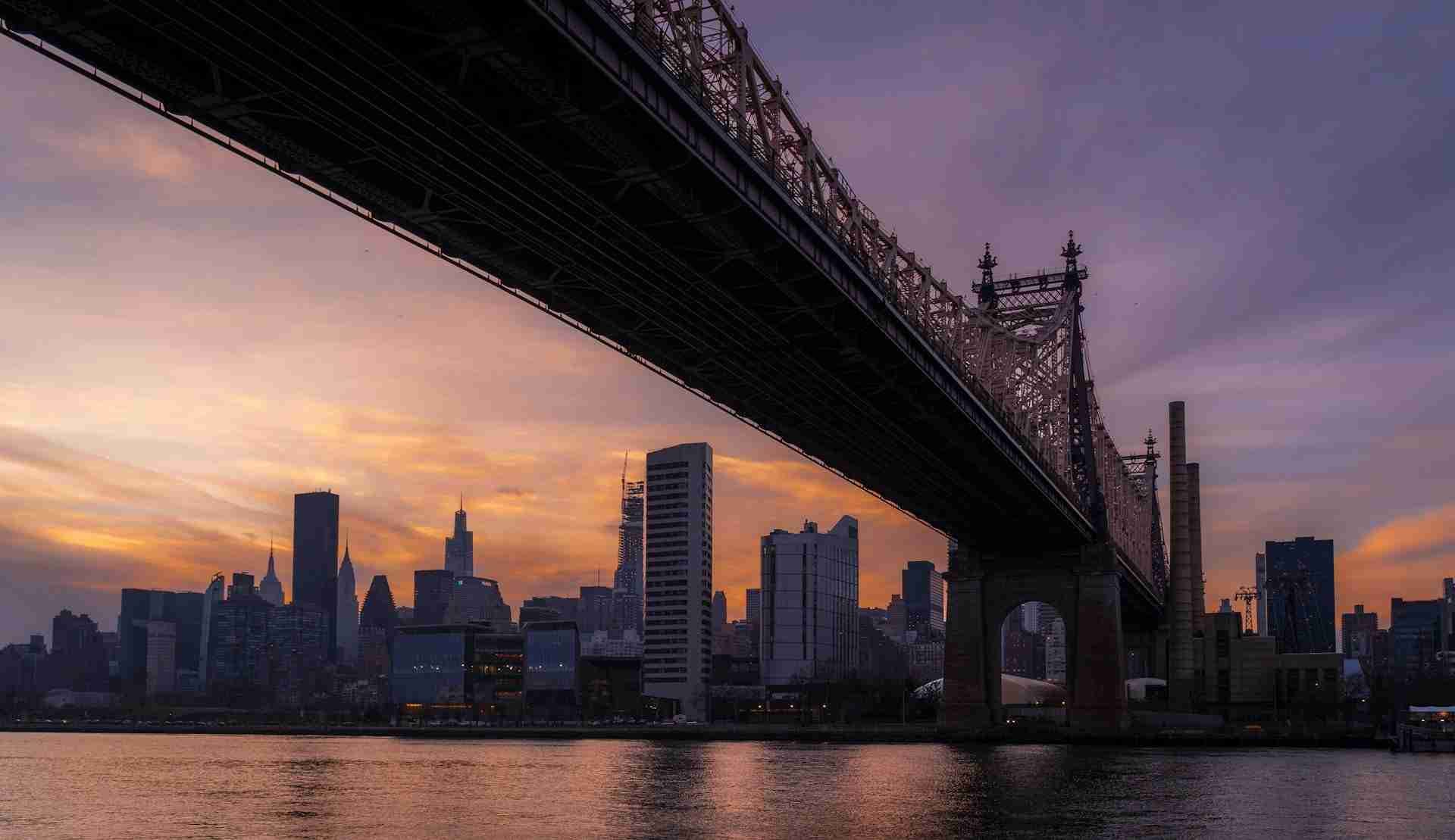
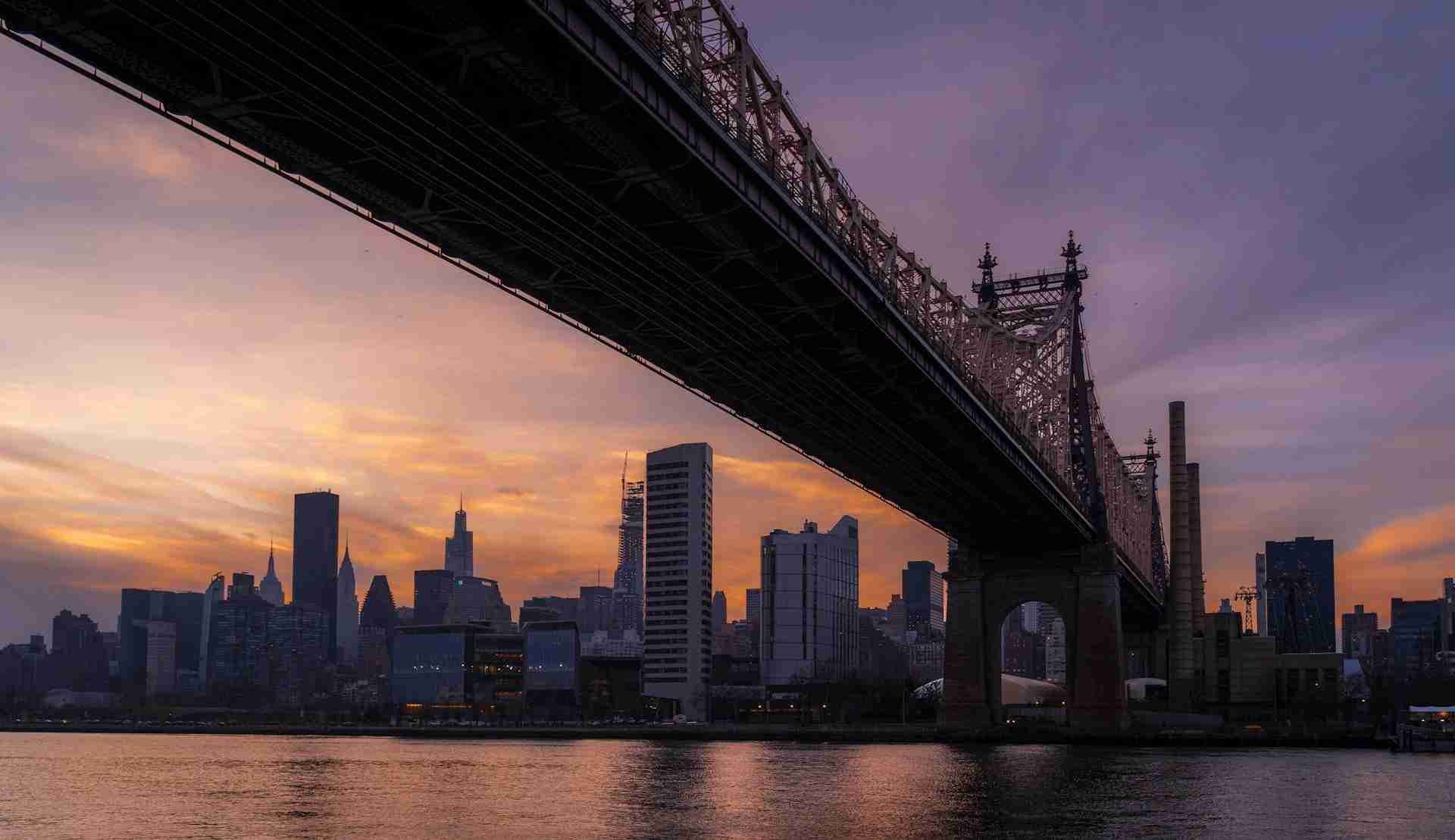
Stretching across the East River between Manhattan and Queens, the Queensboro Bridge—also known as the 59th Street Bridge—is a towering steel cantilever structure that offers one of the most visually rich industrial subjects in New York City. With its intricate latticework, elevated tram lines, and skyline backdrops, the bridge presents an imposing yet elegant form that shifts dramatically depending on your vantage point. Directly beneath it, Queensbridge Park provides an unexpectedly quiet and accessible green space from which to photograph the bridge, the Manhattan skyline, and the flowing East River.
While the bridge is a bustling artery of city life, Queensbridge Park offers a sense of spatial contrast. Here, you'll find grassy lawns, mature trees, and unobstructed river views that frame the bridge from below. Together, the bridge and the park form a dynamic duo of steel geometry and waterfront tranquility, ideal for photographers seeking both monumental structure and natural serenity within the same frame.
Best Photography Opportunities
• Bridge Span from the Waterfront Path
The most compelling view of the Queensboro Bridge from Queensbridge Park is found along the riverside path, where the full cantilever span stretches out across the East River with Manhattan's Upper East Side as a backdrop. A wide-angle lens captures the bridge's structure as it diminishes in perspective, leading the viewer's eye toward Roosevelt Island and the Midtown skyline. Shoot during golden hour for warm light that grazes the steel trusses and brings out their reddish tone.
• Underpass and Support Structure Details
Standing directly beneath the bridge where it touches down in Queens, you'll find powerful geometric compositions of girders, support piers, and shadow play. Use a mid-range zoom or wide-angle lens to exaggerate the scale and structure, shooting upward into the overlapping beams. This location works particularly well during the day when sunlight cuts through the open trusses and casts sharp architectural shadows on the pavement and ground.
• Long Exposure River and Skyline Shots
From the water's edge in Queensbridge Park, long exposures can create serene, minimalist compositions of the bridge with smoothed water below and layered skylines beyond. Include Roosevelt Island in the midground for additional texture, or frame the bridge alongside passing boats or the Roosevelt Island Tramway for a sense of movement. Early morning or blue hour produces rich, deep colors and lights reflecting on the water's surface.
• Bridge at Night with Tramway Motion
At night, the Queensboro Bridge becomes a glowing structure of steel and light. The Roosevelt Island Tramway adds motion and context as it crosses beneath the upper deck. Use a tripod to capture long exposures with the tram as a blur of light trailing beneath the bridge, while city windows and traffic create a tapestry of color. Position yourself further north along the park's walking path for a more layered composition including skyline, bridge, and tram in one frame.
• Park Elements and Human Scale
Queensbridge Park itself offers a quieter photographic story: people walking along the waterfront, playing sports, or sitting on benches under the looming presence of the bridge. These scenes allow you to place human figures in relation to the massive structure, grounding your images and adding emotional resonance. Try environmental portraiture with the bridge blurred in the background, or include architectural elements like lamp posts or fences to frame the scale contrast.
Best Time to Visit
Golden hour provides the richest light on the bridge's steel trusses, particularly in the evening when the sun sets behind Manhattan and casts warm light across the river and into the Queens side. Early morning light tends to be softer and cooler, ideal for more minimalist compositions with fewer people and gentler tones.
Blue hour and night are especially strong for capturing the bridge's lights, reflections in the water, and motion trails from cars or trams. The park is open year-round and each season brings new textures—winter's bare trees open up sightlines to the structure, while summer's greenery adds organic contrast to the steel framework.
Crowds in Queensbridge Park are generally light compared to Manhattan's riverside parks, making it easier to set up a tripod or return to the same spot throughout the day as the light changes.
How to Get There
Queensbridge Park is located along Vernon Boulevard in Long Island City, just east of the Queensboro Bridge. From Manhattan, take the F train to 21st Street–Queensbridge, then walk west toward the river. You'll find park entrances along Vernon Boulevard between 41st Avenue and Queens Plaza South.
If arriving by car, limited street parking is available nearby, though public transit is usually more efficient. The park includes paved paths, grassy fields, and seating areas all positioned with clear views of the bridge and river. Roosevelt Island is also accessible via the tram, which departs from Manhattan's Upper East Side and provides elevated views of the bridge along the way.
Recommended Gear and Shooting Tips
A wide-angle lens is essential for capturing the full span of the bridge from park level or for standing directly beneath it. A 24–70mm zoom is useful for flexibility between full structure and detailed framing, especially when capturing overlapping girders or the tram in motion. For long-distance skyline layering, a 70–200mm telephoto can compress the bridge, Roosevelt Island, and Manhattan into dramatic stacked compositions.
Use a tripod for low-light and long-exposure work, especially when shooting from the waterfront or incorporating motion blur from the tramway. A polarizer can help manage reflections off the river and deepen the blues in the sky on clear days. Neutral density filters are useful for smoothing the water during long exposures or reducing glare during mid-day shooting.
Consider visiting more than once to explore different weather conditions and times of day. The interplay of steel, sky, and water changes dramatically with light and atmosphere. Be aware of fast-moving shadows under the bridge and shifting reflections on the river—small adjustments in angle or timing can make a major difference in mood.
Nearby Photography Locations
The tram itself provides a high, lateral view of the bridge and city. Ride it from Manhattan to Roosevelt Island for aerial photography with a unique perspective of the East River and surrounding neighborhoods.
Just south in Long Island City, this riverside park offers some of the best skyline views of Manhattan, especially during sunset. Old gantry cranes and modern piers create industrial-meets-urban compositions.
On the Manhattan side, the Sutton Place area offers a narrow public viewing platform tucked between buildings. It's one of the few elevated spots for photographing the bridge from the west with clean lines and reduced foot traffic.
Walk across the bridge itself via the northern pedestrian path. This elevated trail provides dramatic views down the East River and across Roosevelt Island, plus close-ups of the bridge's steel elements in mid-span.
A bit further south, this park features marshland, boardwalks, and skyline backdrops. It's a great spot for sunrise photography or minimalist waterfront scenes.
Queensboro Bridge and Queensbridge Park together provide a rare combination of industrial design, open space, and layered urban context. For photographers seeking dramatic structure, dynamic light, and a touch of calm in the heart of New York City, this riverside pairing offers endless ways to frame, reflect, and explore.
Comments
Loading comments…