
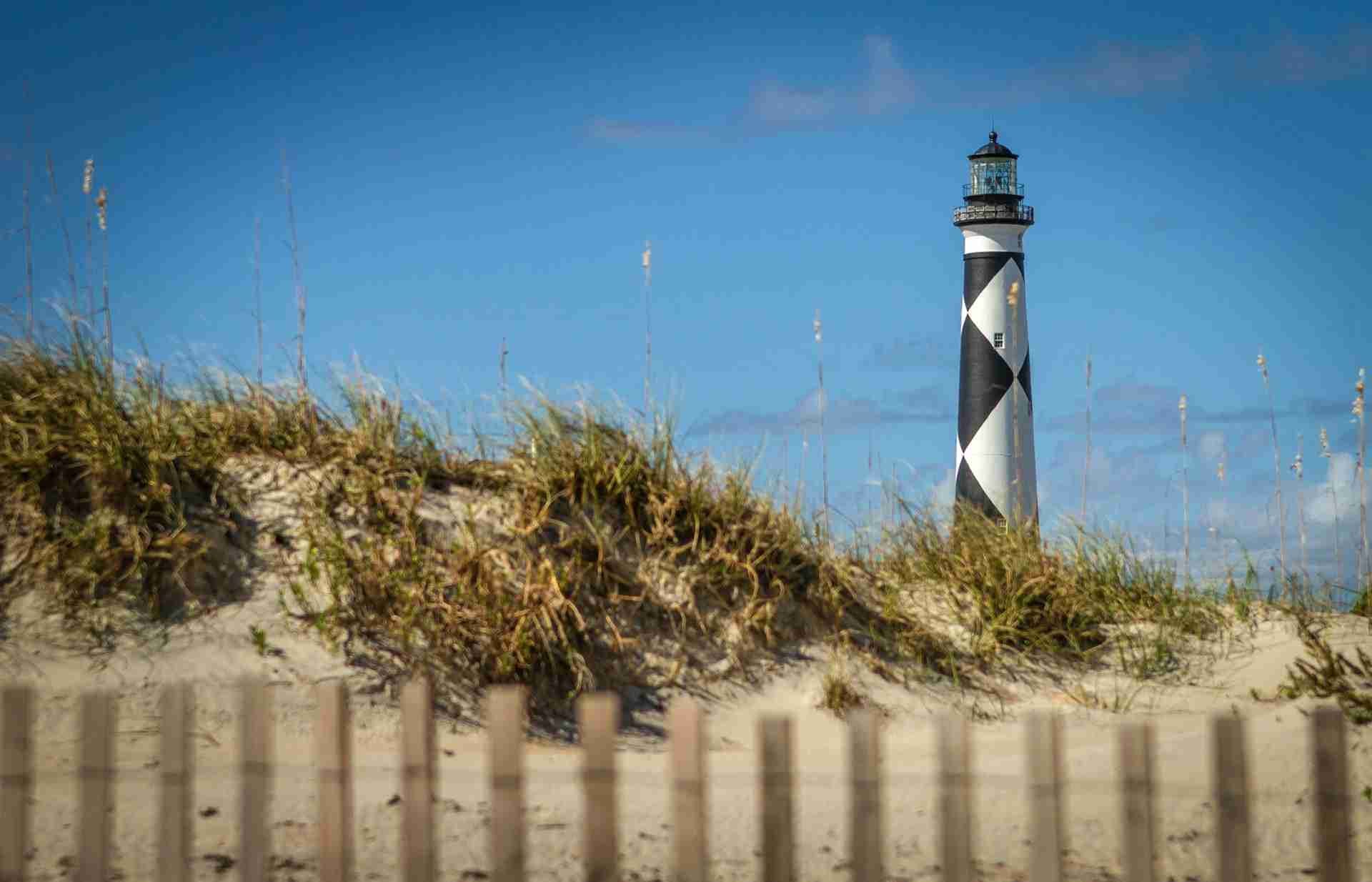
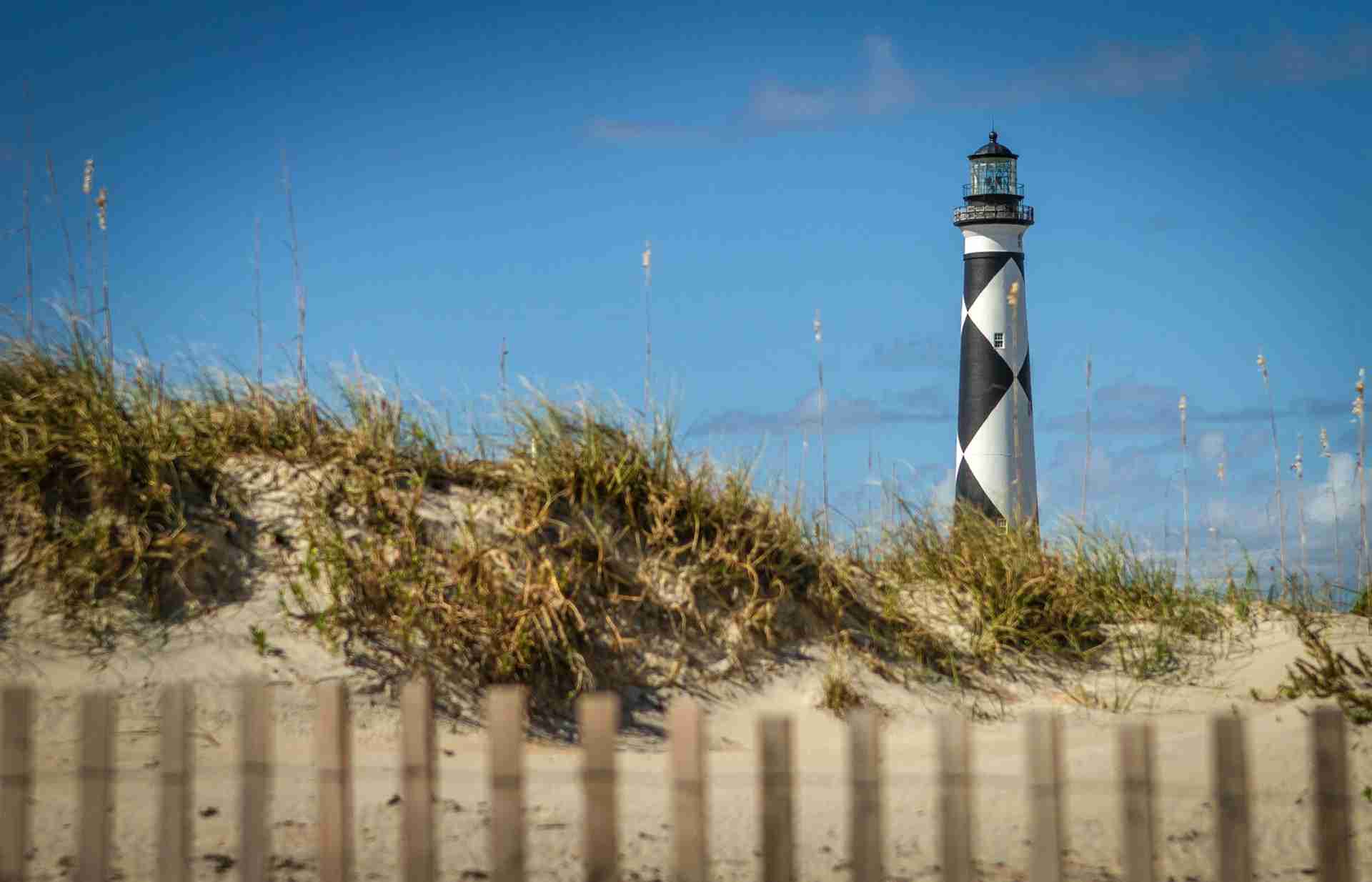
Rising from the southern tip of the Core Banks, Cape Lookout Lighthouse stands as a striking visual anchor along North Carolina's remote Outer Banks. Recognizable by its black-and-white diamond daymark, this 163-foot tower overlooks a sweep of undeveloped barrier islands, tidal marshes, and the open Atlantic. Viewed from Harkers Island or photographed up close on the Core Banks themselves, the lighthouse draws photographers not just for its shape and contrast, but for the setting it occupies: vast skies, reflective tidal flats, and ever-changing weather rolling in from the sea. This isn't a location built around quick roadside access—it's a place for deliberate shooting, where the quality of light and the sweep of clouds shape each frame in real time.
The lighthouse is part of the Cape Lookout National Seashore, a protected area spanning multiple barrier islands accessible only by boat or ferry. The scene here is defined by open space, minimal distractions, and natural rhythm. Light reflects off shallow waters and soft dunes, with the lighthouse providing vertical emphasis in an otherwise horizontal world. Whether you're after classic compositions or looking to experiment with long exposures and minimalist design, Cape Lookout delivers a rewarding, flexible environment that encourages photographers to slow down and look carefully.
Best Photography Opportunities
• Full Portraits of the Lighthouse from the Beach
: Once you reach the Core Banks, you have open access to the lighthouse and the surrounding beach. One of the most effective compositions is a straight-on portrait of the tower from the nearby dunes. This works especially well in soft morning or evening light when shadows help define the tower's shape. The nearby dunes can be used as foreground interest, with sea oats or driftwood adding visual balance. A wide-angle lens will let you place the lighthouse within its environment, while a standard zoom lens helps you isolate the tower with just enough sky to keep the frame feeling open and calm.
• Reflections in Tidal Pools and Wet Sand
: After a rain or during certain tidal conditions, shallow pools of water collect near the base of the lighthouse and along the flat areas of beach. These reflective surfaces can double the impact of the scene, creating symmetrical compositions with the lighthouse and sky mirrored in the water. These images are most effective when shot during calm conditions, so the surface remains smooth. Set up your tripod low to the ground and position the lighthouse centrally to make the most of the reflection. Early morning or blue hour provides the most consistent light for this type of photo, but even on overcast days the results can be striking.
• Boat Approaches from Harkers Island
: The ferry ride from Harkers Island to the Core Banks offers some surprising opportunities for photography, especially if you are using a long lens. As the boat crosses the sound, you will see the lighthouse in the distance, sometimes framed by dunes or weather patterns forming overhead. Shooting from the deck of the ferry with a steady hand or monopod allows you to compress the distance and capture the tower against dramatic skies or streaks of light on the water. These shots work well at sunrise when the sky is full of color or in the late afternoon when the sun is behind you and the lighthouse is fully illuminated.
• Star Photography and Milky Way Alignments
: Cape Lookout is far enough from urban centers to offer very dark skies, making it one of the better spots on the East Coast for night photography. On clear nights during new moon phases, the stars come alive over the lighthouse. The lack of light pollution means you can photograph the Milky Way stretching across the sky with the lighthouse in the foreground. This requires a fast wide-angle lens, a steady tripod, and a little patience for setup in the dark. Frame the tower slightly off center and allow the curve of the stars to arc through the composition. The diamond pattern of the lighthouse is still visible in moonlight, which adds a subtle grounding element to your scene.
• Stormy Weather and Changing Skies
: One of the most rewarding challenges for photographers at Cape Lookout is working with the fast-moving coastal weather. Storm fronts roll in from the southeast, bringing texture and mood to the sky. Under these conditions, the lighthouse becomes even more visually striking as it stands out against dark clouds or dramatic shafts of sunlight. Use a polarizing filter to enhance contrast in the sky or bracket exposures to retain detail across a wide range of brightness levels. On windy days, long grasses and sand patterns add motion and character to your foreground. Just be sure to protect your gear from blowing sand and salty air.
Best Time to Visit
Cape Lookout is open to visitors throughout the year, but the conditions for photography shift with each season. Spring is one of the most balanced times to visit. The temperatures are comfortable, the air is clear, and there is often a mix of sunny and cloudy days that make for interesting lighting. April and May are especially good months if you want to catch sunrise or sunset with just enough color and softness in the sky.
Summer brings strong sunlight and long days, which can be helpful for extended shooting sessions but also adds challenges with harsh midday light and higher humidity. Early mornings and late evenings are the best windows during the summer months. Late summer also brings the potential for fast-moving storms, which can produce excellent cloud formations and dramatic skies.
Autumn is perhaps the most consistent season for landscape photographers. From late September through November, the light takes on a warm tone and the sun stays lower in the sky, making nearly every hour feel like golden hour. The weather tends to be calmer, and crowds are minimal, giving you the space to move and work freely.
Winter has its own rewards. The low sun angle means you can photograph with golden light almost all day long. While the vegetation is sparse and the colors more muted, the shapes and structure of the landscape stand out more clearly. This is a good season for minimalist compositions and long exposure work. Keep in mind that ferry schedules may be more limited during the winter months, so check availability before planning a trip.
How to Get There
Cape Lookout Lighthouse sits on the Core Banks, a barrier island within the Cape Lookout National Seashore. The only way to reach the island is by boat. The most convenient departure point is Harkers Island, where authorized ferry services run daily during the warmer months and on a reduced schedule during the off-season. The ferry ride typically takes around twenty minutes and lands near the lighthouse, allowing easy access to the main trails, dunes, and shoreline.
If you are traveling by car, Harkers Island is located about forty-five minutes from Beaufort and roughly three hours from Raleigh. Parking is available near the ferry terminal, and it is best to book your ferry ticket in advance, especially during weekends or holidays. There is no fee to visit the lighthouse grounds, but there is a cost for the ferry, and any extended stays on the island require a backcountry camping permit.
Once you arrive on the island, everything is done on foot. Trails are sandy but relatively flat, and the lighthouse is a short walk from the ferry drop-off. Bring plenty of water, sunscreen, and protective gear for your equipment, as there are no stores or shelters outside the visitor area. Facilities such as restrooms and a small visitor center are open seasonally.
Recommended Photography Gear
Cape Lookout is a minimalist location by nature, so your gear should be simple but capable. A full-frame camera with good high ISO performance will help in low-light and night conditions. Bring a wide-angle lens in the 14 to 24 millimeter or 16 to 35 millimeter range for landscape and sky shots. A standard zoom such as a 24 to 70 millimeter lens offers flexibility for capturing both the lighthouse and nearby dune patterns. For shooting across the water or from the boat, a 70 to 200 millimeter lens works well to compress distance and frame the tower with sky layers or approaching weather.
A tripod is essential for sunrise, sunset, and long exposures. Coastal wind is often present, so make sure your tripod is stable and weighted if needed. Filters are helpful but not mandatory. A circular polarizer deepens the sky and helps manage glare off wet sand or water. A neutral density filter allows you to slow shutter speeds during brighter light, giving smooth movement to clouds and waves.
Protect your gear with lens cloths, waterproof covers, and sealed storage bags for the ferry ride. Salt air and sand can build up quickly, so routine cleaning is important. Also bring a flashlight or headlamp if you plan to shoot during the early morning or after dark. Lightweight, breathable clothing and waterproof footwear will keep you comfortable as you move across dunes, wet sand, and shallow water.
Nearby Photography Locations
: Located just west of Cape Lookout, Shackleford Banks is known for its herd of wild horses that roam freely across dunes and marshland. These horses make for excellent wildlife photography, especially when photographed with long lenses in soft morning light. The setting feels wild and untouched, with natural beach scenes that shift with the tide and weather.
: Before or after your ferry ride, spend time exploring the shoreline at Harkers Island. From here, you can photograph the lighthouse across the water, especially at sunrise when the tower is silhouetted against the glowing sky. Wooden docks, marsh grasses, and oyster beds offer foreground interest and lead the eye across the sound.
: Further north along the Core Banks, Portsmouth is a ghost village of historic homes and weathered paths. The village is only accessible by boat and takes more effort to reach, but the reward is a quiet, historic setting with wide-open space and unique structures that lend themselves to documentary and fine-art styles.
: Across from Beaufort, this reserve includes tidal creeks, mudflats, and marshland. You can photograph flocks of birds, dramatic skies reflected in shallow water, and the interaction between land and sea in this protected area. Small boats or kayaks give you the best access for low-angle shooting.
: Just inland, the town of Beaufort offers a classic harbor setting with wooden boats, reflective water, and historic homes. It is especially photogenic at sunset when the harbor lights begin to glow and the last light lingers on the water.
Cape Lookout Lighthouse is more than just a scenic tower at the edge of the Atlantic. It is a complete photographic environment where light, landscape, and weather work together to shape your images. It encourages a slower rhythm, the kind where you take your time setting up a shot and let the scene unfold. Whether you are after reflections, storms, stars, or just the play of sun on sand, this is a place where every frame feels earned and every visit brings something different to see.
Comments
Loading comments…