
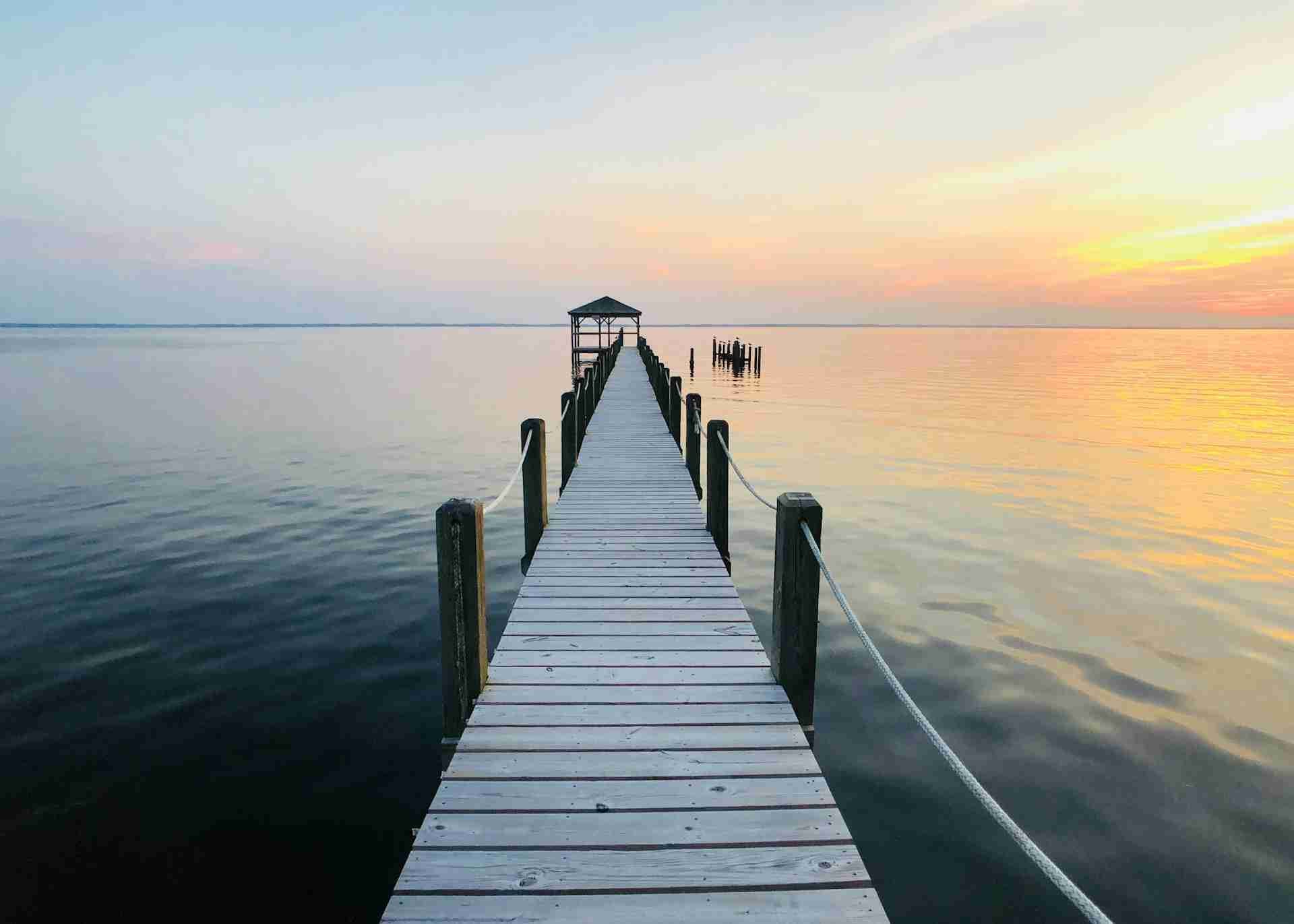
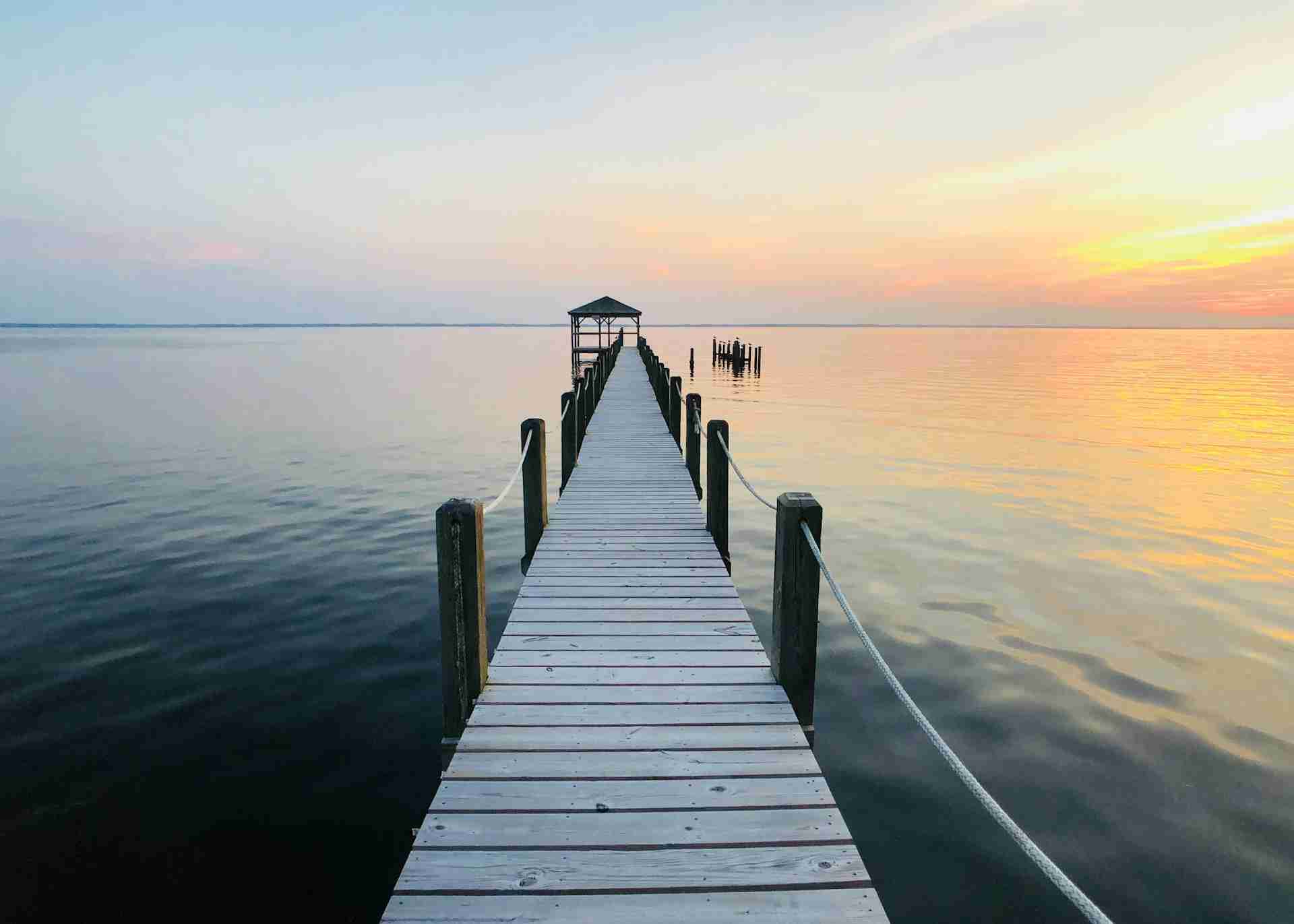
Stretching quietly along the edge of Currituck Sound, the Duck Town Park Boardwalk offers a calm and scenic setting for landscape and nature photographers on North Carolina's Outer Banks. The wooden boardwalk meanders through marsh grasses, over creeks, and past groves of maritime forest, providing unobstructed views across the sound. With long sightlines, open skies, and mirror-like water, the location is particularly rewarding at sunrise and sunset when color fills the horizon and reflects on the calm surface. Wildlife such as herons, egrets, and osprey frequent the area, and the boardwalk's simple lines and materials allow the natural elements to remain the visual focus. Whether you're capturing the changing sky, close-up marsh textures, or silhouettes against evening light, this is a place where patient observation is often rewarded with quiet, layered images.
Best Photography Opportunities
• Sunset Over Currituck Sound
The boardwalk faces west across the sound, making it one of the best spots on the northern Outer Banks to photograph the full gradient of color as the sun sets over the water. Use a wide-angle lens to include marsh grasses or wooden railings in the foreground, adding depth to the sky's reflection. Calm days produce clean mirror effects, while light wind introduces gentle ripples that add texture. Arrive at least 30 minutes before sunset to catch the soft transition of tones, and stay through twilight for deeper blues and silhouettes. A tripod is useful for longer exposures once the light fades.
• Leading Lines of the Boardwalk
The boardwalk itself is a strong compositional tool, drawing the eye through the frame and toward distant trees or open water. Shoot along the boardwalk from a low angle to emphasize its shape and vanishing point, especially during golden hour when side light creates long shadows. Including railings, light posts, or resting benches can add rhythm and break up the linear repetition. These frames benefit from symmetry and controlled framing, making them ideal for early morning or late afternoon when the sun defines structure without overexposure.
• Wildlife in the Marsh and Sound
The calm sound and surrounding wetlands are home to a variety of birds and aquatic life. Early morning is the most productive time to photograph herons, ducks, and wading birds as they hunt or rest in the shallow water. A telephoto lens is necessary to isolate subjects at a distance without disturbing them. Reflections in still water can add a second visual layer, and overcast skies reduce glare, making feather detail easier to capture. Be patient and move slowly along the boardwalk to avoid startling wildlife.
• Reflections and Detail in Tidal Channels
Small channels and inlets run beneath sections of the boardwalk, offering excellent opportunities for close-up water reflections, patterns in mud, and shifting grasses. These scenes change with tide and light, revealing new compositions at different times of day. A standard zoom or short telephoto lens helps frame these small scenes without distortion. Look for repeating patterns in reeds, bubbles, or water movement, and try shooting with the sun behind you to bring out color and clarity. These frames are subtle but add depth to a broader landscape story.
• Silhouettes of Trees and Visitors
As light fades, the outlines of trees and figures walking the boardwalk create simple yet expressive silhouettes. Use a moderate telephoto lens to compress the scene and position the subject against the brightest part of the sky. Fast shutter speeds help preserve sharp edges in low light. These images are strongest when there is color remaining in the sky or light reflecting on the sound below. A small aperture maintains definition along branches or railings, while careful timing ensures subjects are placed clearly within the frame.
Best Time to Visit
The boardwalk is accessible and photogenic year-round, but conditions vary significantly with season. Spring and fall offer the most comfortable temperatures and the richest sky colors, particularly in the evening. Bird activity is also highest during these migration periods, making it easier to capture varied wildlife. Summer brings warmer skies, longer daylight, and frequent dramatic clouds forming over the sound late in the day. Winter is quieter and often provides stiller air and clearer skies, though the landscape is more muted in color.
Sunset is the most productive time of day for wide landscape compositions, while early morning offers the best chances for wildlife and texture-focused work. Midday light tends to be harsh and less effective, though overcast conditions can open up opportunities for photographing details and reflections without deep shadows.
Wind can be a challenge, particularly in winter and early spring, as it disturbs the water's surface and makes long exposures more difficult. Watch for passing storms in the summer that can create dramatic skies with light breaking through clouds in the hour before dusk.
How to Get There
Duck Town Park and its boardwalk are located along the sound side of Duck, North Carolina, just off Duck Road (NC 12). The entrance is well marked, and parking is available near the Town Hall or across from the main park area. The boardwalk begins near the amphitheater and runs for nearly a mile along the sound, connecting to shops and open observation decks.
There is no fee to enter the park or use the boardwalk. Paths are flat and fully accessible, with occasional benches and shaded sections along the way. Photographers can access the boardwalk at several points, making it easy to plan a session around light and weather conditions. Restrooms and water fountains are available near the park entrance.
Tripods and camera gear are permitted throughout the park. Because it's a shared public space, be courteous to walkers and avoid blocking the path with gear, especially during sunset when foot traffic increases.
Recommended Photography Gear
A wide-angle lens is ideal for capturing the full expanse of sky, boardwalk, and water reflections. A standard zoom (24–70mm) adds flexibility for framing wildlife, detail shots, or people in silhouette. A telephoto lens in the 100 to 400 millimeter range is especially useful for bird photography and for compressing silhouettes at a distance.
A lightweight tripod is helpful for twilight or long exposure work, and a circular polarizer improves contrast in skies and reduces reflections on water surfaces. A lens cloth is essential for cleaning off sea spray or moisture during humid evenings. Filters, including neutral density, can be helpful for softening water movement if there's any tidal action or wind.
Comfortable walking shoes and weather-appropriate clothing will keep you focused on shooting rather than conditions. Bug spray is advisable during warmer months, particularly around dusk. Extra batteries and memory cards should be brought along, especially if you're shooting extended sequences of light change at sunset.
Nearby Photography Locations
Just north of Duck, this boardwalk offers similar access to marsh and sound views, with slightly more open water and fewer trees along the edge. It's ideal for sunset silhouettes and wildlife photography in quieter conditions.
A short walk from the boardwalk, the Atlantic side of Duck features sand dunes, sea oats, and wide ocean horizons perfect for sunrise sessions. The early morning light here offers a strong contrast to the warm tones of the soundside at dusk.
South of Duck, this protected area includes maritime forest, salt marshes, and elevated viewpoints over the sound. It's excellent for bird photography and sunrise or overcast mood shots in a more wild setting.
Located in Corolla, the lighthouse and its surrounding park offer structured compositions with strong vertical elements and tree-lined paths. It's best photographed in soft morning light or on overcast days to reduce glare on red brick.
Further south, this reserve features swamp forest trails, canals, and shaded paths ideal for quiet, texture-driven photography. It's a good midday option when light is too harsh for open water.
Duck Town Park Boardwalk brings together calm scenery, layered natural textures, and some of the Outer Banks' best sunset light in a setting that rewards both quiet exploration and precise composition. Whether you're working with motionless reflections or dramatic silhouettes, the boardwalk offers space to slow down and photograph with intention.
Comments
Loading comments…