
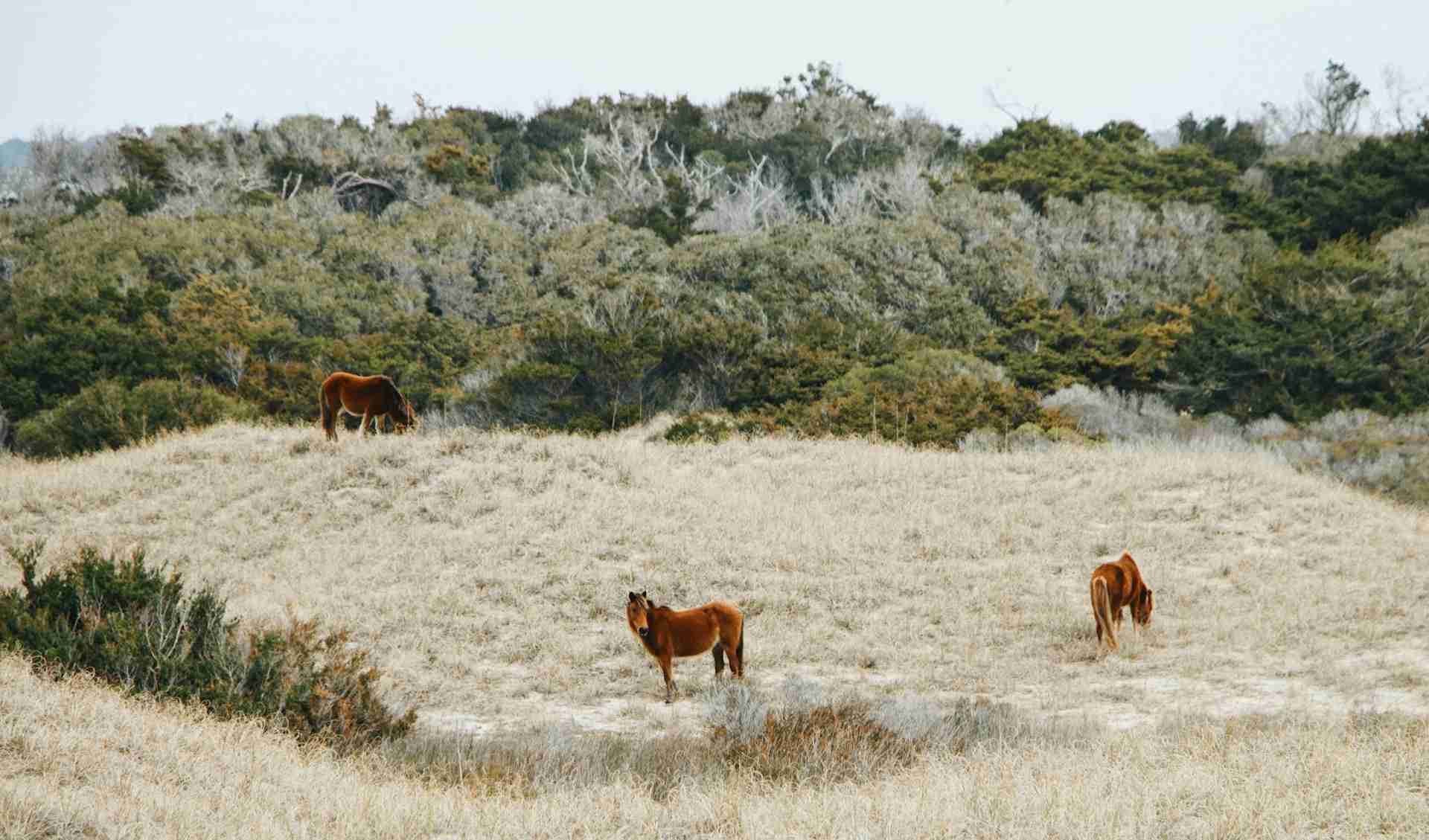
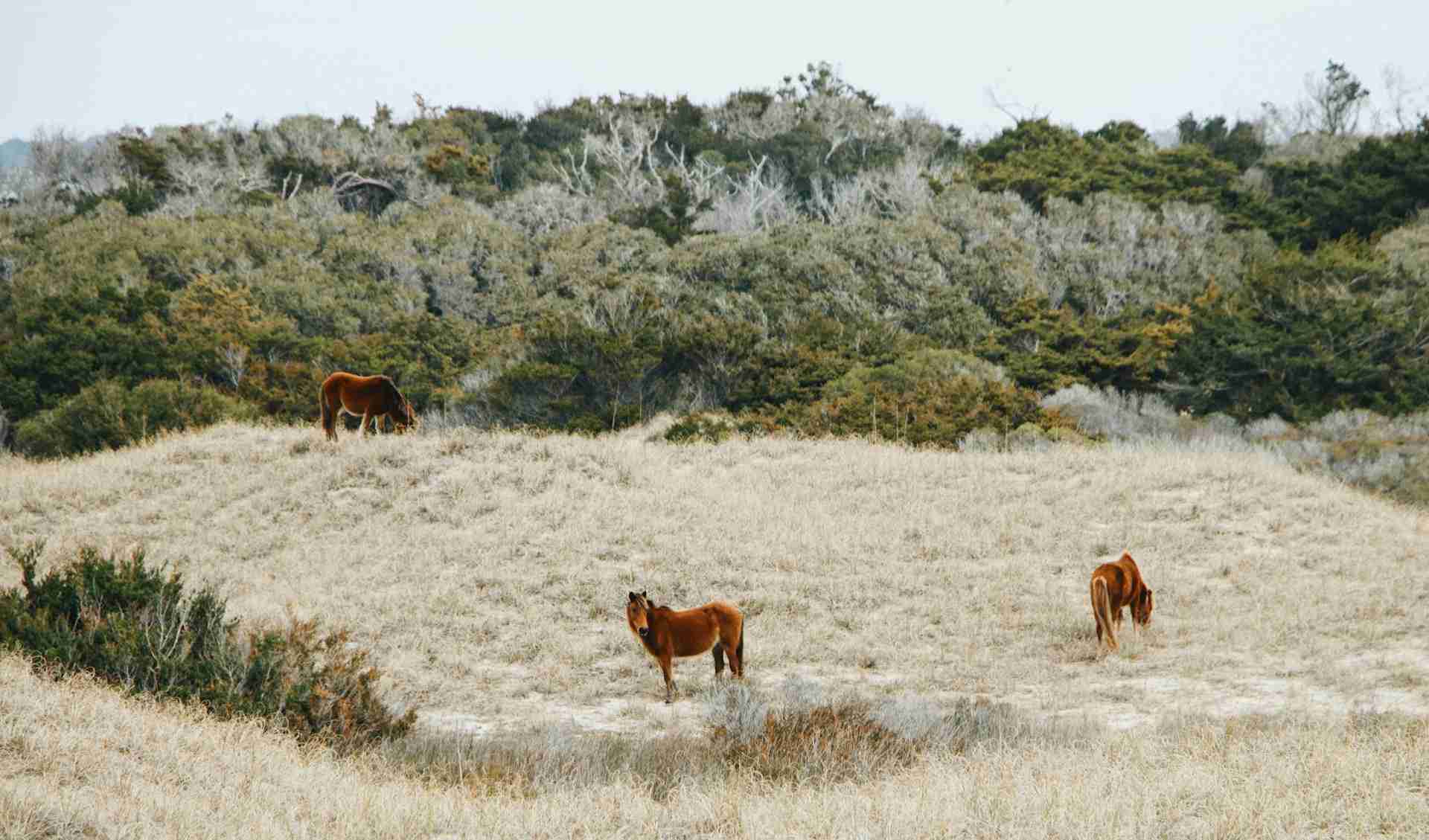
Just off the coast of North Carolina, at the southern tip of the Cape Lookout National Seashore, Shackleford Banks offers a rare blend of untamed shoreline, shifting dunes, and wild horses that roam free against a backdrop of sea and sky. The island, part of the Outer Banks chain, is accessible only by boat, giving it a quiet, undisturbed feel that makes it a dream for photographers looking to capture nature at its most raw and unfiltered. There are no roads, no development, and no distractions—just nine miles of barrier island where light, texture, and movement come together in scenes that feel timeless.
Photographers come here not just for the horses but for the clean lines of the beach, the shapes of the dunes, and the way weather moves over the sea and marsh. You might spend a morning chasing mist through the maritime forest, then shift to golden hour light along a tidal creek as birds rise from the marsh grass. The landscape here shifts constantly with the tide and wind, revealing new compositions every few steps. It's a location where you slow down, stay alert, and let the environment guide your lens.
Best Photography Opportunities
• Wild Horses in Natural Light
: The feral horses of Shackleford Banks are descendants of Spanish mustangs, and they move freely across the island. You might find them grazing near the dunes, standing at the edge of the sea, or wandering through the tall grass inland. The best light for photographing them is during the early morning or late afternoon, when long shadows and soft tones bring out their shape and movement. Use a telephoto lens to capture them respectfully from a distance. A 200 to 400 millimeter range allows you to frame tight shots without disturbing them or risking their trust.
• Dune Lines and Beach Forms
: The island's dunes are constantly sculpted by the wind, creating wave-like patterns and ridgelines that catch the light beautifully. These features are especially effective when photographed in side light during golden hour. Look for sea oats, driftwood, or shell beds to anchor your foreground. A wide-angle lens helps emphasize scale and depth, while a polarizing filter can bring out contrast in the sand and sky. Pay attention to footsteps—your own or others—so you don't disrupt an untouched composition.
• Marsh Reflections and Tidal Pools
: On the sound side of the island, tidal flats and shallow marshes open up into reflective pools that mirror the sky. These areas are particularly photogenic during low tide or just after a storm, when the water is still and glassy. Birds often fly low across the water, creating motion that adds a dynamic element to still frames. A tripod allows for longer exposures that smooth ripples and enhance the calm feel. Early morning light brings out subtle pinks and blues in the sky and water, making these areas ideal for soft, tonal landscapes.
• Shell Studies and Sand Textures
: Shackleford Banks is known for its abundance of seashells, which wash ashore in all sizes and colors. Macro or close-up photography here reveals endless variation in pattern and form. Use soft morning or overcast light to avoid harsh shadows, and shoot from low angles to let shells stand out against the sand. You can also work with rippled textures in wet sand or capture how foam from receding waves interacts with sea debris.
• Storm Skies and Fast-Changing Weather
: Being on the open Atlantic, the island is often the first to see incoming storm systems. Dark clouds and filtered light make for powerful compositions, especially when paired with the stark simplicity of dunes or the solitary profile of a horse against the horizon. Bracketing exposures helps manage difficult lighting, and using a graduated ND filter can balance the brightness of the sky with the darker foreground. Weather moves quickly here, so be ready to adjust your setup with little notice.
Best Time to Visit
The best months for photography on Shackleford Banks are during the spring and fall when temperatures are mild, humidity is lower, and crowds are minimal. April through May and September through early November offer clean light, active wildlife, and a comfortable environment for carrying gear across soft terrain. During these months, the horses are active throughout the day, and the grasses and dune plants are at their most photogenic.
Summer brings longer days and clear skies, but mid-day sun can be harsh. Early morning and late evening are still productive during this season, especially for wildlife and reflective water scenes. Afternoon storms are common and can add drama to an otherwise quiet beach scene. Just be mindful of the heat and exposure—shade is scarce, so bring protective clothing and sunscreen.
Winter is the quietest season on the island. With fewer visitors and a more subdued color palette, this can be a rewarding time for minimalist photography and soft light studies. The horses remain on the island year-round, though they tend to stay more inland when conditions are windy or cold. Winter sunrises and sunsets offer warm tones and long shadows across a stripped-down landscape.
How to Get There
Shackleford Banks is only accessible by water. The most common departure points are Beaufort and Harkers Island, both of which offer seasonal ferry services and private water taxi options. The ferry ride from Beaufort takes around fifteen minutes and lands on the western end of the island, while the Harkers Island route typically brings visitors closer to the eastern side.
Once you arrive, you'll be on your own. There are no roads, restrooms, or facilities on the island, so you must pack in everything you need. That includes water, snacks, sunscreen, and all your photography gear. The terrain is mostly sand and dune grass, with marshy areas on the sound side and a long, open beach on the ocean side. Depending on the tide and time of year, some areas may be more or less accessible, so check local conditions before setting out.
No permits are required for photography, but the National Park Service asks that all visitors respect the island's wildlife and pack out all trash. When photographing the horses, maintain a safe distance of at least 50 feet and do not approach or try to feed them. Their behavior can be unpredictable, and maintaining their wild nature is part of what makes this location so special.
Recommended Photography Gear
Given the mix of landscapes and wildlife on Shackleford Banks, your kit should be built around flexibility and mobility. A DSLR or mirrorless camera with good weather sealing is ideal, as wind-blown sand and salt spray are constant factors. A wide-angle lens in the 16 to 35 millimeter range is perfect for dune scenes, skies, and full-environment landscapes. A standard zoom like a 24 to 70 millimeter lens offers versatility when working close to water or composing tighter beach scenes.
For the horses and distant subjects, a telephoto lens in the 100 to 400 millimeter range gives you the reach you need without disturbing your subject. If weight is a concern, a zoom lens that covers both mid-range and telephoto will keep your kit simple while still delivering quality.
A lightweight tripod is essential for long exposures, especially in low light or when working with tidal reflections. Use a polarizing filter to deepen skies and control glare on wet surfaces. A 6-stop neutral density filter helps when experimenting with motion blur in water or clouds. Bring lens cloths and protective covers for your gear, as conditions can shift quickly. Waterproof bags or dry sacks are a smart choice for boat rides and unexpected splashes.
Wear comfortable, breathable clothing and sturdy sandals or waterproof shoes for walking through both dry sand and tidal areas. A wide-brimmed hat and sunscreen are must-haves, especially if you plan to shoot through midday.
Nearby Photography Locations
: Just across the sound, the lighthouse offers bold vertical contrast against a flat coastal setting. It is particularly effective at sunrise or sunset and pairs well with long exposures, tidal pools, and dramatic skies. The lighthouse can be photographed from the base on the Core Banks or from the water if chartering a boat.
• Beaufort Waterfront and Harbor
: Before or after a trip to Shackleford Banks, the waterfront in Beaufort offers colorful boats, dock scenes, and historic architecture. Early morning light casts a warm glow across the harbor, and reflections from anchored boats create strong foregrounds for tighter compositions.
: Directly across from Beaufort, this protected estuary features salt marshes, tidal creeks, and wildlife such as birds and occasional wild horses. Kayaks provide the best access for unique angles and allow you to explore quietly without disturbing the natural rhythm of the area.
• Core Sound Shoreline near Harkers Island
: This stretch of marsh and shallow water offers moody, minimalist landscapes, especially in low tide when oyster beds and grasses emerge. Sunset and blue hour are particularly productive, with layered skies and calm surfaces that work well for long exposure work.
• Portsmouth Village
: Accessible by boat from the northern end of Cape Lookout National Seashore, this abandoned historic site features weathered structures, wide open grassland, and boardwalks through salt marsh. The sense of history and space here is ideal for black and white photography and quiet, documentary-style work.
Shackleford Banks is not just another beach. It is a living, breathing barrier island where every detail—from the angle of the light to the position of the tide—shapes how you see and shoot. Whether you are tracking the path of a wild horse through morning fog or waiting for the last pink light to catch the crest of a dune, this is a place that rewards patience, curiosity, and a willingness to let the natural world lead.
Comments
Loading comments…