
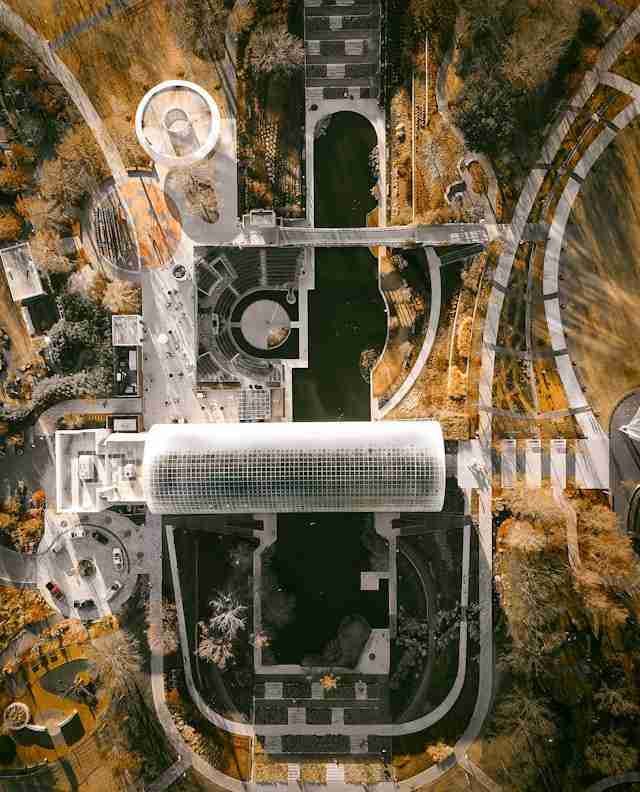
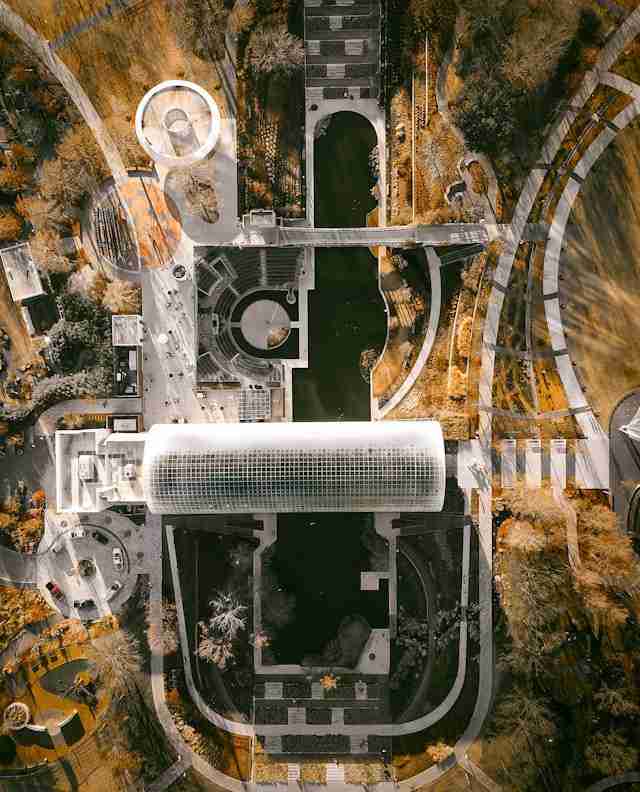
Myriad Botanical Gardens is a dynamic urban park set in the middle of downtown Oklahoma City. The site blends formal landscaping, open lawns, tropical plants, and bold architectural lines into a space that is both photogenic and accessible. At the center of the gardens is the Crystal Bridge Conservatory, a long cylindrical glass structure that spans a narrow pond and catches light throughout the day. The surrounding gardens offer curved paths, seasonal plantings, water features, and layered views of the downtown skyline beyond the trees. For photographers, this is a location that offers strong composition options with minimal travel, making it a perfect site for both quick sessions and long, exploratory shoots.
Best Photography Opportunities
Crystal Bridge Reflections in the Pond
One of the most compelling views is found by framing the Crystal Bridge from across the central pond. Early in the day, the water is often calm, making it ideal for reflection shots that include both the bridge and its mirrored form. Shooting from a low angle near the water helps anchor the frame with surrounding plants or stones, adding foreground depth. A wide lens works best to capture the full sweep of the structure and the skyline behind it, while a longer focal length can isolate specific architectural details. This composition changes throughout the day as the light moves across the glass, creating endless variations.
Inside the Tropical Conservatory
The interior of the Crystal Bridge is home to a warm and humid environment filled with palms, orchids, vines, and carefully layered plant beds. Shooting inside requires careful control of light and exposure, especially in areas with strong sun or overhead illumination. Using a fast prime lens and higher ISO settings allows you to capture fine detail without a tripod, which is often restricted. Close studies of leaves, water droplets, and flower textures work well here, and shooting along the raised walkway lets you create compositions that include the structure of the bridge itself. The contrast between dense vegetation and the building's geometry gives the interior a strong visual rhythm.
Pathways and Framed Skyline Views
Throughout the gardens, paved paths and raised beds create opportunities for leading lines and balanced compositions. Some areas are designed to frame the Oklahoma City skyline in the distance, with trees and sculptures acting as natural borders. These views are especially effective in the early morning or late afternoon, when warm light hits the downtown buildings and long shadows stretch across the grass. Including benches, garden structures, or people on the path can add scale and context. These compositions are simple but satisfying, offering strong shapes without visual clutter.
Water Features and Seasonal Plantings
Small waterfalls, fountains, and shallow pools are located throughout the park, providing moving elements and places to experiment with long exposures. During spring and summer, these water features are surrounded by beds of colorful flowers and dense plantings that shift in tone with the season. Including moving water adds energy to the frame, while flower beds offer strong color contrast and natural framing. Overcast days work well for these scenes, as they reduce harsh shadows and allow colors to appear richer and more even. A circular polarizer is helpful here to reduce glare and enhance surface detail.
Minimal Details and Abstract Studies
Beyond the grand views and formal structures, the gardens are full of small moments that reward close attention. Curving railings, patterned walkways, trimmed hedges, and reflections in puddles all offer abstract potential when framed tightly. Working with a standard zoom or macro lens allows you to isolate texture, form, and light. These small studies are a good way to balance broader scenes with quiet visual notes. Overcast conditions or soft window light help shape these frames without overpowering them.
Best Time to Visit
The Myriad Botanical Gardens is open year round, and each season offers different conditions for photography. Spring is the most colorful time to visit, with beds of tulips, budding trees, and flowering shrubs adding strong color and shape. Summer brings dense plant growth, shaded paths, and vibrant flower displays around the pond and entryways. Fall offers subtle color changes and a softer quality of light, especially in the early morning when golden tones warm the scene. Winter is quieter, with open lines, bare trees, and stronger architectural contrast against the subdued landscape.
Morning is the best time for most compositions, especially when the light is coming in from the east and casting long, soft shadows. Early hours also provide calmer water for reflections and fewer visitors on the paths. Overcast days are excellent for shooting plant detail and managing contrast between bright walkways and shaded areas. The conservatory is best photographed either early or late in the day to avoid harsh light streaming through the glass. Evening can also be productive, especially if the city skyline is catching color behind the trees or if lights begin to reflect off the pond surface.
How to Get There
The Myriad Botanical Gardens is located in downtown Oklahoma City, bordered by Reno Avenue, Hudson Avenue, Robinson Avenue, and Sheridan Avenue. It is easily reached by car with public parking lots and street parking nearby, including dedicated parking for visitors at the corner of Reno and Hudson. The site is also walkable from major downtown landmarks such as the Oklahoma City Convention Center and Scissortail Park. If you're arriving by public transit, city bus lines stop within a few blocks of the gardens, and rideshare access is available directly to the main entrances.
The gardens are free to enter and open to the public daily, with no photography permit required for personal use. The Crystal Bridge Conservatory does charge an admission fee for entry, and tripods may be restricted during busy hours or special events. Restrooms, water fountains, and shaded seating areas are located throughout the park. Visitors should check for seasonal closures, event bookings, or maintenance updates on the official website before planning a session. The entire grounds are wheelchair accessible, and most areas offer plenty of room for slow, deliberate shooting with standard gear.
Recommended Photography Gear
Photographing the gardens is best done with a flexible but lightweight kit. A 24 to 70 millimeter lens is ideal for general work, including reflections, garden overviews, and skyline frames. A wide angle lens between 16 and 35 millimeters is helpful for shooting near the pond or inside the conservatory, where space is limited and the full scene is difficult to capture with longer glass. A short telephoto lens or macro lens works well for isolating plant detail, architectural elements, or texture studies.
A tripod is useful for long exposure work or careful compositions, especially near the water or during low light conditions. However, a small travel tripod or tabletop support may be more practical due to space and visitor traffic. A circular polarizer is useful throughout the park for cutting glare from leaves and water, and it helps deepen color in both sky and shadow. A lens cloth and weather cover are helpful when shooting near mist, rain, or in the humid conservatory interior.
Good walking shoes are recommended, as you'll likely circle the park multiple times to work different light and angles. The park is compact enough to carry a small gear bag and still have room to reposition easily. Extra batteries and memory cards should be packed if you're working in the conservatory, where the light shifts quickly and sessions can stretch longer than expected.
Nearby Photography Locations
Located just south of the gardens, this large urban park includes open lawns, modern architecture, a lake, and a pedestrian bridge. It is ideal for wide cityscape compositions, especially at sunrise and sunset.
A short walk east brings you to the Bricktown area, where brick warehouses, cafes, and a canal system create strong lines and reflections. This location works well for night photography and low light architectural frames.
This memorial site offers reflective pools, symbolic lighting, and thoughtful design elements that support quiet, respectful compositions. Early morning light is best for photographing the chairs, walls, and trees with minimal crowds.
Downtown Skyline from the Skydance Bridge
This elevated pedestrian bridge offers a wide view of the skyline with bold design lines and clear sunset orientation. It is an excellent location for late day cityscapes with a strong foreground subject.
Union Station and Rail Lines
Just west of the gardens, the historic Union Station and nearby train tracks create linear compositions with industrial texture. These frames work well in black and white or under heavy cloud.
Myriad Botanical Gardens offers a rare blend of urban access and layered natural beauty. Whether you are chasing clean reflections, studying the geometry of the conservatory, or waiting for warm light to hit the skyline, this space delivers visual balance and variety without requiring a long hike or remote access. It is a location that invites repeat visits, slow looking, and the careful assembly of images that feel grounded, personal, and alive.
Comments
Loading comments…