
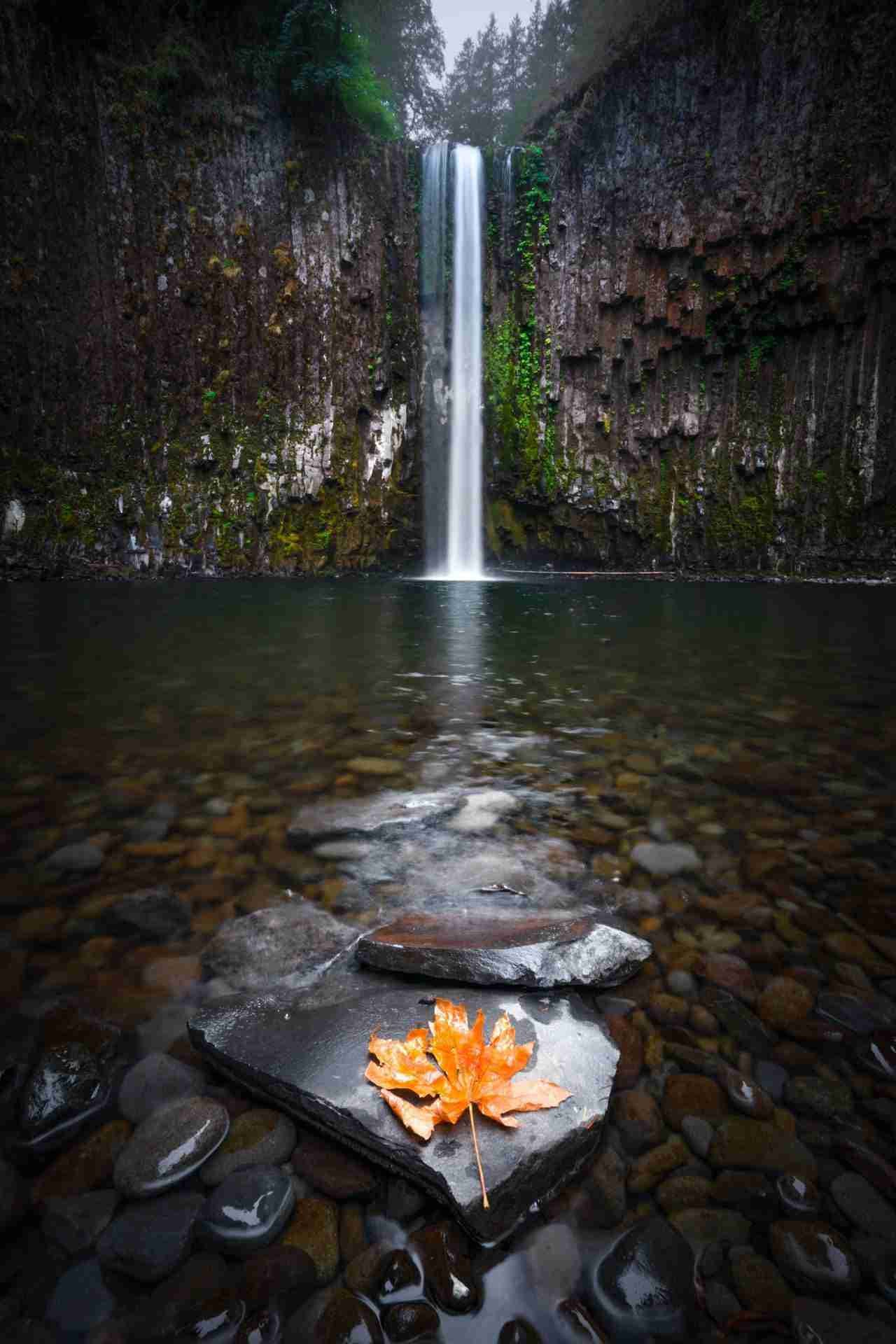
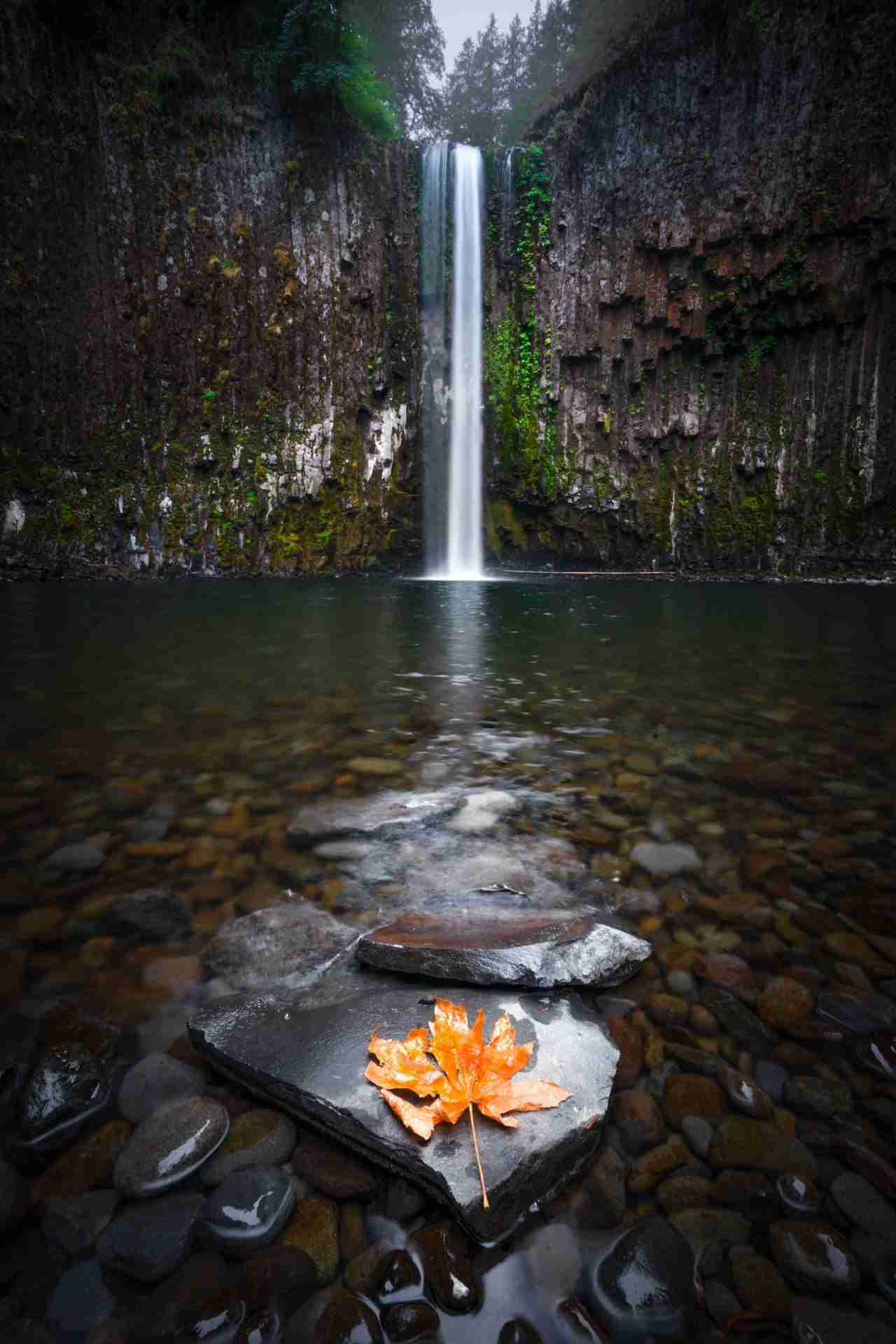
Hidden in a steep, forested canyon near Scotts Mills, Abiqua Falls is one of Oregon's most dramatic and visually distinctive waterfalls. A single powerful plunge drops about 92 feet into a basin surrounded by sheer basalt cliffs, forming a natural amphitheater that feels prehistoric in scale. The vertical columns of volcanic rock, the emerald pool below, and the filtered light from above make this site a prime destination for photographers seeking raw texture, dynamic composition, and powerful natural contrast. It's a place where geology and water meet with stunning clarity—an icon among Oregon's hidden falls.
Best Photography Opportunities
• Full-Falls Frontal Composition
: The classic view of Abiqua Falls frames the full plunge as it crashes into the pool below, with the symmetrical basalt walls curving inward like the walls of a cathedral. A wide-angle lens (16–35mm) lets you capture the entirety of the falls and the surrounding cliffs. Position yourself slightly off-center to show the curve of the rock wall and include foreground stones or driftwood for added depth. Early morning light or overcast skies help balance the exposure across the bright water and dark rock face.
• Basalt Column Textures and Reflected Light
: The columnar basalt that surrounds the falls is one of the most distinctive geological features in the region. Use a telephoto or mid-range zoom lens to isolate patterns and interplay of light and shadow across the rock face. Late afternoon or diffused morning light brings out the color and texture in the stone, especially when mist rises from the base and catches in crevices. Including moss or ferns growing from the cliff adds organic contrast.
• Long Exposure and Pool Reflections
: The plunge pool at the base of the falls can be remarkably calm on still days, allowing for soft reflections of the waterfall and canyon walls. Use a tripod and a 6- or 10-stop ND filter to extend shutter speeds, smoothing the water and creating a serene, dreamlike surface. For dynamic compositions, include nearby boulders or exposed tree roots in the foreground, leading the eye back to the falls.
• Side-Angle and Perspective Shots
: From the trail down to the base, there are several spots where you can photograph the falls from an angle—either peeking through branches or positioned near the cliff edge for a partial view. These angles often emphasize the isolation of the falls and help place it within its dramatic surroundings. Look for curved tree trunks, overhanging moss, or side pools that reflect part of the scene.
• Detail Studies of Mist and Moss
: The canyon surrounding Abiqua Falls is lush with moss-covered rock, dripping vegetation, and filtered light. These elements are perfect for atmospheric, close-up compositions. Use a macro or short telephoto lens to frame droplets on ferns, saturated moss, or light rays passing through mist. These images pair beautifully with the larger waterfall scenes to build a complete visual narrative of the location.
Best Time to Visit
The best time to visit Abiqua Falls is from late winter through early summer when water flow is strong but accessible. March through June is optimal for photographing the full force of the falls while still maintaining trail access and manageable lighting conditions. Autumn adds rich leaf color to the surrounding canyon, especially in the upper approach, while late summer may see reduced flow but easier access to the plunge pool and surrounding ledges.
For photography, overcast days offer the most balanced light across the scene, avoiding the harsh contrasts that direct sun creates between the bright waterfall and dark canyon walls. Mornings bring soft light and cooler temperatures, which often enhance the mist at the base of the falls. If visiting on a sunny day, aim to arrive early or stay late when the sun is lower and shadows are softer.
Winter visits should be approached with caution—while snow and ice can create magical scenes, the trail becomes extremely slick and hazardous, and water flow may surge unexpectedly.
How to Get There
Abiqua Falls is located in Marion County, near the small town of Scotts Mills, Oregon. The falls are accessed via a rugged forest road (CF 300) that branches off Crooked Finger Road SE. The final approach requires navigating a very rough gravel road—high-clearance vehicles are strongly recommended, and four-wheel drive may be necessary in wet or muddy conditions.
From the unofficial parking area, follow the steep trail down into the canyon—about 0.5 miles one way. The descent includes slippery roots, steep inclines, and a rope-assisted section. Wear hiking boots with excellent traction and take your time on the descent, especially with camera gear.
There are no formal facilities or signage, and the site is not managed by a park authority. Please pack out everything you bring in, and follow Leave No Trace principles to preserve the fragile canyon ecosystem.
Recommended Gear and Shooting Tips
Bring a wide-angle lens (16–35mm) to capture the full scene, along with a mid-range zoom (24–70mm) for more focused compositions. A tripod is essential for long exposure work, especially when shooting water movement and reflections. ND filters (6- or 10-stop) allow for smoother water flow even in brighter conditions, and a circular polarizer helps cut glare and deepen foliage colors.
Protect your gear from mist—bring a microfiber cloth for frequent lens cleaning, and consider a rain cover or dry bag for your pack. Waterproof boots will help when stepping on slick stones or crossing shallow stream sections. A lens hood can help manage flare when light filters down the canyon walls at angles.
Scout your composition before setting up—shifting just a few feet can dramatically change how the falls align with foreground rocks or canyon features. Look for reflections in puddles, moss patterns on the rock, or mist swirling in shafts of light for dramatic, otherworldly frames.
Nearby Photography Locations
: A gentle, forested waterfall park nearby with both upper and lower falls. Easier access than Abiqua, ideal for peaceful compositions and forest detail work.
• Silver Falls State Park
: Just a short drive north, this park features a loop trail passing ten waterfalls, each uniquely photogenic. Ideal for waterfall variety, trail photography, and seasonal foliage.
• Drift Creek Falls
: South of Abiqua, this hike leads to a scenic waterfall framed by a dramatic suspension bridge—perfect for wide compositions and moody forest scenes.
: Offers crystal-clear pools, ancient forest, and smaller cascades with emerald water. A great place for abstract water studies, forest macro, and story-driven landscape work.
• Molalla River Corridor
: A scenic byway with access to forest views, riverbanks, and lesser-known falls. Good for river reflections, foggy mornings, and relaxed environmental photography.
Abiqua Falls is more than a waterfall—it's a cathedral of water and stone, wrapped in mist and shadow, hidden just far enough to keep its magic intact. For photographers willing to venture into its depths, it offers silence, scale, and a palette of greens and greys that define the Pacific Northwest wilderness.
Comments
Loading comments…