
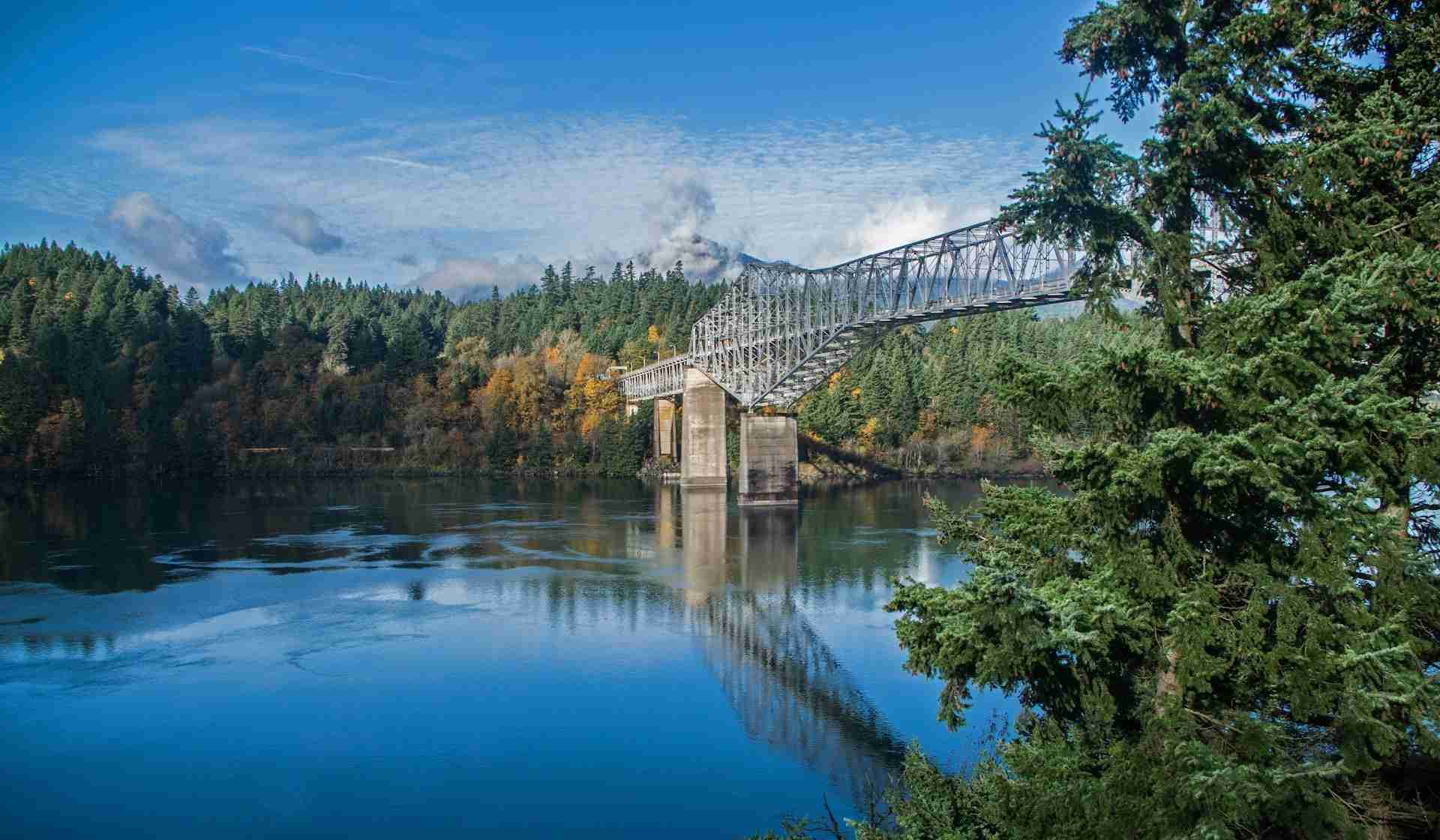
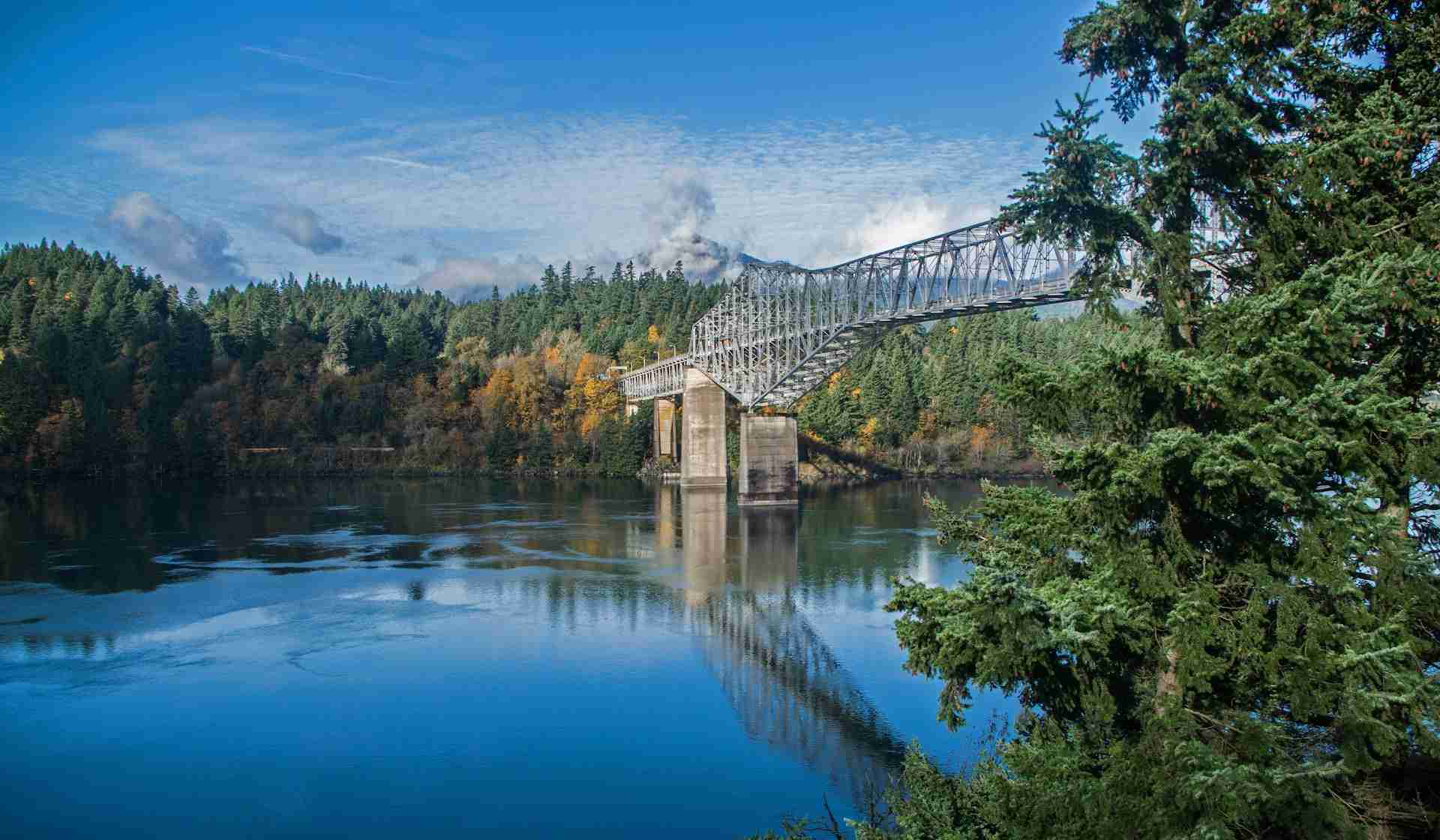
Stretching across the Columbia River at Cascade Locks, the Bridge of the Gods is both a feat of engineering and a symbol of the Gorge's cultural history. This steel cantilever bridge connects Oregon and Washington, spanning one of the most scenic stretches of the river. Its lattice trusses rise above the water with geometric precision, while the surrounding cliffs and forested slopes create a dramatic natural frame. For photographers, the bridge offers a compelling mix of subjects: industrial structure against wild landscape, reflections on the Columbia's surface, and dynamic weather that changes the mood from one moment to the next. Whether captured at sunrise, under storm clouds, or illuminated at twilight, the Bridge of the Gods is a subject that rewards both architectural and landscape approaches.
Best Photography Opportunities
• Wide Perspectives from the Oregon Shore
From the riverbanks at Cascade Locks, photographers can capture sweeping views of the bridge against the backdrop of Washington's cliffs. Wide-angle lenses emphasize the scale of the truss structure as it stretches across the river. Foreground elements such as driftwood, fishing boats, or wildflowers add depth and context to these shots. Sunrise often provides soft light across the scene, while in the evening the bridge glows warmly against cooler tones in the river. Overcast days bring out the detail in the steel without harsh contrast, making for clean, evenly lit compositions.
• Framing with the Columbia River
The river itself is an essential element when photographing the bridge. Shooting from a low angle along the shoreline, you can use reflections to mirror the trusses, especially in calm morning water. Including long exposures smooths ripples on the surface, creating a tranquil canvas beneath the structure. Mid-range zooms allow you to compress the span and surrounding cliffs, showing the bridge as part of a broader landscape. Mist rising from the river in cooler months adds atmosphere and soft layering that enhances these compositions.
• Close Architectural Studies
Walking across the bridge provides opportunities to study the geometry of its steel trusses up close. Telephoto lenses isolate repeating patterns of beams and rivets, while wide lenses exaggerate perspective along the roadway. Shooting upward from the base emphasizes the vertical strength of the cantilevers. Side lighting during morning or afternoon adds contrast and dimension to the steel, highlighting its form against the sky. These detail-oriented images highlight the craftsmanship and industrial presence of the bridge.
• Elevated Views and Landscape Context
Elevated vantage points on both sides of the river allow for images where the bridge is placed within the vast landscape of the Gorge. From the Oregon side, trails above Cascade Locks provide higher perspectives where the structure appears as a slender line across the wide river. On the Washington side, nearby viewpoints give compositions that combine the bridge with the steep Oregon cliffs beyond. Sunset from these elevated spots often produces dramatic light transitions, with the steel trusses glowing against pink or orange skies. These views emphasize the bridge as part of the broader Columbia River story.
• Night Photography and Illuminated Trusses
After dark, the Bridge of the Gods transforms as its roadway lights create a glowing line across the river. From the shoreline, long exposures capture this illumination reflecting off the water, balanced with the twilight colors still lingering in the sky. Stars or passing traffic can be included as dynamic elements in longer exposures. Shooting directly along the roadway also creates leading-line compositions with vanishing perspective. The combination of artificial light and natural surroundings makes the bridge one of the Gorge's most rewarding night subjects.
Best Time to Visit
The Bridge of the Gods is photogenic in every season, with conditions shifting dramatically throughout the year. Spring brings lush greenery to the cliffs and fresh growth along the shoreline, with frequent mist creating soft, moody frames. Summer offers the clearest skies and longest daylight hours, making it ideal for both daytime architectural work and extended twilight sessions. Autumn is one of the most atmospheric seasons, with colorful foliage along the Gorge and morning fog rising from the river. Winter provides stark contrast, with bare trees, snow-dusted cliffs, and clear air that sharpens visibility across the span.
For daily timing, mornings often deliver calm river conditions for reflection shots, along with softer light across the bridge. Midday can be harsh but is suitable for detail studies of the steel. Evenings provide the most dramatic transitions, as the bridge catches warm light while the cliffs fall into shadow. Twilight is particularly rewarding for combining natural and artificial illumination, especially from vantage points on the Oregon shoreline. Overcast weather is not to be avoided here—it often produces some of the most balanced and photogenic conditions.
How to Get There
The Bridge of the Gods is located in Cascade Locks, Oregon, approximately 45 minutes east of Portland along Interstate 84. The Oregon approach is directly accessible from town, with ample parking areas along Wa Na Pa Street near the riverfront. From here, photographers can reach shoreline viewpoints or walk onto the bridge itself. On the Washington side, access is via State Route 14, with viewpoints available both near the bridge and along the highway.
There is a toll for vehicles crossing the bridge, but pedestrians and cyclists can also access it for a smaller fee. Walking across the span provides both photographic opportunities and an immersive perspective on the structure. Facilities in Cascade Locks include restaurants, shops, and riverfront parks that make longer visits easy. Drone use is technically permitted under FAA rules, but given the active traffic on the bridge and its position within the Columbia River Gorge National Scenic Area, caution and respect for regulations are essential.
Recommended Photography Gear
A wide-angle lens in the 16 to 35 millimeter range is essential for capturing the full span of the bridge from the shoreline. A 24 to 70 millimeter zoom is highly versatile, balancing broader landscapes with tighter architectural studies. A telephoto lens in the 70 to 200 millimeter range allows you to compress the bridge against the cliffs or isolate details in its trusses. For night photography, fast prime lenses with wide apertures are valuable for capturing both stars and low-light scenes.
A tripod is crucial for long exposures, whether smoothing river reflections during the day or capturing the illuminated bridge at twilight. Neutral density filters extend exposure times for creative river and sky effects, while a circular polarizer helps control glare from water surfaces. Lens cloths are useful year-round, as mist and rain are common in the Gorge. Weather-sealed gear is especially important during autumn and winter, when conditions can shift suddenly from sun to showers.
Nearby Photography Locations
Just west of Cascade Locks, Multnomah Falls is Oregon's most famous waterfall, offering dramatic two-tiered cascades framed by basalt cliffs. Early morning visits provide the best chance for soft light and fewer visitors.
Located near Bonneville Dam, Wahclella Falls is a powerful cascade set in a moss-covered amphitheater. The approach trail follows a scenic creek, offering both stream and waterfall compositions.
Though sections have been closed due to fire damage, this trail remains one of the Gorge's most scenic, with waterfalls, mossy canyons, and deep forest scenes. When accessible, it provides endless opportunities for landscape and detail photography.
Just east of Cascade Locks, Bonneville Dam offers an industrial counterpoint to the Gorge's natural scenery. Its spillways, turbines, and fish ladders provide unique subjects for photographers interested in the intersection of engineering and environment.
Directly across the river, Stevenson is a small town with a strong waterfront presence. Its marina and riverfront park offer alternative views back toward the Bridge of the Gods, especially at sunset.
The Bridge of the Gods is far more than a piece of infrastructure; it is a symbol of connection in a landscape where nature and human presence are constantly in dialogue. Photographers who explore its many perspectives, from shoreline reflections to illuminated night scenes, will find a subject that balances geometry, scale, and atmosphere. In every season and every light, the bridge stands as both a gateway to the Gorge and a rewarding canvas for creative photography.
Comments
Loading comments…