

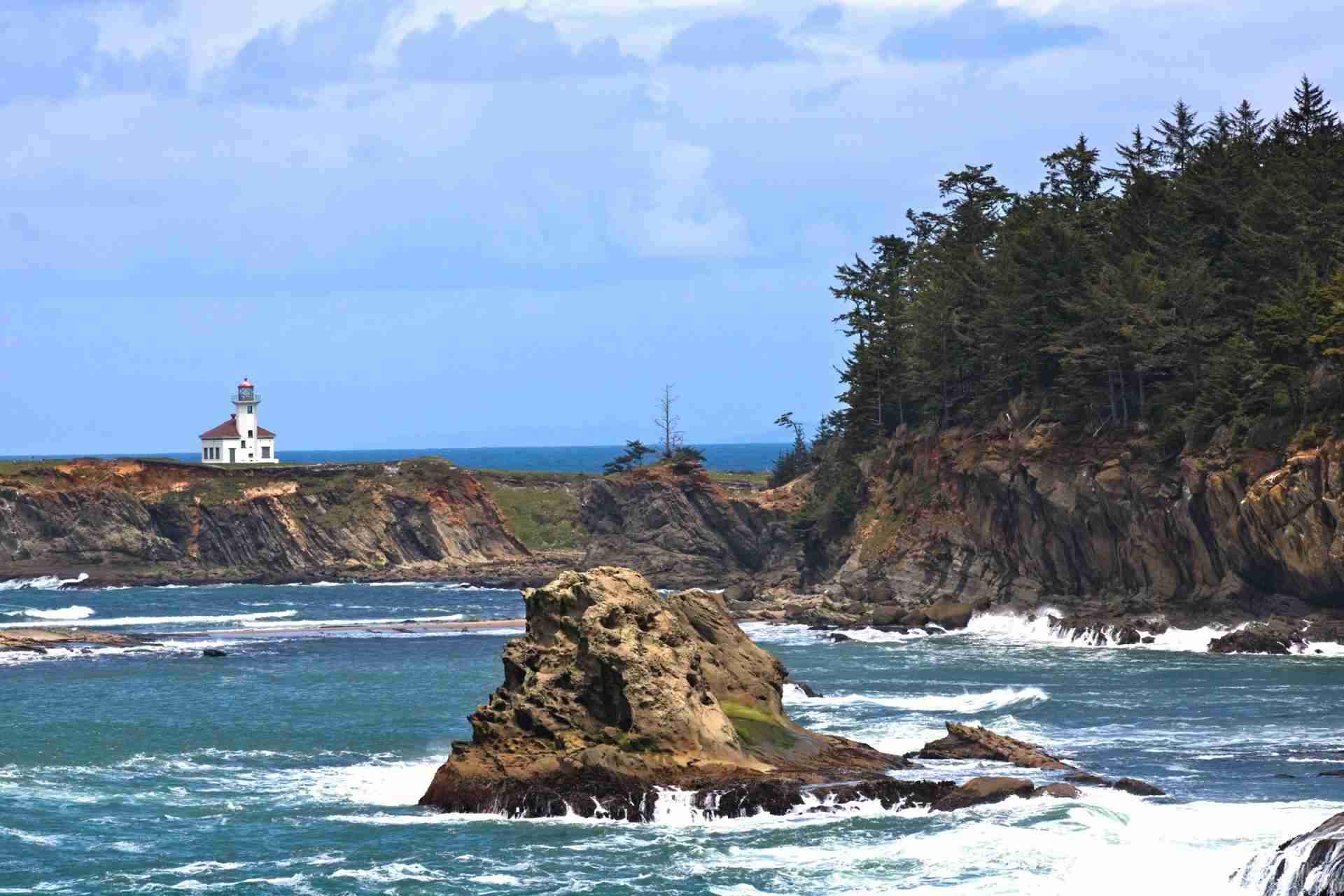
The Lighthouse Viewpoint along Cape Arago Highway is one of those easy to miss spots that ends up being one of the better coastal views in the area. You pull off the road, walk a short distance, and suddenly you're looking out at Cape Arago Lighthouse sitting on its own small island just offshore. The surrounding coastline is rough and uneven, with dark rock formations and shifting water adding texture in every direction. It's a location where the composition comes together naturally, but still rewards a bit of patience if you take the time to move around and refine your framing. Between the lighthouse, the ocean, and the foreground along the cliffs, there's enough variety here to keep you working the scene for a while without it feeling repetitive.
Best Photography Opportunities
• Lighthouse from the Main Viewpoint
The classic shot here is from the designated viewpoint looking straight out toward Cape Arago Lighthouse. The lighthouse sits on a small island surrounded by water, which naturally isolates it in the frame. From this angle, you can keep the composition clean and let the structure stand out against the ocean. The surrounding rocks and waves add context without overwhelming the subject. It's worth adjusting your position slightly to line up the lighthouse in a balanced way within the frame. Even though it's the most obvious shot, it's one you'll want to take your time with.
• Telephoto Lighthouse Isolation
Because you can't get physically close to the lighthouse, a longer lens becomes really useful here. Using a telephoto lens lets you isolate the lighthouse and compress the scene, making it feel much more prominent. This also helps bring in the textures of the waves and rocks around the island. You can experiment with tighter compositions that remove distractions and focus purely on the structure. It's a great way to create a more graphic image compared to the wider views. This is one of the most effective ways to photograph this location.
• Coastal Foreground Framing
The rocky shoreline near the viewpoint can be used to build stronger compositions. Including these foreground elements helps add depth and leads the viewer's eye toward the lighthouse in the distance. You can use the shape of the rocks or the edge of the cliffs to guide the composition. This works especially well if you position yourself slightly off from the main viewpoint. It turns a simple shot into something more layered and intentional. Taking a few extra minutes to find the right foreground makes a big difference.
• Long Exposure Ocean Movement
The waves around the lighthouse and along the coastline are constantly moving, which gives you a great opportunity to work with longer exposures. Slowing your shutter speed softens the water and creates a smoother, more flowing look. This contrasts nicely with the solid structure of the lighthouse and the rocky shoreline. Timing your shot with the movement of the waves can help create a more balanced image. Even subtle changes in exposure length can change the feel of the photo. It's a good technique to experiment with here.
• Wide Coastal Scene with Lighthouse Context
Stepping back and going wider lets you include more of the coastline along with the lighthouse. This gives a better sense of place and shows how the lighthouse sits within the larger landscape. The cliffs, ocean, and surrounding terrain all come together in one frame. It's a good option if you want something that feels more like a full landscape rather than a subject focused shot. You can shift your position slightly to control how much coastline you include. This approach helps tell the bigger story of the location.
Best Time to Visit
Late afternoon into sunset is usually the best time to photograph this location. The light softens and begins to add more depth to the cliffs and water. Depending on the season, you can get some nice color in the sky behind or around the lighthouse.
Morning can also work well, especially if you want fewer people around and calmer conditions. The light will be softer and more even, though the direction of light may be less dramatic depending on the time of year.
Overcast conditions are very common along the Oregon coast, and they actually work well here. The softer light helps control contrast and brings out the textures in the rocks and water. Clear days can be great too, but the scene often benefits from a bit of cloud.
How to Get There
The Lighthouse Viewpoint is located along Cape Arago Highway near Coos Bay, Oregon. There are small pull off areas along the road where you can park and walk a short distance to the viewpoint. Access is easy and does not require any hiking, making it one of the more accessible coastal photography spots in the area. There are no fees to stop at the viewpoint, though nearby state park areas may have their own regulations. Be mindful of the terrain near the cliffs, as some areas can be uneven or exposed. It's best to stay on established viewpoints and avoid getting too close to the edges.
Recommended Photography Gear
A 24 to 70 millimeter lens works well for wider coastal compositions and general shooting. It gives you flexibility for framing both the lighthouse and the surrounding landscape. A 70 to 200 millimeter lens is highly recommended here. It allows you to isolate the lighthouse and compress the scene, which is one of the strongest ways to photograph this location. A tripod is useful if you plan to shoot longer exposures of the ocean or stay for sunset. It also helps when refining compositions in changing light. A polarizing filter can help reduce glare on the water and bring out more detail in the scene, especially on brighter days.
Nearby Photography Locations
This is one of the closest and most reliable spots for coastal photography in the area. The curved shoreline, sea stacks, and more sheltered water give you a completely different type of composition compared to the exposed lighthouse viewpoint. It works especially well in softer light when the scene feels more balanced.
Just a few minutes away, this area is great if you want more dramatic wave action and rugged cliffside views. During higher surf, waves crash against the rocks with a lot of force, which makes for strong action shots. The park also has maintained paths that make it easy to explore multiple angles.
This viewpoint looks out over offshore rock formations that are often covered with marine life. It's a good place to photograph patterns in the ocean and, if you're lucky, seals or sea lions resting on the rocks. A longer lens helps here to bring those details closer.
• Yoakam Point State Natural Site
This is a quieter and less visited viewpoint along the same stretch of coastline. It offers wide views of the ocean with rugged cliffs and fewer people around. It's a good option if you want something a bit more open and less structured.
Located closer to Coos Bay, this beach gives you a more accessible shoreline with dunes, driftwood, and open ocean views. It's a good place to switch from elevated viewpoints to ground level compositions. The variety here makes it a nice addition to a full shooting day.
Comments
Loading comments…