
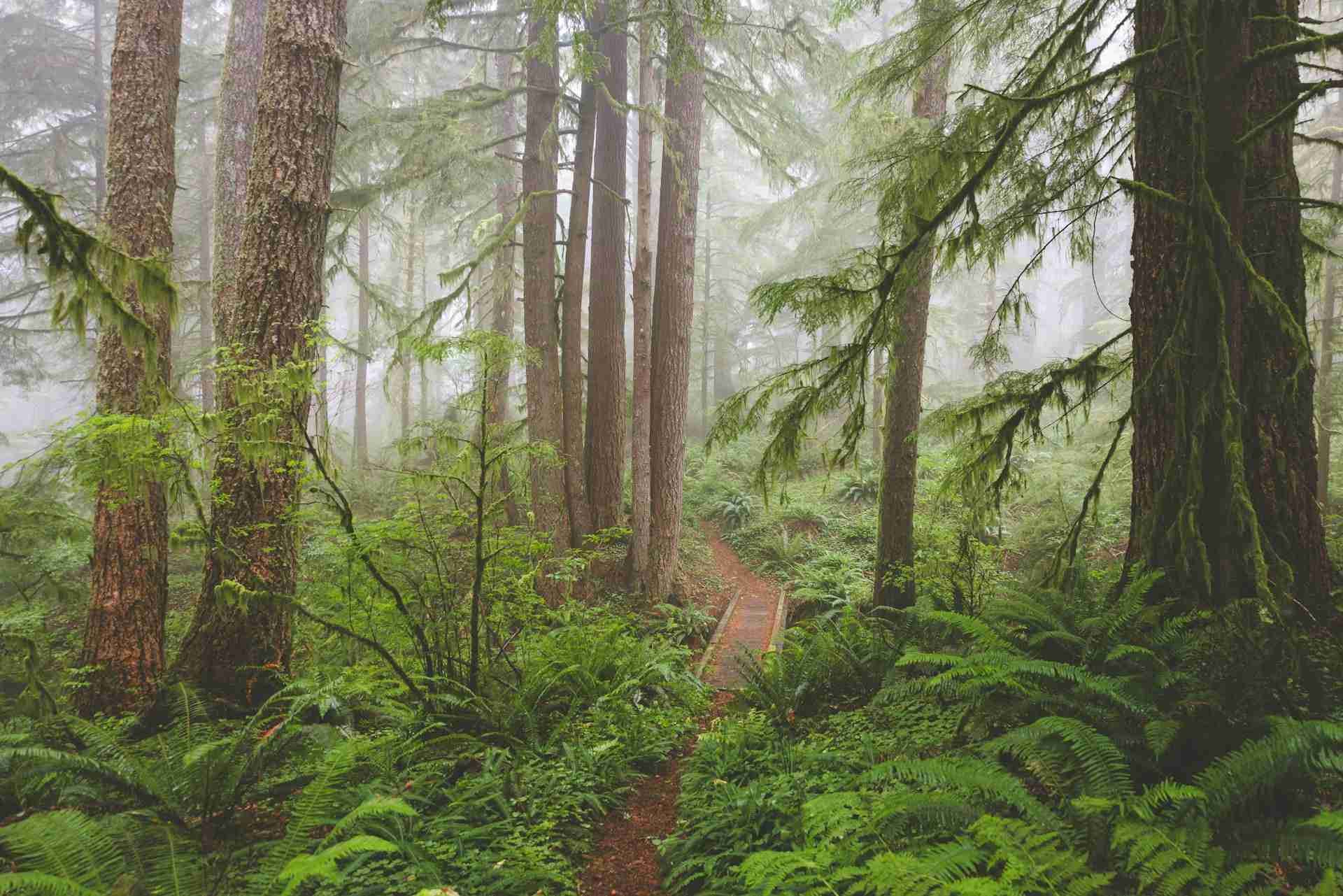
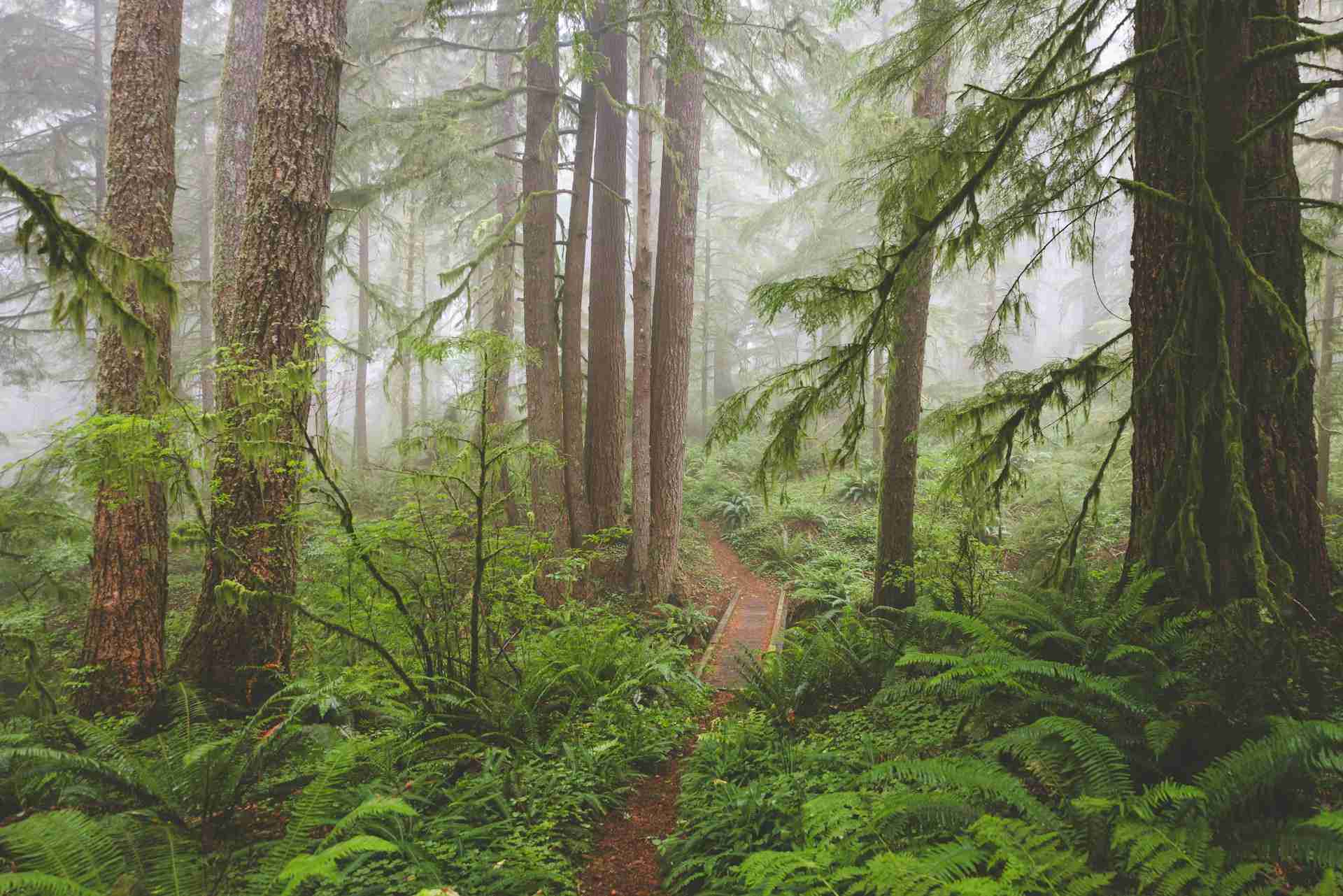
Cascade Head on the Oregon Coast is one of the most compelling photographic landscapes in the Pacific Northwest. The Rainforest Trail off North 3 Rocks Road near Otis leads you first into a dense, moss-laden temperate rainforest, and then out into high meadows and dramatic viewpoints over the Pacific. This combination of ecosystems within a single hike offers photographers an extraordinary range of subjects, from intimate forest details to vast coastal panoramas. The entire area is part of a UNESCO Biosphere Reserve, protecting its unique biodiversity and keeping the forest wild and untamed. Walking this trail with a camera means moving from silence beneath towering spruce trees into open headlands where wind and waves dominate, and this constant shift between moods is what makes Cascade Head so rewarding to photograph.
Best Photography Opportunities
• Moss-Draped Forest Canopy
The first section of the trail plunges you into deep rainforest where Sitka spruce rise above a ground carpeted with sword ferns. Every surface is draped in moss, giving the scene a soft, ancient feel. For photographers, these interiors are best approached with wide lenses to exaggerate the height of the trees and the density of the foliage. A tripod is valuable here, as light can be dim, and longer exposures will bring out rich colour saturation. After rainfall, the greens are especially vivid, and droplets hanging from moss strands can be used as sparkling detail shots. Careful composition is key, as the abundance of texture can overwhelm the frame unless anchored with a strong central subject.
• Fog and Layers of Trees
Morning fog is one of the most atmospheric gifts of Cascade Head. When it drifts through the rainforest, trunks appear and disappear in layers, simplifying complex scenes into graphic shapes. Telephoto lenses compress these layers into striking vertical patterns, while wide shots capture the feeling of walking into mist. A shaft of light breaking through fog can create dramatic, almost theatrical images, so patience is often rewarded. These conditions are also excellent for black and white photography, as tonal contrasts become more important than colour.
• The Trail as a Compositional Element
The Rainforest Trail itself makes an excellent subject. Its winding dirt path serves as a natural leading line, drawing the eye deeper into the scene. Overhanging branches and mossy arches create ready-made frames, enhancing the sense of enclosure. Shooting low to the ground with a wide lens can make the path feel immersive, as if the viewer is standing in the forest themselves. Seasonal differences along the trail also change its mood: spring growth brings brighter greens, while autumn undergrowth turns rusty orange and brown.
• Wildlife and Birdlife
Cascade Head is a strong location for wildlife photography, particularly if you carry a telephoto lens. Roosevelt elk sometimes graze in the meadows above the forest, and black-tailed deer move quietly along the trail margins. The reserve is also home to the threatened marbled murrelet, a seabird that nests in old-growth trees, as well as raptors riding coastal thermals. Even smaller subjects such as slugs, salamanders, and insects in the undergrowth provide opportunities for close-up work. Wildlife here requires patience and silence, but capturing an elk against a misty meadow backdrop is one of the most rewarding shots you can make.
• Coastal Meadows and Ocean Vistas
Emerging from the forest, the trail climbs into open meadows that deliver sweeping views of the Pacific. This is where Cascade Head shows its full drama: cliffs plunging into the ocean, seabirds circling overhead, and waves pounding the rocks below. Wide-angle lenses are best for conveying the scale of these views, while telephotos allow you to pick out details such as distant sea stacks or the patterns of surf. Sunset is particularly rewarding, as golden light washes across the meadows and turns the ocean surface into bands of colour. Including meadow grasses or wildflowers in the foreground gives compositions depth and context.
• Seasonal Wildflowers and Changing Light
In late spring and early summer, Cascade Head's meadows explode with wildflowers. Lupines, daisies, and paintbrush add vibrant colour to the slopes, offering perfect foregrounds for wide landscapes. Shooting low with a wide lens lets you place individual flowers against the vastness of the Pacific. Autumn changes the palette entirely, bringing warm tones to grasses and frequent morning mists that soften the scene. Winter, by contrast, delivers stormy skies and dramatic surf, which pair beautifully with stark headland views. The trail is one of those locations where each season feels like a new subject altogether.
Best Time to Visit
Cascade Head is rewarding in every season, but the character of the trail shifts dramatically throughout the year. Spring brings wildflowers and strong contrasts between fresh green forest and colourful meadows. Morning fog is frequent, adding atmosphere to the rainforest and layering the coastal views with drifting mist. Summer offers clearer skies and longer days, making it easier to work with both early and late light, though midday haze can flatten ocean vistas. Autumn is perhaps the most photogenic season, with warm tones in the meadows, elk activity in the clearings, and misty mornings that add mystery to the forest. Winter is storm season, when the Pacific becomes a subject in itself, with crashing waves and brooding skies, though the trails can be muddy and slippery.
Time of day is just as important. Early morning delivers fog, calm conditions, and the highest chance of solitude on the trail. Midday is best spent inside the forest, where diffused light under the canopy prevents harsh contrast. Evenings bring golden sidelight to the meadows and headlands, and sunsets over the Pacific can be spectacular from the upper viewpoints. Blue hour works particularly well on the coast, when fading light softens wave action and adds subtle gradients to the horizon.
How to Get There
The Rainforest Trailhead for Cascade Head is located off North 3 Rocks Road, a short drive from Otis and about twenty minutes north of Lincoln City, Oregon. From Highway 101, turn west onto North 3 Rocks Road and follow the signs until you reach the parking area for the trail. Parking space is limited, so arriving early is recommended, especially in the summer and on weekends. Access to the trail is free, though it is managed as a protected reserve with strict rules: staying on the path is required, and drones or pets are not allowed in order to protect sensitive ecosystems.
The trail itself is around two and a half miles one way to the upper viewpoints. Though not long, it climbs steadily and can be muddy, particularly after rain. Sturdy footwear is essential, and trekking poles can be useful for carrying gear safely on slippery sections. There are no restrooms or facilities at the trailhead, so bring water, snacks, and weather protection. Lincoln City offers the nearest amenities, while Otis has basic services. Cell coverage is limited along parts of the trail, so plan accordingly. Because this is a reserve, photographing responsibly is important: avoid trampling meadows, respect wildlife distance, and leave no trace.
Recommended Photography Gear
A wide-angle lens is the single most important tool for this trail, allowing you to capture both the towering rainforest and the expansive coastal views. A mid-range zoom such as a 24 to 70 millimetre lens is highly versatile, covering both intimate forest scenes and balanced landscapes of meadow and ocean. A telephoto lens is invaluable for isolating wildlife, compressing layers of foggy forest, and picking out distant seabirds or wave patterns.
A tripod is strongly recommended, especially for forest interiors where low light requires long exposures, and for sunset or blue hour work at the cliffs. A circular polariser is essential for rainforest photography, reducing glare on wet foliage and enriching greens. Neutral density filters allow for smoothing the motion of ocean waves or waterfalls on the cliffs. A macro lens is useful for ferns, mosses, and insects, adding variety to your session.
Practical gear is just as important here. Waterproof covers for camera and backpack are necessary, as sudden coastal rain is common. Extra batteries and lens cloths should always be carried, as humidity and cold can drain power and fog lenses. A lightweight but durable backpack is recommended, as the trail is steep enough that a comfortable carry makes a big difference. Hiking poles can help keep balance on muddy sections, particularly if you are carrying a tripod.
Nearby Photography Locations
Just south of the trailhead, Three Rocks offers tide pools, rocky outcrops, and crashing surf. At low tide, pools reveal starfish, anemones, and seaweed, making it an excellent location for both detail and wide seascapes.
Stretching for miles, the beaches of Lincoln City are perfect for sunset photography, with wet sand reflecting colour across the horizon. Kite festivals, driftwood, and tidal pools add variety to the otherwise minimalist shoreline scenes.
A short drive north, this beach is famous for the preserved stumps of an ancient forest that emerge from the sand at low tide. These ghostly shapes create eerie and striking silhouettes against the ocean, especially at sunrise or sunset.
Further south, Cape Kiwanda combines massive sandstone cliffs with a broad sandy beach. Its shifting dunes, wave-carved patterns, and headland views make it one of the most dramatic spots on the Oregon Coast for both wide and intimate seascapes.
North of Cascade Head, the estuary provides calm reflections, tidal wetlands, and abundant birdlife. Telephoto work here is especially rewarding, capturing herons, eagles, and waterfowl against a backdrop of still water and reeds.
Cascade Head's Rainforest Trail is a place where patience and exploration pay off. Few hikes offer such an immediate transition from dense mossy rainforest to expansive ocean cliffs, and fewer still combine such biodiversity with dramatic light. For photographers, it is an endlessly versatile location, equally rewarding in mist and in clear skies, in winter storms and in summer bloom. Whether you come for the quiet of the forest or the spectacle of the Pacific, Cascade Head gives you both in a single journey, making it one of the most compelling places to bring your camera on the Oregon Coast.
Comments
Loading comments…