
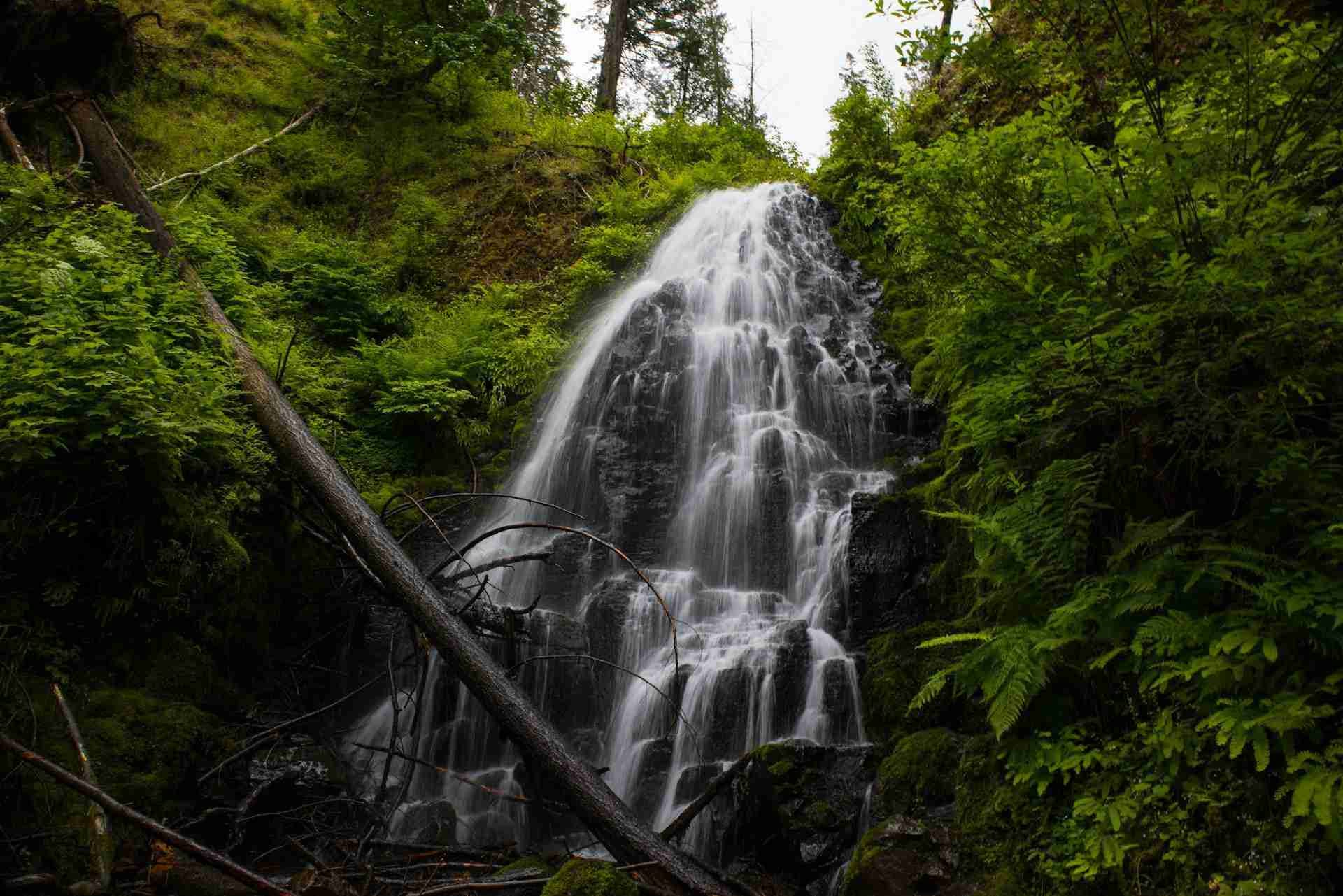
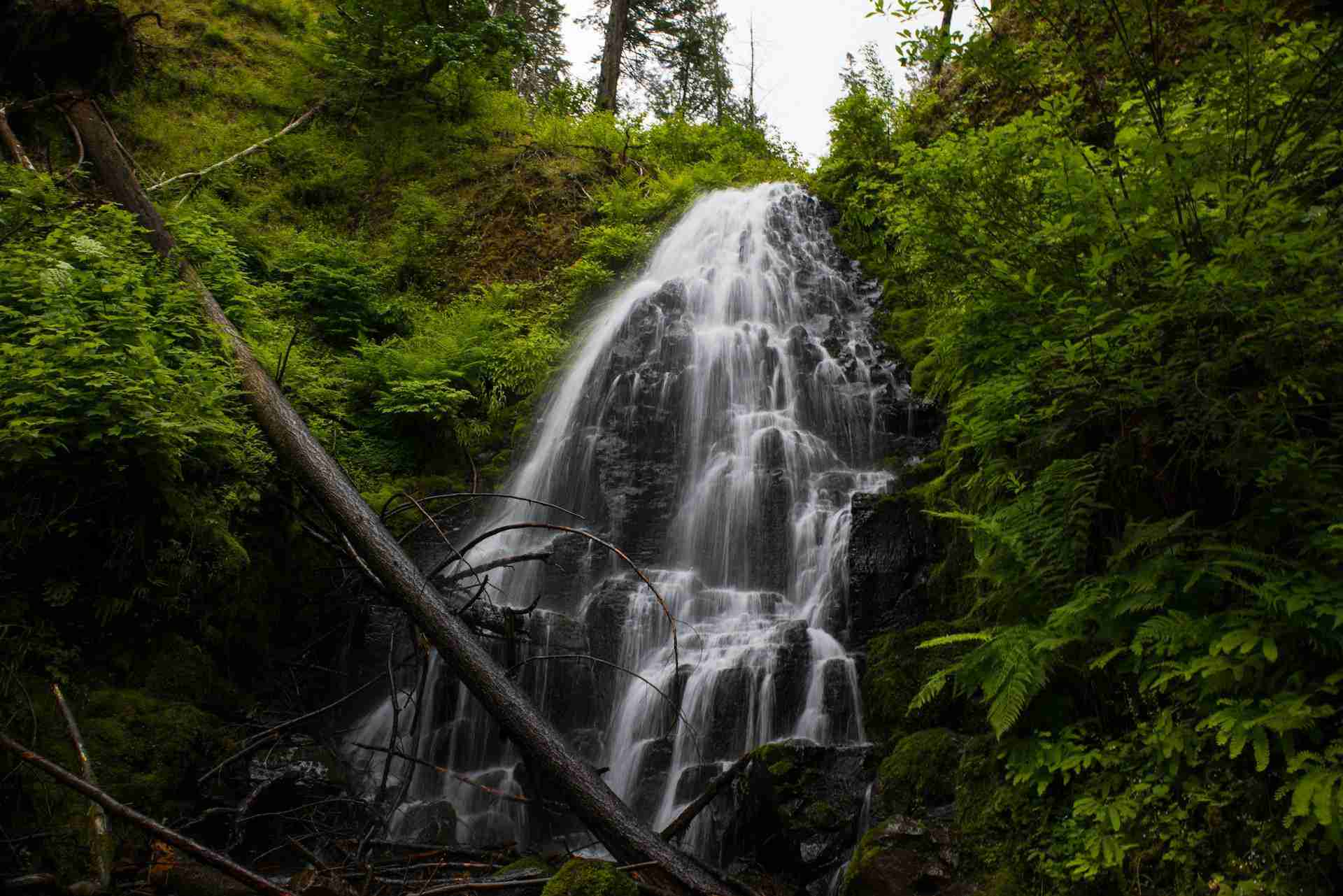
Fairy Falls is one of the most rewarding small waterfalls in the Columbia River Gorge, not because of its size, but because of its shape, setting, and soft movement. Tucked into the forest along the Wahkeena Trail (#420), this 20-foot fan-shaped cascade flows gently over a black basalt face, breaking into countless thin streams that seem to shimmer in the right light. It's a compact, intimate location surrounded by ferns, moss, and tall trees that block out most of the wider landscape, forcing you to focus in on detail and flow. For photographers who enjoy slower, contemplative shooting with plenty of time to compose and adjust, Fairy Falls is an ideal place to work with texture, tone, and subtle contrast. The trail itself also offers plenty of opportunities to shoot along the way, making the full hike part of the photographic experience.
Best Photography Opportunities
• Classic Front-On Composition of the Falls
The most popular and effective way to photograph Fairy Falls is from directly in front of it, just a few feet from the base. The waterfall spreads out evenly as it flows over a wide rock face, forming a delicate fan that's nearly symmetrical. This view works well with a mid-range focal length, around 35 to 50mm, which avoids distortion while still fitting the full waterfall in the frame. Use a long exposure to smooth the individual streams into a soft white curtain, or go with a faster shutter to capture the texture and separation between them. Framing the falls with some of the nearby moss-covered rocks and greenery adds depth and a sense of place without cluttering the shot.
• Side Views with Ferns and Leading Lines
A lesser-known angle can be found just to the side of the falls, where the trail continues uphill. From here, you can frame the waterfall partially obscured by ferns or tree trunks, giving your image a layered feel. The small stream below the falls provides a natural leading line that can guide the viewer's eye back toward the cascade. A vertical orientation works well in this spot, allowing you to show the forest floor, the fall itself, and the canopy above in a single image. Because the lighting in this forested area is soft and diffused, exposures are typically even, allowing you to balance highlights and shadows without too much effort.
• Detail Shots of Water Texture on Rock
Fairy Falls offers plenty of opportunity for close-up or abstract shots that focus on the texture of water moving over basalt. Use a telephoto or macro lens to isolate sections where water flows in delicate strands over ridged rock surfaces. These images can be more impressionistic, emphasizing shape and motion over the full structure of the falls. Overcast days are best for this style of shooting, as they remove distracting highlights and let the detail come through clearly. Small pools at the base of the falls also create interesting ripple patterns, especially when leaves or foam are drifting through them.
• Trail Features and Natural Framing on the Approach
The Wahkeena Trail leading to Fairy Falls winds past several smaller streams, rock walls, and tree-covered switchbacks. Photographers who take their time on the trail can find moments where light breaks through the canopy and lights up sections of the path or foliage. There are also a few footbridges and water crossings that make good compositions in their own right, especially if the trail is wet or misty. These scenes add context to the final waterfall image and can help tell a fuller visual story. Use a wide lens and keep your shutter speed slightly lower to capture the movement in leaves or water while still holding focus on the trail itself.
• Post-Rain or Misty Conditions for Atmosphere
While Fairy Falls is photogenic year-round, some of the best images come when the area is damp or foggy. After a light rain or during a misty morning, the leaves glisten, the rocks go dark and rich, and the forest feels quiet and closed in. These conditions help add visual contrast and mood without needing dramatic light. If fog is present, it's especially effective in softening the background and simplifying compositions. In these situations, it's often best to work slowly, waiting for the right break in light or for the mist to settle into the right shape behind your subject.
Best Time to Visit
Fairy Falls is best photographed in the spring and early summer, typically between April and June, when water flow is strong but not overwhelming. During this time, the surrounding forest is bright green, and the trail is often lined with ferns and blooming plants. The lighting along the Wahkeena Trail is naturally diffused due to the dense tree canopy, but mornings generally provide the most consistent and soft conditions. Direct sunlight is rare at the falls itself, which means you have a flexible window to shoot throughout the day without fighting harsh highlights.
In autumn, the trail becomes more colorful as maple leaves turn yellow and orange, adding new elements to frame the falls. Fallen leaves along the trail and in the pools below the waterfall can add interest to your compositions. Winter and early spring bring fewer crowds and a more muted color palette, with darker greens and slick surfaces that can make the rocks shine in the right light. However, the trail can become icy and muddy in colder months, so use caution and check trail conditions ahead of time.
How to Get There
Fairy Falls is located along the Wahkeena Trail (#420) in the Columbia River Gorge, near the town of Corbett, Oregon. To reach the trailhead, take I-84 east from Portland and exit at Bridal Veil. From there, follow the Historic Columbia River Highway to the Wahkeena Falls parking area, which is clearly marked and located just west of Multnomah Falls. This parking lot can fill up quickly, especially on weekends, so early arrival is recommended.
The hike to Fairy Falls is about 1.3 miles one way with moderate elevation gain. The trail includes a series of switchbacks and a few narrow sections along the cliffside, but it is well maintained and clearly marked. Along the way, you'll pass Wahkeena Falls and several smaller cascades, making the hike part of the photo experience. There are no entry fees for hiking or photography, but be respectful of other hikers by keeping gear compact and off the main path. Tripods are allowed and useful, but be mindful of footing, especially near wet or uneven ground.
Recommended Photography Gear
For photographing Fairy Falls and the trail, a lightweight but versatile kit works best. A 24–70mm lens is the most useful all-around option for shooting the waterfall from both standard and side angles. Pair it with a wide-angle lens in the 16–35mm range if you want to include the forest environment or emphasize the vertical flow of the falls. A mid-telephoto lens (70–200mm) is helpful for isolating details and working with the layered sections of rock and water.
Bring a sturdy tripod for long exposure work, as shutter speeds between one and four seconds are ideal for softening the water flow while keeping surrounding elements sharp. A circular polarizer is essential in this setting, helping reduce glare on wet rocks and bringing out color in the foliage. If you're hiking in wet or misty weather, pack a lens cloth and protective gear for your camera—conditions near the falls can be very damp. Waterproof hiking shoes are recommended, as the trail can be slick in places, especially near the base of the falls. A small backpack or belt pouch helps keep your hands free for navigating rocky sections.
Nearby Photography Locations
Located right at the trailhead, Wahkeena Falls is a powerful cascade that drops in multiple tiers. You can shoot it from the base near the stone bridge or hike a short distance for a more compressed view from above. The surrounding trees and stonework make it a great warm-up location before heading up the trail.
Just east of the Wahkeena Trail parking area, Multnomah Falls is the tallest and most visited waterfall in Oregon. While it's often crowded, arriving early allows for peaceful shots of the iconic bridge, upper and lower falls, and the surrounding cliffs. A telephoto lens helps isolate the upper falls through gaps in the trees.
For a more secluded experience, continue hiking past Fairy Falls to reach Ecola Falls, a hidden gem tucked into the forest. It's less visited and more rugged, but offers excellent shooting conditions with strong vertical flow and lush surroundings. The extra distance pays off if you're looking for a more off-the-beaten-path composition.
A short drive west from Wahkeena, the Angels Rest trail offers sweeping views of the Columbia River Gorge from above. It's a completely different style of photography (wide, open vistas rather than intimate waterfalls) but makes a great companion stop if you're looking to balance landscape and detail work in the same day.
Located west of Wahkeena along the historic highway, Latourell Falls is known for its dramatic single-drop plunge and striking columnar basalt backdrop. It's easy to access and photograph from both the base and a higher viewpoint, and is particularly good during overcast weather when contrast is naturally softened.
Fairy Falls is one of those places that feels tailor-made for careful photography. It doesn't shout for attention, but the more time you spend there, the more possibilities open up. The setting rewards a thoughtful approach, and every change in light, weather, or season brings something new to see. If you enjoy slowing down, composing with purpose, and finding beauty in the details, this quiet corner of the Columbia River Gorge is worth the climb.
Comments
Loading comments…