
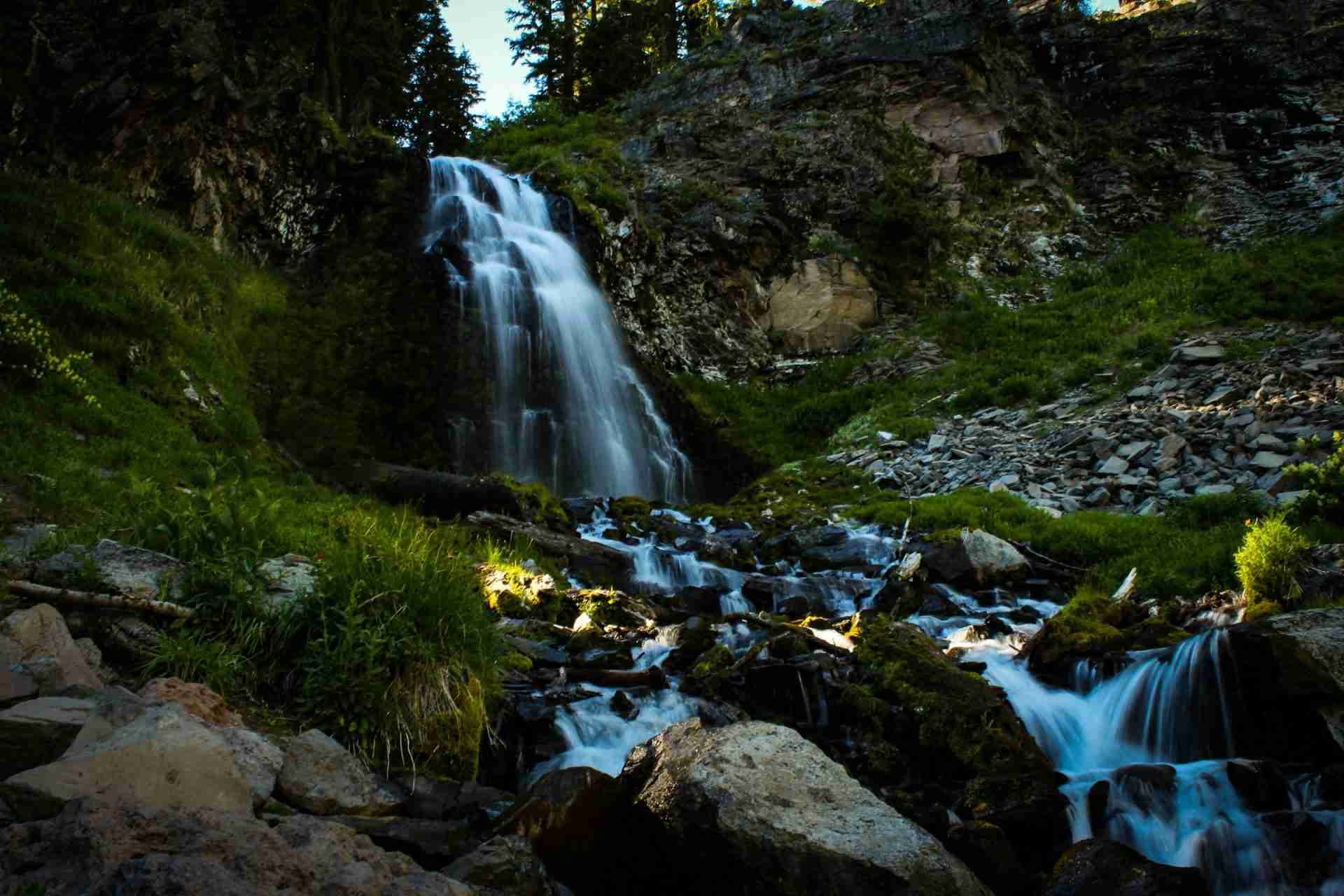
Plaikni Falls is a compact waterfall tucked within a quiet corner of Crater Lake National Park. Unlike the sweeping lake views the park is known for, Plaikni Falls offers a more intimate woodland setting. The short, shaded trail winds through old growth forest before opening to a modest cascade spilling over moss covered rock into a small basin. The waterfall is not large, but its contained scale makes it easy to compose thoughtfully. Surrounded by dense greenery and filtered light, the scene feels calm and enclosed, providing a different photographic experience from the dramatic viewpoints along the rim of Crater Lake
Best Photography Opportunities
• Centered Composition of the Main Cascade
The main waterfall drops in a single, clean sheet over a curved rock ledge. From the viewing area, you can frame the cascade directly with the surrounding moss and foliage forming a natural border. Because the falls are relatively small, careful framing helps prevent the scene from feeling empty. A moderate focal length keeps proportions balanced without exaggerating perspective. This composition works especially well with longer shutter speeds that soften the water while preserving detail in the rock.
• Low Angle From the Basin Edge
Moving slightly lower toward the pool at the base introduces reflections and foreground texture. From this angle, the water appears fuller and the moss lined rock face gains visual depth. Including a small section of stream or wet stone in the foreground adds layering to the composition. Exposure control is important here, as highlights in flowing water can easily clip. This perspective benefits from calm conditions and even light.
• Detail Studies of Moss and Rock Texture
The surrounding rock walls and fallen logs are covered in moss and lichen, providing opportunities for close compositions. Side light filtering through the forest enhances texture without harsh contrast. A tighter crop focusing on the interaction between water and stone can create abstract results. Overcast conditions are especially effective for preserving subtle tonal variation. These detail images add variety to a wider landscape series.
• Seasonal Framing With Forest Canopy
Depending on the season, the forest canopy changes the character of the falls. Spring and early summer bring vibrant green foliage that frames the waterfall naturally. In autumn, subtle color shifts can add warmth to the scene. Including overhanging branches or tree trunks as framing elements gives the image depth without overwhelming the subject. This approach works best when the background remains uncluttered.
• Long Exposure With Soft Woodland Light
Plaikni Falls is well suited for long exposure photography because of its shaded setting. Slower shutter speeds smooth the water and enhance the calm atmosphere of the forest. A tripod is essential to maintain sharpness in surrounding foliage and rock. Waiting for even light reduces harsh highlights on wet surfaces. This technique produces the most cohesive and serene interpretations of the falls.
Best Time to Visit
Late spring and early summer typically provide the strongest water flow at Plaikni Falls due to snowmelt in the surrounding mountains. During this period, the cascade appears fuller and more dynamic. Early morning is often the best time to photograph the falls, as light filters gently through the forest canopy and visitor traffic is minimal. Late afternoon can also work, particularly when the sun is lower and contrast is reduced. Midday light may create bright patches and uneven exposure where sun breaks through trees. Overcast days are ideal for maintaining even tones across moss, rock, and water. Autumn offers a quieter atmosphere and subtle seasonal color, though water flow may be lighter.
How to Get There
Plaikni Falls is located in the southeastern section of Crater Lake National Park in Oregon. The trailhead is accessible via Pinnacles Road, typically open seasonally depending on snow conditions. The hike to the falls is approximately two miles round trip on a relatively gentle and well maintained trail, making it accessible for most visitors. There is a designated parking area at the trailhead. Entry to Crater Lake National Park requires a park entrance fee or valid pass.
Recommended Photography Gear
A standard zoom lens provides flexibility for both wide waterfall compositions and tighter detail shots. A tripod is strongly recommended for long exposure photography in the shaded forest. A polarizer can help reduce glare on wet rock and deepen green tones in foliage. Neutral density filters may be useful if brighter light conditions require slower shutter speeds. Because the trail is relatively short, carrying a compact but stable setup is practical. Protecting gear from moisture and spray near the base of the falls is also advisable.
Nearby Photography Locations
The lake itself offers expansive caldera views, deep blue water, and dramatic cliffs. It provides a striking contrast to the intimate woodland setting of Plaikni Falls.
This viewpoint showcases tall volcanic spires formed by erosion. It adds a geological element to a park focused photography trip.
Located along the main park road, Vidae Falls is more accessible and offers a different waterfall composition. It pairs well with Plaikni for a waterfall focused visit.
This elevated viewpoint provides classic views across Crater Lake and Wizard Island. It is especially strong at sunset.
This vantage point highlights the distinctive rock formation rising from the lake. It offers strong shape based compositions in clear weather.
Comments
Loading comments…