
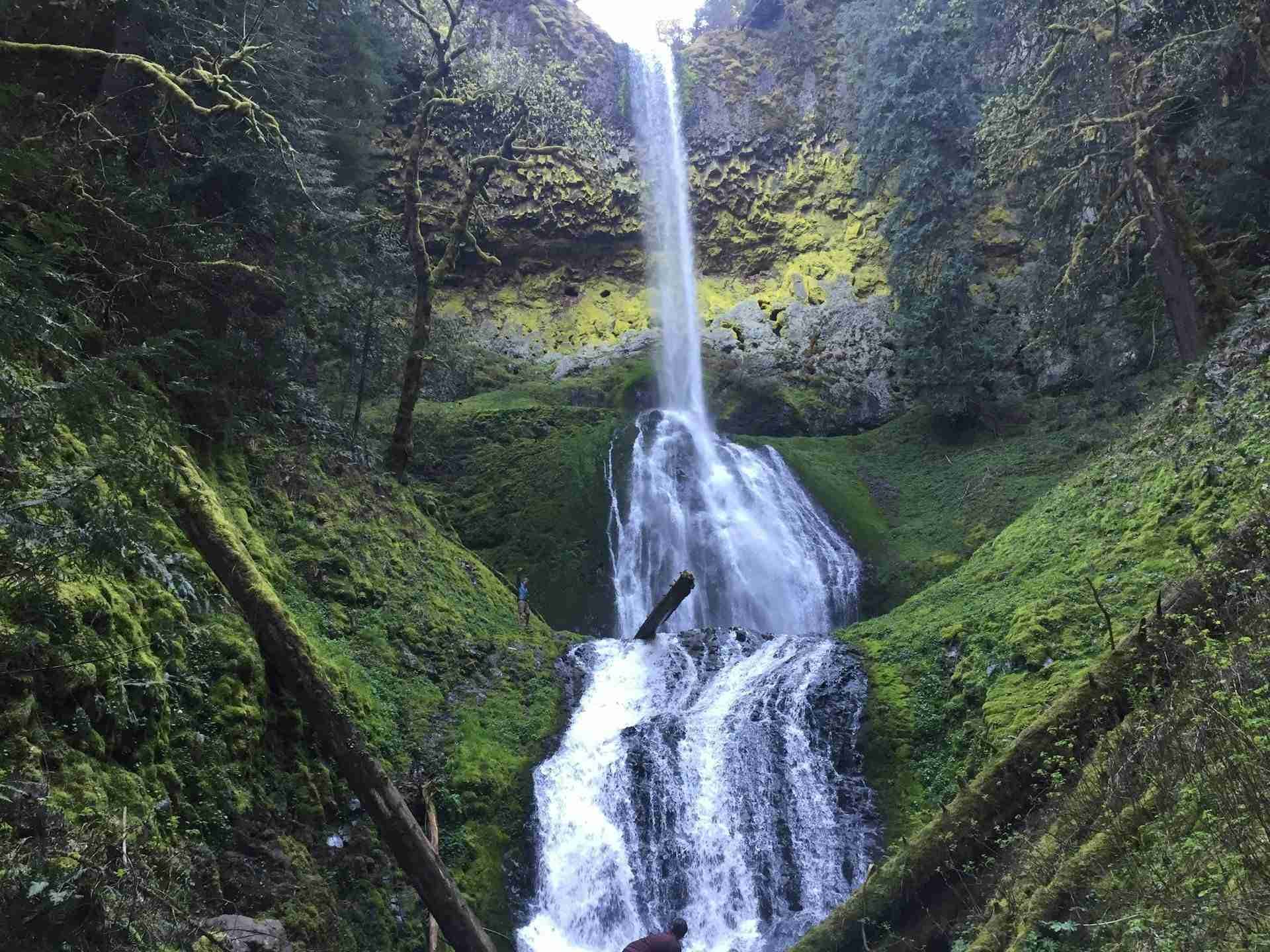
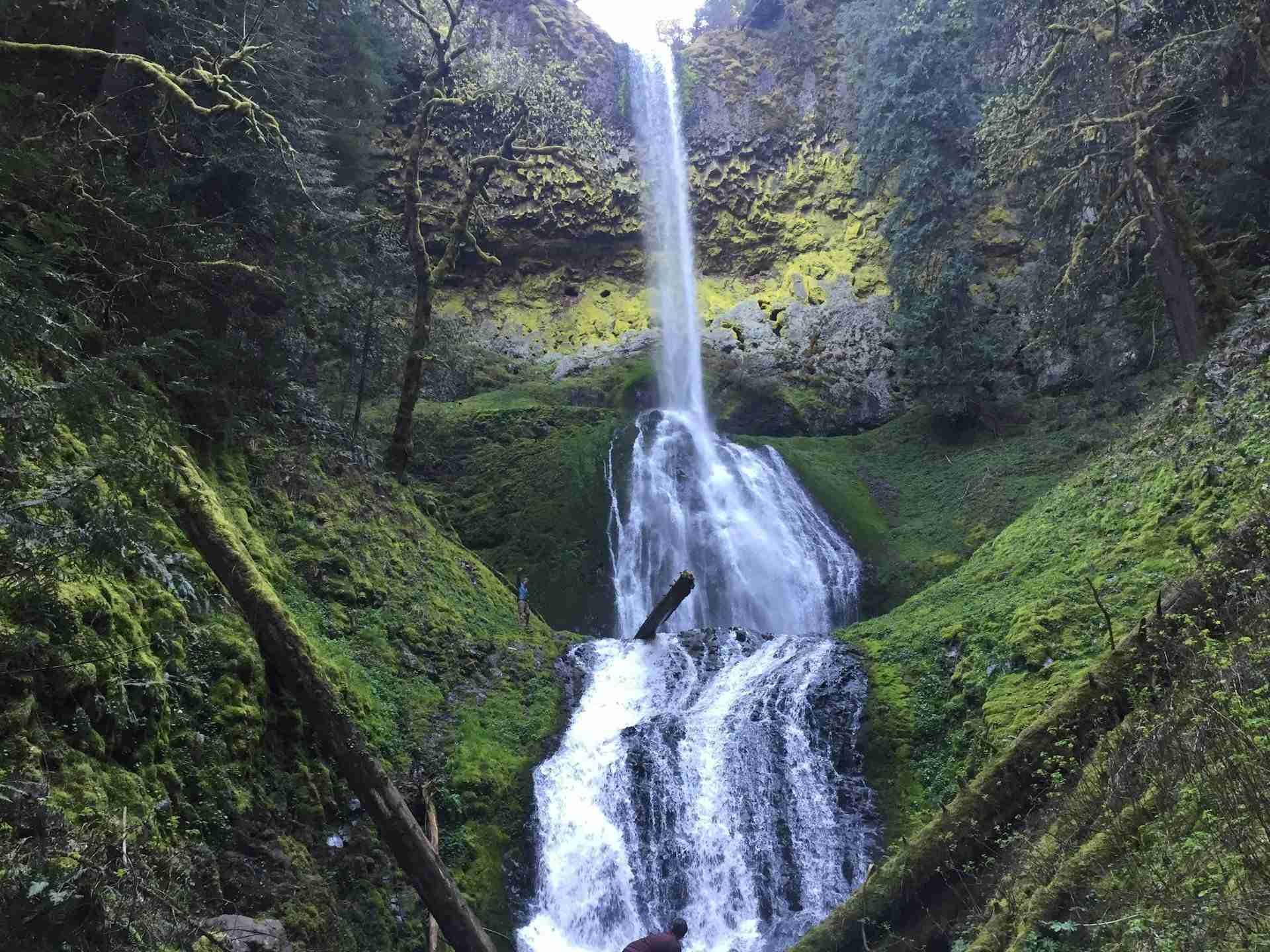
Tucked deep within the moss-covered forests of the Pacific Northwest, Pup Creek Falls is a 240-foot, two-tiered waterfall hidden along the Clackamas River Trail near Estacada, Oregon. Framed by ancient firs, ferns, and volcanic rock, the waterfall feels untouched—remote, wild, and far from the road. Its dramatic vertical drop and lush surroundings make it a quintessential Oregon waterfall scene, perfect for photographers seeking solitude, atmosphere, and layered compositions within a richly textured landscape. Accessible only by foot, the journey to Pup Creek Falls is part of the photographic reward, offering a trail rich with light play, river views, and changing forest character.
Best Photography Opportunities
• Main Falls Framing and Vertical Compositions
: The primary viewpoint near the base of Pup Creek Falls allows for direct views of both tiers as they spill down a mossy basalt wall. A vertical composition best captures the full height and flow of the falls, especially when shooting from a slightly offset position to include surrounding vegetation. A wide-angle lens from a low vantage point emphasizes the towering drop and surrounding scale. Use long exposures to smooth the water and enhance the contrast with sharp, mossy rock.
• Side Angles and Framing With Ferns
: Move slightly up or down trail for angled perspectives that frame the waterfall with overhanging branches, ferns, or logs. These elements create natural vignettes and leading lines into the falls. Backlight filtering through the forest canopy often highlights edges of greenery, adding a soft glow. Shoot with a mid-range zoom to balance subject prominence with environmental depth.
• Detail Studies of Cascading Sections
: The lower tier of the falls offers multiple rivulets and splash zones where water spreads across rock faces and fallen logs. Use a telephoto lens or macro to isolate individual water paths and frame around natural details like moss, wet bark, or glistening lichen. These quiet compositions provide a more abstract, textural counterpoint to full-falls imagery.
• Trailside River Views
: The Clackamas River Trail leading to the falls passes through canyons, high ridges, and close riverbanks, offering opportunities to photograph the Clackamas River in various moods. Look for filtered light through tall conifers, reflections in eddies, or fog hugging the water early in the day. Use a polarizer to reduce glare and enhance the deep greens and blues of the river corridor.
• Atmospheric Forest Shots Along the Hike
: The 4-mile trail (one-way) is as photogenic as the falls themselves. Large Douglas firs, dense fern floors, and misty switchbacks create immersive forest compositions. Early morning light filtering through fog or after rain provides moody, cinematic backdrops. Include trail elements—wooden steps, cliffside cables, or hikers—for scale and storytelling.
Best Time to Visit
Spring (April to early June) is the ideal time to visit Pup Creek Falls. During this period, the falls run full, the forest is lush with fresh growth, and the trail is alive with wildflowers and moss. Early summer remains excellent, though water volume begins to taper. Autumn brings quieter trails, amber foliage, and golden light filtering through the thinning canopy.
For photography, mornings offer the softest light and the best chance of fog or dew—perfect for long exposures and evenly lit scenes. Overcast days are also ideal, reducing contrast and preventing hotspots on water or foliage. Midday sun, if breaking through, can be harsh in the exposed upper falls but may add drama in backlit spray or mossy glows along the trail.
Avoid heavy winter visits without proper gear and planning—snow, ice, or fallen trees can obstruct the trail, though experienced winter hikers may find the falls hauntingly beautiful under frost and silence.
How to Get There
Pup Creek Falls is located along the Clackamas River Trail in the Mount Hood National Forest, southeast of Estacada, Oregon. There are two main access points:
• Fish Creek Trailhead
(Recommended): Located off Highway 224, approximately 14 miles east of Estacada. From the parking area, the hike to the falls is about 4 miles one way.
• Indian Henry Trailhead
: The longer approach (5.5 miles one way) begins closer to Ripplebrook and follows the river downstream.
Due to 2020 wildfire impacts and restoration work, access routes and trail conditions may vary—check the U.S. Forest Service site or local ranger district for the latest trail updates before your visit.
There is no entrance fee, but parking may require a Northwest Forest Pass. Facilities are minimal, so prepare accordingly with water, snacks, and layered clothing. Cell service is unreliable; download maps offline and carry a GPS-enabled trail app or physical map.
Recommended Gear and Shooting Tips
A wide-angle lens (16–35mm) is essential for capturing the full height of the falls and framing expansive forest scenes. A mid-range zoom (24–70mm) works well for trail shots and tighter waterfall compositions. A longer lens (70–200mm) is useful for isolating water details or shooting compressed river scenes along the way.
A sturdy tripod is critical for long exposure waterfall photography. Bring a circular polarizer to control water glare and enhance foliage color, and ND filters (6- or 10-stop) to achieve soft water flow in brighter light. Pack a lens cloth—spray from the falls and damp trail air will constantly coat your glass.
Wear waterproof hiking boots and be ready for mud, roots, and narrow ledges. A rain cover for your gear is wise, especially in spring. Consider trekking poles for stability if you're carrying heavy equipment, and give yourself ample time—the trail is not technical, but it is rugged and deserves an unhurried pace.
Nearby Photography Locations
: A striking plunge waterfall in a basalt amphitheater near Scotts Mills. Less accessible than Pup Creek, but visually dramatic and ideal for vertical compositions and long exposure work.
: A mossy, old-growth forest trail leads to rustic wooden hot springs tubs—excellent for atmospheric forest imagery and human-scale environmental shots under filtered canopy light.
• Ramona Falls
: Located on the western flanks of Mount Hood, this broad, veiled waterfall cascades down a lava cliff in intricate rivulets. The shaded amphitheater is perfect for long exposures and moody forest work.
• Clackamas River Road Views
: Pull-offs along the Clackamas River Scenic Byway offer opportunities to photograph bends in the river, reflective pools, and riverside forest scenes, especially during autumn color change.
• Timberline Lodge and Mount Hood Views
: For wide-angle mountain landscapes and alpine light, head up to Timberline for sweeping views of Oregon's highest peak—ideal as a golden-hour contrast to the forested depths below.
Pup Creek Falls is the kind of destination that rewards commitment—not just in the effort to reach it, but in the time spent absorbing its scale and serenity. Here, the Pacific Northwest shows its true form: towering trees, persistent mist, and a waterfall that carves silence through stone. For photographers, it offers an experience as deep as the images you'll bring home.
Comments
Loading comments…