
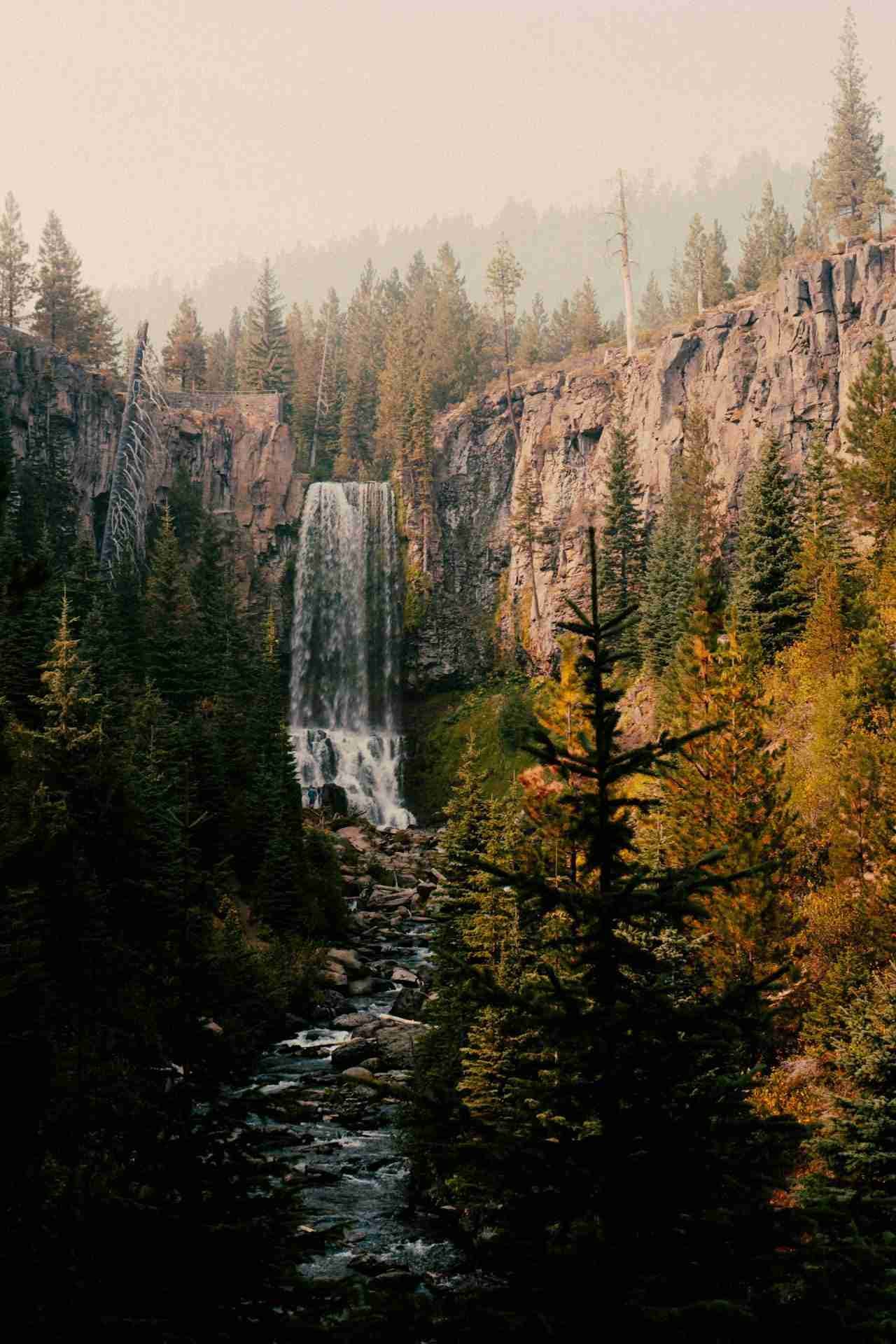
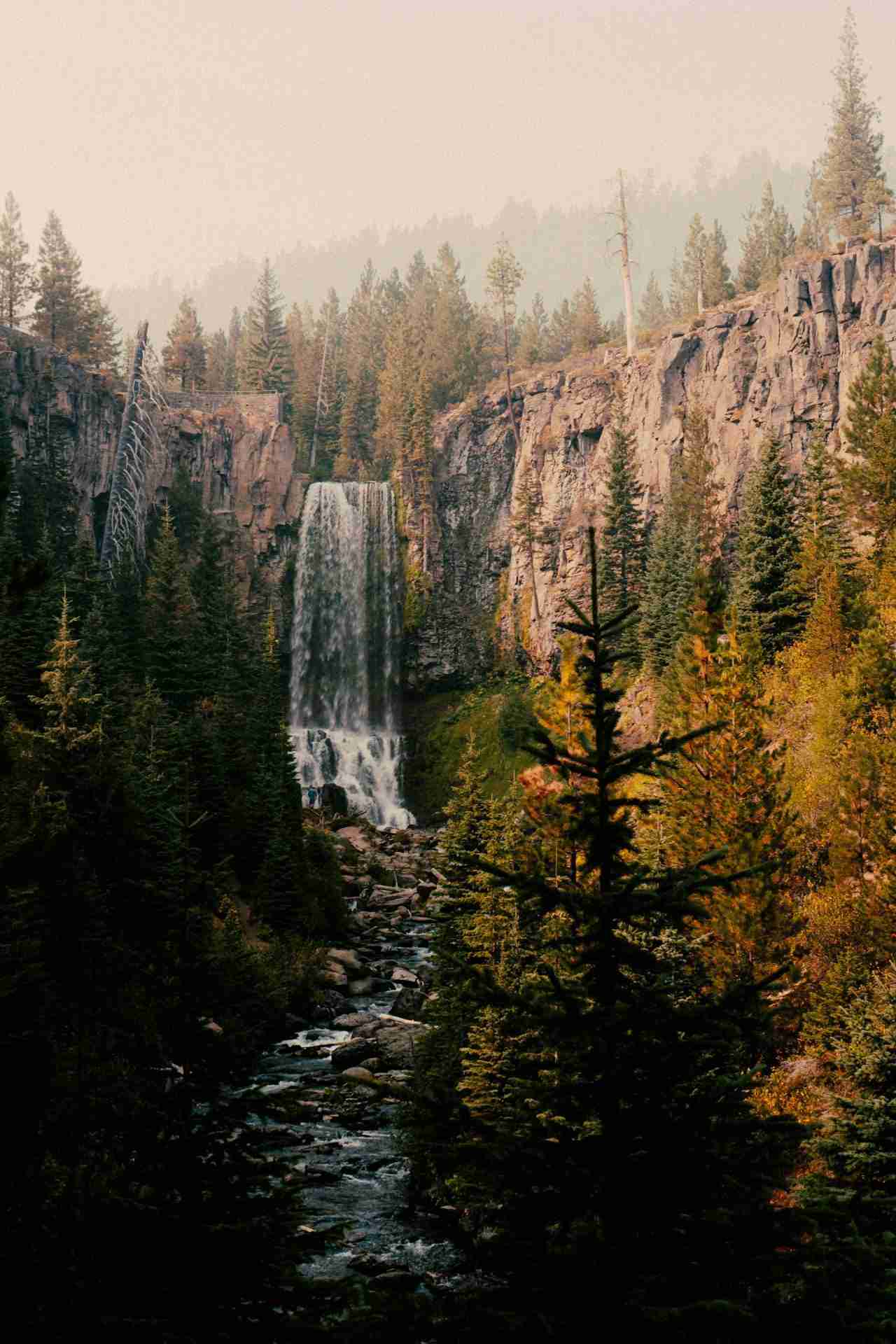
Tumalo Falls is a 97ft waterfall tucked into the forested slopes of the Deschutes National Forest in central Oregon. Fed by Tumalo Creek, the falls drop in a clean, straight sheet over a basalt cliff, framed by tall conifers and surrounded by a web of hiking trails that offer both easy access and elevated views. It's one of the more accessible falls in the region, drawing both casual visitors and dedicated photographers thanks to its balanced structure, consistent water flow, and opportunities for varied compositions. Whether you're after a classic front on shot or want to build a more layered frame through trees and trail curves, the site delivers strong results without needing a long approach or special conditions.
Best Photography Opportunities
• Main Viewpoint Near the Parking Area
The most direct view of Tumalo Falls is just a short walk from the trailhead, where a wooden fence lines the overlook and gives an unobstructed, centered composition of the waterfall from across the canyon. This is the best place to start, especially if you're visiting during early morning or late evening when light moves across the canyon at a lower angle. The falls drop straight into the creek bed, and the vertical flow works well with longer exposures. A tripod helps here, especially when the area is shaded and the shutter speed drops.
• Trail Shot from the Upper Path
Just above the lower viewpoint, a short trail climbs to a higher overlook that gives a slightly offset, elevated angle of the waterfall. From here, the scene opens up with the surrounding forest visible above the cliff line and more of the creek exposed below. This angle helps separate the falls from the background trees and gives more context to the terrain. Shooting wide allows you to pull in some of the trail or include hikers for scale. This is also a good spot for cloud movement or changing light patterns across the tree line.
• Mid Range Compositions with Pine Framing
Several side spots along the trail offer chances to frame the waterfall through gaps in the trees. These mid range views give you more control over balance and depth, using pine branches or trunks as natural borders. These shots benefit from soft light, especially during overcast days or late in the afternoon when contrast softens and the green of the forest becomes more saturated. A standard zoom lens gives the flexibility to shift between tighter waterfall frames and wider scenes that include foreground elements.
• From the Creek Edge
Although not an official trail, there are some lower access points near the creek below the main falls where you can shoot upward, capturing the full vertical flow from base to crest. These angles work best for isolating the shape of the drop against sky and stone, especially if water flow is strong and mist creates separation. A neutral density filter and long exposure can soften the water, while a small aperture helps keep the rock texture sharp throughout. Be cautious near the water's edge, as footing can be uneven and slippery.
• Secondary Falls Along Tumalo Creek Trail
Continuing up the trail from the main falls, there are several smaller waterfalls and fast moving creek sections that offer quieter scenes for more intimate work. These areas are less crowded and allow for low-angle shots of cascades, moss covered rocks, and forest detail. These compositions benefit from tripod use and polarizing filters to cut glare on the water surface. They make strong standalone images or sequences that complement the main waterfall frame.
Best Time to Visit
Late spring through early fall offers the best balance of access and water flow at Tumalo Falls. In spring and early summer, snowmelt feeds the creek, and the waterfall runs high with a strong, consistent column. Morning light is best for front lit compositions from the main viewpoint, while afternoon light favors side lit frames along the upper trail. Summer brings more visitors, so early arrival helps if you want the area to yourself. Fall introduces more color in the understory, and the light softens, especially on overcast days. Winter access may be limited by snow, and the road to the trailhead is often closed, requiring a longer hike or snowshoe approach.
How to Get There
Tumalo Falls is located west of Bend, Oregon, in the Deschutes National Forest. From downtown Bend, take Skyliners Road to the clearly marked Tumalo Falls Road, which leads directly to the trailhead and day use parking area. The access road is gravel but well maintained during the open season. There is a small fee for parking, and facilities are limited to restrooms near the trailhead. The falls are less than a five minute walk from the lot, with an optional trail continuing upstream for those looking to explore beyond the main site. Road closures can occur seasonally, so check conditions ahead of time, especially in the winter.
Recommended Photography Gear
Bring a wide angle lens to frame the full drop of the falls from both the lower and upper viewpoints. A standard zoom is useful for mid range work and trail shots that include people or forest framing. A tripod is essential for long exposures and low light conditions under tree cover. A circular polarizer helps reduce water glare and boosts contrast in greens, especially when shooting the creek or moss-covered rocks. Neutral density filters are valuable for slowing shutter speeds at the main waterfall. Footwear with good grip is recommended for trail sections that may be wet or uneven.
Nearby Photography Locations
This scenic river path winds through forested terrain and offers access to several rapids, quiet eddies, and pine covered banks. It's a flexible location for both wide scenes and detail work, especially in changing light.
About 45 minutes from Tumalo Falls, Smith Rock features towering rock formations, desert vegetation, and strong directional light. It's especially good at sunrise and sunset for dramatic shadows and landscape depth.
Located west of Bend in the Cascade Lakes region, this lake provides clear reflections of South Sister and Broken Top when wind is low. Best in early morning with calm water and crisp mountain light.
This volcanic cinder cone inside Bend offers panoramic views over the city and toward the Cascades. A great spot for sunset or twilight frames with long focal lengths to compress distant mountain ridges.
For slower paced shooting, this urban park in Bend offers quiet compositions of river reflections, trees, and park architecture. Ideal for handheld walks or early morning detail work when the light is still soft.
Tumalo Falls doesn't require much effort to reach, but still offers enough variety to hold attention through several hours of shooting. Whether you're working tight compositions of water and texture or wide frames of the waterfall framed by forest, the site rewards patience and control. It's an easy stop that consistently delivers.
Comments
Loading comments…