
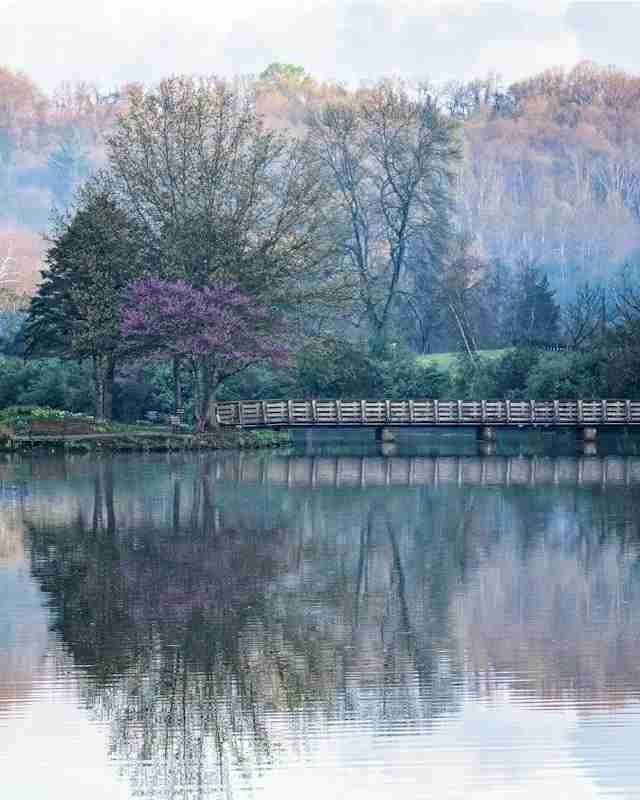
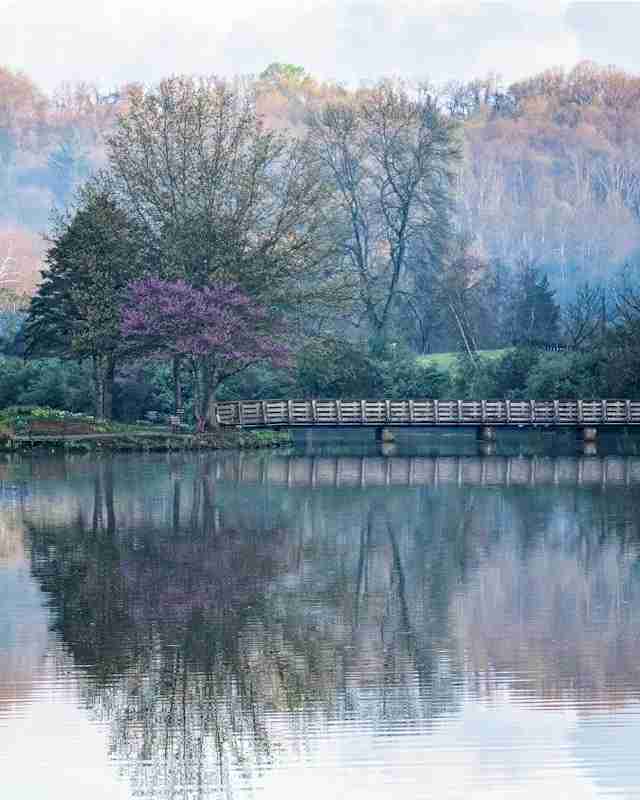
Marshall Lake and the small wooded island at its center form a quiet, often overlooked pocket of photographic potential in Allison Park's Hampton Township. Set within a suburban parkland environment, the lake offers calm reflections, seasonal tree color, and a footbridge that leads to the island, creating a surprisingly versatile location for landscape, nature, and minimalist compositions. Though compact, the area responds well to changing light and is best suited for photographers who enjoy working with symmetry, soft water, and subtle environmental shifts across the seasons. Whether you're building a series or looking for a simple, reflective frame, Marshall Lake provides space for still, intentional shooting.
Best Photography Opportunities
• Island Bridge Framed Across the Lake
From the southern shoreline, you can photograph the small footbridge that leads to Marshall Island with the lake's water acting as a mirror in calm conditions. A wide-angle lens lets you capture the bridge, trees, and reflection in one layered composition. Early morning is ideal, when the water is most still and light grazes across the top of the trees. Overcast days also work well, providing balanced exposure and a quiet mood that fits the scale of the scene. Consider including nearby shoreline grasses or branches in the foreground to create depth.
• Reflections of Trees in Still Water
On days without wind, Marshall Lake offers strong mirror reflections of the surrounding tree line, especially in autumn when the leaves shift into warmer tones. Use a standard or telephoto lens to crop tightly into these reflections, creating near-abstract images with color and line mirrored on the water's surface. These shots are especially effective just after sunrise or before sunset, when the low angle light adds warmth and brings out subtle detail in the ripples.
• Minimalist Shots from the Island Interior
Once on Marshall Island, the tree cover and open views back across the lake offer minimalist compositions of tree trunks, water, and distant shoreline. A short telephoto lens helps isolate vertical lines or patterns in the bark and branches. In fog or soft rain, these interior shots take on a muted quality that works well in black and white. The simplicity of the island makes it ideal for quieter frames that rely on form and tone rather than grand scenery.
• Wildlife and Bird Photography from the Shoreline
The lake attracts waterfowl and small bird species throughout the year, especially in spring and early fall. Use a long telephoto lens to shoot across the water or from under tree cover without disturbing the scene. Ducks, geese, and the occasional heron can be photographed near the water's edge, while smaller songbirds move through the island trees. These subjects benefit from a patient approach and soft morning light.
• Seasonal Tree Color and Shoreline Composition
During October, the trees surrounding the lake shift into a palette of oranges, reds, and golds. Position yourself on the eastern edge of the water in late afternoon to catch backlit foliage with warm sunlight cutting across the lake. A polarizing filter can help enhance the color and reduce surface glare on the water. These wider compositions often work best with a tripod and mid-range lens to keep the framing clean and stable.
Best Time to Visit
Marshall Lake is most photogenic in the shoulder seasons, especially in early spring and mid-autumn when the trees show either fresh growth or full color change. Early mornings are consistently the best time to visit. The water is calmest before the wind picks up and the park sees little foot traffic before mid-morning, allowing for clean reflections and more opportunities for wildlife photography.
Summer brings lush greens and longer daylight hours, though harsh midday light can flatten the scene unless you work in shade or under cloud cover. Winter presents a starker visual palette with bare trees and occasional snow, which can be used to isolate forms in more minimalist frames. Rain and fog add texture and softness to the area, making even quiet days productive if you are prepared for moisture and low contrast.
How to Get There
Marshall Lake and Marshall Island are located within the broader Allison Park area of Hampton Township, Pennsylvania. The park sits near the intersection of Wildwood Road and South Pioneer Road and is easily accessible by car. Parking is available nearby with designated spaces close to the lake and walking paths that lead directly to the shoreline and island footbridge.
The entire area is open to the public with no entry fees, and foot access to the island is available via the small wooden bridge on the southern side of the lake. Trails are flat and well-maintained, making the site easy to navigate with camera gear. The park remains open year-round from dawn until dusk, and there are no known restrictions on tripod use or handheld photography throughout the grounds.
Recommended Photography Gear
A 24–70mm zoom lens offers the most flexibility for wide landscapes and tighter shots of the bridge, island, and tree reflections. A 70–200mm lens is useful for wildlife and for isolating compositions across the water or within the trees. A wide-angle lens, such as a 16–35mm, helps when working from the shoreline or building low compositions with foreground elements.
Bring a tripod for stable work in low light or long exposures of water surfaces. A circular polarizer is helpful for reducing reflections and enhancing foliage color, particularly in autumn. A rain cover or dry bag is a good idea if visiting during variable weather or working near the water's edge. A microfiber cloth is essential for wiping down lenses on damp mornings.
Nearby Photography Locations
• North Park Lake
Roughly 15 minutes west of Marshall Lake, North Park Lake offers a much larger body of water with long curves, elevated viewpoints, and a popular boathouse. It is a good contrast to the quieter scale of Marshall and ideal for sunrise sessions.
This nature reserve features forested trails, wetland areas, and opportunities for macro work, bird photography, and forest compositions. Located just south of Allison Park, it provides a quieter alternative to busier parks and pairs well with a half-day shoot at Marshall Lake.
Offering both formal gardens and wooded trails, Hartwood Acres is a strong subject in late spring and early summer. The mansion, stone structures, and wide lawns give a more structured look to architectural and landscape compositions.
A few miles away, Wildwood Park features a boardwalk through marshlands and shallow water with strong opportunities for wildlife and layered wetland photography. Early morning fog and late afternoon light both work well here, especially for layered compositions with reeds and sky.
This long trail cuts through parts of Allison Park and includes woodland scenery, open hills, and footbridges. It is best for forest texture work or soft light conditions and connects well with the surrounding park network.
Marshall Lake and Marshall Island offer a quiet and thoughtful environment for landscape photographers who prefer to work with stillness, symmetry, and changing light. With access to soft reflections, subtle color changes, and clean framing opportunities, it is a location that encourages deliberate shooting and rewards careful composition across all seasons.
Comments
Loading comments…