
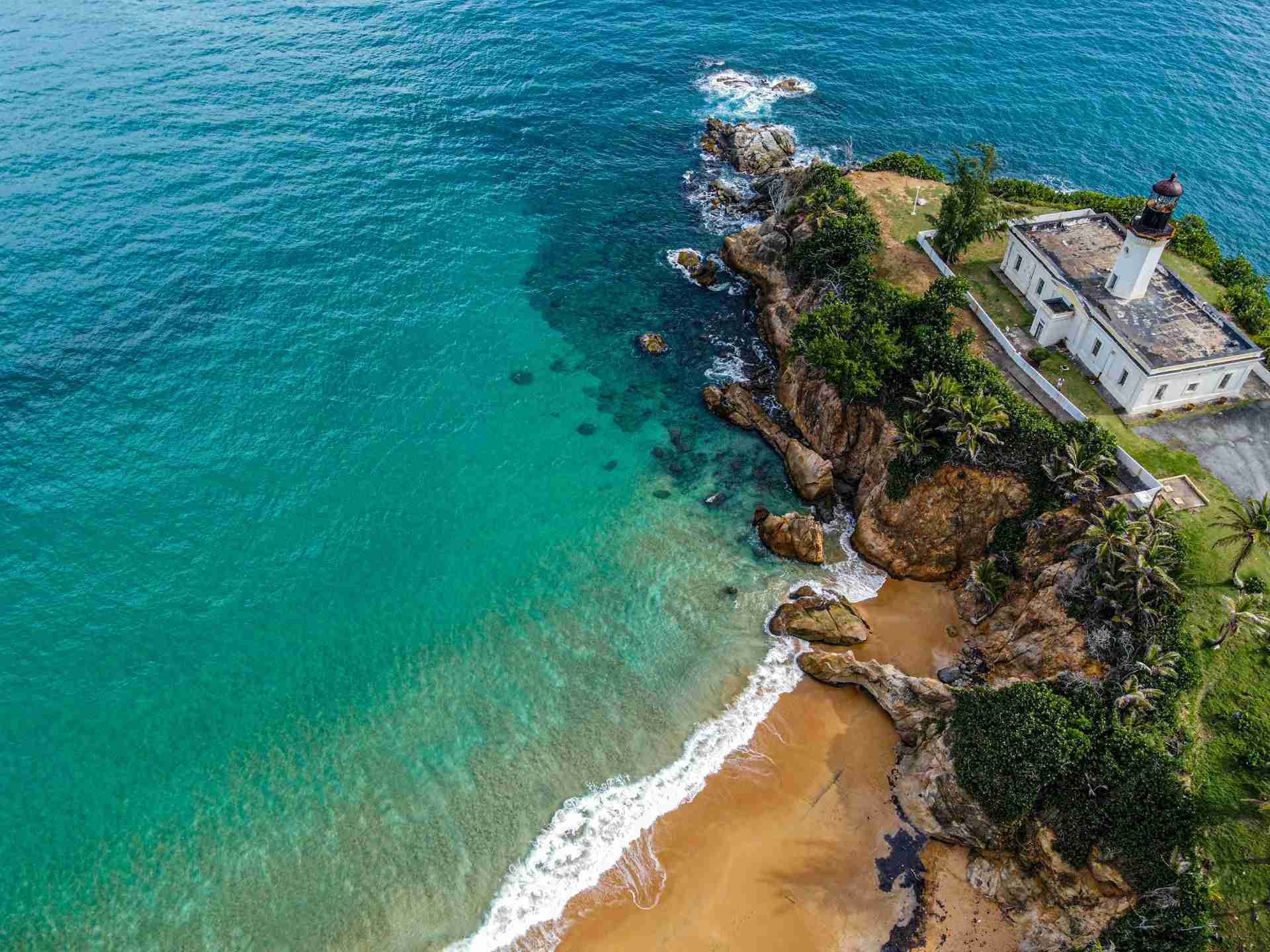
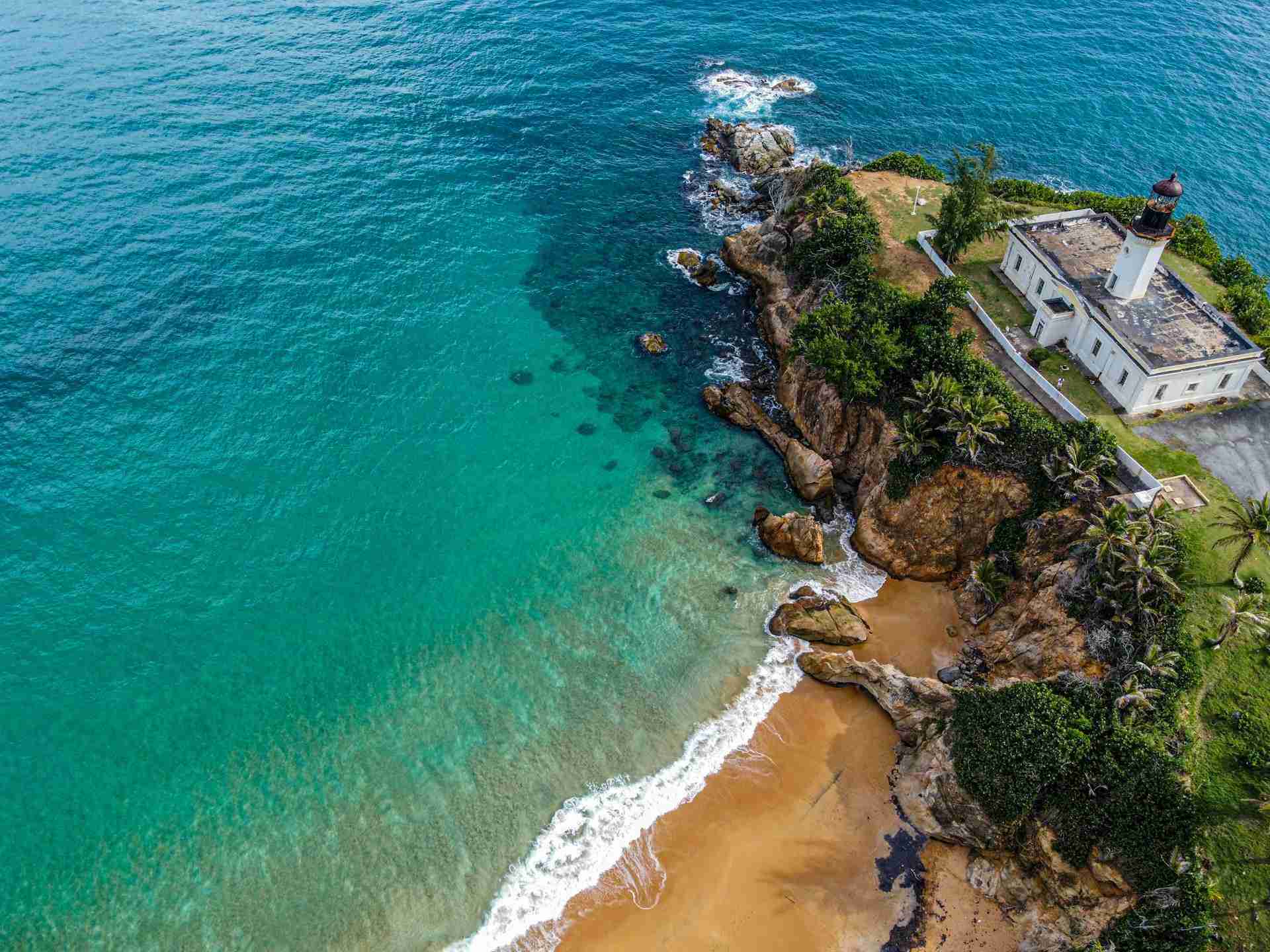
Punta Tuna Lighthouse stands on a headland in Maunabo, a small coastal town in Puerto Rico's southeast corner. Built in the late nineteenth century, the lighthouse has a square tower that rises above its keeper's quarters, and it overlooks a stretch of black rock cliffs where the Caribbean pounds the shoreline. The building itself is simple and clean, painted white and framed by palms and scrubland, but its location gives it a dramatic presence. For photographers, it offers a balance between structure and landscape, history and coastline. You can work close for architectural detail, step back for full views of the lighthouse against sea and sky, or explore the edges of the cliffs for sweeping seascapes. It is a subject that changes mood with every shift of weather and light, and it rewards time spent moving between perspectives.
Best Photography Opportunities
• Lighthouse Architecture
The whitewashed walls and angular form of Punta Tuna Lighthouse make it a strong subject for both wide shots and close studies. With a wide lens you can place the lighthouse in its coastal setting, contrasting clean lines with rough cliffs and palms. A telephoto zoom allows you to pick out details such as the lantern room, the textural wear of the stonework, or the symmetry of windows and doorways. Early light is best for avoiding harsh shadows on the building, but soft evening light can also highlight the walls with a warm tone. Straight-on compositions work well here, as the symmetry of the building is part of its visual character.
• Clifftop Coastal Views
Standing on the grounds around the lighthouse, you are immediately above a series of black rock cliffs that drop into the Caribbean. These viewpoints give you strong leading lines as the coastline bends away to the north and south. The cliffs take on warm color at sunrise, and waves breaking below add motion and drama to the scene. Wide horizontals work especially well, showing both the expanse of the sea and the small presence of the lighthouse above it. Polarizers help cut glare off the water and deepen the natural tones of blue and green in the ocean.
• Palm Groves and Grounds
The surrounding palms and scrubland offer natural framing and foreground options when photographing the lighthouse. Positioning palms in front of the structure adds depth and scale to wide compositions, while side light filtering through the trees creates layered shadows on the ground. These areas also give you a chance to mix detail shots of roots, leaves, and bark with wider architectural frames. The contrast between tropical vegetation and the formal geometry of the lighthouse adds character and context. This part of the grounds is also quieter, allowing for slower, more deliberate compositions.
• Storm Light and Seascapes
Because the lighthouse faces directly into the Caribbean, it is an excellent place to watch weather systems develop. Dark clouds often move in from the horizon while light breaks through in patches, giving you high-contrast skies and restless seas. These conditions are perfect for seascapes that balance the solidity of the lighthouse with the shifting atmosphere around it. Long exposures can soften the sea and clouds into broad tones that emphasize the sharp, clean shape of the building. For monochrome work, storm days provide some of the best conditions here, with dramatic skies and deep shadow across the cliffs.
• Night and Astrophotography
The southeastern coast of Puerto Rico has relatively low light pollution compared to the northern part of the island, which makes Punta Tuna suitable for night photography. The lighthouse becomes a strong foreground element when framed beneath a clear, star-filled sky. The Milky Way is visible here for much of the year, especially during the summer months when the arc rises over the sea. Long exposures bring out detail in both stars and structure, and careful use of light painting can help illuminate the lighthouse walls without overpowering the sky. A sturdy tripod and wide fast lens are essential for this type of work.
Best Time to Visit
Sunrise is the best time to photograph Punta Tuna Lighthouse. The building faces east, so the first light of the day strikes it directly and floods both the structure and the cliffs with soft, warm tones. Morning also tends to bring calmer air, which is ideal if you plan to shoot long exposures from the cliffs. Midday sun is strong and can flatten the white walls of the lighthouse, though a polarizer will help balance sky and water if you are shooting at that time. Sunset light arrives from the side, creating contrast and definition along the lighthouse walls and cliffs, while the sky over the Caribbean often fills with pastel colors. The dry season from December through April brings more predictable sunrises and clear skies. The wet season from May through November offers more dramatic conditions, with storm systems and turbulent surf that add mood to your images. Each season offers its own possibilities, and planning around your preferred atmosphere is more important than waiting for perfect weather.
How to Get There
Punta Tuna Lighthouse is located in Maunabo, on the southeastern coast of Puerto Rico. From San Juan, the drive takes about two hours via PR-52 before connecting with PR-3, which follows the southern and eastern coastlines. From Ponce, the journey is just over an hour across the island on PR-52 and PR-53. The lighthouse is clearly marked and is part of the Punta Tuna Natural Reserve. A small parking area is available near the entrance, and from there it is only a short walk to the lighthouse grounds. Access is generally free, although the interior of the building is not always open due to restoration work or local events. There are limited facilities nearby, so bring your own water and supplies if you plan to stay for several hours. The headland is exposed, and conditions can change quickly, so plan for strong sun, wind, and sea spray while working near the cliffs.
Recommended Photography Gear
A wide-angle lens is essential for capturing both the lighthouse and its surroundings in a single frame. A 16 to 35 millimeter range works well for compositions that include the sea and sky as well as the structure itself. A mid-range zoom such as a 24 to 70 millimeter lens is useful for general coverage, portraits among the palm groves, and balanced architectural shots. A telephoto lens allows you to isolate the lighthouse against the water or focus on wave action along the cliffs. A tripod is necessary for sunrise, sunset, and night photography, especially if you plan to shoot long exposures. A circular polarizer is helpful for cutting glare from the sea and enriching color in both sky and water, while neutral density filters allow you to extend exposure times for smooth water effects. A drone can be very effective here, offering perspectives that show the building against the sweep of coastline, but fly with caution since winds are often strong. Salt spray is constant, so keep lens cloths handy and protect your gear between shots.
Nearby Photography Locations
South of the lighthouse, the Maunabo coast has rocky outcrops and small coves where the Caribbean meets dark stone. These areas are ideal for wave photography, especially during sunrise when side light adds definition to the rocks.
• Patillas Beachfront
To the west, Patillas offers calmer waters and palm-lined beaches that contrast with the rugged cliffs at Punta Tuna. The wet sand reflects sunset color beautifully, making it a strong location for evening photography.
North of Maunabo, El Yunque provides rainforest trails, waterfalls, and mountain lookouts. This is a good complement to a coastal session, giving you a completely different environment to photograph within the same day.
Further north along the coast, Punta Santiago is known for its long beaches and offshore views. Aerial photographers will find strong compositions here, as sandbars and shallow water create natural curves and patterns visible from above.
Close to Maunabo, Playa Lucia is a broad sandy beach with steady surf and open horizons. Sunrise works particularly well here, and the beach is far quieter than those near San Juan, allowing for uninterrupted shooting.
Punta Tuna Lighthouse is more than a historic site. It is a meeting point between the permanence of a man-made structure and the restless movement of the sea. Photographers will find both simplicity and drama here, from quiet symmetry in the lighthouse walls to storm light rolling in across the horizon. It is a location that invites you to stay longer than you planned, watching how the light shifts and the coastline changes, and it rewards every visit with new images.
Comments
Loading comments…