
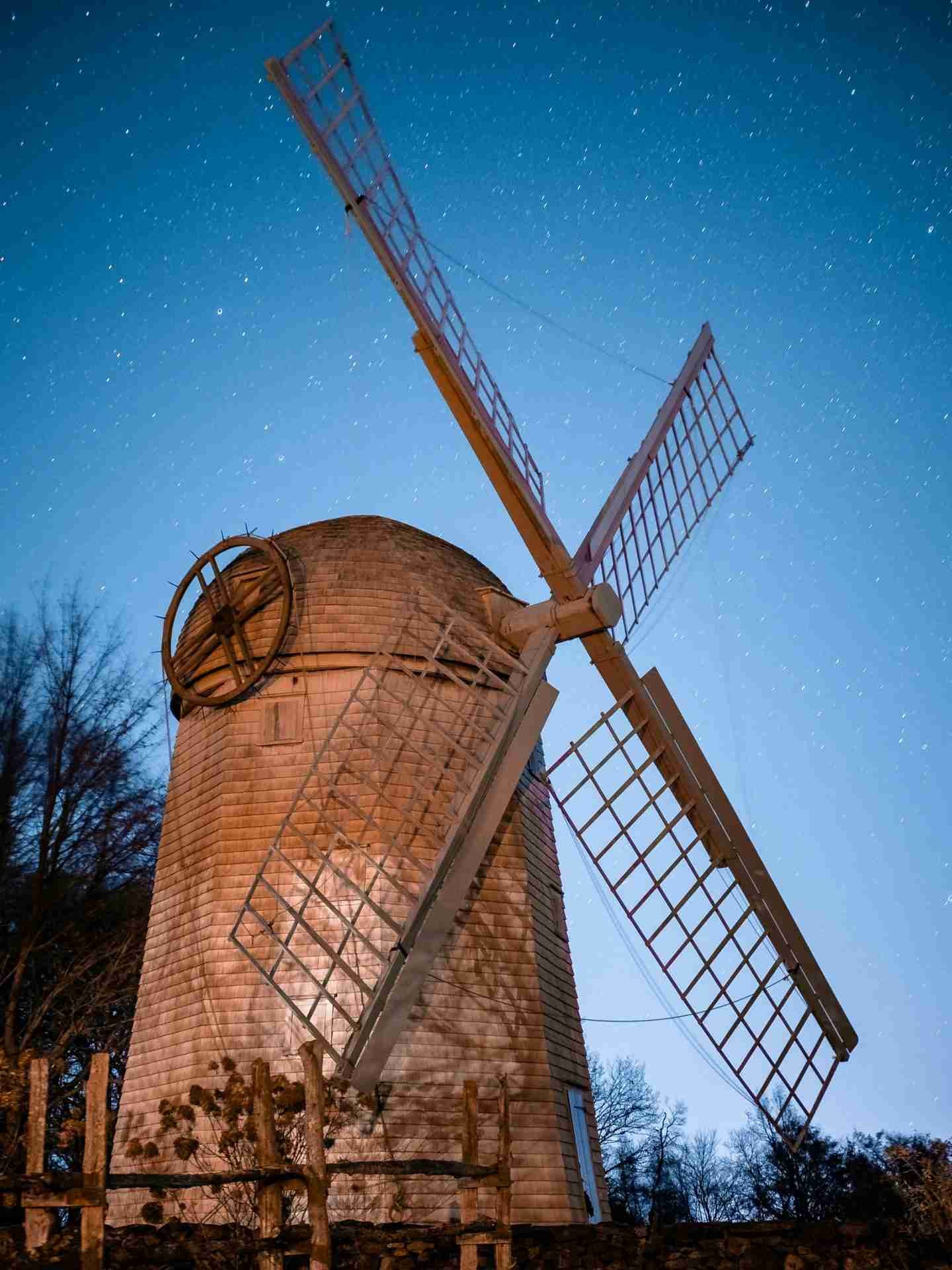
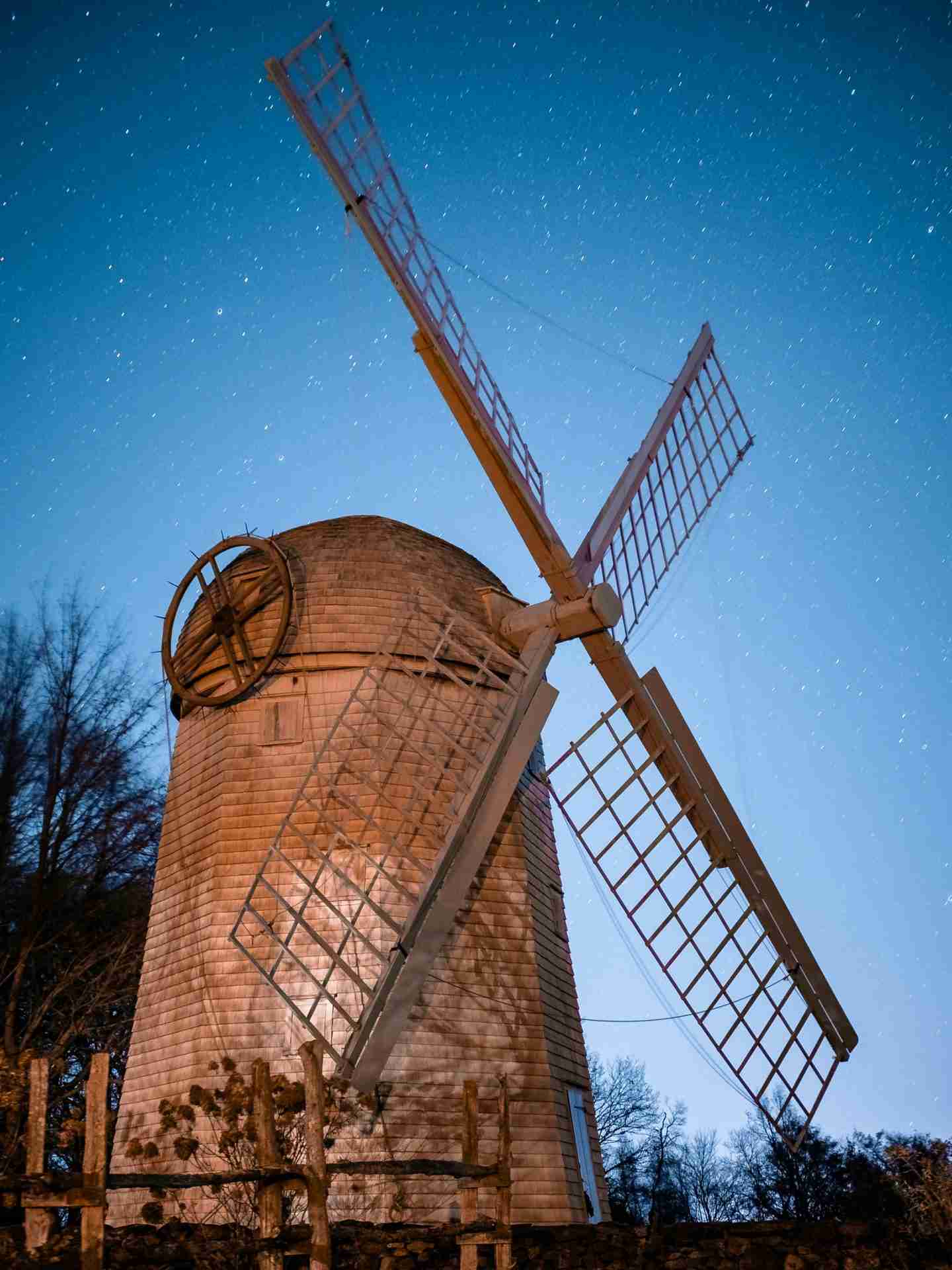
Jamestown Windmill rises from the top of Windmill Hill as a clean, unmistakable landmark above the island landscape. Built in 1787 and later restored, this wooden smock mill remains one of the few operational windmills in New England. Its tapered wooden body, angled sides, and rotating cap give it a distinct silhouette that stands out against open sky in every direction. The windmill sits photogenically within open farmland bordered by low stone walls and gently rolling grass. The setting is simple, and that simplicity makes it such a diverse shooting location. There are no competing buildings or dense tree lines crowding the frame, which gives photographers the freedom to build deliberate, uncluttered compositions. The elevated hilltop position also allows you to work with big skies, changing light, and long sightl ines across Jamestown.
Best Photography Opportunities
• Silhouette Against Expansive Sky
One of the strongest compositions is the windmill standing alone against open sky. Because the site is elevated and unobstructed, you can frame the entire structure without background clutter. Blade placement is critical here. A slight rotation can either open up negative space or cause awkward overlap with the mill body. Looking for a balanced blade position often makes the difference between an average frame and a refined one. Lower shooting angles increase the windmill's visual strength and prevent the horizon from cutting through the structure. This approach works particularly well when the sky carries subtle cloud texture that adds depth without overpowering the subject.
• Using Stone Walls as Structured Foreground
The historic stone walls around Windmill Hill provide natural leading lines and grounding elements. Incorporating a wall in the lower portion of the frame introduces texture and depth while reinforcing the rural New England setting. Positioning the wall diagonally can guide the eye toward the base of the windmill. Early morning or late afternoon light enhances the rough stone surfaces and creates gentle contrast with the smoother wood siding. Careful framing keeps the foreground supportive rather than dominant. This method builds a stronger sense of place rather than isolating the windmill as a standalone object.
• Side Profile Emphasizing the Smock Form
From the side, the windmill's tapered structure becomes more pronounced. The angled walls and overhanging cap create clean lines that lend themselves well to architectural composition. A moderate focal length helps maintain proportion without exaggerating perspective. Paying attention to how the blades intersect with the roofline is essential, as this intersection strongly affects visual balance. Even lighting conditions are often preferable for this angle, as harsh light can flatten the wood texture. These images feel controlled and deliberate when alignment is precise.
• Close Detail of Wood Grain and Mechanism
Moving closer to the structure reveals the craftsmanship of the wooden siding and blade connections. The weathered boards show subtle variation in tone and texture that responds well to soft side light. Detail compositions allow you to focus on structure and material rather than overall form. Overcast conditions are especially useful for preserving fine surface detail without harsh highlights. Including a portion of the blade mechanism can introduce subtle motion if the wind is active. These tighter images provide contrast to wide landscape compositions and deepen the visual narrative.
• Evening Silhouettes
As the sun lowers, the windmill can be reduced to pure shape against a warm horizon. This is where the simplicity of the structure becomes most effective. The four blades create a strong cross form that reads clearly when separated from the body. A tripod helps maintain stability as light fades and color intensifies. Waiting for a moment when the sky transitions smoothly from warm to cool tones can produce a balanced and calm composition. These frames often feel the most graphic and refined when distractions are minimized.
Best Time to Visit
Light direction plays a major role at Windmill Hill due to its exposed position. Early morning often provides the calmest atmosphere, with softer contrast and fewer visitors. The rising sun can gently illuminate one side of the windmill, adding depth to the wood siding without creating harsh shadow. Late afternoon and sunset are equally strong, particularly when warm tones enhance the natural color of the wood and surrounding grass. Because the hill is open in all directions, you can adjust your position depending on where the light is strongest.
Midday light can be more challenging, especially under clear summer skies, as overhead sun flattens texture and increases contrast. Overcast conditions, however, can be surprisingly effective for detail work and controlled architectural compositions. Seasonal differences are noticeable in the surrounding landscape. Spring and summer bring greener grass and fuller color, while autumn introduces warmer tones that complement the wood structure. Wind conditions also matter here. Strong gusts can affect tripod stability and blade motion, so checking forecasts before a planned shoot is worthwhile.
How to Get There
The Jamestown Windmill is located on Windmill Hill along North Rd making it easily accessable car. The approach is straightforward and does not require a long hike. The surrounding grassy area is open and publicly accessible, with no entrance fee required for exterior photography. The compact nature of the site allows you to explore multiple angles within a short visit, but giving yourself time to observe the changing light will improve results.
Recommended Photography Gear
A standard zoom lens is ideal for capturing both full structure compositions and tighter architectural studies. A short telephoto lens is particularly useful for compressing the windmill against the sky and isolating blade patterns. A sturdy tripod is recommended for sunrise and sunset sessions, especially when wind speeds are manageable. A polarizer can help deepen sky tones and reduce glare under bright conditions. Because the location is open and breezy, securing your tripod and minimizing loose accessories is important. Keeping your gear streamlined makes it easier to move freely around the hill and refine compositions without interruption.
Nearby Photography Locations
This park at the southern tip of Jamestown offers rocky shoreline, open Atlantic views, and a historic lighthouse. It provides dramatic coastal compositions that contrast with the inland calm of Windmill Hill.
Cliffside terrain and remnants of military fortifications create layered compositions with rugged textures. The park introduces a more dramatic and industrial coastal atmosphere.
The lighthouse offers classic New England coastal imagery. Its strong vertical form pairs well with the windmill's rotating blades for a cohesive regional theme.
This large suspension bridge provides sweeping lines and structural scale across Narragansett Bay. It introduces a modern engineering subject within the same landscape.
• Newport
A short drive away, Newport offers harbor scenes, historic mansions, and coastal cliffs. It expands a Windmill Hill visit into a broader architectural and maritime photography session.
Comments
Loading comments…