
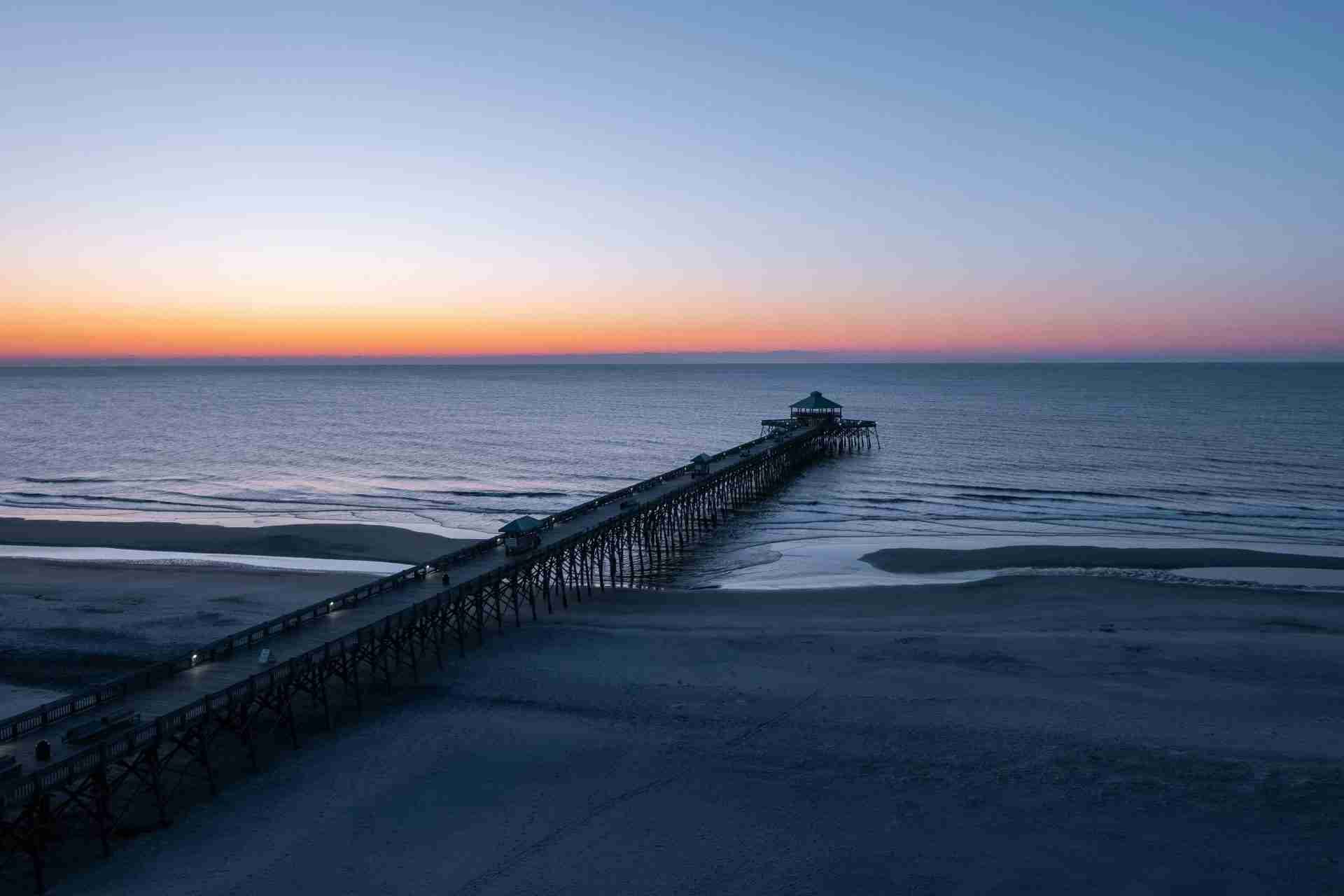
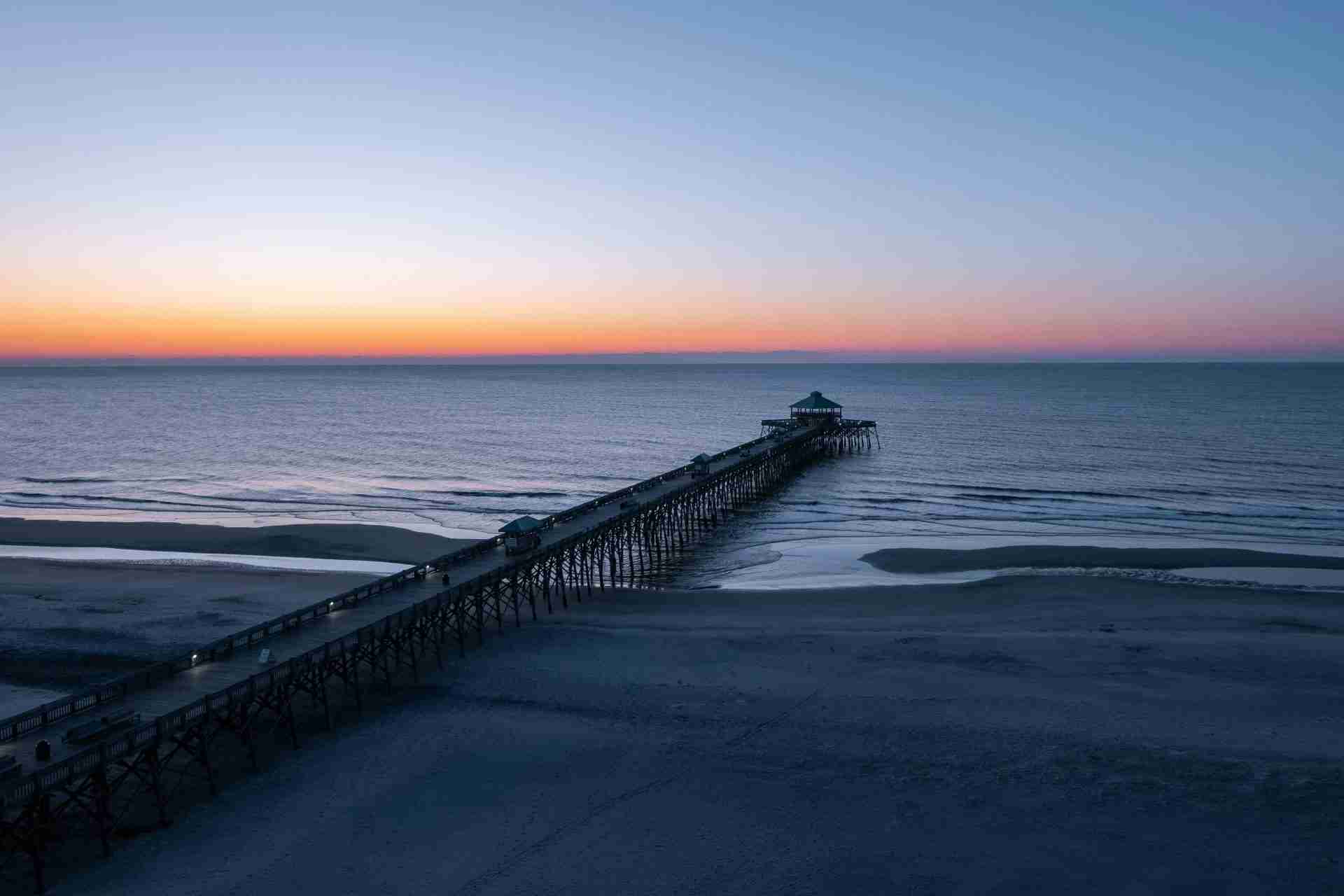
Folly Beach Pier is a well loved landmark on the South Carolina coast, stretching over 1000ft into the Atlantic Ocean from the relaxed beach town of Folly Beach. Recently rebuilt with reinforced concrete and wooden decking, the new pier preserves the look and feel of the original while offering stronger, safer access for locals and visitors alike. With its long repeating supports, open beach setting, and constantly changing light, it's one of the most photogenic structures on the South Carolina coast. For photographers, the pier works well for both wide views and tighter detail shots, with sunrise light coming straight across the ocean and soft golden color wrapping around the structure at either end of the day. Whether you're drawn to symmetry, reflections, motion blur, or just want to work with good light over water, Folly Beach Pier is a rewarding place to shoot.
Best Photography Opportunities
• Under the Pier
Shooting from underneath the pier creates one of the most recognizable images of the location. The repeating supports form clean geometric lines that draw the eye straight toward the horizon. This works best at low tide, when you can walk further underneath and frame the full length of the structure without water blocking your view. Try long exposures in the early morning to smooth out the waves and create a contrast between the soft water and the sharp lines of the pier. A tripod and wide lens are both helpful for getting the best results in these low light conditions.
• Sunrise Over the Atlantic
The pier faces east, so sunrise is one of the most reliable times to photograph it with clean, directional light. From the beach, you can frame the pier extending into the rising sun, or move off to the side and shoot the light hitting the columns at an angle. Early morning color tends to be strongest between October and April, when the air is cooler and the skies are more dynamic. On clear days, you'll get soft pastel tones before the sun appears, while cloudy mornings can lead to more dramatic sky patterns. Arrive early enough to set up and start shooting during blue hour, before the light changes too fast.
• Detail Shots from the Pier Deck
The pier itself offers plenty of small details to work with, from weathered textures in the wood to patterns in the railings, benches, and fishing gear left behind by early visitors. These shots are best taken during soft light, either early or late in the day, to avoid strong shadows and blown-out highlights. Focus on small sections rather than trying to capture the whole scene, and look for layers like footprints, fishing rods, or light hitting wet boards. A mid-range lens is great for isolating parts of the pier without compressing the view too much. Overcast days can also be useful here for evenly lit detail work.
• Side Views with Ocean and Sky
From either side of the beach, you can back up and frame the full pier with the open ocean stretching out beside it. These compositions help show the scale of the structure and work well during both sunrise and sunset. At low tide, wet sand near the shoreline can reflect the light and add interest to the lower part of the frame. These wider shots often benefit from including sky, clouds, or breaking waves to keep the scene from feeling too empty. Use a polarising filter to manage glare if you're shooting under strong sunlight.
• Night Photography and Pier Lights
In the evening, the pier is lit by evenly spaced lamps that run along its entire length, creating a clean line of light that stands out against the dark water. Long exposures work well here, whether you're shooting from the beach or on the pier itself. The combination of soft surf, warm artificial light, and reflections creates a peaceful and cinematic look that's different from what you'll get during the day. Aim for twilight or just after the last light has left the sky to keep a little color in the background. A tripod and remote shutter release will make a big difference when working in these low-light conditions.
Best Time to Visit
Folly Beach Pier is open all year, and the best time to visit depends on the kind of light and atmosphere you want to capture. Sunrise is the most dependable option for photographers, with clean light over the water, fewer people on the beach, and often the best conditions for long exposures. Mornings also tend to be calmer, both in terms of wind and wave activity, which can help if you're looking to shoot still reflections or motion blur in the water.
Sunset can also work well if you're aiming for soft side light and warmer tones, especially if clouds form to the east and reflect the fading sun. Midday is usually less productive unless you're focused on details or want to shoot in black and white with strong contrast. Summer brings hotter temperatures and more crowds, but it also offers long shooting windows and regular cloud patterns that catch evening light. Spring and fall offer a balance of good weather and lower visitor traffic, while winter gives you a quieter experience with more dramatic skies.
How to Get There
Folly Beach Pier is located on Center Street in the town of Folly Beach, about 25 minutes from downtown Charleston, South Carolina. If you're arriving by car, there is public parking nearby, including paid lots and metered spaces within walking distance of the pier. During peak season and weekends, parking fills quickly, so arriving early is a good idea if you're planning to shoot at sunrise or sunset.
The pier is part of Folly Beach County Park and is open daily, though hours can change depending on the season. Access to the pier itself is free, and there are no permits required for handheld photography. Tripods are allowed, but be respectful of foot traffic during busy hours. The beach is wide and walkable, with hard packed sand that makes it easy to move with gear. Basic amenities, including restrooms and a small tackle shop, are available near the entrance.
Recommended Photography Gear
A wide angle lens, such as a 16 to 35mm, is perfect for shooting under the pier or capturing full views of the structure from the beach. A standard zoom like a 24 to 70mm helps with more flexible framing, including details on the pier deck and mid range compositions at sunrise or sunset. A longer lens, like a 70 to 200mm, can be useful if you're working from a distance or want to isolate wave patterns, birds, or human subjects against the pier.
Bring a tripod for long exposures, especially in the early morning or at night when you're working with slower shutter speeds. A polarising filter can help cut glare off the water or wet sand, and a set of neutral density filters can allow for longer exposures even in daylight. Make sure your gear is protected from salt spray, especially on windy days. A cleaning cloth, waterproof bag, and weather sealed body or lens hoods are helpful to keep everything in good shape.
Nearby Photography Locations
• Morris Island Lighthouse Viewpoint
Located at the northeast tip of Folly Beach, this spot offers views of the historic Morris Island Lighthouse just offshore. You'll need to walk along the beach or through a short trail to reach the best view. Sunrise here is especially good when the sky lights up behind the lighthouse, and low tide sometimes reveals old driftwood or sand patterns that can anchor your foreground.
On the opposite end of the island, this quieter stretch of beach faces south and often has fewer visitors. The park is a good spot for sunset, with views over dunes, open water, and passing shrimp boats. It's also a nice place for long exposures of surf and sky.
• Downtown Charleston Waterfront
Only a short drive away, Charleston's historic waterfront offers cobblestone streets, pastel buildings, and views of the harbor. Sunrise and blue hour are especially good times to explore if you want a change from the coastal scenes on Folly.
On the way to Folly, this large park has quiet marshes, walking trails, and access to the edge of the Stono River. It's a good stop for nature focused photography, including birds, water reflections, and soft evening light through the trees.
Comments
Loading comments…