
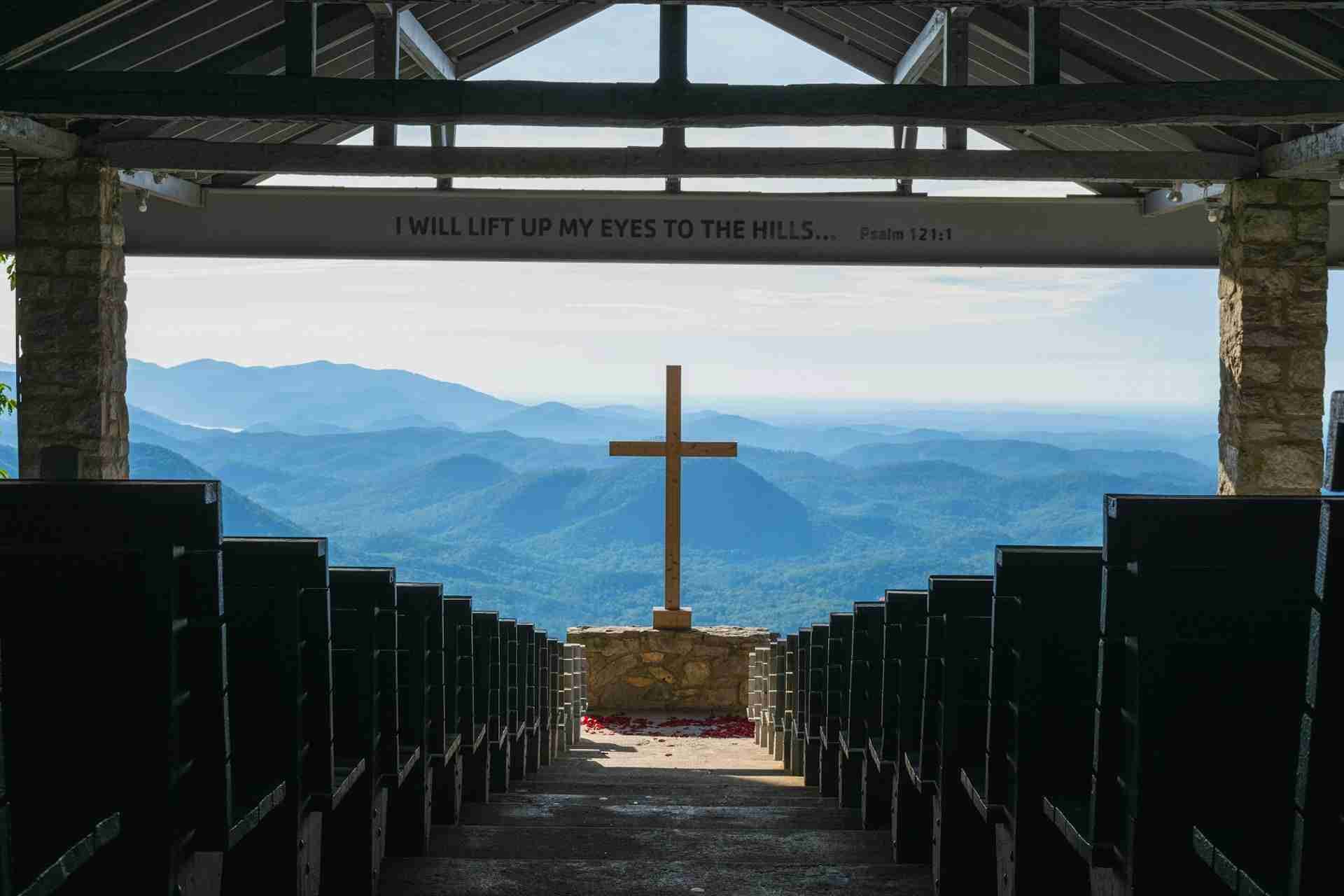
High in the mountains above the Carolina foothills, Fred W. Symmes Chapel, more commonly known as Pretty Place, and offers one of the most photogenic open-air chapel views in the southeastern United States. Located near the edge of the Blue Ridge Escarpment on the YMCA Camp Greenville grounds, the chapel is cut into the hillside and framed by massive timber beams and stone benches, all oriented toward a panoramic view of layered ridges and open sky. At sunrise, when fog lingers in the valleys and soft color begins to wash over the mountains, this location offers some of the most rewarding mountain photography in the region. Its simple symmetry and open composition give photographers a strong foundation to work with, whether shooting landscapes, architecture, or a mix of both. With light that changes minute by minute and a scene that balances structure with horizon, it is a place that rewards careful timing and patience.
Best Photography Opportunities
• Sunrise through the Chapel Frame
The open front of the chapel faces directly east, giving a clear view of the sunrise over the Blue Ridge Mountains. The cross and stone altar provide a natural focal point that anchors the frame against the open horizon. Arriving at least 45 minutes before sunrise gives time to set up a tripod and compose as light begins to develop. A wide-angle lens captures the entire structure, while a vertical orientation emphasizes the height of the frame and the sky above. As light grows stronger, shadow and color shift across the valley, allowing multiple exposures with very different moods.
• Detail Work of Beams, Stone, and Textures
The craftsmanship of the chapel lends itself to close-up compositions that highlight wood grain, stone texture, and carved lettering. These materials change character as the light moves through the morning, taking on warm or cool tones depending on cloud cover. A 35mm or 50mm lens works well to isolate these details and control perspective. Shooting in soft or diffused light helps preserve tonal balance and prevents harsh contrast on uneven surfaces. These images pair well with the larger landscape views and create a more complete story of the location.
• Mist and Fog in the Valley Below
On humid mornings or after rainfall, fog settles into the valleys below the chapel, adding depth and motion to the view. This natural layering effect can be emphasized with a telephoto lens that compresses ridges and drifting clouds. Shooting at a slower shutter speed can capture subtle movement in the fog while keeping the mountains sharp. Arrive early and stay patient, as fog often forms, rises, and disappears within minutes. These conditions create soft, atmospheric compositions that contrast beautifully with the solid structure of the chapel.
• Backlit Scenes and Side Light in the Chapel
As the sun climbs above the horizon, its light begins to reach inside the chapel, illuminating the benches, beams, and floor with warm, directional glow. This side light reveals depth and texture in the stone and wood while maintaining shadow for contrast. Composing from within the chapel toward the valley allows you to frame the structure as a silhouette against the bright sky. A midrange zoom is useful for adjusting framing quickly as light changes. The best results come between thirty minutes and an hour after sunrise, when the balance between interior shadow and exterior brightness is strongest.
• Cloud Drama and Weather Transitions
When storms pass through or clouds build over the valley, the scene takes on a very different tone that works well for dramatic landscape compositions. The shifting light across the mountains adds complexity and depth to otherwise simple frames. Using a graduated ND filter or bracketed exposures helps retain both sky and foreground detail. Wide compositions benefit from including part of the chapel in the frame to provide grounding against the open air. These conditions produce moody, high-contrast images that highlight the power of light and weather in this elevated setting.
Best Time to Visit
Fred W. Symmes Chapel is best photographed at sunrise, as it faces east and overlooks the Blue Ridge foothills. Morning light fills the valley and moves slowly across the chapel, creating dynamic contrast and long color transitions. Spring and autumn are the most balanced seasons for photography, offering cooler air, clearer skies, and frequent morning fog. In autumn, tree color across the hills adds texture and warmth to the scene, especially from mid to late October. Winter produces the sharpest clarity in the air, but mornings can be cold and access may occasionally be limited due to icy conditions.
Summer sunrises are softer and last longer, though humidity can introduce haze that mutes the distant ridges. The best conditions usually occur between April and early June, and again between September and November. Photographers should check weather and fog forecasts before visiting, as changing valley conditions strongly influence visibility. Arriving at least an hour before sunrise ensures time to set up and adapt to the low light. The site remains open after sunrise for continued shooting as side light reaches the interior structure.
How to Get There
The chapel is located on YMCA Camp Road in Cleveland, South Carolina, just off US-276 near the North Carolina border. From Greenville, the drive takes about an hour north through scenic mountain roads. Once on YMCA Camp Road, follow the signs leading to Camp Greenville, where the chapel sits near the top of the ridge. Parking is available in a small lot above the chapel, followed by a short, paved walk down to the overlook. Access is straightforward and suitable for all fitness levels.
There is no entry fee, but the chapel sits on private property and is often reserved for weddings or events. Visitors should always check the Camp Greenville schedule to confirm that the chapel is open to the public. Early mornings are generally open, but access can change with little notice. Tripods are allowed, and photographers are expected to remain quiet and respectful while shooting. Drone use is prohibited anywhere on the property due to safety and privacy regulations.
Recommended Photography Gear
A well-rounded landscape kit will cover all conditions at Symmes Chapel. A wide-angle lens in the 14 to 35 millimeter range is essential for capturing the full structure and valley view. A midrange zoom such as a 24 to 70 millimeter lens helps isolate architectural elements or layer mountain ridges. A telephoto lens between 70 and 200 millimeters works well for fog and distant compression shots across the valley. A tripod is vital for long exposures in low light, and a remote shutter release or timer helps avoid camera shake.
A circular polarizer can reduce glare on stone and wood, while a graduated ND filter helps balance the bright sky with shadowed interior sections. For foggy or changing light, keep extra batteries and a dry lens cloth on hand, as condensation can build up quickly. A camera with good dynamic range will help preserve detail in both the bright horizon and shaded structure. Simple footwear and a flashlight are useful for navigating before dawn, as the path can be uneven in low light.
Nearby Photography Locations
Ten minutes south of the chapel, this overlook provides wide views across the Piedmont and the Blue Ridge foothills. The cliffs face southeast and catch first light beautifully, especially when fog lingers below. A telephoto lens compresses the ridgelines for layered depth. Early morning is best for color and definition. Afternoon visits work well for side light and longer shadows.
Located just off US-276, this open granite outcrop gives broad, unobstructed views toward the east. It is ideal for sunset compositions with long shadows across the rock face. The open platform provides space for low tripod setups and minimalist framing. In overcast light, the subtle tones of sky and stone create gentle transitions. Clear evenings reveal clean horizons that contrast well with the textured surface of the rock.
A short drive from the chapel, this trail leads to a tall waterfall surrounded by thick forest. The shaded light within the canyon allows for long exposures and clean water texture. Overcast conditions or light rain bring out the color of the moss and rock. A midrange zoom helps control framing on narrow paths. Tripod placement is limited, but the trail rewards careful composition.
About twenty-five minutes south, this park offers a mix of lake reflections, forest trails, and mountain backdrops. Sunrise light across the lake provides mirror-like reflections in calm weather. The upper trails give wide views toward the Blue Ridge Escarpment. Morning fog adds softness to the lake scenes. It is a versatile spot that complements the chapel's elevated perspective.
This wooded preserve contains clear rivers, small waterfalls, and hiking trails beneath dense tree cover. The park is ideal for close-up forest work, long exposures, and quiet compositions. A polarizer helps manage reflections on wet rocks and leaves. The trails are shaded and work well even in midday light. Streams and bridges offer multiple framing options for texture and flow.
Fred W. Symmes Chapel combines structure, setting, and light in a way that always feels deliberate and balanced. Its simplicity gives photographers room to experiment, while the changing conditions of the Blue Ridge keep every visit different. With patience and an understanding of light, the chapel's open frame becomes more than a viewpoint. It becomes a study in how architecture and landscape can meet in complete harmony.
Comments
Loading comments…