
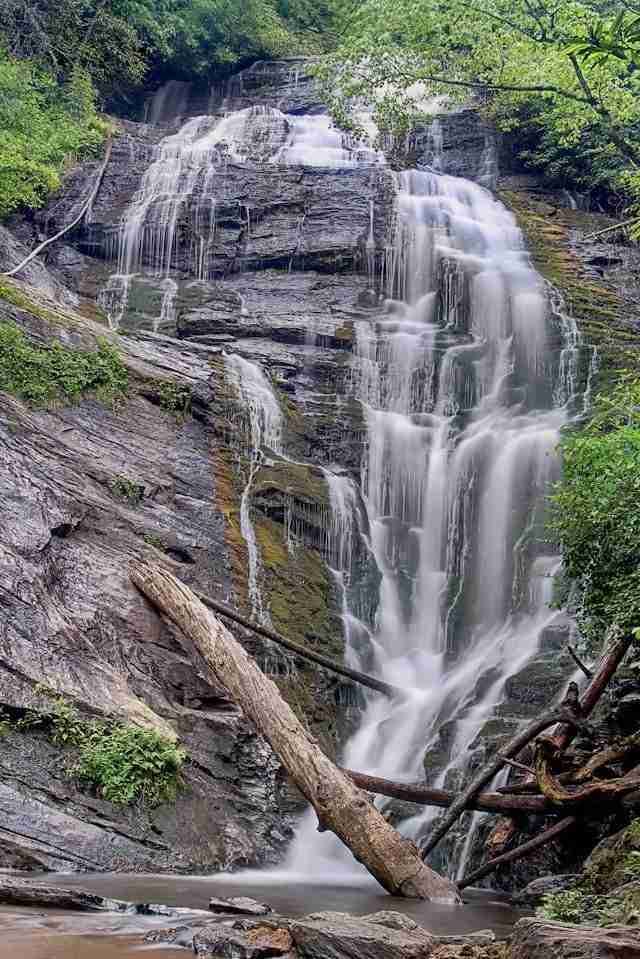
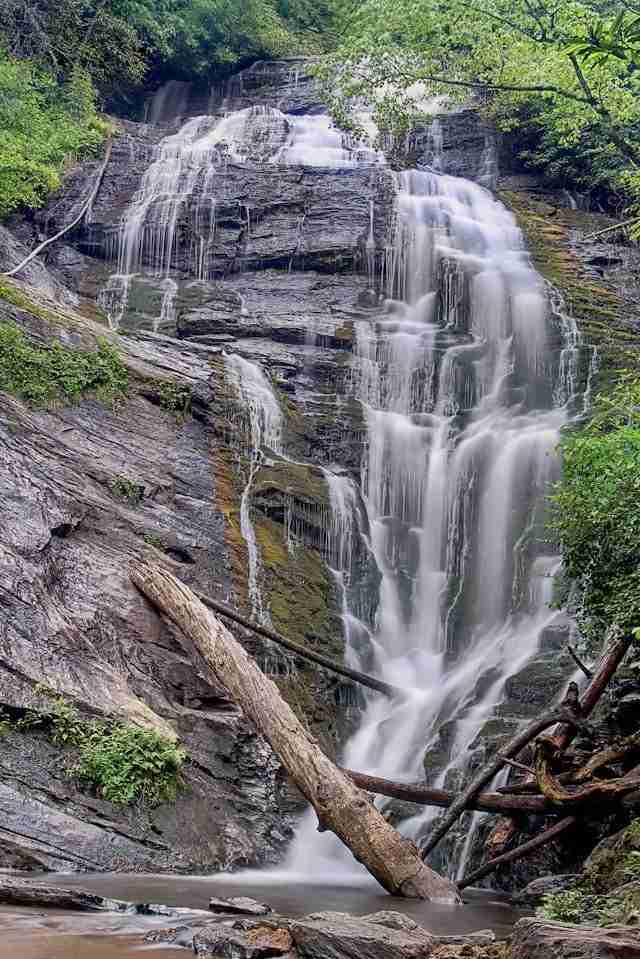
Hidden in the lush, remote corner of the Andrew Pickens Ranger District in Sumter National Forest, Kings Creek Falls is a secluded gem for waterfall photographers who thrive on immersive forest landscapes. This 70-foot cascade flows over a rugged series of rock ledges before tumbling into a tranquil pool below, all surrounded by rhododendron thickets, moss-covered boulders, and a dense hardwood canopy. Far from any major development, Kings Creek Falls rewards those willing to venture into the backcountry with soft light, clean compositions, and the kind of serene atmosphere that only comes from being deep in protected wilderness.
What sets Kings Creek Falls apart isn't its size—it's the mood. The falls are well-proportioned for intimate landscape work, where detail, texture, and light interplay matter more than grand scale. In the right conditions, filtered sunlight breaks through the canopy to create dappled highlights on the falls and surrounding rocks, while mist from the cascade adds dimension to long exposure compositions. For photographers seeking a quiet scene untouched by tourism infrastructure, this tucked-away waterfall offers a canvas of pure, natural rhythm.
Best Photography Opportunities
• The Main Cascade
Kings Creek Falls descends in tiers, fanning out as it drops and forming a veil-like sheet of water over the dark rock face. Long exposure techniques bring out the fluid texture of the descent, especially with shutter speeds between 1/4 and 1 second to reveal the fine threads of water. The symmetry and vertical flow make it ideal for centered compositions, though off-center framing can allow for a more naturalistic, layered scene with rocks and foliage anchoring the edges. During wetter seasons, mist rises from the base and can catch early light beautifully, adding atmosphere and a sense of depth.
• Mossy Foreground Elements
The base of the falls and the surrounding creek are rich in compositional foregrounds—moss-draped boulders, textured roots, and reflective pools that change with the light. These elements provide excellent anchors for wide-angle compositions, helping to lead the viewer's eye through the frame toward the cascading water. In overcast conditions, colors saturate naturally, making the greens pop without requiring heavy post-processing. Even in tighter frames, the contrast between the soft water and rough, moss-covered surfaces delivers strong visual interest.
• Upstream Creek Textures
Before reaching the main falls, Kings Creek meanders through shaded terrain with small drops, ripples, and split flows. These quieter sections are ideal for more meditative shots where shape and motion play a central role. Slow shutter speeds reveal subtle swirling eddies and leaf patterns, while fallen branches and stones add compositional rhythm. It's also an excellent place to explore low-angle perspectives—getting close to the waterline creates an immersive feel and offers cleaner background separation when shooting through the forest.
• Rhododendron Tunnel and Trail Shots
The approach trail is an experience in itself, winding through a dense understory of rhododendron and mountain laurel that forms an overhead canopy in places. These natural tunnels create dramatic leading lines and a sense of enclosure that works beautifully for moody forest shots. After rain, water droplets cling to the leaves and catch soft light, adding sparkling highlights and layering to your frames. Including elements of the trail, such as footsteps, hikers, or gear, can add a narrative touch to your shoot.
• Moody Forest and Mist
Kings Creek Falls shines in mist and light rain, when the air hangs heavy and diffused light eliminates harsh contrast. This kind of weather softens shadows and allows for greater dynamic range, making it easier to capture detail in both the cascading water and the shaded surroundings. Mist adds dimension, especially when backlit, and can create a mystical mood that transforms a simple scene into something evocative and timeless. It's also the best time to experiment with black-and-white compositions that highlight form, flow, and tonal gradation.
Best Time to Visit
The falls are accessible year-round, but the ideal shooting conditions occur in late winter through spring, when the water flow is at its peak and the surrounding forest is bursting with new growth. April and May bring blooming wildflowers and bright greens that photograph beautifully under soft, diffuse light. Summer adds dense foliage, but also more intense midday light—early morning or post-rain shoots are best in those months.
Autumn introduces warm, earthy tones that contrast well with the cool white of the falls. Fallen leaves collect in pools and on rocks, adding natural interest to compositions. Winter, while less lush, often brings clearer visibility through the forest and dramatic, leafless branches for more graphic compositions.
Because the falls are shaded by dense canopy, the best light typically occurs in the morning and late afternoon, when sun angles are low and side lighting filters through the trees. Midday light can be harsh and patchy, creating difficult exposure challenges unless overcast. For long exposures and even light, cloudy days are ideal.
How to Get There
Kings Creek Falls is located near the South Carolina-Georgia border in the Andrew Pickens Ranger District of Sumter National Forest. The most common access point is via the Burrells Ford Road area, about 20 miles northwest of Walhalla. From SC Highway 28, take Burrells Ford Road (FS 708) for several miles until you reach the gravel parking lot near the Burrells Ford Campground.
From the trailhead, it's approximately a 1.5-mile hike to the falls. The trail is moderately easy, following the Chattooga River Trail before branching off toward Kings Creek. While well-marked and not technical, the path includes uneven terrain, roots, and damp sections—especially after rainfall. Allow extra time if carrying heavier gear, and consider using a backpack system to keep your hands free.
The site is undeveloped—there are no viewing platforms, fences, or facilities, which is part of the charm but also means you'll need to be self-sufficient. Cell signal is unreliable, so plan navigation in advance and bring plenty of water, especially in warmer months.
Recommended Gear and Shooting Tips
A wide-angle lens (16–35mm) is your best bet for capturing the full verticality of the falls and surrounding scene, while a mid-range zoom (24–70mm) helps frame tighter compositions of water textures, foreground elements, and intimate forest details. A macro or close-focusing lens can be valuable for photographing moss, wet leaves, and forest floor textures near the water's edge.
Bring a sturdy tripod for long exposures—especially given the uneven ground near the base of the falls. Rubber feet are more useful than spikes here, and a low-angle center column helps with stability on rocks or stream banks. A circular polarizer is essential for cutting glare from wet rocks and enhancing color richness, and neutral density filters (6- or 10-stop) allow for smooth flow effects even in brighter conditions.
Weatherproofing is important. Expect spray at the base of the falls and the potential for sudden rain. Use a lens hood to reduce water droplets on the front element, and pack microfiber cloths or a lens wipe system to manage moisture between shots. A rain cover for your pack will keep your gear dry during the hike in and out.
Take your time to scout angles—there's no single "best" vantage point. Moving just a few feet can radically change how the water aligns with rocks, light, and foliage. Be mindful of slippery surfaces and avoid stepping on fragile moss beds or into the flow itself. The area's pristine condition is part of what makes it so rewarding to shoot—leave it as wild as you found it.
Nearby Photography Locations
This scenic trail follows the Wild and Scenic Chattooga River, offering peaceful river bends, granite outcrops, and small cascades perfect for long exposures or minimal nature compositions. Soft morning light filters through the canopy for ethereal streamside scenes.
Located just upstream from Burrells Ford, this 50-foot cascade is an easy hike and a great secondary stop. It's smaller than Kings Creek Falls but photogenic, especially in spring when the rhododendrons are blooming around its banks.
Near Walhalla, this popular waterfall is easier to access and offers dramatic vertical flow over a stepped rock face. It's often busier, but early morning or weekday visits allow for clean compositions and access to varied angles.
A unique blend of history and landscape, this site includes a short trail to Station Cove Falls—a beautiful, fan-shaped waterfall surrounded by seasonal wildflowers. It's a gentler scene with strong layering and great potential for moody, intimate compositions.
Straddling the South Carolina, Georgia, and North Carolina borders, this rugged wilderness area offers remote forest scenes, cliff overlooks, and river access for photographers seeking solitude and raw natural drama. It's a more strenuous area, but one filled with unspoiled photographic rewards.
Kings Creek Falls is not about spectacle—it's about subtlety, quiet immersion, and the beauty of layered forest and flowing water. For photographers willing to put in the walk and wait for the light, it's a space that rewards observation over speed, offering images that feel as timeless as the forest that surrounds them.
Comments
Loading comments…