
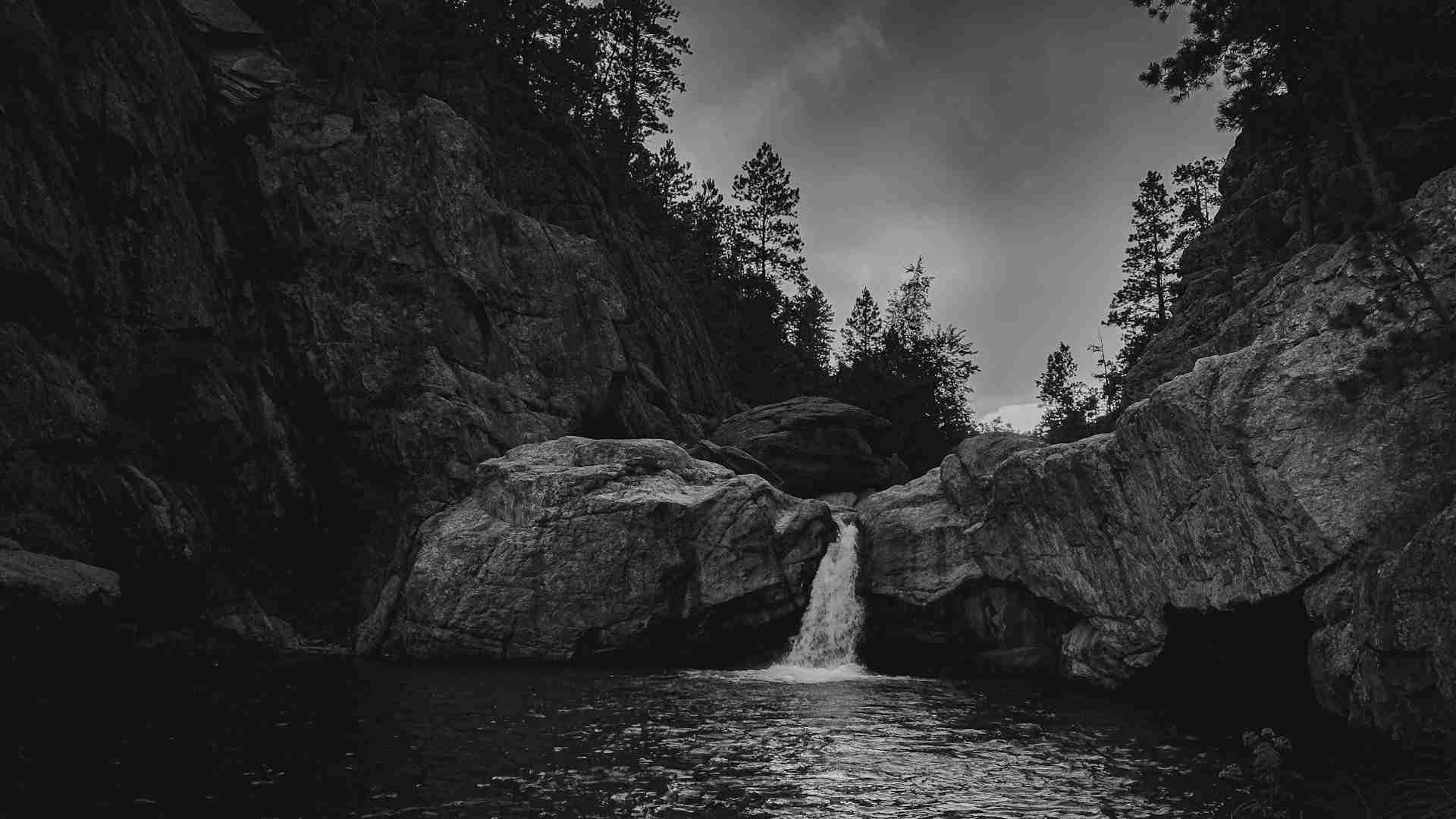
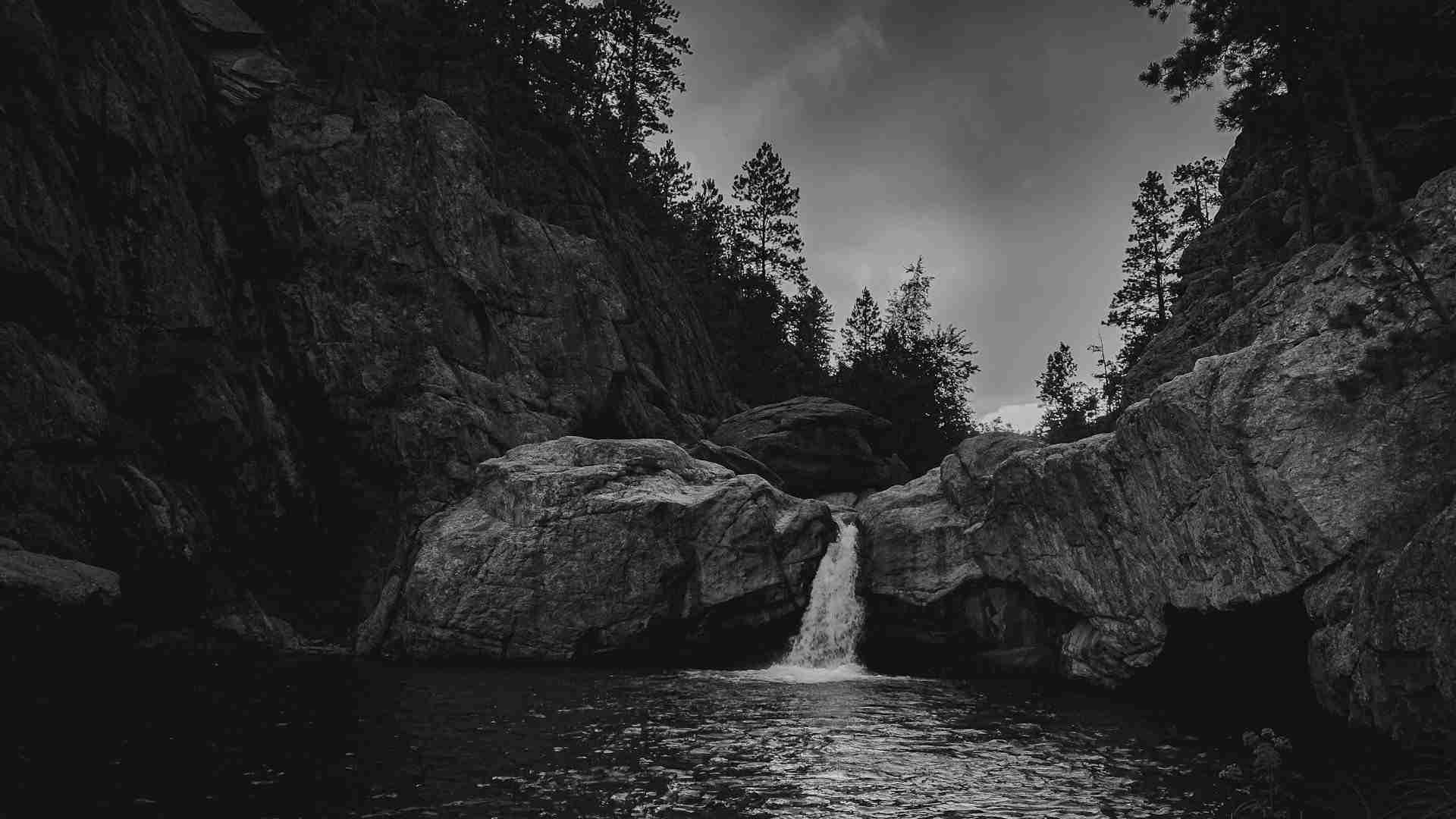
Tucked deep within the Black Hills National Forest, Hippie Hole is a rugged and intimate destination that combines raw natural beauty with a touch of counterculture allure. Known locally for its cliff-jumping scene and off-grid swimming, this secluded gorge along Battle Creek offers a unique photographic subject. The scene is framed by sheer granite walls, crystal-clear water cascading into an emerald pool, and a forested backdrop that glows with color in the golden hours. While its name might suggest a free-spirited hangout, Hippie Hole is also a compelling location for photographers looking to capture dramatic compositions shaped by light, water, and stone.
What makes Hippie Hole particularly appealing is its natural sense of isolation. You won't find signage or developed viewpoints here—just raw terrain and elemental contrast. The way light filters through the trees and bounces off rock and water gives the space a constantly shifting personality, rewarding return visits and experimentation with different focal lengths and shooting styles. It's the kind of location where environmental portraiture, long exposures, and even abstract compositions can all be explored within a few square meters, provided you're willing to slow down and look closely. For photographers seeking something beyond the typical postcard scenes of the Black Hills, Hippie Hole delivers wild character and unexpected beauty.
Best Photography Opportunities
• Battle Creek Waterfall
The waterfall at Hippie Hole may be modest in height, but its character is striking—especially when framed by the surrounding vertical rock walls and the pool it feeds into. The falls drop directly into a carved-out basin, creating a clean, vertical flow that responds well to long exposures between 1/4 second and 2 seconds. During midday, light reflects off the granite and illuminates the water from behind, while early morning and late afternoon offer side lighting that enhances texture and depth. For photographers shooting handheld, a fast shutter and slightly elevated perch can capture the explosive motion of the fall's entry into the pool. Tripods work best from the banks or boulders on either side, and foreground elements such as moss-covered stones or overhanging branches can add compositional layers.
• Cliff Formations and Rock Textures
The vertical granite walls that hem in the pool on either side are not just natural barriers—they are canvases of color, line, and form. These cliffs are deeply striated, with veins of quartz and lichen adding detail and contrast to tight compositions. The interplay of shadow and sun as it moves through the day produces dramatic shifts in tone and contrast, ideal for black-and-white work or moody color profiles. Telephoto lenses can isolate sections of rock, while wide angles emphasize the immensity of the gorge when shot from below. In early spring or after rainfall, wet rock surfaces deepen in color and texture, enhancing their visual appeal for macro and abstract shots.
• Emerald Pool Reflections
When the water at Hippie Hole is calm, the pool takes on a gem-like appearance, with hues shifting from deep green to slate blue depending on the angle and time of day. It's a perfect mirror on windless mornings, especially when there's mist or low light filtering through the forest canopy. A circular polarizer is key for managing glare and reflections, allowing photographers to choose whether to reveal submerged boulders and fallen branches or to capture mirrored symmetry with the cliffs and sky above. Positioning the camera low to the waterline creates immersive, symmetrical compositions, while aerial perspectives from nearby rocks offer a top-down look at the interplay between water and stone.
• Forest Light Play
The forest encircling Hippie Hole is composed mostly of ponderosa pines, with occasional undergrowth that glows under angled light. As the sun rises or drops low, beams of light slice through the canopy, especially after mist or rain, creating radiant columns that catch dust and moisture in the air. This natural spotlighting effect adds a cinematic atmosphere to wider environmental shots or tighter, moodier scenes. Backlighting tree trunks and ferns offers opportunities for high-contrast silhouettes, while soft diffused light during overcast conditions works beautifully for capturing the subtle gradients of greens and browns in the forest floor.
• Adventure and Human Element
While many photographers prefer untouched landscapes, the human presence at Hippie Hole can add scale and emotion—especially when timed and framed with intention. Cliff jumpers offer dynamic action shots against a stark granite backdrop, especially when captured mid-air with a fast shutter speed around 1/1000 sec or higher. Swimmers, sunbathers, and hikers bring life and narrative to the space, whether you're going for environmental portraits or candid moments that tell a story. Including a silhouetted figure at the edge of the cliff can emphasize the scale of the gorge, while shooting from the opposite side allows for layered compositions that juxtapose human motion with natural stillness.
Best Time to Visit
Spring through early fall offers the most accessible and photogenic conditions at Hippie Hole. Late spring brings vibrant greens to the forest canopy and strong water flow over the falls, ideal for capturing kinetic energy and lush backgrounds. Summer is peak season, when the water levels are steady and the area is most lively, giving photographers a chance to work with both landscape and human interest subjects. Light during this time tends to be direct and intense in the midday hours, so plan for early mornings and late afternoons to make the most of side lighting and soft shadows that bring out the natural textures of stone and water.
Autumn offers arguably the most atmospheric shooting conditions, as the golden foliage surrounding the gorge creates a rich visual contrast with the dark granite and teal water. Misty mornings in fall can add an ethereal quality to forest compositions, and the lower angle of the sun provides consistently good light throughout the day.
Winter access is extremely limited and generally discouraged due to icy trails and the steep descent, but for those experienced in winter hiking and cold-weather shooting, the frozen waterfall and snow-covered cliffs can offer stark, minimalist compositions. That said, you'll need crampons, layered gear, and absolute certainty in your route, as the area is remote and unmaintained during winter months.
Crowd levels vary significantly depending on the time of day and week. Weekdays, especially early in the morning, offer the best chance of solitude—ideal for long exposure work or quiet exploration without interference. If you're looking to incorporate human subjects into your frames, weekends in summer are when locals tend to show up, bringing with them the energy and motion that can make your images more dynamic.
How to Get There
Reaching Hippie Hole requires a bit of effort, which helps maintain its off-the-beaten-path charm. From Keystone or Rapid City, take Highway 40 toward Hermosa, then follow County Road 323 (Battle Creek Road) into the forest. You'll need to park near the unmarked trailhead at the end of a rough gravel road—be prepared for rutted terrain and limited parking space. From there, it's about a half-mile hike down a steep, rocky trail. Good hiking shoes and a backpack for your gear are essential, as the descent is not suitable for wheeled equipment or unstable footing. There are no official signs or facilities, so downloading an offline map or GPS coordinate is highly recommended.
Recommended Gear and Shooting Tips
Photographing Hippie Hole is as much about preparation as it is creative execution. The terrain is rugged, the light is variable, and the compositions reward those who can adapt quickly. Start with a versatile lens setup—a wide-angle (around 16–35mm) is essential for capturing the full expanse of the gorge and waterfall, while a mid-range zoom (like a 24–70mm or 70–200mm) will help isolate cliff textures, reflections, and distant figures for storytelling compositions. If you're into abstract or detail-rich work, a macro lens or extension tubes can turn lichen-covered rocks, flowing water, and forest floor elements into compelling visual studies.
A sturdy but lightweight tripod is highly recommended, especially for long exposures of the falls and reflections. The approach hike is steep and uneven, so carbon fiber legs and a compact head will go a long way in reducing fatigue without compromising stability. For those planning to shoot water movement, don't forget neutral density filters—an ND6 or ND10 will allow for smooth, silky motion in bright daylight, while a circular polarizer is essential to manage glare and enhance reflections on the pool's surface.
Because the area is shaded for much of the day, high dynamic range can be a challenge. Bracketing exposures for later blending is often useful when trying to capture the interplay of sunlit granite and darker forested edges. Manual focus or focus peaking can be helpful when composing intricate scenes with layered foreground elements, especially in lower light or near water spray.
Lastly, weatherproofing is key. The hike in involves brush, dirt, and the occasional slick rock, and there are no shelters nearby. Pack your gear in a well-sealed hiking pack with a rain cover, and bring lens cloths or microfiber towels to deal with spray or humidity. You'll want to be mobile and prepared—because at Hippie Hole, the best shots often emerge when you're quick to react to the changing light and natural energy of the place.
Nearby Photography Locations
Often described as the crown jewel of Custer State Park, Sylvan Lake offers mirror-like reflections of domed granite outcrops and towering pines. Early morning mist and glassy water make it one of the most photogenic lakes in the Black Hills, particularly for wide-angle landscape compositions.
The highest point in South Dakota provides a sweeping panorama that is unmatched in the region. The trail to the summit is also photographically rich, passing through dense forest, granite spires, and open ridges. The historic Harney Lookout Tower at the summit adds a compelling architectural element to the vast mountain vista.
This scenic byway winds through dramatic granite spires that rise like teeth from the earth. Tight tunnels, hairpin turns, and roadside pull-offs offer excellent opportunities for both landscape and automotive photography. Sunset light can make the rocks glow with a reddish hue, perfect for dramatic end-of-day shots.
This short but steep trail leads to a cluster of jagged granite formations that reach skyward like fingers of stone. It's a great location for minimal compositions, silhouette photography during golden hour, and dramatic black-and-white interpretations of form and contrast.
This engineering marvel of a road features pigtail bridges, forest tunnels, and several overlooks that frame Mount Rushmore in the distance. It's particularly compelling at dawn, when soft light filters through the trees and fog often settles in the valleys below, creating layered compositions.
Whether you're chasing reflections, texture, action, or atmosphere, Hippie Hole delivers an exceptional combination of elements within a relatively compact and wild space. It's not just the visuals that make it worth the hike—it's the way the environment responds to light, weather, and motion that keeps photographers returning with new creative angles. For those willing to go beyond the usual pull-offs and roadside lookouts of the Black Hills, this hidden gorge rewards patience, preparedness, and an eye for detail. Bring your curiosity, your time, and your gear—and you'll leave with images that feel as untamed as the place itself.
Comments
Loading comments…