
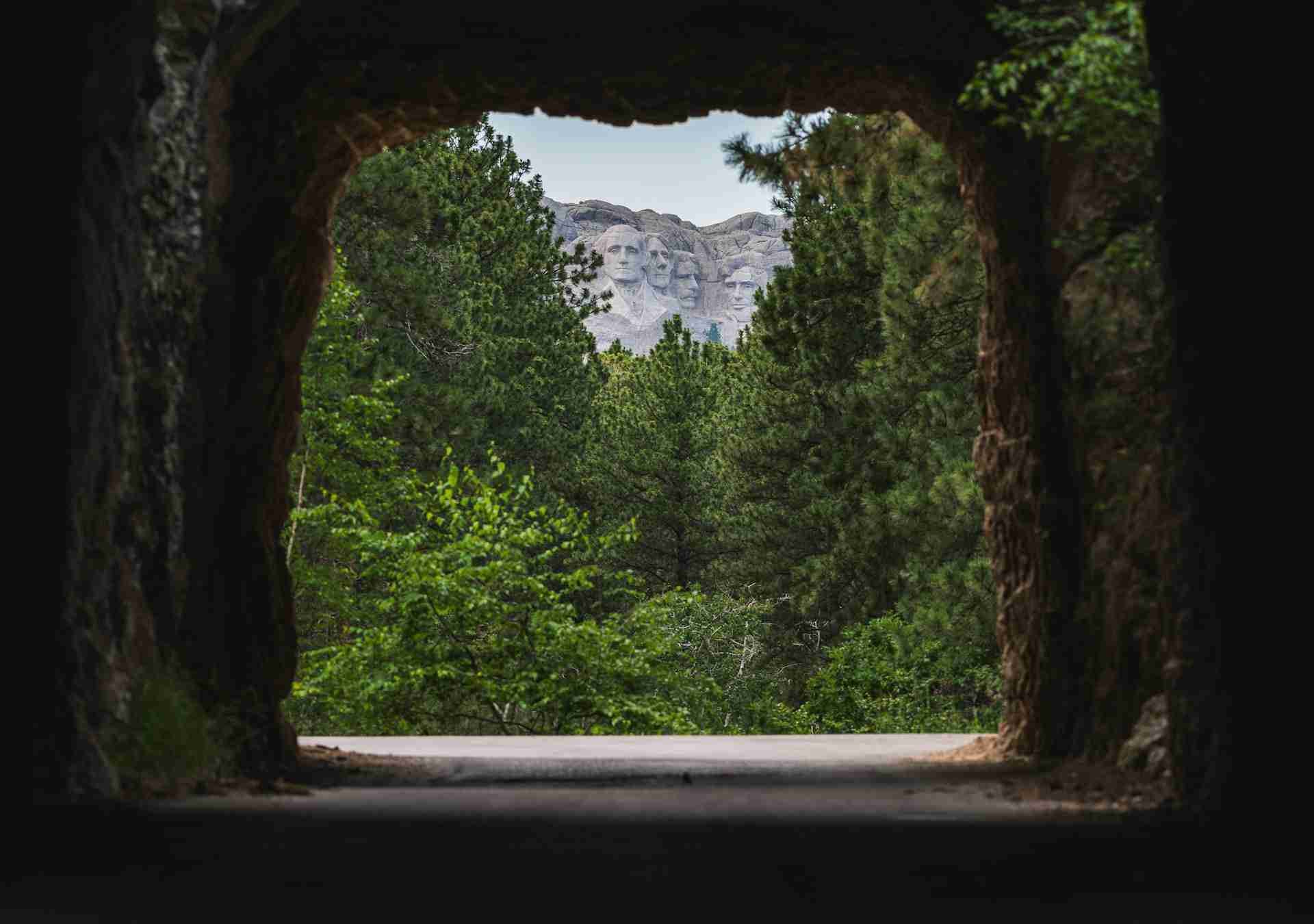
Hidden within the winding granite corridors of South Dakota's Black Hills, the Scovel Johnson Tunnel Viewpoint offers one of the most surprising and photogenic perspectives of Mount Rushmore. Unlike the well-trodden paths of the National Memorial itself, this viewpoint, framed perfectly by the single-lane rock tunnel on Iron Mountain Road, provides a distant yet direct view of the monument, encased by the rugged texture of the tunnel's interior. It's a composition that feels intentional, almost sculptural, revealing the famous presidential faces in a literal frame of stone. For photographers, this location combines technical challenge, natural framing, and a sense of discovery that's hard to match anywhere else in the region.
Best Photography Opportunities
• Mount Rushmore Through the Tunnel
: This is the primary shot that draws photographers to the Scovel Johnson Tunnel Viewpoint. Standing just outside the east end of the tunnel, you can align your lens perfectly through the rock bore to capture Mount Rushmore centered at the far end. The granite walls of the tunnel act as a natural vignette, drawing the eye toward the monument. Early morning offers the best chance for low-contrast light that enhances detail in both the foreground rock and the monument. A mid-telephoto lens in the 70 to 200 millimeter range is ideal for bringing the distant faces closer without sacrificing clarity. Composing the frame takes patience. Small adjustments to your position can make a big difference in alignment, so plan to spend time fine-tuning.
• Side Angle of Tunnel and Landscape
: From just north of the tunnel entrance, you can shoot a more environmental composition that includes the road, tunnel, forest, and a partial glimpse of Mount Rushmore in the background. This perspective works especially well during golden hour when warm side light illuminates the surrounding pine trees and textured rock faces. The road itself can be a strong compositional element, curving slightly and guiding the eye toward the tunnel. Including a vehicle or cyclist passing through can add scale and storytelling to the shot. A moderate zoom or a 35 millimeter lens helps keep the scene tight without losing the natural contours of the landscape.
• Mount Rushmore from the National Memorial Plaza
: While the tunnel view offers a unique frame, the direct views from the Mount Rushmore Memorial plaza and trail network allow for clean, classical compositions. Here, a longer lens lets you focus on details in the carving, while wider angles capture the full monument in context with the pine-dotted hills and sky. The memorial's lighting changes dramatically throughout the day. The soft evening light after sunset often renders the faces in subtle tones that a midday visit cannot match. You can also find strong compositions from the Presidential Trail, where the monument appears partially obscured by trees, adding a layered quality to your shots.
• Twilight and Headlight Trails
: During the blue hour and early night, the tunnel viewpoint becomes a strong location for light trail photography. Set up your tripod facing through the tunnel toward Mount Rushmore and use long exposures to capture car headlights curving through the bore. This technique adds a dynamic foreground element to the static monument in the distance. A low ISO, narrow aperture, and exposures of 10 to 30 seconds usually yield the best results, especially if traffic is light but consistent. The warm glow of headlights against the granite complements the cool ambient twilight and gives the composition a cinematic feel.
• Black Hills Landscape from Iron Mountain Road
: Just a few hundred feet from the tunnel are several pull-offs with panoramic views of the surrounding hills and forest. These make excellent locations for environmental wide shots that place Mount Rushmore within the larger Black Hills ecosystem. Mist in the valleys during early morning or dramatic clouds after a storm help create layered, dimensional images. These scenes benefit from a wide lens and the patience to wait for the right light and weather combinations. The constant changes in visibility and light quality throughout the day make these overlooks worth revisiting.
Best Time to Visit
The tunnel viewpoint is accessible seasonally, typically from late spring through early fall, with summer offering the most reliable weather and visibility. Late May through June is a particularly strong window, as the surrounding forest is green and vibrant, and the morning light remains soft and angled for longer. Shooting early in the morning helps avoid both traffic and harsh shadows that can affect the tunnel composition. Between 7:00 and 9:00 a.m., the sun rises behind the photographer's position and lights Mount Rushmore with warm, even tones, while leaving the tunnel in open shade. This balance makes it easier to expose for both the foreground and the distant sculpture without sacrificing detail.
Midday light during summer can be harsh, and the monument may appear flat when shot from the tunnel due to the high angle of the sun. Late afternoon shifts the light angle to the side, creating interesting textures in the granite walls of the tunnel but also introducing deep shadows across the sculpture. Autumn, from late September to early October, adds golden tones to the surrounding pines and hills. This creates opportunities for contrast between natural and carved rock, with cooler air improving visibility for long-distance views.
Winter access can be limited due to snow and road closures along Iron Mountain Road, and the tunnel itself may be impassable during inclement conditions. For nighttime or twilight light trails, summer offers the best combination of clear skies and manageable temperatures. However, plan your visit carefully, as the road has no artificial lighting and visibility drops quickly after sunset. A flashlight or headlamp is essential for setting up safely in the dark. Weather in the Black Hills can change quickly, so checking forecasts and light conditions on the day of your shoot is critical.
How to Get There
The Scovel Johnson Tunnel is located on Iron Mountain Road, also marked as SD Highway 16A, approximately 8 miles southeast of Mount Rushmore within Custer State Park. The tunnel is part of a one-lane section of the road and access is subject to seasonal closures due to snow. From Keystone, take SD-244 east toward the Mount Rushmore National Memorial, then follow signs for Iron Mountain Road and SD-16A. The drive is slow and winding with sharp curves, switchbacks, and several other tunnels. The Scovel Johnson Tunnel is clearly marked, and there are safe areas to pull over just before and after the tunnel for photography.
While there is no official parking lot for this viewpoint, small gravel pullouts provide enough space for a few vehicles. Be cautious of traffic when positioning your gear near the tunnel entrance. There are no fees required to access the tunnel or to photograph from the road. However, entry to Mount Rushmore National Memorial does require a parking pass, which is separate from state park access. Photographers interested in capturing both views should plan a loop route. Capture the tunnel shot early in the day, then continue north to visit the memorial directly as light conditions shift.
Recommended Photography Gear
Photographing this location requires gear suited to long distances, changing light, and tight shooting environments. A full-frame camera body with strong dynamic range and low-light performance is ideal, especially for capturing fine detail in both shaded foreground and sunlit Mount Rushmore. A 70 to 200 millimeter telephoto lens is essential for tunnel compositions, allowing you to frame the monument cleanly and compress distance while maintaining sharpness. For more environmental shots from nearby pull-offs or side angles, a 24 to 70 millimeter zoom provides excellent flexibility without distortion.
A tripod is crucial for long exposures, low-light setups, and twilight compositions. Use a model that is light but stable, as you will be shooting close to the edge of narrow roads and may need to move quickly. A remote shutter release or interval timer will help reduce camera shake, particularly when capturing light trails. Circular polarizers can help cut glare from the rock and deepen sky tones during daylight sessions, while neutral density filters are helpful for lengthening exposures near dusk or in bright conditions.
Bring a lens hood to reduce flare, especially if you're working during golden hour or shooting toward the sun. A microfiber cloth is important for wiping off dust or moisture, as early mornings can be damp and breezy. Extra batteries and memory cards are recommended, as this location often involves bracketing exposures or waiting for precise conditions. If you plan to shoot past sunset, bring a headlamp with a red light mode to preserve your night vision while adjusting settings or navigating safely along the roadside.
Nearby Photography Locations
: Located just south of Iron Mountain Road, this scenic route passes through towering granite spires and narrow tunnels with sharp visual lines. The light here is best in the early morning or late afternoon when shadows stretch across the rugged stone, and the formations gain depth and texture. The road itself makes an excellent subject, especially when winding through tight curves under dramatic skies.
: Found within Custer State Park, Sylvan Lake is ringed by massive granite outcrops and pine forest. It is ideal for mirror-like reflections at sunrise or sunset and offers a quieter atmosphere than the memorial. The surrounding boulders make strong foreground elements for wide shots, and the area is walkable, allowing for a range of perspectives.
: Offering broad views of the Black Hills, Mount Coolidge provides a unique angle on the surrounding region, including distant glimpses of Mount Rushmore. This location is best near sunset when the valleys below catch the last light. The lookout tower adds scale and historical interest to wide compositions.
: This high-elevation trail rewards hikers with panoramic views and dramatic changes in light as you gain altitude. The summit is the highest point in South Dakota and provides expansive views of forest, granite, and distant plains. Early morning and late day light offer the best definition and color for landscape shots.
: For street photography and architectural texture, Keystone offers an old mining town aesthetic with wooden storefronts, signage, and quiet streets in the early morning. It is a strong contrast to the natural scenes nearby and adds a human element to your Black Hills photography story.
Photographing the Scovel Johnson Tunnel Viewpoint is about more than capturing Mount Rushmore from a clever angle. It is an exercise in precision, timing, and creative framing. Paired with the expansive scenery of the Black Hills and nearby natural and cultural locations, this hidden viewpoint becomes a valuable part of any well-rounded photography itinerary in western South Dakota.
Comments
Loading comments…