

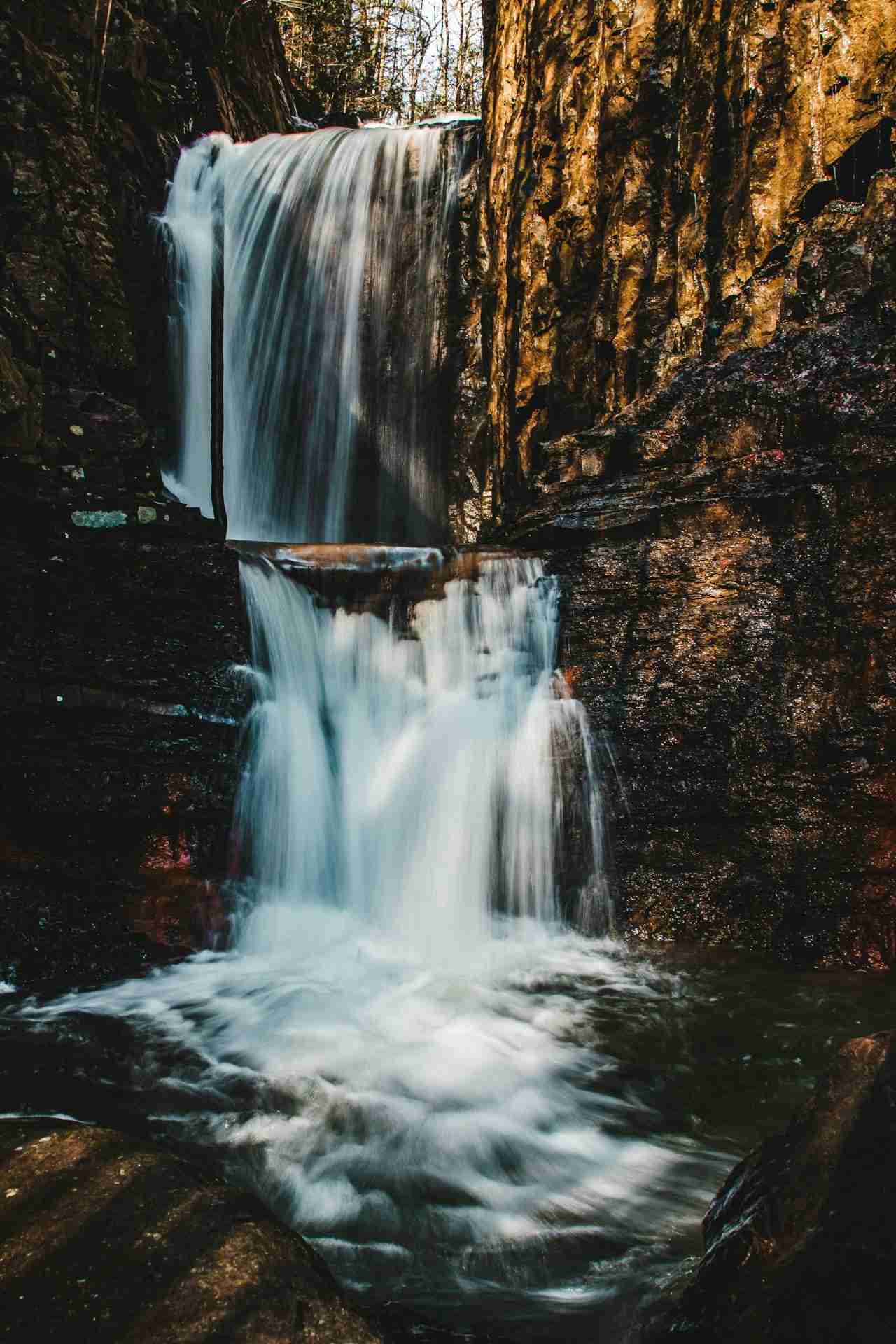
Little Egypt Falls, also known as Triple Falls or Bruce Creek Falls, is a multi tiered waterfall hidden in the wooded hills near Caryville, Tennessee. The waterfall flows down a wide rock formation in several distinct steps, creating a layered cascade that spreads across the face of the stone. Instead of dropping in a single plunge, the water glides over ledges and channels, forming a series of smaller falls that combine into one dramatic scene. The surrounding forest frames the waterfall with trees, moss covered rocks, and shaded creek banks that help soften the landscape. For photographers, the location offers a rewarding mix of moving water, textured rock, and natural woodland elements that create strong opportunities for long exposure waterfall photography.
Best Photography Opportunities
• Full View of the Triple Cascade – The most recognizable composition at Little Egypt Falls captures the entire waterfall as it spreads across the rock formation. From the base of the falls, photographers can frame all three primary tiers as water flows down the broad stone surface. The stepped structure naturally guides the viewer's eye from the upper cascades down to the lower pool. Using a tripod and slower shutter speeds can transform the moving water into smooth white streams that contrast with the darker rock beneath. Including sections of the creek in the foreground can also help anchor the composition and add depth to the scene.
• Lower Pool and Creek Reflections – At the base of the falls, Bruce Creek forms a shallow pool where water collects before continuing downstream. This area provides opportunities to photograph reflections of the surrounding forest and the lower cascades. Rocks scattered along the creek create natural framing elements that help lead the viewer's eye toward the waterfall. During calmer conditions the surface of the water can mirror sections of the cascade above. These reflections often work best early in the day when the creek remains undisturbed.
• Rock Textures and Flow Patterns – The rock formation beneath the waterfall contains interesting shapes, grooves, and channels that influence how the water spreads across the surface. These textures create smaller patterns where water flows in narrow lines or gathers briefly before dropping again. Photographers who look closely at these details can find smaller compositions within the larger waterfall scene. Moderate telephoto lenses can help isolate these sections and emphasize the interaction between water and stone. Overcast conditions are particularly helpful for capturing these details because they reduce harsh highlights on the water.
• Side Angle Along Bruce Creek – Moving slightly off to one side of the waterfall reveals a different perspective where the cascading water flows diagonally across the frame. This angle allows photographers to include the creek channel and surrounding forest along with the waterfall. Fallen branches, rocks, and moss along the creek bank can serve as foreground elements that guide the viewer toward the falls. The angled composition also highlights the layered structure of the rock formation. This viewpoint often creates a more dynamic composition than photographing the waterfall straight on.
• Forest Framing Around the Falls – The wooded setting surrounding Little Egypt Falls offers opportunities to frame the waterfall with trees and foliage. Branches and trunks can act as natural borders that lead attention toward the cascade. During late spring and summer the surrounding greenery provides contrast against the pale movement of the water. Photographers can experiment with slightly wider compositions that include both the waterfall and the surrounding forest environment. These scenes help show how the waterfall sits within its quiet woodland setting.
Best Time to Visit
Little Egypt Falls photographs best during periods when Bruce Creek is flowing strongly. Visiting after recent rainfall often produces the most dramatic cascades, as the multiple tiers of the waterfall become more active and visually connected. During drier periods the flow can become thinner, though the layered structure of the rock still creates interesting patterns.
Overcast weather is particularly helpful for waterfall photography because it softens the light and reduces bright highlights on the moving water. Cloudy conditions also deepen the colors of the surrounding forest and wet rock surfaces. Spring and autumn are often the most rewarding seasons, as cooler temperatures and seasonal rainfall help maintain stronger water flow. Early morning visits can provide quieter conditions along the trail and more even lighting within the forest.
How to Get There
Little Egypt Falls is located near Caryville in Campbell County, Tennessee, along Bruce Creek within the Cumberland Mountains region. The waterfall is reached by a short hike through forested terrain.
Most visitors access the trail from a roadside pull off area near Little Egypt Road. From the parking area, a short but moderately steep trail leads down toward the creek and the waterfall. The hike typically takes around ten to fifteen minutes depending on conditions, though sections of the trail can be uneven or slippery after rainfall.
Access to the falls is generally free, but visitors should be prepared for natural trail conditions and use caution near the creek and wet rocks. Because the waterfall sits in a wooded ravine, sturdy footwear and careful footing are recommended when exploring around the base of the falls.
Recommended Photography Gear
A tripod is one of the most useful tools when photographing Little Egypt Falls. The shaded forest environment and moving water often require slower shutter speeds to create smooth flowing textures in the cascade. A stable tripod helps maintain sharp images while working with these longer exposures.
A wide lens is helpful for capturing the full waterfall along with surrounding rocks and forest. A mid range zoom lens can also be valuable for isolating smaller sections of the cascade and focusing on detailed water patterns. A circular polarizing filter is especially useful here because it reduces glare on wet rocks and enhances the colors of the forest and creek. Waterproof footwear and a microfiber cloth for cleaning lens spray can also make the shooting experience more comfortable near the waterfall.
Nearby Photography Locations
• Cumberland Mountain State Park
offers wooded landscapes, a scenic lake, and historic stone structures built during the early twentieth century. Photographers can capture reflections across Byrd Lake, forest trails, and seasonal changes in the surrounding hills. The park provides a peaceful environment for landscape photography throughout the year.
features a calm lake surrounded by forested hills and open shoreline. The lake often produces reflections of the surrounding mountains, especially during calm mornings. Wildlife and water birds are also commonly seen along the shoreline.
sits along the Clinch River and offers wide views of Norris Lake and the surrounding Tennessee hills. Photographers can capture scenic overlooks, wooded trails, and shoreline scenes throughout the park. Early morning and late afternoon light often reveal the layered hills surrounding the water.
• Cumberland Gap National Historical Park
contains dramatic mountain landscapes and historic routes once used by early settlers. Elevated viewpoints provide sweeping views across the Cumberland Mountains and the valleys below. The park offers excellent opportunities for photographing both history and landscape together.
features rugged mountain terrain, waterfalls, and dense forest landscapes. Hiking trails lead to high ridges where photographers can capture expansive views across eastern Tennessee. The park is especially appealing during autumn when the surrounding forest changes color.
Comments
Loading comments…