
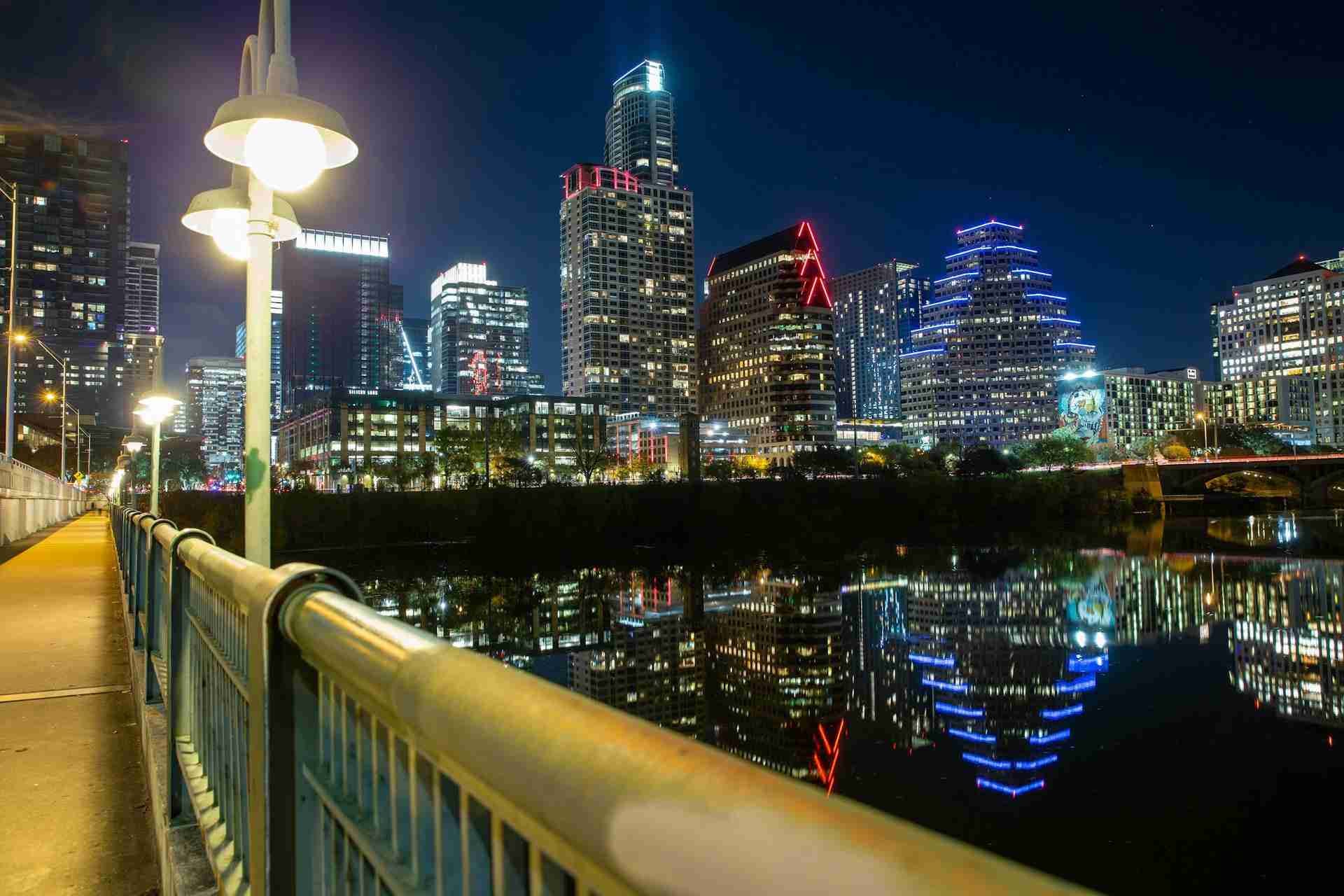
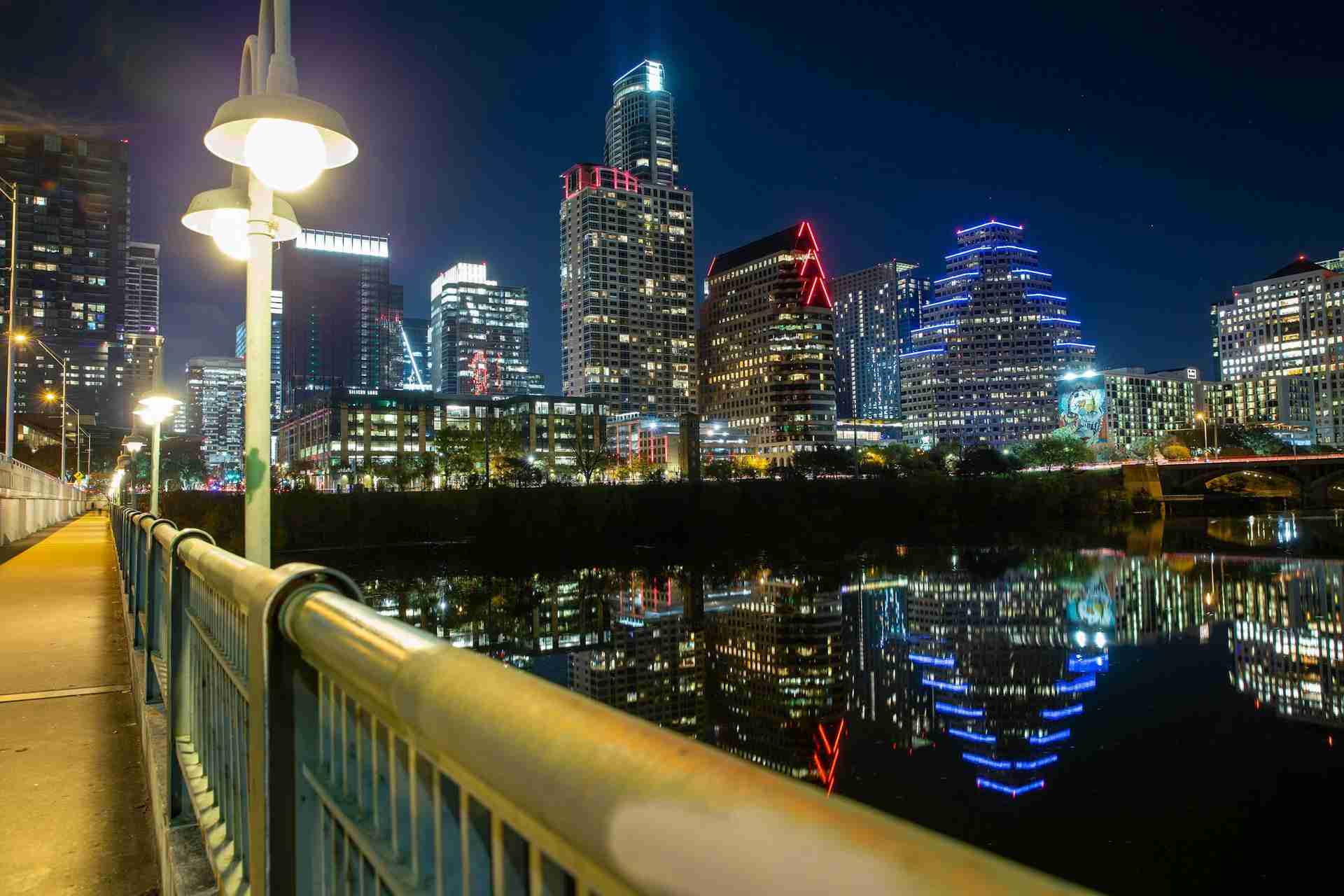
Spanning Lady Bird Lake just south of downtown, the First Street Bridge offers one of the most balanced and accessible vantage points for photographing Austin's cityscape. Also known as the South First Street Bridge, this location delivers clean sightlines to the skyline, the lake's calm surface, and the pedestrian activity along the trails below. The bridge aligns directly with Congress Avenue, placing the Texas State Capitol and high-rises along a central axis that is especially striking at golden hour and after dark. Whether you are shooting fast-changing weather, quiet reflections, or long-exposure traffic trails, this bridge gives you architectural drama and urban energy in one concise frame.
Best Photography Opportunities
• Twilight Skyline and Reflections
As the sun dips behind the city, the buildings begin to glow with interior lights while the lake below mirrors the entire skyline. The period just after sunset, known as blue hour, is the ideal time to capture these reflections when the contrast between the city lights and the darkening sky is most vivid. A tripod is essential for longer exposures, which help smooth the water and brighten the skyline's reflection. Framing northward from the pedestrian walkway lets you place the tallest buildings along a vertical line that echoes the lake's symmetry. Be patient as the light changes, and experiment with different exposure times to balance the glow of the city against the depth of the water. Including the lake's surface in the composition enhances the feeling of balance and adds softness to the hard architectural lines.
• Golden Hour Side Light on the Skyline
Late afternoon is another rewarding time to photograph from the bridge, when warm light from the west side of the lake hits the downtown buildings with a directional glow. This side light brings out depth in the high-rises and creates layered shadows between them, adding contrast and dimension to an otherwise flat skyline. Using a mid-range zoom lens, you can compress the buildings for a denser composition, or pull back slightly to include the lake's surface in the lower third of the frame. Reflections become less intense but still readable, and golden light wraps gently around the city's modern glass facades. It is also a quieter time of day on the bridge, making it easier to set up your composition without interruption.
• Morning Light and Mist on the Lake
Early mornings often bring mist and subtle light along Lady Bird Lake, especially during cooler months. The First Street Bridge is a great location for photographing this mist as it rises off the water, diffusing the reflections and adding a soft, atmospheric quality to the scene. Use a telephoto lens to isolate mist drifting between the trees along the shore or wrapping around rowing crews as they move through the frame. The skyline is less dramatic at this hour, but the soft blue light and quiet mood offer a completely different take on the location that is more intimate and subdued. This is also the least crowded time on the bridge, offering plenty of freedom to move and compose from different vantage points.
• Long Exposures with Boat and Trail Movement
With enough traffic below, including paddleboards, kayaks, and trail users, you can use long exposures to create motion blur while keeping the skyline sharp. A strong ND filter allows for shutter speeds of ten seconds or more even in daylight, creating smooth water and soft trails of movement across the surface. Positioning the camera to include the boardwalk or shoreline paths adds an additional human element, while downtown remains still in the background. Boats create elegant streaks across the frame when moving steadily through long exposures, especially in low wind conditions. This technique helps convey the dynamic life of the lake while preserving the structural clarity of the urban skyline.
• Nighttime Traffic and Bridge Details
At night, the bridge itself becomes part of the subject. From the pedestrian walkway, you can photograph traffic light trails across the lanes while the skyline remains lit in the background. Wide-angle lenses allow you to stretch the bridge's structure across the foreground, creating leading lines toward the city lights. LED lights and taillight motion add color to the image, particularly when shooting during peak evening traffic. Experiment with exposure lengths to find a balance between the intensity of the light trails and the clarity of building detail. Including parts of the bridge rail or sidewalk can add framing context and emphasize the sense of urban scale.
Best Time to Visit
The best time to photograph downtown Austin from the First Street Bridge depends on the type of image you want to create. Sunset and blue hour are ideal for capturing the city skyline in its most dynamic light, especially in spring and autumn when the air is clear and the golden hour is longer. During these seasons, the sun sets at an angle that reflects directly onto the buildings, enriching their tones and adding detail to glass surfaces.
Winter mornings often bring low mist across the lake, especially after cool nights, creating a soft, filtered effect that is best captured before 9 a.m. At this hour, the pedestrian bridge is also quieter, giving you more time to compose without interruptions or vibrations from foot traffic.
Summer provides longer twilight windows, which are helpful for extended shooting sessions. While midday light can be harsh, it does allow for sharp architectural definition and crisp shadows if you are interested in graphic, contrast-heavy compositions. Stormy or overcast days offer dramatic skies that balance well with the hard lines of the skyline, especially when framed tightly from a telephoto perspective.
Wind can influence your results significantly. On calmer days, the lake surface remains glassy and reflective. When breezes pick up, reflections blur and motion blur techniques become more effective for creative abstracts. Plan your visit based on both time of day and weather, and consider scouting the location in advance to understand how traffic, lake activity, and cloud coverage will affect your setup.
How to Get There
The First Street Bridge, also known as the South First Street Bridge, spans Lady Bird Lake in downtown Austin. If driving, you can park near Auditorium Shores or along Riverside Drive to the south, both of which offer metered street parking and access to the nearby hike and bike trails. From these lots, it is a short walk up to the bridge's pedestrian paths.
Cyclists can access the bridge directly via the Ann and Roy Butler Hike and Bike Trail, which runs along both shores of the lake. For those arriving by public transit, Capital Metro buses run along South First Street and nearby Cesar Chavez Street. Ride-share drop-offs can be made safely on either side of the bridge, and bike racks are available in the green spaces nearby.
There is a wide pedestrian sidewalk on the west side of the bridge, which offers the best unobstructed view north toward downtown Austin. The sidewalk is stable for tripods but can get crowded during peak traffic hours and sunset. If you plan to shoot during these times, arrive early to claim your position and keep your setup compact. There are no photography restrictions on the bridge, but drone use is not permitted directly over the lake without FAA approval, as this is a populated urban zone with multiple airspace considerations.
Recommended Photography Gear
A sturdy tripod is essential for capturing sharp skyline shots during blue hour, long exposures of traffic, or reflections across the lake. A full-frame camera with good low-light performance will help you get cleaner files in the rapidly changing light of twilight or early morning. A wide-angle lens in the 14 to 24 millimeter range is useful for capturing the full expanse of the skyline and bridge structure, while a 24 to 70 millimeter standard zoom covers most practical compositions from both wide scenes to tighter crops.
A telephoto lens between 70 and 200 millimeters is useful for isolating building clusters, compressing foreground and background elements, or picking out details along the shoreline and Capitol dome. A polarizer can help reduce glare from the water and improve color saturation on clear days, especially when shooting midday. ND filters are recommended if you plan to experiment with long exposures, particularly during daylight when shutter speeds would otherwise be too fast.
Bring spare batteries, as long exposures and live view can drain your power more quickly than usual. A remote shutter or camera app is helpful to eliminate vibration during critical exposures. Because the location has no cover or shade, a lens hood is useful to block stray light, and sunscreen or a hat will make long sessions more comfortable. Use a compact bag or backpack, as you may need to reposition frequently to adjust for changing light and crowds.
Nearby Photography Locations
Just one block east of the First Street Bridge, this structure offers direct views up Congress Avenue toward the Capitol. It is especially famous in the summer for its bat flights at sunset, where over a million Mexican free-tailed bats emerge from beneath the bridge, offering strong silhouetted compositions.
Located on the south side of the lake, Auditorium Shores provides open green space with framed views of the skyline across the water. This area is perfect for golden hour shots with strong foreground elements like runners, sculptures, or low tree branches.
Set just southwest of the bridge, this location provides elevated views of downtown with architectural framing from the curved terrace and columns of the Long Center building. It is ideal for wide compositions that balance modern lines with urban density.
• Zilker Park and Barton Creek Pedestrian Bridge
Further west along the trail, Zilker Park offers open space and skyline views framed by trees and parkgoers. The pedestrian bridge at Barton Creek provides a subtle but unique vantage point for sunset light reflecting on the glass buildings downtown.
This wooden trail wraps around the south shore of the lake and includes floating platforms that offer low angles on the skyline. It is especially effective for sunrise and early morning mist when the city reflects softly across the water's surface.
Photographing downtown Austin from the First Street Bridge combines convenience with visual diversity. Whether you are capturing crisp reflections, vibrant sunsets, or the layered geometry of a growing skyline, the bridge offers a perspective that is both approachable and endlessly versatile. For photographers who thrive on finding structure within motion and simplicity within complexity, it remains one of the best places in the city to begin or end the day.
Comments
Loading comments…