
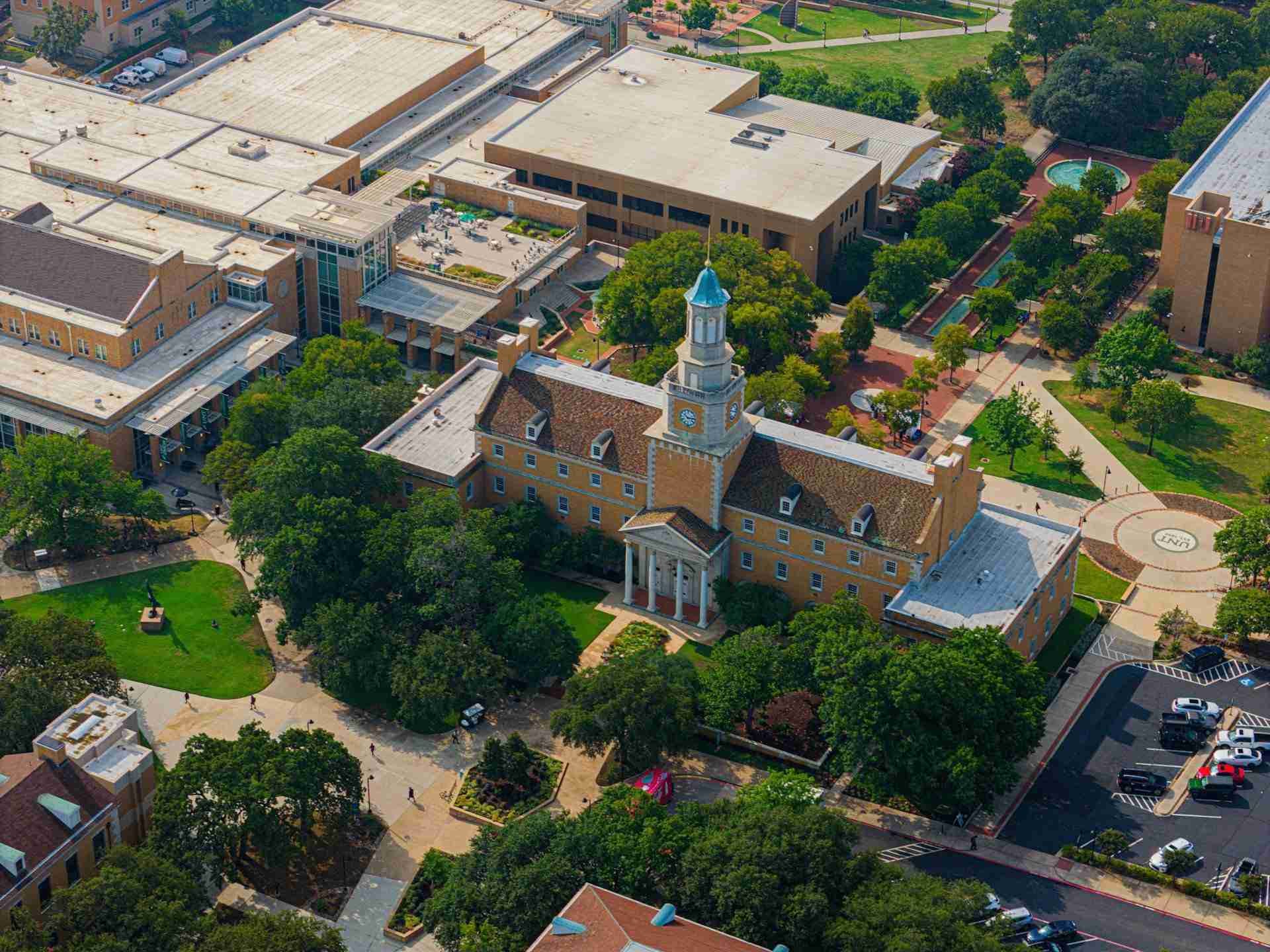
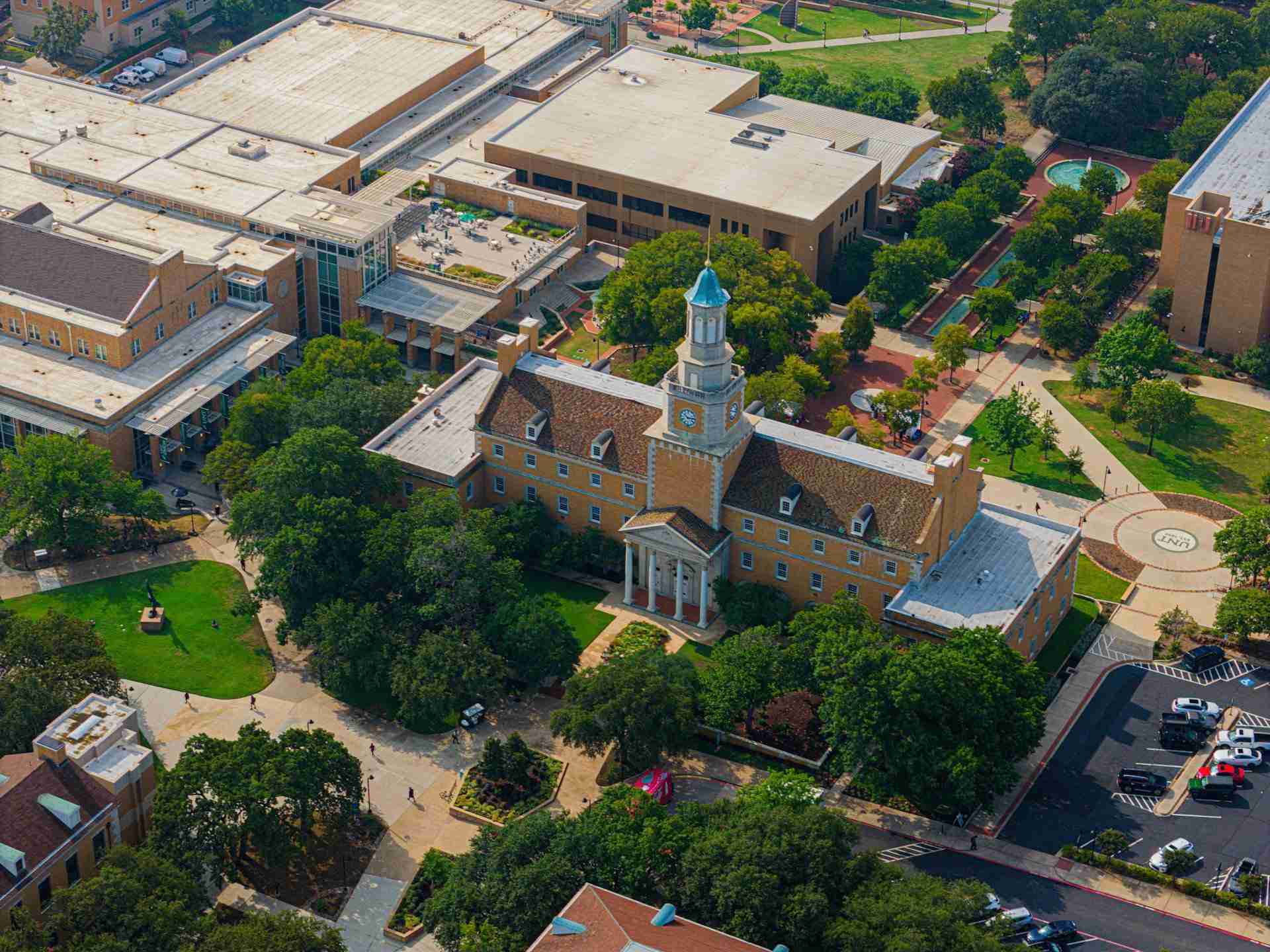
Set in the heart of the University of North Texas campus in Denton, the Hurley Administration Building is a commanding piece of academic architecture that has come to symbolize the university's identity. Topped by a green dome and central clock tower, the building blends neoclassical symmetry with mid-century institutional gravitas. Surrounded by landscaped lawns, leafy walkways, and red-brick campus structures, it stands as a focal point for both student life and formal ceremonies. For photographers, it offers a compelling subject in every season, from sunlit domes and golden-hour shadows to the intimate geometry of windows, ledges, and classical stone details.
Best Photography Opportunities
• Main Facade and Symmetry from the Lawn
: The most iconic view is from directly in front of the building across the Hurley Lawn. From this vantage point, the neoclassical symmetry is perfectly aligned, with walkways, trees, and flowerbeds offering strong foreground elements. A wide-angle lens can emphasize the vertical reach of the dome and the breadth of the building's base, while seasonal changes in vegetation—from spring tulips to autumn leaves—can be used to frame the building naturally. Early or late in the day, light slants across the facade to enhance depth and texture, while midday gives clean, high-key compositions with strong architectural clarity.
• Tower and Dome Close-ups at Golden Hour
: The building's green dome, clock face, and cupola offer outstanding opportunities for long-lens detail work. In the golden light of sunrise or sunset, these elements glow with warmth and contrast beautifully against a pale or dusky sky. Use a telephoto lens to frame upward shots from campus walkways or from an angle to capture clouds passing behind the tower. These tighter compositions work particularly well for editorial-style images and visual storytelling about the university's identity and legacy.
• Side Paths and Framed Perspectives
: The tree-lined sidewalks on either side of the building are ideal for framing the structure with natural elements. Use branches, flowering trees, or seasonal plantings to create depth and visual layering, drawing the eye toward the tower. During fall, these pathways blaze with color, while in spring, blossoms soften the classical architecture with vibrant contrast. These are excellent angles for lifestyle photography or capturing students in motion within a beautifully structured scene.
• Evening and Blue Hour Illumination
: As the day fades, the building's subtle architectural lighting begins to highlight its strongest features. Small floodlights illuminate the tower and dome, while nearby path lighting casts soft pools across the lawn and walkways. Blue hour is especially dramatic here—the balance between the lingering sky and artificial lights lends itself to long-exposure shooting, especially when reflections from damp sidewalks or evening mist add mood and atmosphere. Include silhouetted passersby or benches in the frame to add storytelling elements.
• Entryway, Columns, and Architectural Details
: The front staircase, columns, and ornamental trim offer a range of compositional options for abstract and detail-oriented photography. These elements are best explored in soft, directional light, which enhances their form without creating harsh contrast. Look for symmetry in the columns, patterns in the stone, or sunlight slicing through the doorway shadows for moody, elegant frames. These tighter shots round out a broader photographic series focused on the building's monumental character.
Best Time to Visit
The Hurley Administration Building is a rewarding subject year-round, but each season brings its own visual characteristics that influence composition and mood. Spring (March through May) delivers vivid greens and vibrant flowers across the campus, especially in the formal beds in front of the building. Early summer offers long, clean light for late-day sessions and deep blue skies for architectural contrast. Fall is arguably the most dramatic season, with fiery foliage surrounding the building and adding warmth and texture to both wide and close-up compositions.
For light, sunrise and golden hour provide the most dynamic conditions. The eastern orientation of the lawn catches warm morning light across the main entrance and upper tower, while late afternoon light strikes from the side, enhancing shadows and architectural relief. Overcast days are ideal for detail studies and evenly lit compositions, reducing contrast on the pale stone and brick surfaces. Winter, though less colorful, emphasizes the building's clean lines and is excellent for black-and-white or moody compositions that focus on form and contrast.
Visit on weekends or early mornings for quieter scenes if you want uninterrupted shots of the facade. On weekdays, the walkways and entrances are active with students, making it a good time for human-scale imagery and motion-based compositions that capture the building's role in daily campus life.
How to Get There
The Hurley Administration Building is located at 1501 W. Chestnut Street on the University of North Texas campus in Denton. From I-35E, exit North Texas Boulevard and follow signs into the campus core. The building is easily accessed via footpaths from the nearby visitor parking areas or campus garages.
Metered parking is available along streets nearby, and UNT offers designated visitor lots during the week. Be sure to check current parking regulations via UNT Transportation Services, especially during university events. The area surrounding the building is flat, walkable, and open to pedestrian traffic, making it easy to scout compositions and set up at various distances.
Recommended Gear and Shooting Tips
A wide-angle lens (16–35mm) is essential for capturing the full scale of the building from the lawn or angled walkways, especially when working with foreground trees or paths. For framing close-up architectural details such as the dome, windows, or entry columns, a mid-range zoom (24–70mm) allows for flexibility while maintaining sharpness and depth. A telephoto lens (70–200mm or longer) is particularly useful for isolating the upper tower and dome features from a distance, especially under golden light.
Bring a tripod for shooting during golden hour, blue hour, or low-light sessions—especially if you're aiming for long exposures or perfect alignment in symmetrical frames. A circular polarizer can help deepen the sky and reduce glare on stone or windows, particularly useful when shooting in full sun or with reflections in frame. ND filters (6- or 10-stop) can be used creatively to blur foot traffic or emphasize stillness in early or late light.
Lens hoods and microfiber cloths are essential, especially when shooting at sunrise or sunset when directional light can flare. Be aware of campus events or scheduled maintenance that might affect access or alter the visual environment around the building. Walk the site thoroughly—changing your height or shifting just a few steps to the left or right can dramatically improve balance, foreground, or background composition.
Nearby Photography Locations
• Library Mall and Eagle Statue
: Just a short walk away, this part of campus features green lawns, student traffic, and the university's Eagle sculpture, often surrounded by flags and seasonal flowers. It's perfect for lifestyle and environmental portraiture with campus identity in the background.
• McConnell Tower and the Union Green
: Another iconic architectural element, McConnell Tower adds vertical emphasis and pairs well with leading lines from the Union walkways. Ideal for skyline silhouettes or moody twilight scenes with glowing windows.
• Apogee Stadium and Mean Green Village
: Just west of the main academic zone, this area offers modern stadium architecture, sweeping concrete curves, and opportunities to photograph crowd energy during events or minimalist abstracts during quiet hours.
• Discovery Park
: A few miles north, this satellite UNT campus includes glass-and-metal research buildings surrounded by prairie grasses and open sky. Excellent for sunset minimalism and bold compositions with long shadows.
• Historic Denton Courthouse Square
: The town's central square features vintage storefronts, cafés, and the towering 1896 courthouse in Second Empire style. Best visited at dusk for lively street scenes or during early morning for calm architectural studies.
The Hurley Administration Building is a campus anchor that transcends mere function—it's a canvas of symmetry, light, and historical presence. With its stately dome, formal lines, and ever-changing seasonal foregrounds, it rewards photographers who take the time to explore its angles, textures, and luminous transitions from dawn through dusk.
Comments
Loading comments…