
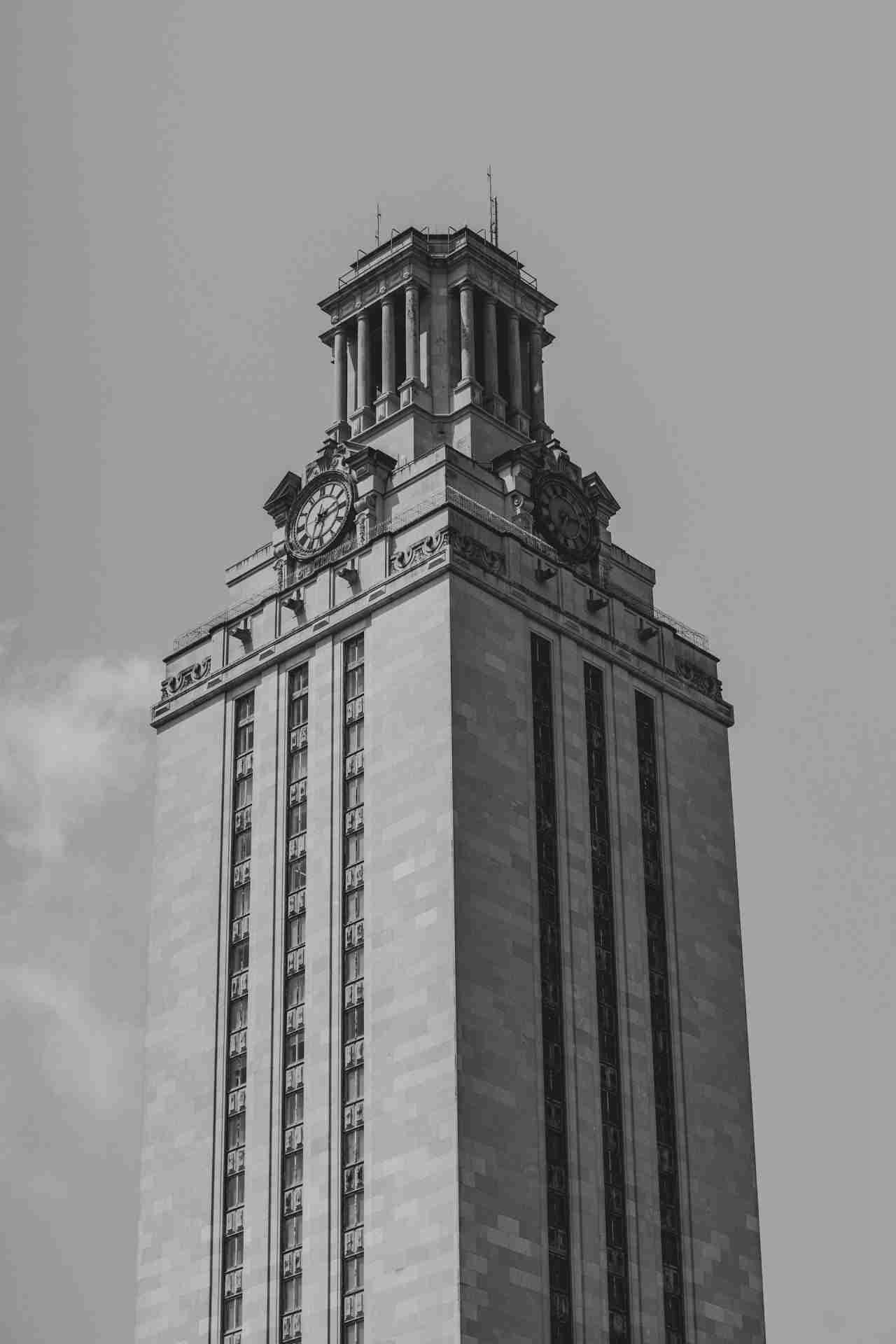
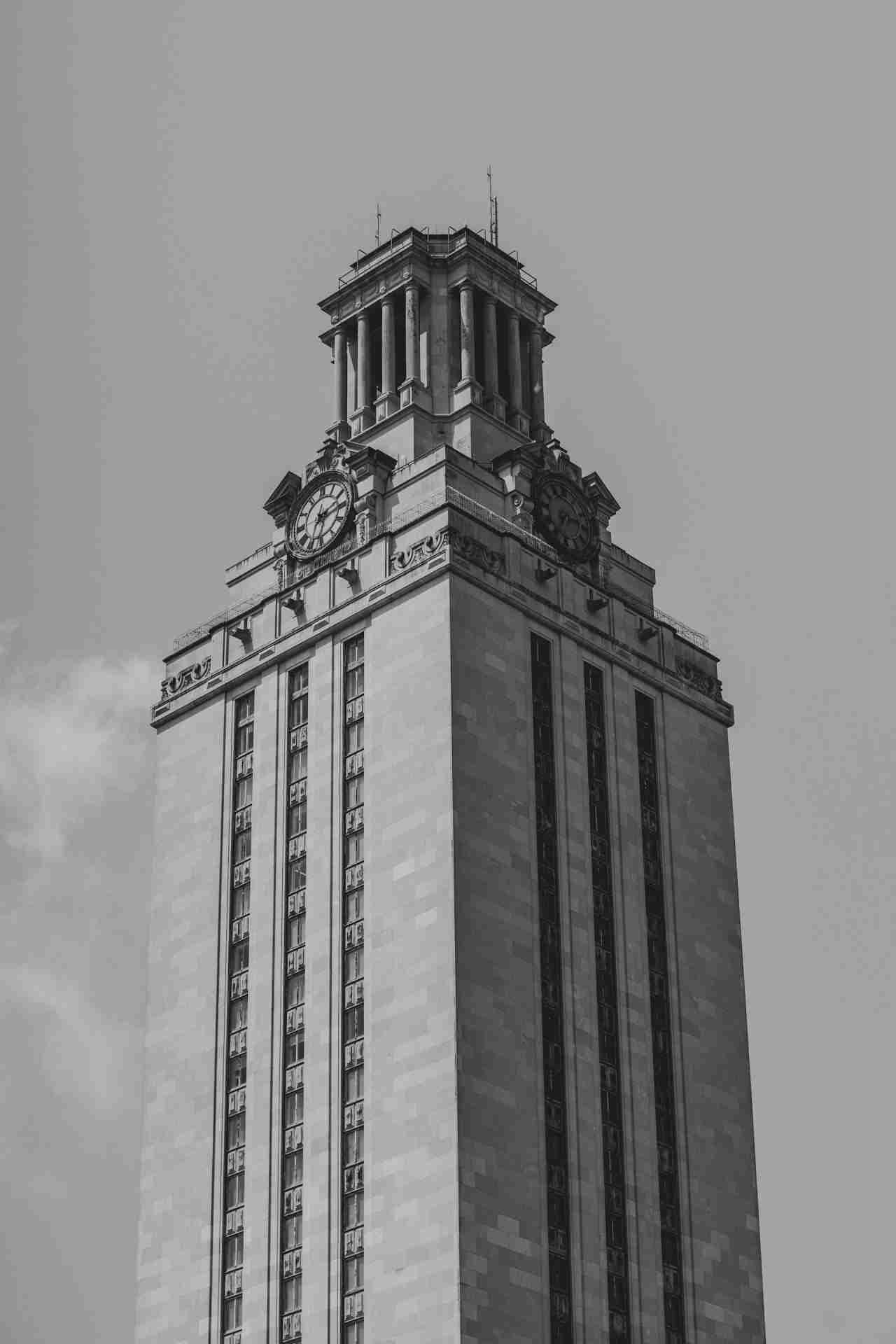
The University of Texas Tower rises above the heart of the UT Austin campus as a clean, symmetrical form visible from multiple vantage points across the city. Designed in the 1930s in a blend of Beaux-Arts and Art Deco styles, the UT Tower stands 307 feet tall and remains one of the most recognized structures in Central Texas. Its pale limestone facade, terracotta accents, and broad square base give photographers a clear geometric subject that plays especially well with directional light. During game days or special events, the tower is illuminated with burnt orange lighting, creating a glowing focal point that contrasts dramatically with the surrounding campus. From street-level close-ups to wide shots from across the city, the UT Tower offers a study in verticality, symmetry, and cultural presence.
Best Photography Opportunities
• Main Mall Symmetry and Leading Lines
The most classic viewpoint lies straight down the South Mall, with the UT Tower perfectly centered at the top of the wide green lawn. This composition works well with a standard or telephoto lens to compress the elements of the fountain, walkway, and tower into a single symmetrical frame. Early morning light strikes the front of the tower directly, while late afternoon creates interesting sidelight across the building's carved stone surfaces. This perspective is especially strong when the lawn is empty or lightly populated, giving a clean line of sight to the tower without distraction. Including foreground elements like the Littlefield Fountain or seasonal plantings adds visual layering and depth to an otherwise linear frame.
• Burnt Orange Lighting at Night
During certain evenings, particularly after athletic victories or university milestones, the tower is lit in burnt orange or patterned designs. These moments are highly anticipated and offer a rare opportunity to capture the tower with dramatic lighting. Use a tripod and longer exposure to balance the artificial lighting of the tower with the ambient darkness of the campus. A mid-range focal length works best to isolate the tower while still including silhouettes of trees or buildings in the foreground for scale. If photographing from the Main Mall, pay attention to light flare from campus streetlamps and consider a lens hood or stepping slightly off center to control highlights.
• Reflections and Framed Views on Campus
Several buildings across the UT campus feature polished surfaces, pools, or large windows that reflect portions of the tower, offering opportunities for indirect compositions. These reflection shots add variety and can function as abstract studies or environmental portraits. One example includes the windows of the nearby College of Liberal Arts building or the mirrored surfaces around the Student Activity Center. Use a longer focal length to isolate the tower within the reflection and play with focus to alternate between sharp tower detail and soft surrounding forms. Overcast skies work well here, as they prevent highlight blowouts and maintain balance in mixed lighting conditions.
• Low Angles and Textural Detail
Standing near the base of the tower allows for more experimental wide-angle shots that emphasize the tower's height and textured stonework. Tilting the lens upward exaggerates vertical lines and places the tower against the sky in a way that communicates its scale and position within the urban landscape. Shoot in morning or late afternoon to capture directional light across the facade, which enhances detail in the columns and cornices. These compositions benefit from clean framing, so watch for any distracting signage or passersby that might draw attention away from the vertical subject. A polarizer can help reduce glare and deepen sky contrast when working at steeper angles.
• Distant Perspectives from West Campus and Beyond
From further afield, the UT Tower stands out against the downtown skyline and lower campus buildings, offering a more contextualized view. Locations like West Campus rooftops, Pease Park, or even high floors of nearby parking garages let you frame the tower within the greater Austin environment. These long-range perspectives work well during golden hour, when soft light falls on both the tower and the skyline beyond. Use a telephoto lens to compress the scene and control background distractions. These images are particularly effective when clouds or weather conditions add drama to the sky, anchoring the tower as a visual and cultural landmark.
Best Time to Visit
Photographing the UT Tower is productive year-round, though the quality of light and surrounding campus activity shift with the seasons and academic calendar. Spring brings fresh landscaping and student energy, with early sunrises that cast even light on the tower's east-facing side. In summer, the campus quiets down, allowing for clean, undisturbed compositions and more predictable lighting conditions due to clear skies.
Autumn adds long shadows and richer color temperatures, especially in the late afternoon, which complements the warm stone of the tower. Winter skies can be grey or stormy, adding mood to the scene and helping diffuse light across the tower's flat surfaces. Early mornings and evenings are the best times for dramatic light and fewer people, particularly if you want to avoid crowds or campus events.
Special lighting nights, when the tower glows orange or features commemorative displays, are announced in advance by the university. These moments often draw a crowd, so arrive early to secure a good spot and prepare for longer exposure work. Weather also plays a significant role, as low fog, clouds, or evening haze can soften the edges of the structure and change its tonal character. Wind is rarely a major issue, but if using a tripod, make sure it is stable on paved surfaces like the South Mall.
How to Get There
The UT Tower is located at the northern end of the South Mall within the University of Texas at Austin campus. Visitors can approach the tower on foot from multiple directions, but the most common access point is from the south via 21st Street. Paid public parking is available in the Brazos Garage and the San Antonio Garage, both of which are within a ten-minute walk of the tower.
The tower grounds are open to the public, though access to the building interior and observation deck is restricted and requires a reservation through the university's visitor services. If you are photographing from the lawn or nearby walkways, no permit is needed, but commercial use may require clearance from university event staff. Tripods are permitted, though it's courteous to stay clear of pedestrian flow during peak campus hours. The South Mall is fully accessible and includes paved paths and stairs with plenty of room to move around.
Nearby buildings such as the Texas Union and the College of Liberal Arts provide elevated platforms or shaded courtyards for alternate compositions. If you're aiming for a night shot or planning to photograph a tower lighting event, arrive early to find the best line of sight before others set up.
Recommended Photography Gear
A full-frame camera with good low-light performance is ideal for capturing the tower during sunrise, sunset, or evening lighting events. Bring a standard zoom lens in the 24 to 70 millimeter range for framing the tower from multiple spots across campus, including reflections and detail shots. A wide-angle lens will help exaggerate height when shooting from the base and is especially useful for creative compositions that use foreground architectural elements as framing tools.
A telephoto lens between 70 and 200 millimeters is helpful for distant perspectives, skyline context, and isolating the tower in mixed compositions. For long exposure work or low-light scenes, a tripod is essential, especially on paved or sloped surfaces around the South Mall. Consider using a remote shutter release or app to avoid vibration during key exposures.
Filters are optional but useful. A polarizer can enhance contrast and cut glare on bright days, especially when shooting reflections or high-angle frames. Neutral density filters can help with motion blur or long exposures during the day, although the UT Tower itself does not involve a lot of fast movement. Pack extra batteries and memory cards if you plan to shoot across multiple lighting conditions or events.
Nearby Photography Locations
Located at the southern end of the South Mall, the fountain provides strong foreground interest for symmetrical compositions leading up to the tower. Reflections in the water and wide shots that include both the fountain and the tower create balanced, formal frames.
Just west of the tower, the museum complex includes striking modern architecture, curved lines, and open courtyards. It offers a contrasting photographic experience and pairs well with the more traditional lines of the tower in a broader UT campus series.
Roughly a fifteen-minute walk south, the Capitol building provides a second monumental subject for photographers interested in symmetry, light, and structure. Framing both the Capitol and the tower in one outing offers narrative continuity through architectural form.
Northwest of campus, Pease Park provides a natural setting with distant views of the UT Tower and downtown Austin. Early morning or late afternoon light here helps frame the tower through treetops or open clearings.
This shaded, modern courtyard just west of the tower provides architectural shadows, angles, and minimalist forms. The contrast of light and shadow here makes it an excellent space for mid-day photography when the tower itself is less compelling.
The UT Tower rewards patient, intentional photography. Whether you are chasing symmetrical perfection, unique lighting conditions, or simply exploring its interaction with the surrounding campus, the tower remains a visually rich subject in the heart of Austin. For architectural photographers and urban storytellers alike, it offers an enduring sense of place and a shifting play of form across light and time.
Comments
Loading comments…