
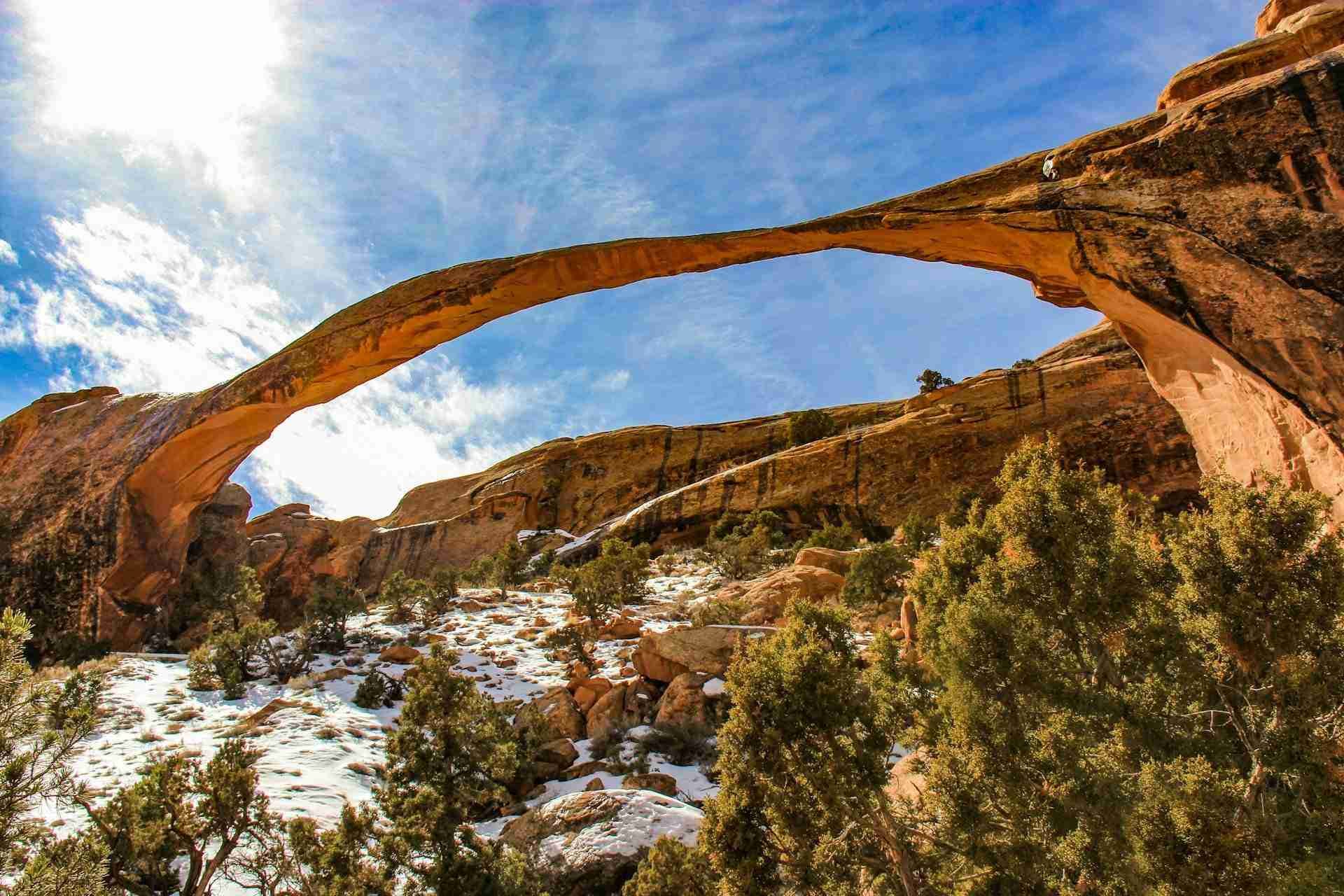
Landscape Arch, one of the most iconic and delicate natural formations in Arches National Park, offers an incredible opportunity for photographers. Stretching an impressive 290 feet, it is the longest natural arch in North America and appears impossibly thin, making it a striking subject for landscape photography. Located within the Devils Garden area, this arch presents a dynamic composition, whether framed against a brilliant sunrise, a clear blue sky, or the rugged desert terrain. Its delicate structure and the surrounding red rock formations create a dramatic contrast that changes beautifully throughout the day with shifting light.
Best Photography Opportunities
• Sunrise and Golden Hour Lighting
– The best time to capture Landscape Arch is during the early morning when the warm hues of the rising sun illuminate the arch and the surrounding sandstone. This time of day brings out the deep reds and oranges in the rock while creating long, dramatic shadows that add depth to your compositions. The soft, low-angle light also reduces harsh contrasts, allowing the details of the arch's texture to be captured more effectively.
• Framing with the Surrounding Landscape
– Wide-angle lenses work well for emphasizing the sheer scale of the arch against the surrounding desert landscape. Using natural framing techniques with nearby rock formations or sparse desert vegetation can add visual interest and depth to your shots. Incorporating leading lines, such as the natural curves of the rock formations or a winding section of the trail, can enhance composition and guide the viewer's eye toward the arch.
• Clear Night Skies for Astrophotography
– Due to its remote location and minimal light pollution, Devils Garden offers excellent conditions for night photography. Capturing the Milky Way arcing over Landscape Arch can result in breathtaking long-exposure images. The expansive sky combined with the arch's delicate silhouette creates an almost otherworldly scene, making it an ideal spot for experimenting with light painting or star trail photography.
• Seasonal Variations in Composition
– While the arch itself remains a constant, the surrounding landscape changes throughout the seasons. In winter, a dusting of snow on the red rock can provide an incredible contrast, while spring brings sparse greenery that adds vibrancy to the scene. Each season presents a new mood; for example, summer thunderstorms can create dramatic skies, while autumn's crisp air enhances clarity for detailed, high-contrast images.
• Minimalist Silhouettes at Sunset
– As the sun sets behind the arch, you can experiment with silhouette photography. Position yourself to capture the glowing sky behind the arch, allowing its delicate structure to stand out in contrast against the fading light. Shooting at different exposures can help highlight the gradient colors of the desert sky, transitioning from deep orange to twilight blue, which adds a striking visual element to your composition.
Best Time to Visit
The ideal time to visit Landscape Arch for photography is during the early morning or late afternoon when the light is soft and directional. Sunrise is particularly stunning, as the golden hues highlight the textures of the sandstone, casting long, dramatic shadows that add depth to the scene. Late afternoon and sunset provide cooler, more subdued tones, creating a different but equally captivating atmosphere.
Spring and fall are the best seasons for visiting, as temperatures are mild and the lighting conditions tend to be optimal for photography. In spring, sparse vegetation and occasional wildflowers add a touch of green to the predominantly red and orange landscape, making for more varied compositions. Autumn, with its crisp, clear air, enhances visibility and produces vibrant sunset colors, offering excellent opportunities for capturing the arch with a dramatic sky.
Summer can be challenging due to extreme heat, with daytime temperatures often exceeding 100°F (38°C). If visiting during this season, it is best to photograph at sunrise or shortly after, as midday light is harsh and can wash out the colors of the rock. Carrying ample water and sun protection is essential for those hiking in summer conditions.
Winter, though less common for visitors, presents unique photographic opportunities. Occasional snowfall dusts the red rock formations, creating a striking contrast that enhances the arch's delicate structure. The park is significantly less crowded during this time, allowing for serene, uninterrupted compositions. However, winter weather can make trails icy and slippery, so proper footwear and caution are necessary.
Regardless of the season, it is always advisable to check the weather forecast before heading out. Sudden storms, particularly in summer, can lead to flash flooding in the park's lower areas. By planning your visit around the best light and seasonal conditions, you can maximize your chances of capturing truly breathtaking images of Landscape Arch.
How to Get There
Landscape Arch is located within the Devils Garden area of Arches National Park, approximately 18 miles from the park entrance. To reach the arch, start at the Devils Garden Trailhead, which has a well-maintained parking lot. The hike to Landscape Arch is about 1.6 miles round trip along a relatively easy and well-marked trail. While the hike itself is not strenuous, carrying a tripod and extra water is recommended, especially in warmer months.
Arches National Park requires an entrance fee, which grants access to all areas of the park, including Devils Garden and Landscape Arch. Fees vary depending on the type of pass or vehicle, and annual passes are available for frequent visitors. Additionally, a timed entry reservation system may be in place during peak season, so checking the National Park Service website before visiting is highly recommended.
Exploring the Surrounding Area
Beyond Landscape Arch, Devils Garden offers an array of additional photographic opportunities. Continuing along the trail leads to several other impressive arches, including Partition Arch and Navajo Arch, both of which provide different perspectives and framing options for landscape photography. The primitive loop section of the trail offers rugged, less-traveled views of the desert landscape, ideal for capturing the raw and untamed beauty of Arches National Park. Wildlife, including desert cottontails and various bird species, can sometimes be spotted along the way, adding another element of interest to your shots.
Nearby Photography Locations
• Double Arch
– Located in the Windows Section of the park, Double Arch consists of two massive sandstone arches connected at the base, creating a unique and dramatic composition. The interplay of light and shadow here makes for compelling photographs, especially in the early morning or late afternoon. Climbing up the rocks near the base can provide fresh perspectives, capturing the arches from beneath or framing the desert landscape through them.
• Delicate Arch
– Perhaps the most famous arch in the park, Delicate Arch is an iconic subject that requires a moderate hike to reach. Sunset is the best time for photography, as the arch glows in the golden light against the La Sal Mountains in the background. For a unique perspective, consider visiting in the winter when snow highlights the surrounding terrain, adding an extra layer of contrast.
• Balanced Rock
– A striking rock formation that seems precariously perched on a narrow base, Balanced Rock provides excellent opportunities for silhouette photography at sunset. Its location near the park entrance makes it an easy stop for capturing dramatic compositions. The changing light throughout the day alters the mood of the scene, making it a worthwhile subject at different times.
– This labyrinth of narrow canyons and towering sandstone fins offers a more adventurous photographic experience. Due to its complex terrain, access is limited, but a guided tour provides the chance to capture the intricate interplay of light and shadow in this unique landscape. The tight spaces and towering walls create an excellent setting for abstract compositions, focusing on patterns and textures in the rock formations.
– A classic composition involves framing Turret Arch through the opening of the North Window. This perspective creates a natural frame that enhances the depth and scale of the scene, particularly in the golden light of sunrise. Adjusting your angle slightly can help balance the elements in the frame, ensuring that both the foreground and background contribute to the overall composition.
Landscape Arch is a must-visit for any landscape photographer exploring Arches National Park. Its delicate structure and ever-changing light conditions offer a wealth of creative possibilities. Whether you capture it in the soft morning glow, under a star-filled sky, or as part of a wider desert composition, this natural wonder remains an unforgettable subject for photography.
Comments
Loading comments…