
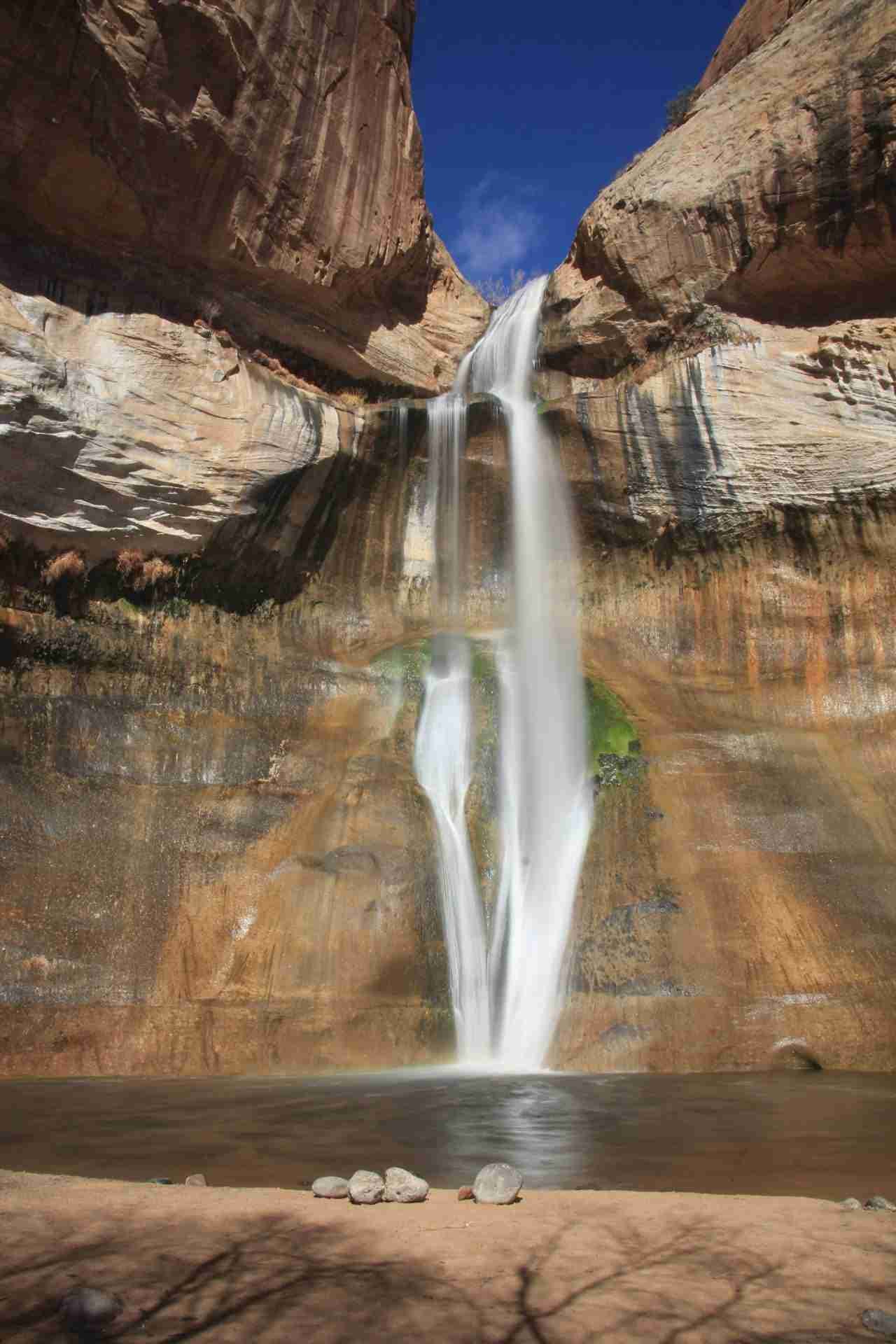
Lower Calf Creek Falls is a surprising splash of life and motion tucked deep within the canyons of Grand Staircase–Escalante National Monument in southern Utah. The 126-foot waterfall spills over streaked sandstone walls into a clear desert pool, surrounded by cottonwood trees and sunlit alcoves that feel like another world compared to the surrounding high desert. For photographers, this is a place where stark textures meet soft movement, and harsh light softens into rich tones as the sun moves across the sky. The approach to the falls is just as visually rewarding as the destination, winding through a wide canyon carved by Calf Creek. This combination of scale, isolation, and desert greenery makes Lower Calf Creek Falls a rewarding subject for those seeking contrast, clarity, and subtle color.
Best Photography Opportunities
• Lower Calf Creek Falls Itself
The waterfall is the focal point of the hike and an excellent subject for both vertical and horizontal compositions. A portrait-oriented frame can emphasize the entire plunge from lip to pool, especially if you include the striped canyon walls that carry the eye downward. For wide shots, consider stepping back to incorporate the full basin and framing the water with the surrounding vegetation. If conditions are calm, reflections in the pool add another layer of interest, especially in morning light. Bring a circular polarizer to control glare on the water and deepen the colors in the sandstone and greenery around the base.
• Canyon Wall Textures and Light Play
Throughout the hike, the Navajo sandstone walls offer layered patterns in warm oranges, browns, and occasional grays. As the sun arcs through the day, light bounces off the canyon walls to create soft secondary glows in shadowed areas. These moments are fleeting and hard to predict, but they create quiet scenes rich in detail and subtle light. Using a longer lens, you can isolate abstract patterns in the rock or capture compressions between cliff textures and narrow tree trunks. These spots reward patience and are often missed by hikers focused on the destination.
• Ancient Petroglyphs
Midway along the trail, a set of Fremont-era petroglyphs can be seen on the canyon wall across the creek. Though not accessible up close, these carvings are a reminder of the long human presence in the area. A telephoto lens of 200mm or more will let you photograph the petroglyphs from a respectful distance. Soft light is key here, as harsh midday sun can wash out the detail in the rock. These panels are best captured in the morning before the wall is fully illuminated.
• Calf Creek Reflections and Desert Life
The creek itself winds throughout the canyon and frequently offers chances to capture reflections of trees and cliffs in the still water. Cottonwoods, grasses, and reeds add vertical contrast and bring softer textures into the frame. During spring and fall, these plants change color, adding visual interest to what is otherwise a predominantly sandstone landscape. Watch for birds, lizards, and insects that frequent the water's edge—they can offer interesting detail shots or add life to wider frames. In quiet spots, long exposures can smooth out the creek's movement and add a sense of flow to compositions.
• Sunlight Filtering Through Canyon Turns
Several bends in the canyon offer dramatic views where the trail curves and opens suddenly into wider views. These turns often create narrow beams of light that slip through the cliffs during early morning or late afternoon. They are not consistent from day to day, so timing and weather matter, but when they appear, they offer a chance to capture strong directional light against otherwise shaded rock. A fast lens and careful metering can help manage these scenes, which often benefit from both high contrast and subtle gradients in tone.
Best Time to Visit
Spring and fall offer the most reliable conditions for both hiking and photography. From mid-April to early June, fresh growth along Calf Creek brings a mix of greens and yellows that contrast beautifully with the sandstone. Late September through October is also excellent, as the cottonwoods near the falls and along the creek change color and the light becomes warmer and lower throughout the day. Summer days are long, but the light can be harsh by mid-morning, and the heat can make the hike more difficult and limit your window for shooting comfortably. If you do visit in summer, aim to reach the falls early, just after sunrise, when the sun begins to light the amphitheater from the east. Winter provides soft light most of the day, especially in the narrow canyon sections, but portions of the trail may be icy, and water levels can drop, changing the character of the falls.
How to Get There
Lower Calf Creek Falls is accessed from the Calf Creek Recreation Area off Scenic Byway 12, between the towns of Boulder and Escalante. The parking area is located directly off the highway and includes restrooms and a small campground nearby. There is a day-use fee to park, which supports trail maintenance and facilities. The trail to the falls is a 6-mile roundtrip hike that generally follows Calf Creek through the canyon, with minimal elevation gain but long stretches of sand and sun exposure. The trail is well-marked and passes interpretive signs along the way. Because the falls are a popular destination, it's best to arrive early to secure parking and enjoy quieter light conditions. Carry plenty of water and sun protection, especially during warmer months, and allow extra time for photography stops along the way.
Recommended Photography Gear
A standard full-frame DSLR or mirrorless body will be well-suited for this location, with lenses covering the 16–200mm range. A wide-angle lens (16–35mm) is essential for capturing the full height of the falls and the broader canyon scenes. A telephoto lens (70–200mm or longer) is useful for isolating petroglyphs, compressing distant textures, and capturing wildlife or detail shots along the creek. A tripod is recommended for long exposures at the waterfall and creek, especially in low light conditions. Neutral density filters help control shutter speed for silky water effects, while a circular polarizer is useful for reducing glare and enhancing contrast in wet rock surfaces. Wear comfortable hiking shoes with good grip, as sections of the trail can be sandy and uneven. A weather-resistant pack and lens protection are helpful during windy or dusty conditions, which are common in the canyon.
Nearby Photography Locations
Located about 13 miles down Hole-in-the-Rock Road, Devil's Garden is a compact area filled with sculpted sandstone formations, including small arches and freestanding hoodoos. The site is easy to access and can be explored in a short session, but the variety of forms and clean desert surroundings make it perfect for experimenting with light, shadows, and minimalism. Sunset and sunrise create strong color contrast on the rocks, especially when clouds catch the light.
This trail begins just outside the town of Escalante and follows the river through a canyon lined with cottonwoods and shaded alcoves. About 2.5 miles in, it leads to a massive natural bridge that spans high above the river. The bridge makes for compelling wide shots, while the river corridor offers changing light and reflections that reward careful observation. It's a quieter hike with excellent photographic variety.
Less visited than the lower falls, Upper Calf Creek requires a short but steep descent over slickrock. The smaller waterfall here tumbles into a turquoise pool that often has fewer crowds and more dramatic mid-morning light. The surrounding area offers elevated views over the canyon rim and opportunities for broader landscape shots of the surrounding terrain.
Located off Hole-in-the-Rock Road, Zebra Slot is a narrow sandstone passage known for its striped walls and tight curves. Best visited around midday when light penetrates the narrow opening, the canyon offers opportunities for creative compositions focused on texture, line, and form. It's a short but intense hike that requires good weather and preparation for navigating water and tight spaces.
This historic route crosses slickrock and open desert between Boulder and Escalante. The trail offers panoramic views across canyons and ridges, with moments of unexpected intimacy at natural water pockets and high vantage points. The expansive views are ideal for layering compositions and shooting under shifting sky conditions, particularly in the evening as long shadows stretch across the rock.
Lower Calf Creek Falls stands out as a rare meeting point of water, rock, and subtle light in one of Utah's most visually dynamic regions. For photographers looking to blend motion with shape, and scale with detail, this trail and its waterfall offer a quiet but endlessly rewarding experience that opens up even more possibilities when paired with the nearby landscapes waiting just beyond the bend.
Comments
Loading comments…