
Edge of the Earth: A Photographer's Guide to Moon Overlook, Utah
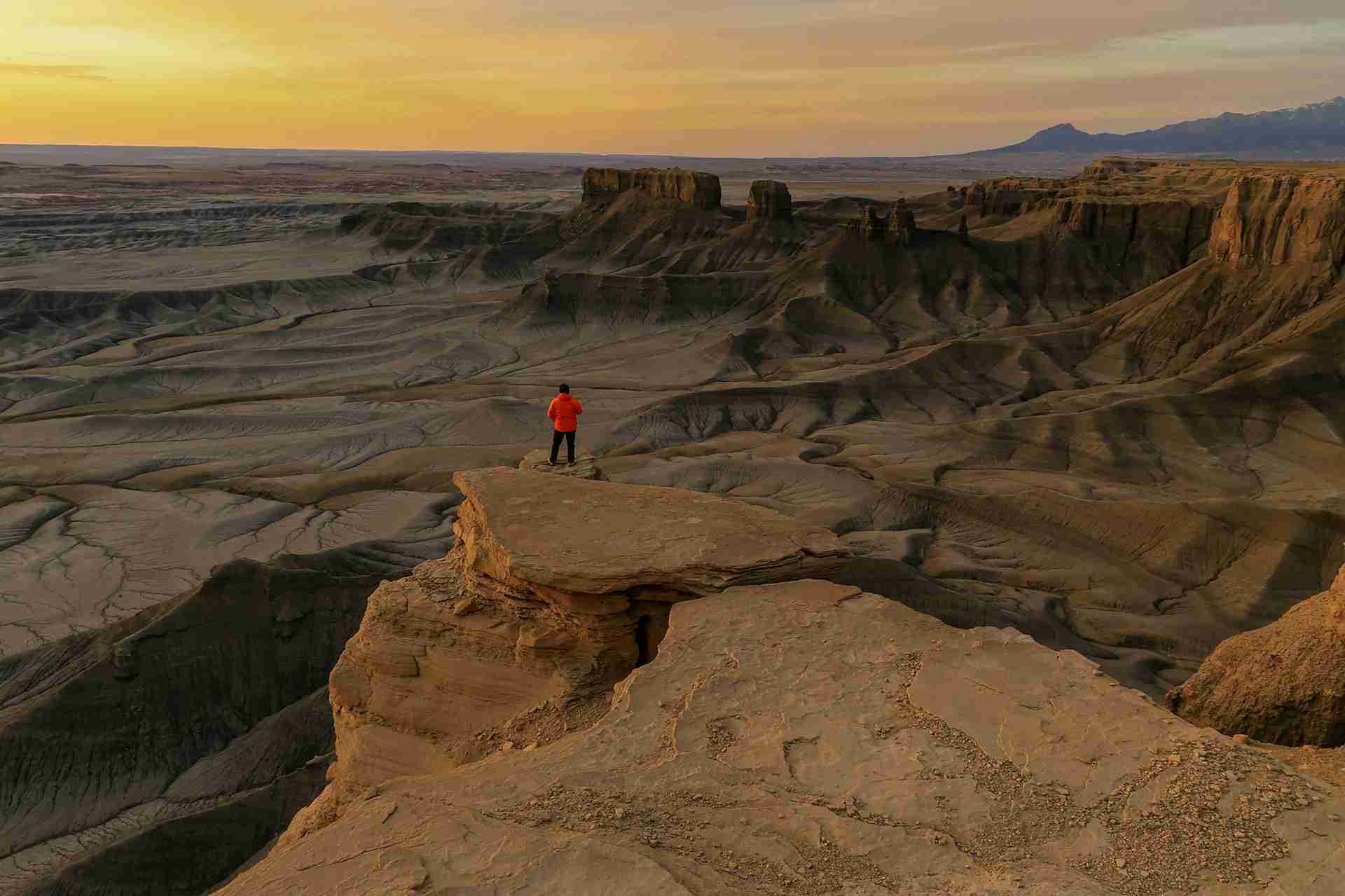
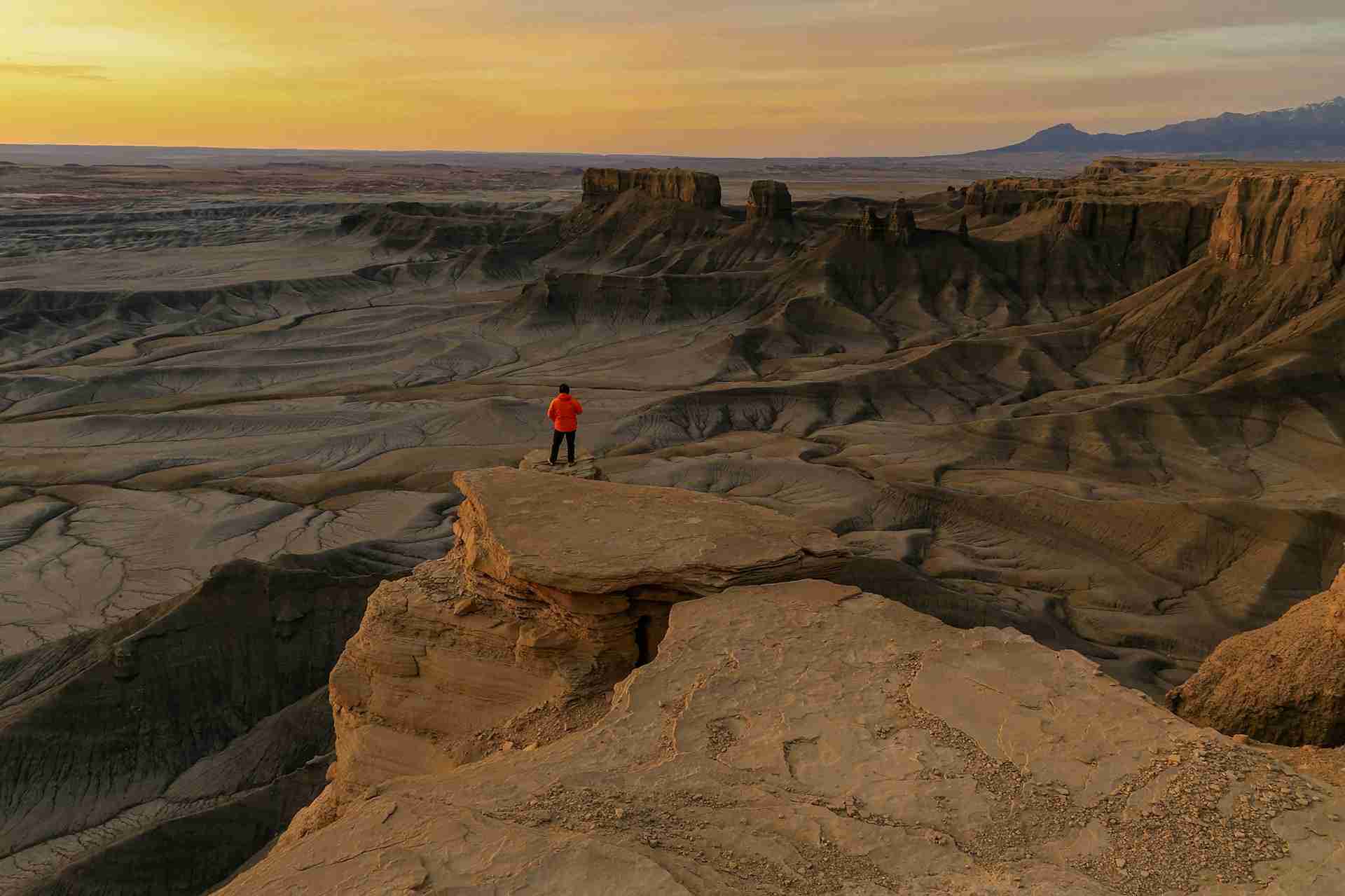
Perched above the surreal terrain of Utah's Badlands, Moon Overlook delivers one of the most otherworldly views in the American Southwest. Located near Factory Butte, just outside Hanksville, this remote cliffside vista opens up to an expansive canvas of eroded ridges, barren valleys, and distant mesas. The overlook provides a rare sense of scale and isolation, as if you're standing on the edge of another planet. For landscape photographers, Moon Overlook offers a dynamic range of light, texture, and scale that rewards patience and creativity in equal measure.
Best Photography Opportunities
• Panoramic ridgeline views:
From the cliff edge, the land unfolds into a maze of sedimentary folds, deeply carved ravines, and rhythmic undulations that stretch to the horizon. This is where wide-angle lenses shine, especially in golden hour light that emphasizes every curve and shadow. The sense of vertical drop at your feet, juxtaposed with the openness beyond, creates compositions that communicate both grandeur and vulnerability. Photographers can play with vertical or horizontal framing to highlight the vastness, and stitching panoramas is highly recommended for creating high-resolution, gallery-quality images. The subtle shift in light and tone across the land offers limitless framing variations, even from a single vantage point.
• Factory Butte as a compositional anchor:
Factory Butte's flat-topped mass rises like a monument from the sea of badlands and is one of the region's most recognizable features. Use this dramatic landmark to anchor your compositions, whether you're placing it centrally within a wide frame or using it as a visual counterweight in a more abstract landscape. A mid-telephoto lens allows you to compress the scene and emphasize the contrast between the butte's monolithic form and the softer ridgelines in the foreground. On days with dramatic skies, Factory Butte serves as a powerful silhouette or focal point for long-exposure cloud movement. Including human scale in the frame, such as a distant figure on the ridge, can further dramatize the enormity of the landscape.
• Sunrise light and pastel tones:
Arriving before dawn rewards photographers with a calm, pastel world painted in shades of lilac, pink, and amber. The absence of direct sunlight allows for a balanced tonal range, ideal for subtle, contemplative landscapes that emphasize texture and atmosphere. As the sun begins to rise, light rakes across the badlands at an oblique angle, carving shadow and shape into the terrain. This period of transition, between night's neutrality and the drama of golden hour, is perfect for storytelling sequences or cinematic stills. Use this time to capture both wide scenes and intimate details in soft light, and consider bracketing exposures to manage the increasing dynamic range.
• Foreground textures and cliff-edge drama:
The ground at Moon Overlook is a photographer's playground of textures, including fractured clay, patterned rock slabs, and wind-etched surfaces that echo the topography below. Shooting low and incorporating these textures into your foreground adds a tactile dimension to your images, drawing the viewer into the scene. These compositions are particularly effective in early or late light, when side illumination heightens contrast and reveals micro-relief in the ground. Be cautious near the cliff edge, but where safe, you can use the lip of the drop as a leading element that guides the eye into the canyon below. Adding scale, such as a tripod silhouette or backpack, can further anchor the image in reality while still suggesting the surreal.
• Blue hour and night photography:
After sunset, Moon Overlook becomes a quiet theatre of twilight, with the badlands gently dissolving into shadow while stars emerge overhead. Blue hour is ideal for long exposures that smooth the sky and reveal faint details in the landscape, especially when the moon is rising or recently set. The cool tones of twilight enhance the alien quality of the terrain, and a sturdy tripod allows for precise exposures at slower shutter speeds. Once full night arrives, the location transforms into a prime site for astrophotography, with minimal light pollution and sweeping open skies. Try framing the Milky Way above the ridgelines or using light painting techniques to illuminate foreground textures in contrast with the cosmos above.
How to Get There
Moon Overlook is located in the remote badlands near Hanksville, Utah, just west of the iconic Factory Butte. To reach it, take Utah State Route 24 north from Hanksville and look for Factory Butte Road (also known locally as Coal Mine Road). Follow this well-graded dirt road westward for several miles until you reach the junction with Skyline View Road. This smaller spur road leads directly to the overlook and is generally accessible to high-clearance vehicles in dry conditions. Though a four-wheel-drive vehicle is not always necessary, recent rain or muddy conditions can quickly change the terrain and require more capable transport.
There are no entry fees or permits required to visit Moon Overlook, as it is located on public Bureau of Land Management (BLM) land. However, the site is completely undeveloped, with no restrooms, signage, or amenities of any kind. Be prepared to navigate using GPS coordinates or offline maps, and bring all necessary supplies with you. Once parked near the cliff's edge, a short walk may be required to reach your desired vantage point. Use caution near the overlook, as the ground can be unstable near the rim.
Best Time to Visit
Late spring and early autumn are the most favorable seasons for photography at Moon Overlook, offering a balance of dramatic lighting and comfortable weather. During these times, the sun's lower angle creates more pronounced shadows and vibrant colors, while the moderate temperatures make early morning and evening shoots far more enjoyable. These months also tend to bring clearer skies, ideal for both golden hour compositions and night photography sessions.
Winter provides a unique aesthetic with frost and occasional snow outlining the ridgelines and texturing the clay, though access may be more difficult and conditions harsher. Summer, though visually dramatic with monsoon clouds and long twilight periods, presents challenges with midday heat and washed-out light. If visiting in summer, plan shoots early or late in the day and carry ample water and sun protection.
Blue hour and twilight at Moon Overlook offer some of the most subtle and emotionally resonant images. The soft ambient light reveals shadow detail while preserving the rich colors of the sky. For those interested in star trails or Milky Way shots, moonless summer nights provide an ideal window, thanks to minimal light pollution and wide horizons. Always check lunar phases, weather forecasts, and sunset/sunrise times to optimize your shooting schedule.
Recommended Gear for Moon Overlook
An effective kit for Moon Overlook begins with a wide-angle lens, ideally in the 14–35mm range, to encompass the sweeping views and cliff-edge drama. Pair this with a mid-range zoom such as a 24–70mm for flexible framing, and include a 70–200mm or longer telephoto lens for isolating Factory Butte or compressing the layered terrain. Each of these lenses offers a different perspective on the same scene, enabling creative variety without changing locations.
A sturdy tripod is essential for sharp results in low light and long exposures. Bring a ball head or gimbal head if planning panoramas or astrophotography. Circular polarizers will reduce glare on sunlit slopes and enhance sky contrast, while graduated ND filters help balance uneven exposures when the sky is much brighter than the land. A full ND filter also allows for slow-shutter effects during daylight, blurring clouds or creating dreamy textures across the landscape.
Because Moon Overlook is remote and exposed, dust protection is a must. Use sealed lens bags, lens hoods, and microfiber cloths to keep optics clean. A remote shutter release or internal timer ensures vibration-free exposures. For night shoots, bring a red headlamp to preserve night vision and aid in focusing. An intervalometer is useful for star trails or time-lapse sequences. Lastly, pack high-energy snacks, layered clothing for temperature shifts, and navigation tools such as GPS apps or offline maps. This is wild country, and preparation is key.
Nearby Photography Locations
• Factory Butte:
Just a short distance from the overlook, Factory Butte is a dramatic mesa that dominates the skyline. Its flat top and sharply textured slopes make it an iconic subject, especially at sunrise when side light emphasizes its sculptural form.
Located south of the overlook, these vividly colored mounds display bands of blue, red, and purple clay. The undulating forms are best photographed in soft light, which brings out their unique tones without harsh contrast.
Part of Capitol Reef National Park, Cathedral Valley features towering sandstone monoliths and a vast desert basin. Ideal for sunrise or sunset photography, it offers both intimate details and grand compositions.
• Blue Valley Badlands:
Visible from the overlook itself, this labyrinthine landscape offers endless opportunities for abstract compositions. Access is more challenging, but those who descend into the valley can explore up-close erosion patterns and rhythmic ridgelines.
Located deeper within Cathedral Valley, these twin monoliths rise dramatically from the desert floor. Their symmetry and isolation make them powerful subjects, particularly during golden hour or under moonlight.
Comments
Loading comments…