
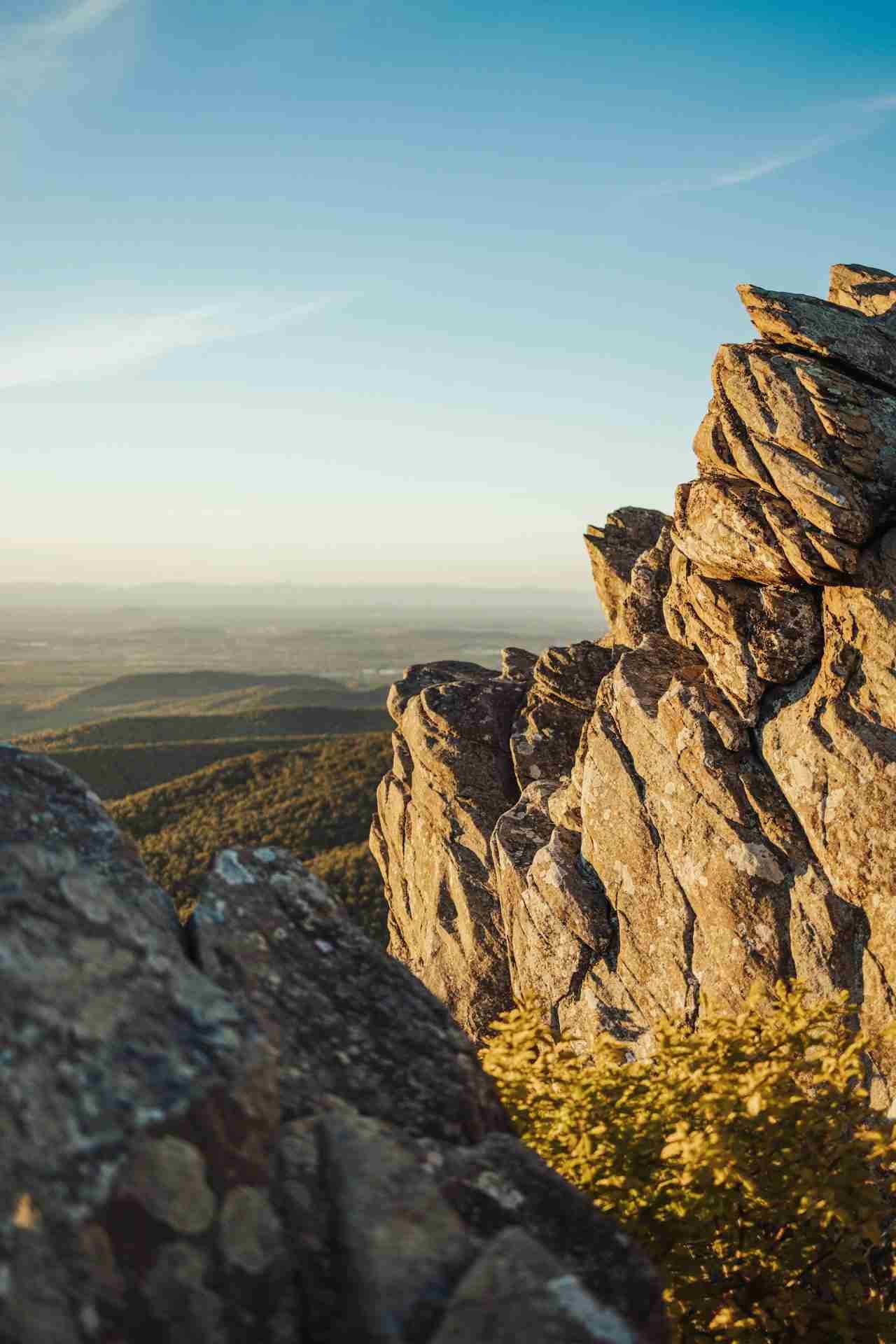
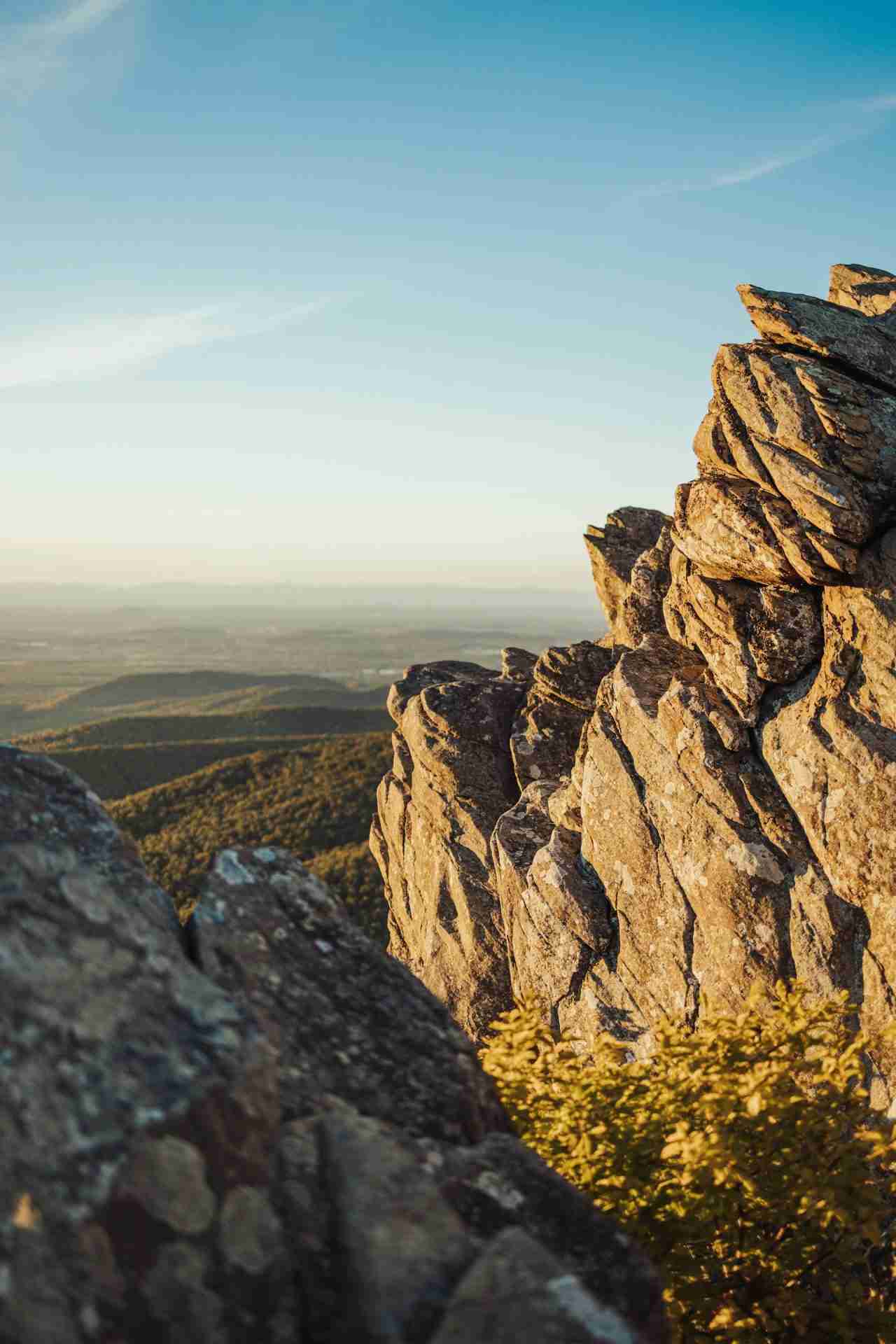
Humpback Rocks sits along the Blue Ridge Parkway in central Virginia. The rocky outcrop at the summit opens up to wide views across the Blue Ridge Mountains, with layered ridge lines stretching into the distance. The viewpoint a broad rocky area where you can move around to adjust your framing depending on the light and conditions. The hike to the top is short but steep, which helps keep the area feeling natural without being difficult to reach. The combination of open views, textured foreground rocks, and constantly changing mountain light makes it a reliable location for landscape photography throughout the year.
Best Photography Opportunities
• View Over Layered Blue Ridge Mountains
The main viewpoint at the top of Humpback Rocks gives you a wide, unobstructed look across multiple layers of mountain ridges. These layers naturally fade into the distance, creating depth that works well in both color and black and white images. You can shift slightly across the rock surface to change how the ridge lines stack within your frame. Atmospheric conditions play a big role here, with haze often helping separate the layers and add dimension. This is a location where subtle changes in light can make a big difference in the final image. Taking time to wait for those shifts often leads to stronger results.
• Rocky Foreground With Expansive Background
The exposed rock at the summit gives you solid foreground elements that can anchor your composition. Cracks, textures, and natural shapes in the stone can be used to lead the viewer's eye into the scene. By lowering your camera slightly, you can emphasize the foreground while still keeping the mountain layers visible. This adds depth and helps avoid flat looking images. The contrast between the rough rock and the softer distant ridges works especially well in softer light. It is a simple but effective way to build a stronger composition.
• Framing With Trees and Natural Edges
Along the edges of the summit, patches of trees and vegetation can be used to frame the view. These elements help break up the open space and add structure to your images. Positioning them carefully within the frame can guide the viewer's eye toward the distant mountains. This approach works well if you want something more layered and less open than the main viewpoint. It also helps add a sense of place by including more of the immediate environment. Exploring the edges of the summit can lead to more unique compositions.
• Golden Hour Light Across the Ridges
When the sun is low, the light moves across the ridge lines and creates alternating bands of light and shadow. This adds depth and helps define the shape of the mountains more clearly. The effect changes quickly, so being ready to shoot as the light shifts is important. Warm tones during sunset can add color to the scene without overpowering it. This is one of the most rewarding times to photograph the area. Staying in one position and watching the light move can produce a strong sequence of images.
• Telephoto Compression of Mountain Layers
Using a longer focal length from the summit lets you compress the distant ridge lines and bring them visually closer together. This works especially well in hazy conditions, where each layer separates slightly in tone and creates a sense of depth. Small adjustments in framing can completely change how the layers stack, so it is worth taking time to fine tune your composition. This approach helps simplify the scene by removing unnecessary foreground and focusing on shape and contrast. It is also a strong option during sunrise or sunset when light moves across the ridges and highlights different sections. A telephoto setup gives you more control over how you present the landscape compared to wider shots.
Best Time to Visit
Sunrise is one of the most rewarding times to shoot at Humpback Rocks, as the first light reaches across the ridges and helps separate the layers of mountains. Early morning also tends to be quieter, giving you more space to work and adjust your compositions. Sunset is another strong option, with warm light moving across the landscape and adding depth to the scene. Conditions can change quickly at this elevation, so clouds, haze, and shifting light all play a role in how your images turn out. Blue hour is less dramatic here but can still work if you want softer tones and a calmer feel.
Fall is one of the most popular seasons due to the changing colors across the mountains, which adds another layer of interest to your images. Summer offers longer days and more flexibility with timing, though haze can sometimes reduce visibility. Spring brings fresh greens and a slightly quieter atmosphere, while winter can provide clear air and sharp views, especially after a cold front passes through. Wind can be a factor at the summit, so it is worth checking conditions if you plan to use a tripod.
How to Get There
Humpback Rocks is located directly off the Blue Ridge Parkway, making it easy to access by car. There is a designated parking area near the trailhead, followed by a short but steep hike to the summit. The trail is well maintained but gains elevation quickly, so it can feel more demanding than its distance suggests. Good footwear is recommended, especially if you are carrying camera gear. There are no entrance fees specifically for the trail, though access depends on the Blue Ridge Parkway being open. Arriving early is a good idea, especially during peak seasons, as parking can fill up quickly. The trail is straightforward to follow, and the summit area is open enough to move around safely once you reach the top.
Recommended Photography Gear
A standard zoom lens is a solid choice here, allowing you to adjust between wider landscape shots and tighter compositions of the ridge lines. A telephoto lens is especially useful for compressing the layers of mountains and emphasizing the depth of the scene. A tripod can help stabilize your shots during low light conditions, particularly at sunrise or sunset. A polarizing filter can improve contrast in the sky and reduce haze slightly, though its effect may vary depending on conditions. Since the hike is short but steep, keeping your gear setup light will make the climb more manageable. Extra layers are also worth bringing, as temperatures can feel cooler at the summit.
Nearby Photography Locations
There are multiple overlooks along this stretch of the parkway, each offering slightly different angles across the mountains. These spots are easy to access and provide quick opportunities for wide landscape shots without hiking.
Located near the trailhead, this historic farm area offers a different subject with old buildings and open fields. It works well for more grounded compositions compared to the elevated views above.
This viewpoint offers a dramatic cliff edge and wide views across the valley below. It is especially popular at sunset and provides a stronger sense of height compared to Humpback Rocks.
One of the tallest waterfalls in Virginia, this location provides a completely different environment with flowing water and forest surroundings. It is a good option if you want to add variety to your shoot.
This area offers calm water, forest reflections, and a more enclosed landscape. It is a good place to work with still scenes and different lighting conditions away from the exposed ridge lines.
Comments
Loading comments…